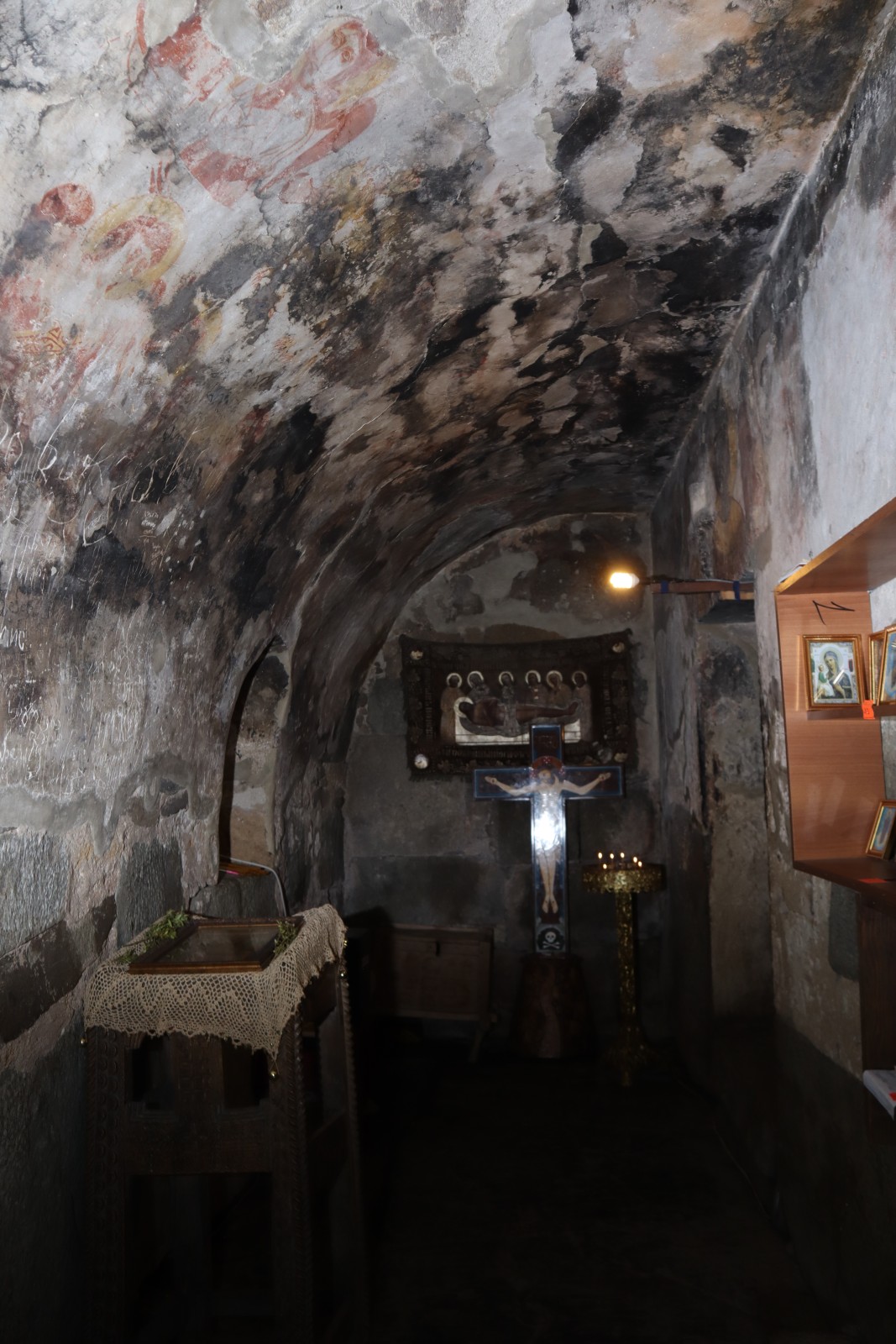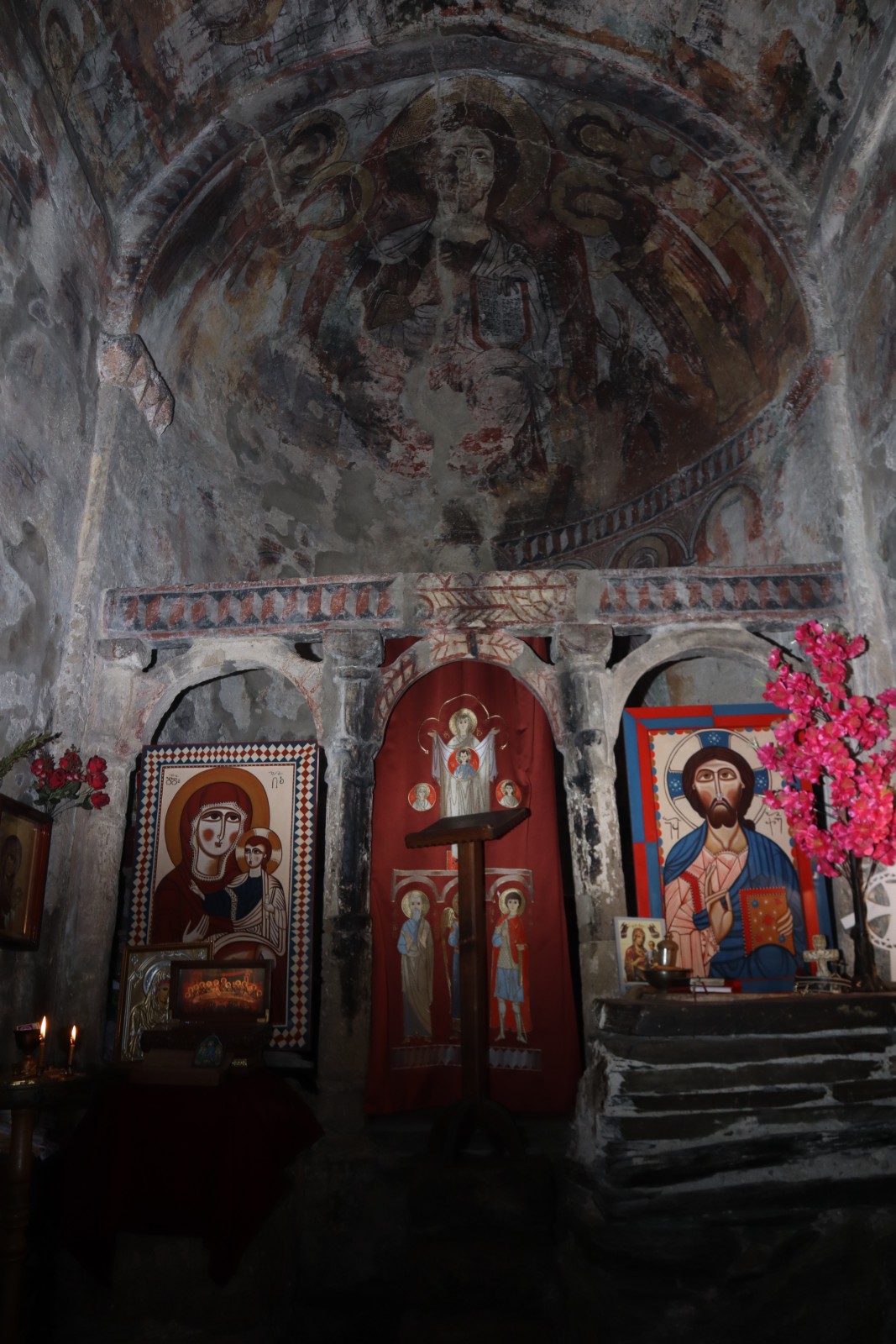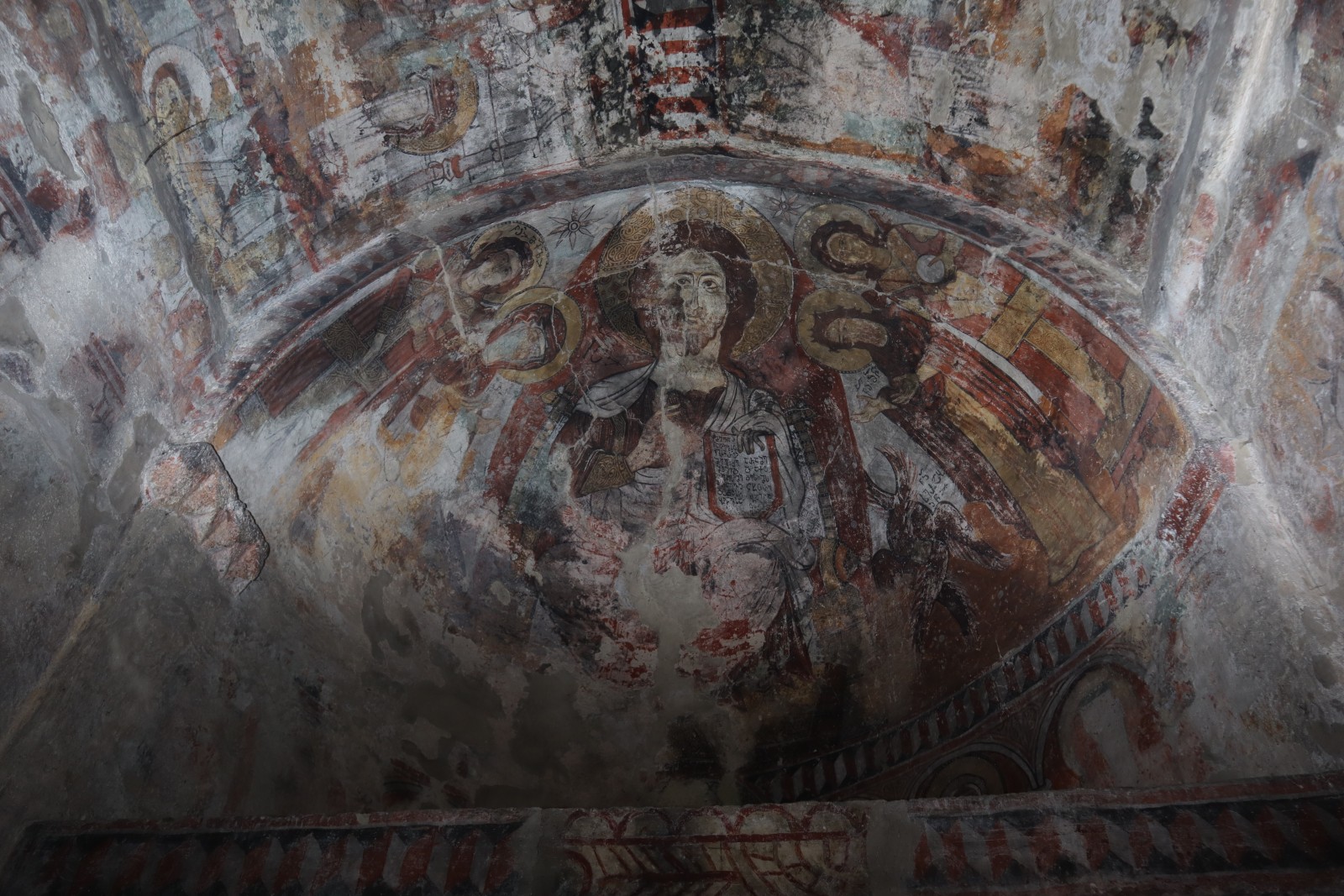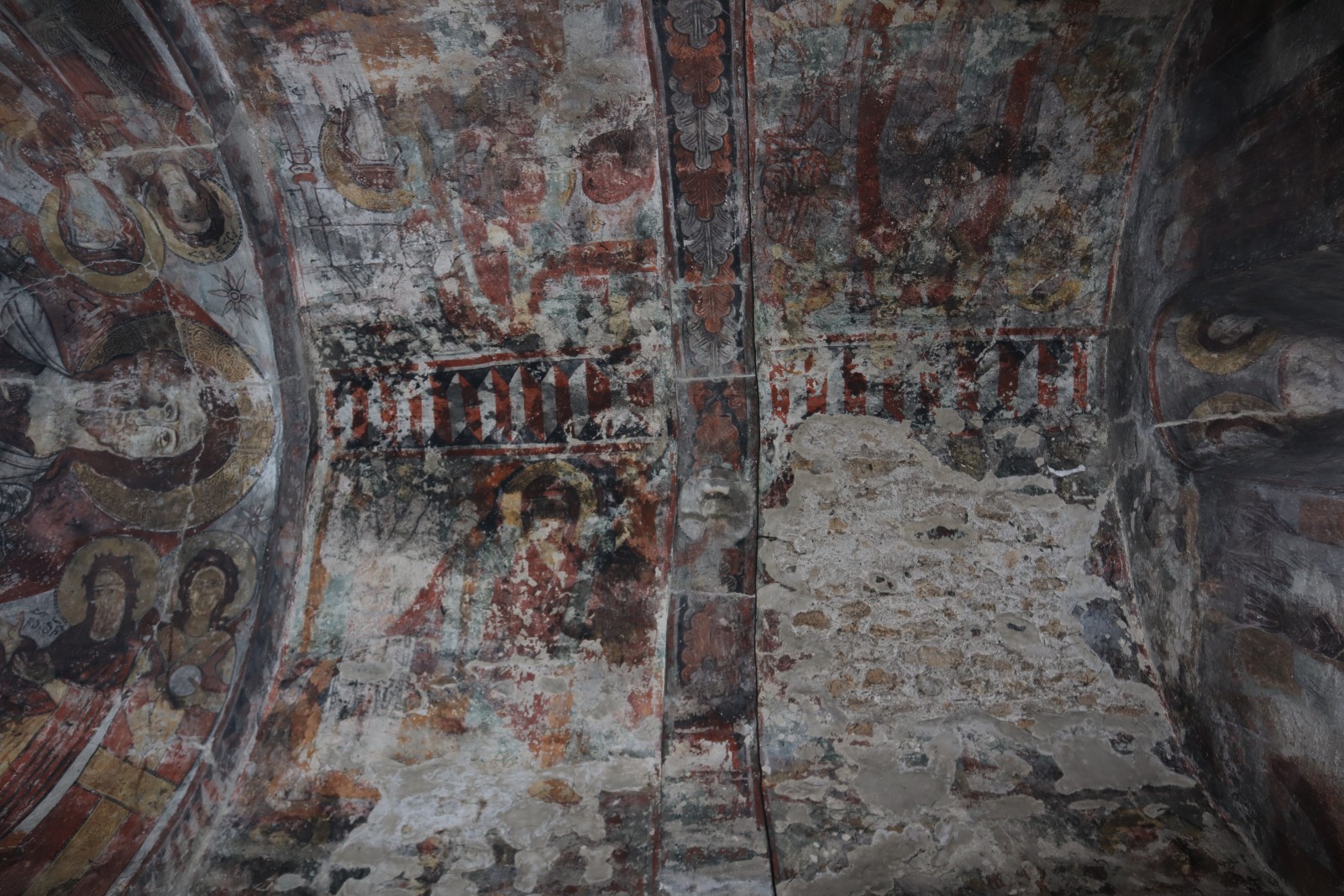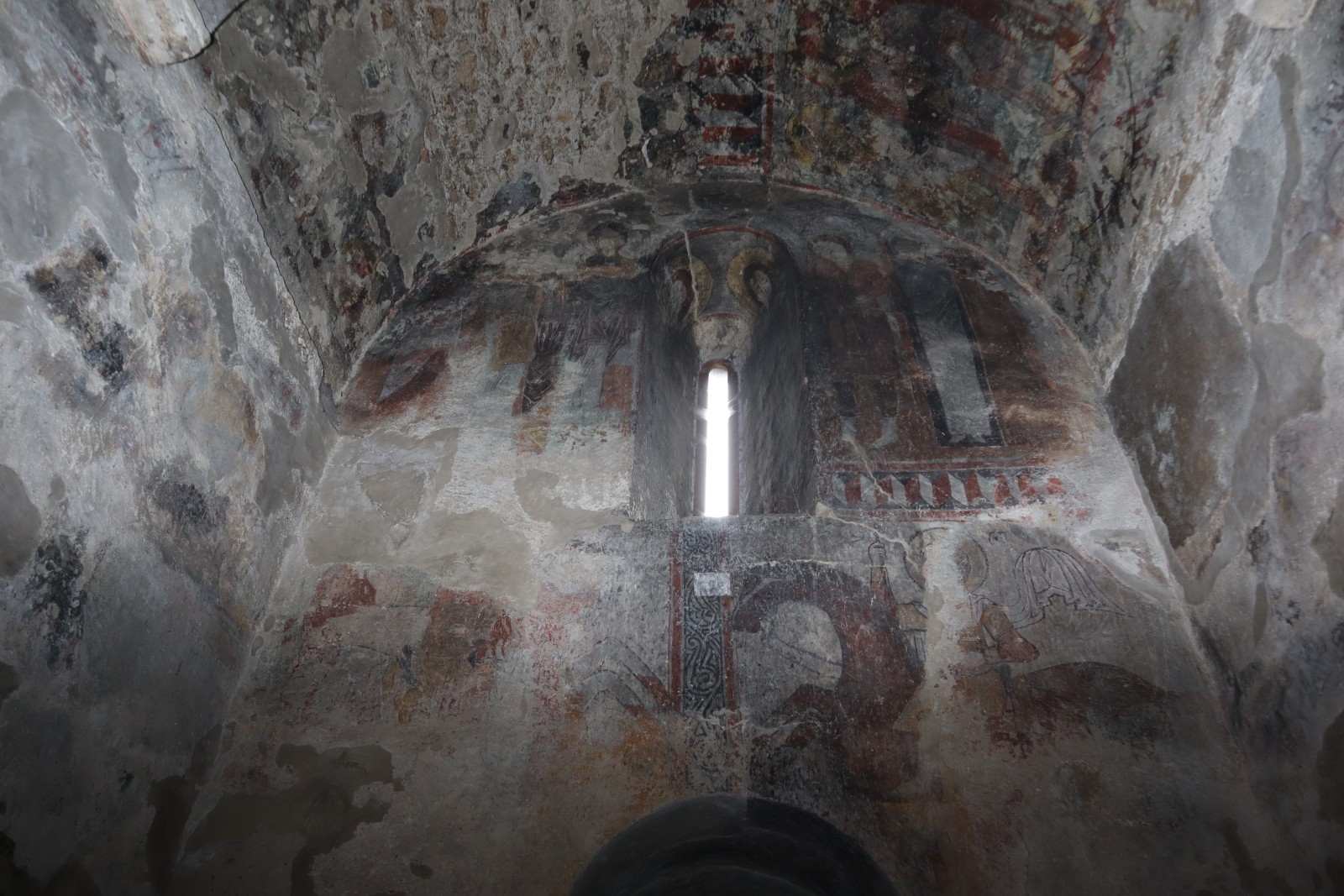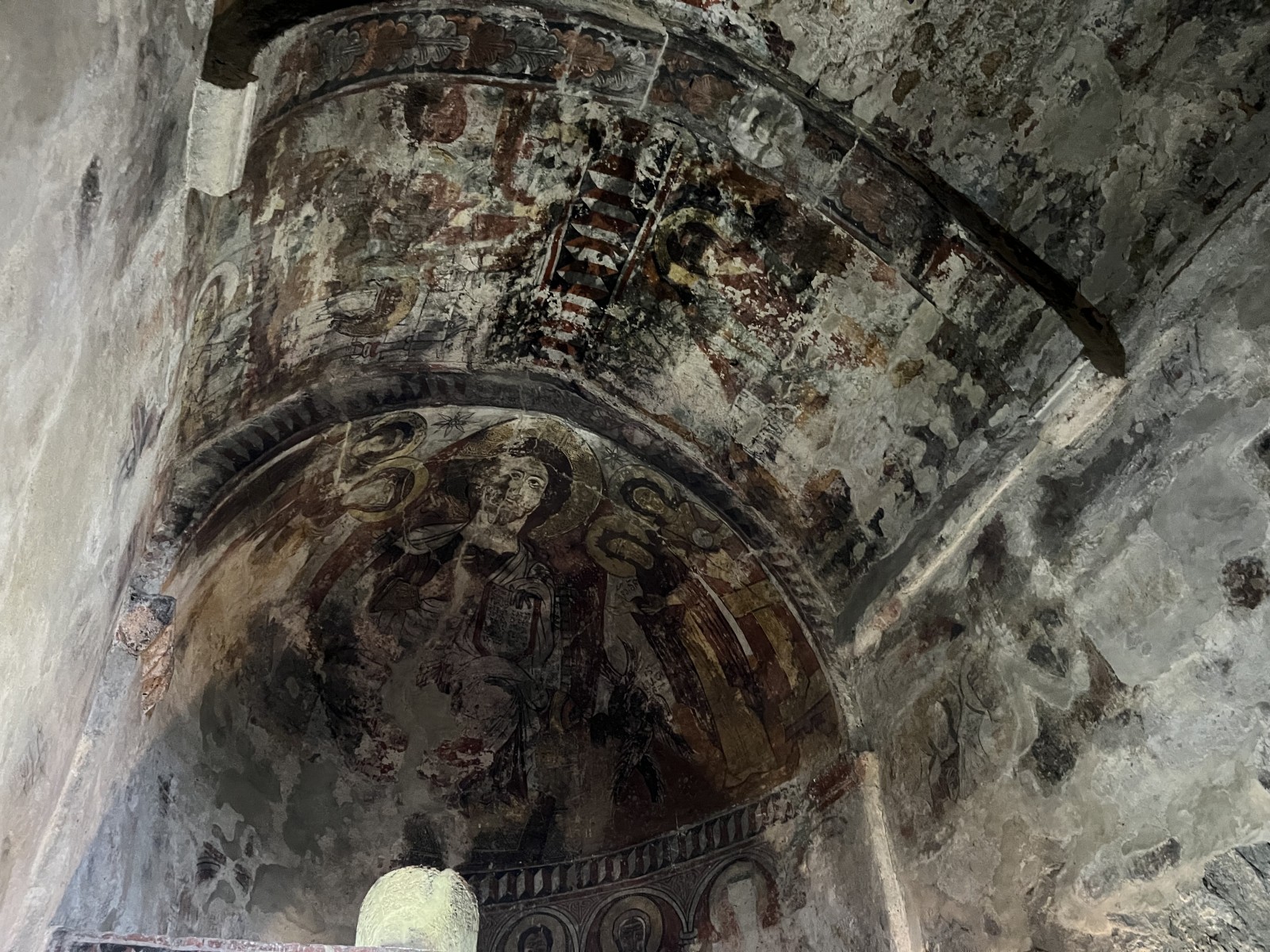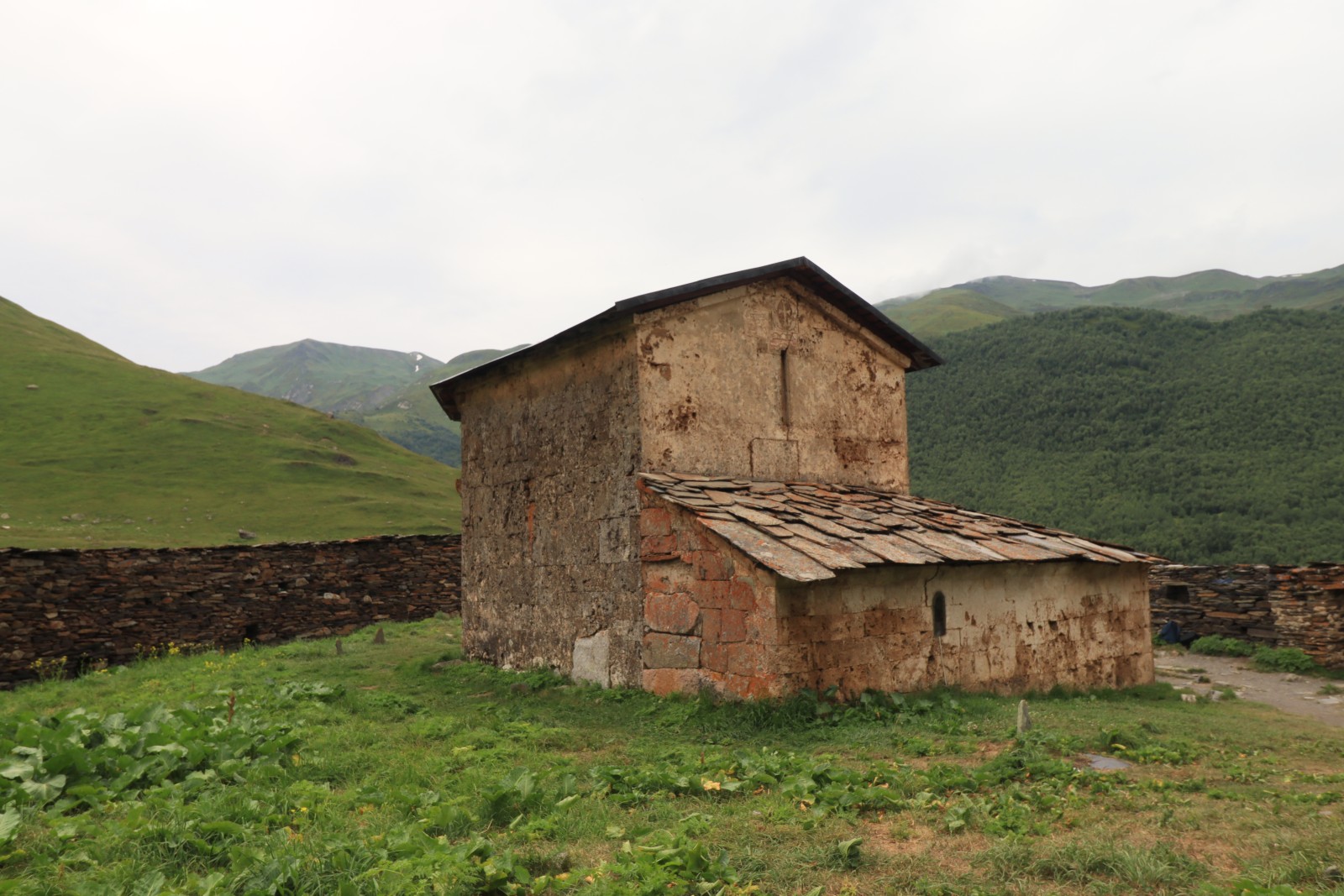
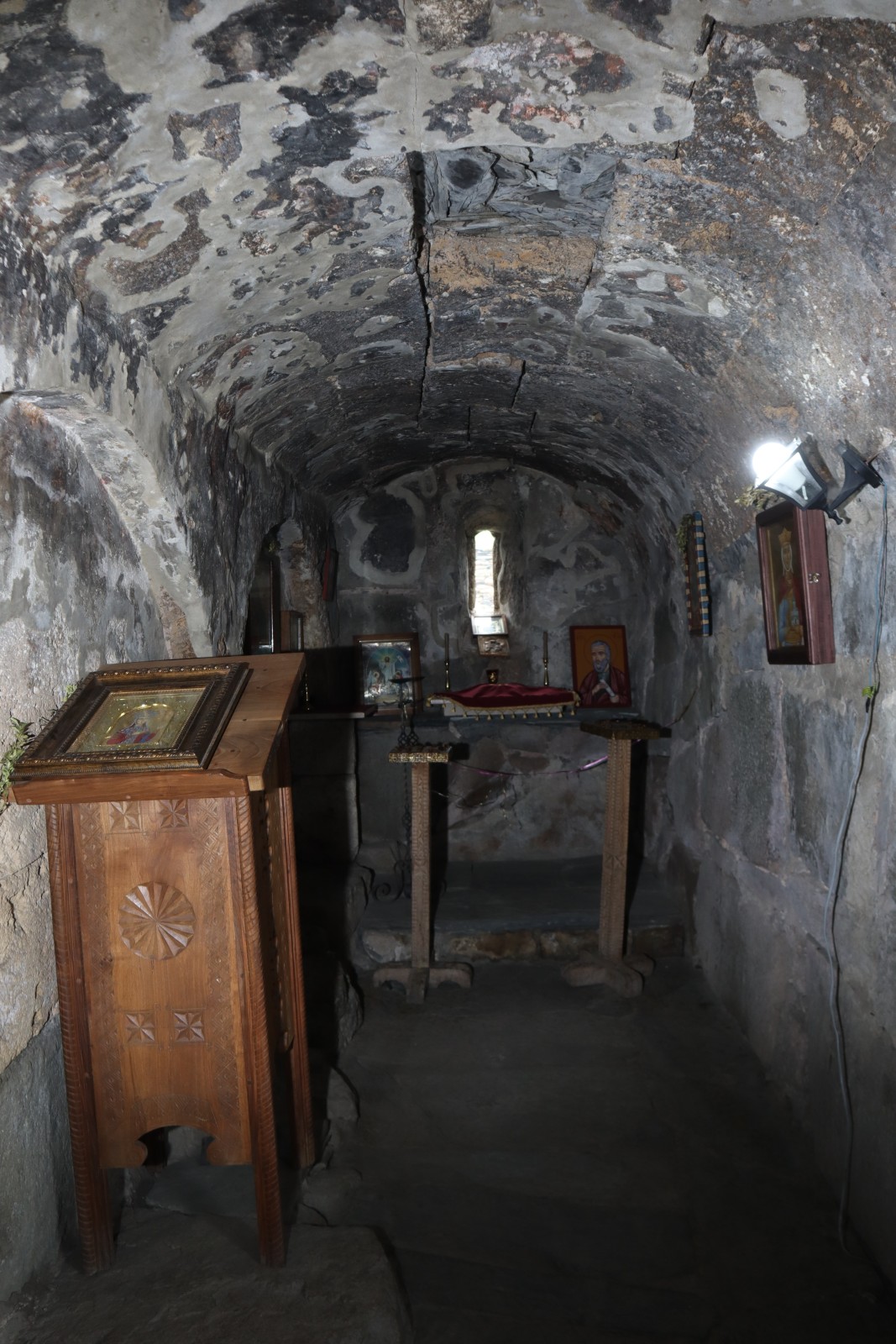
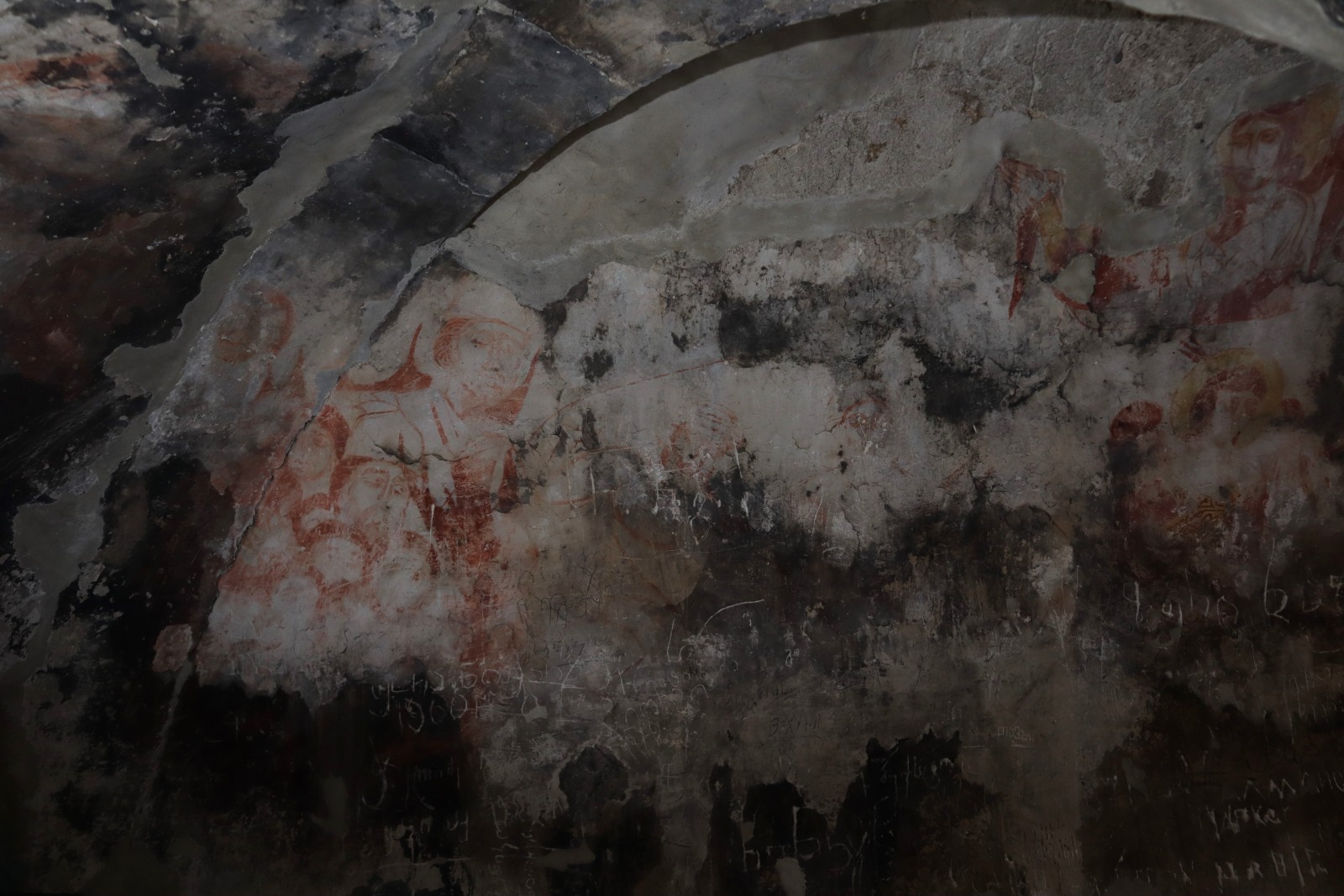
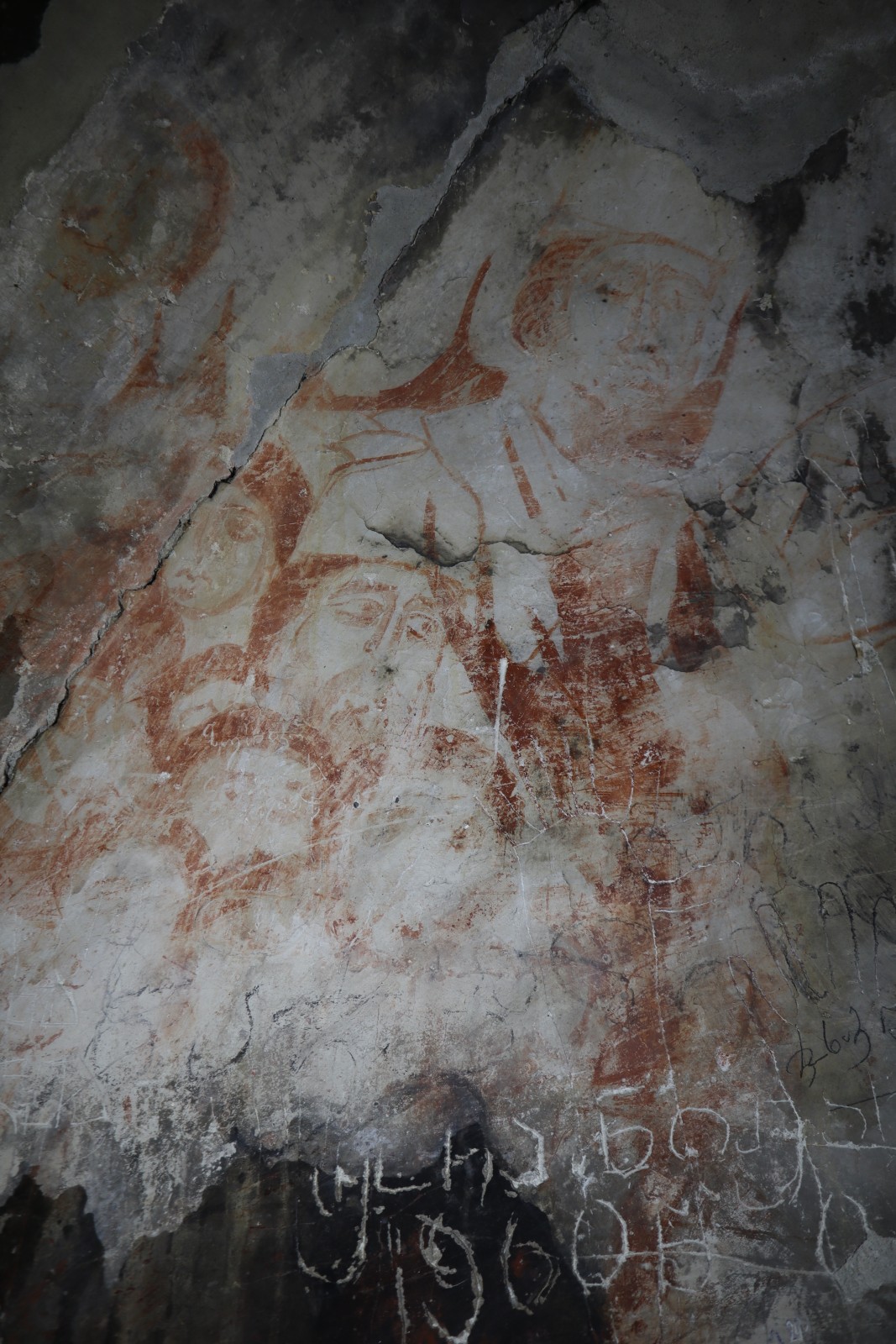
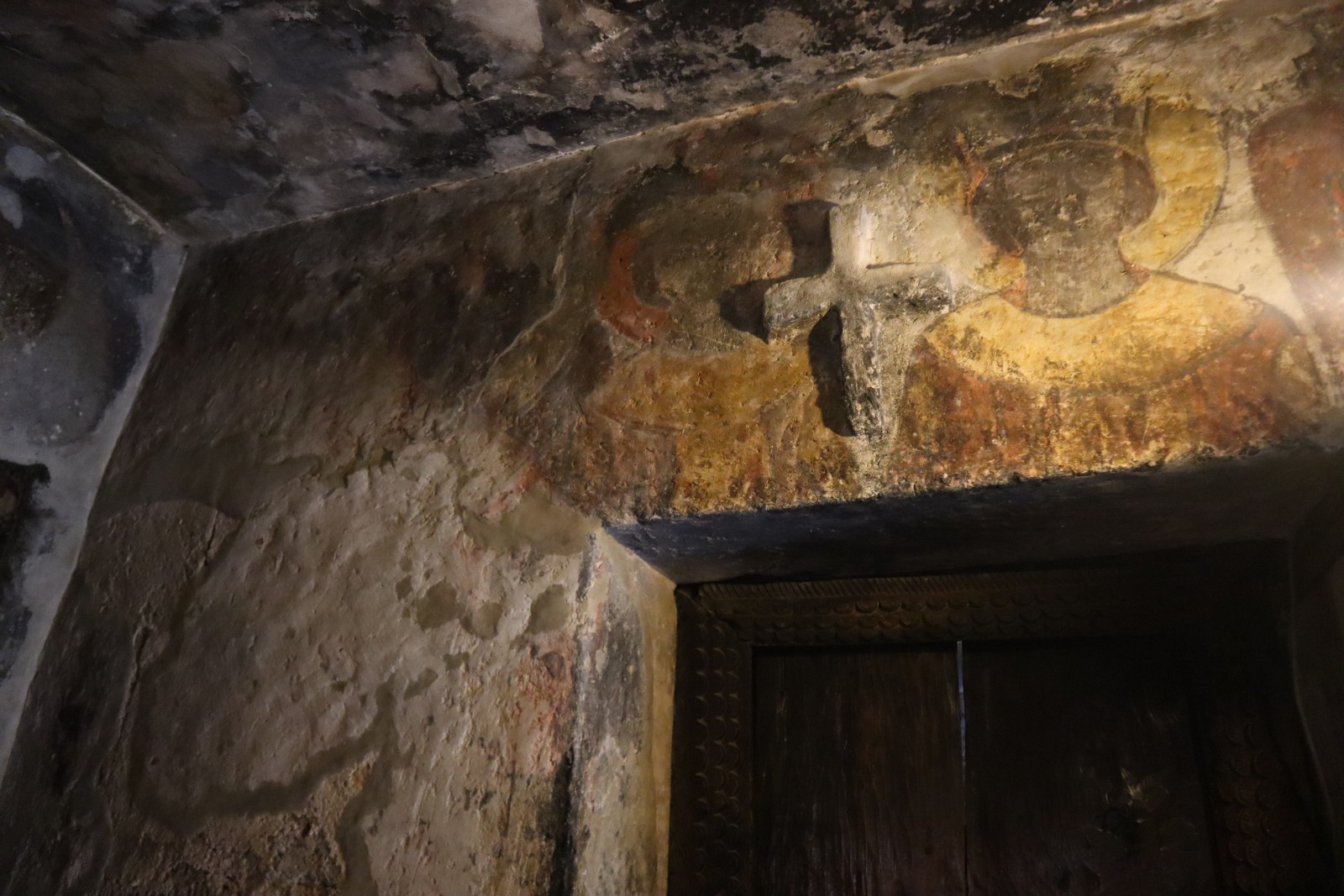
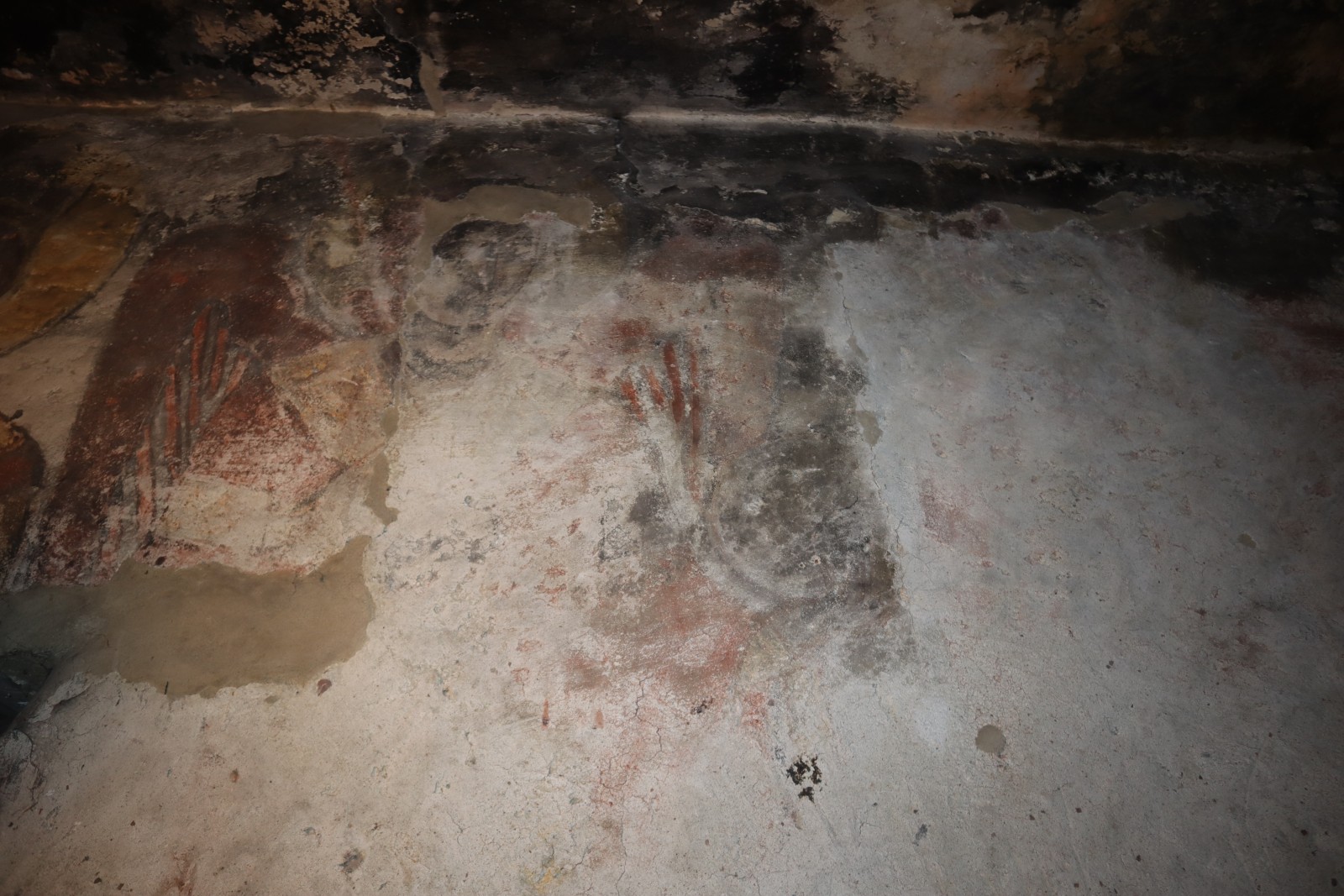
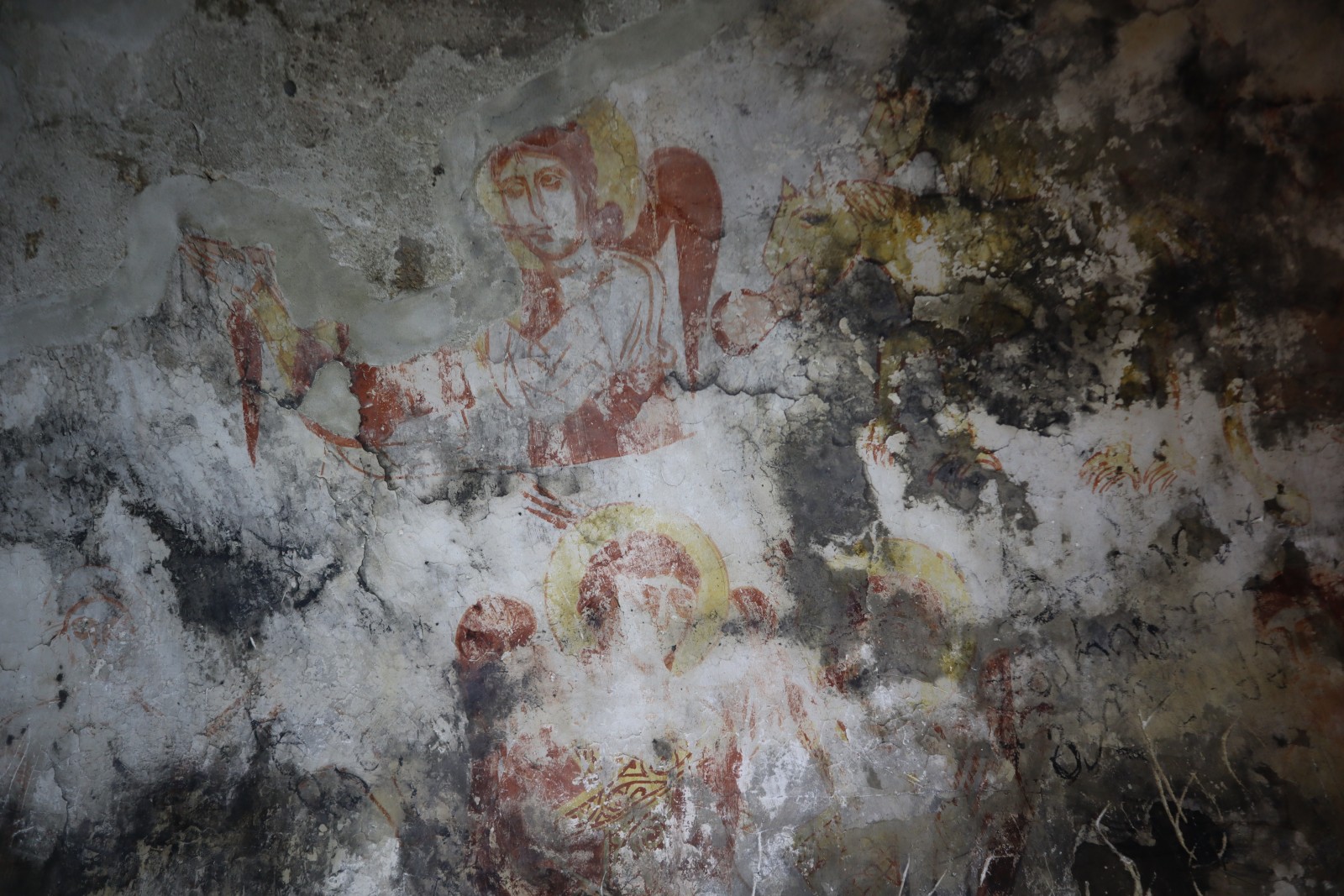
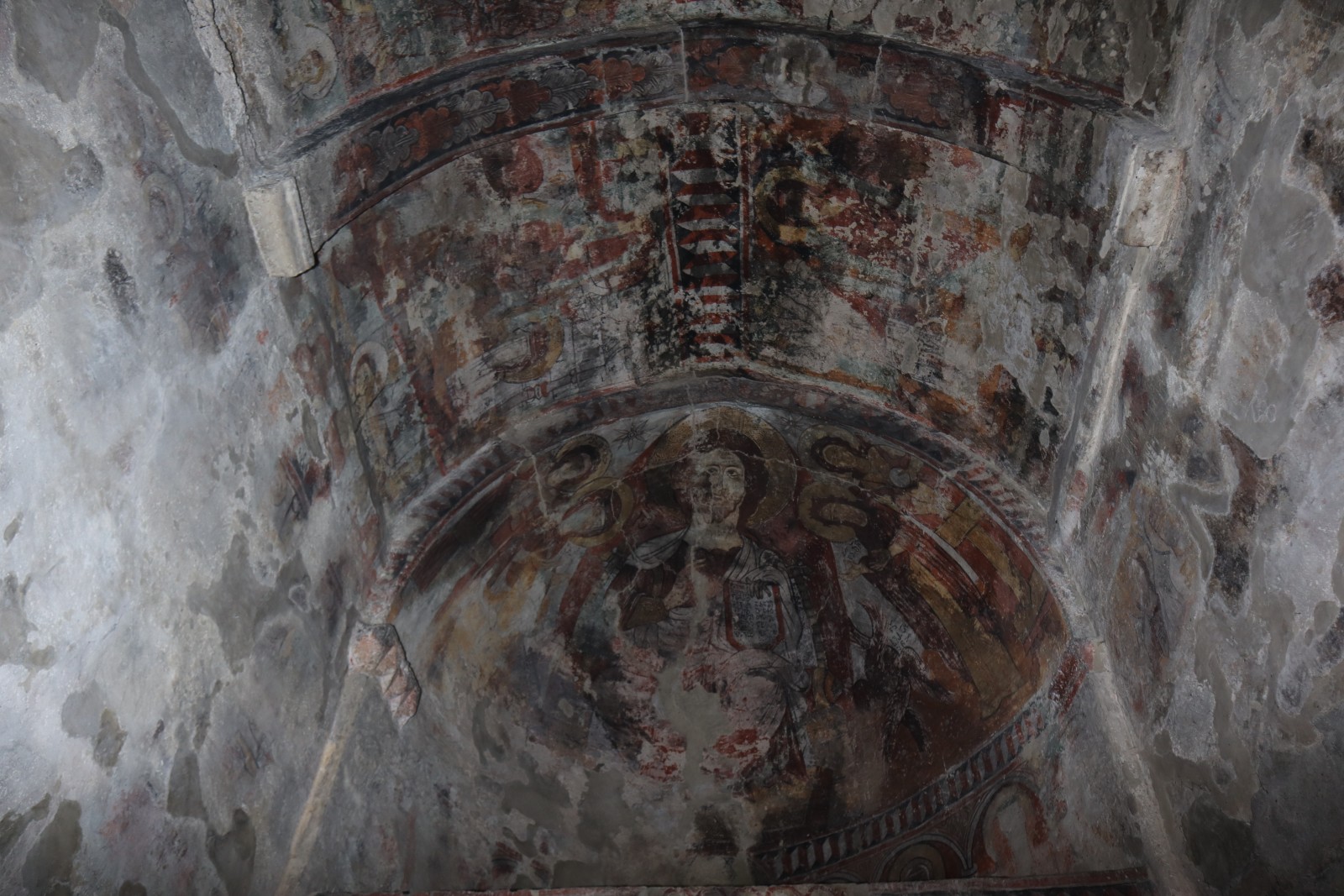
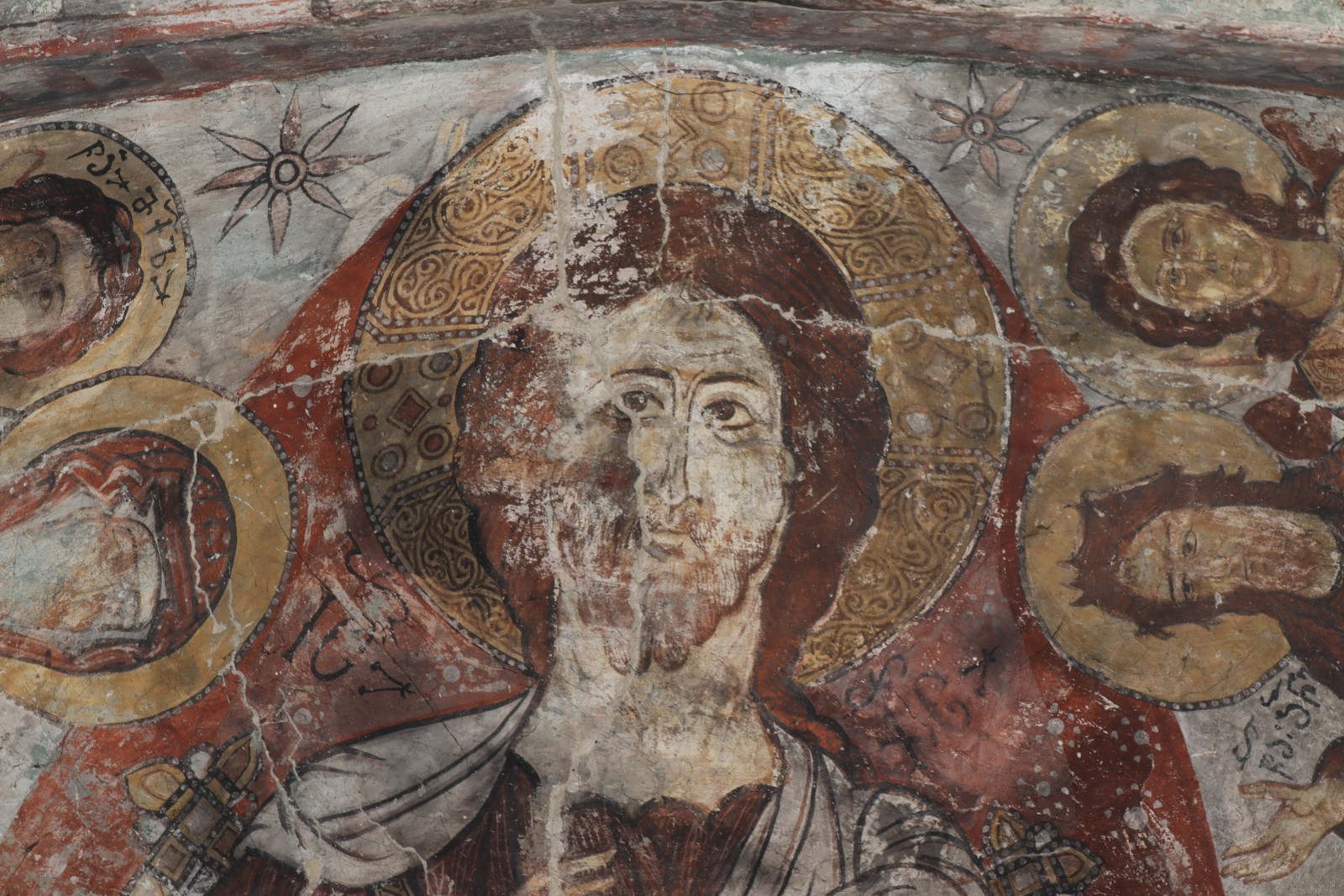
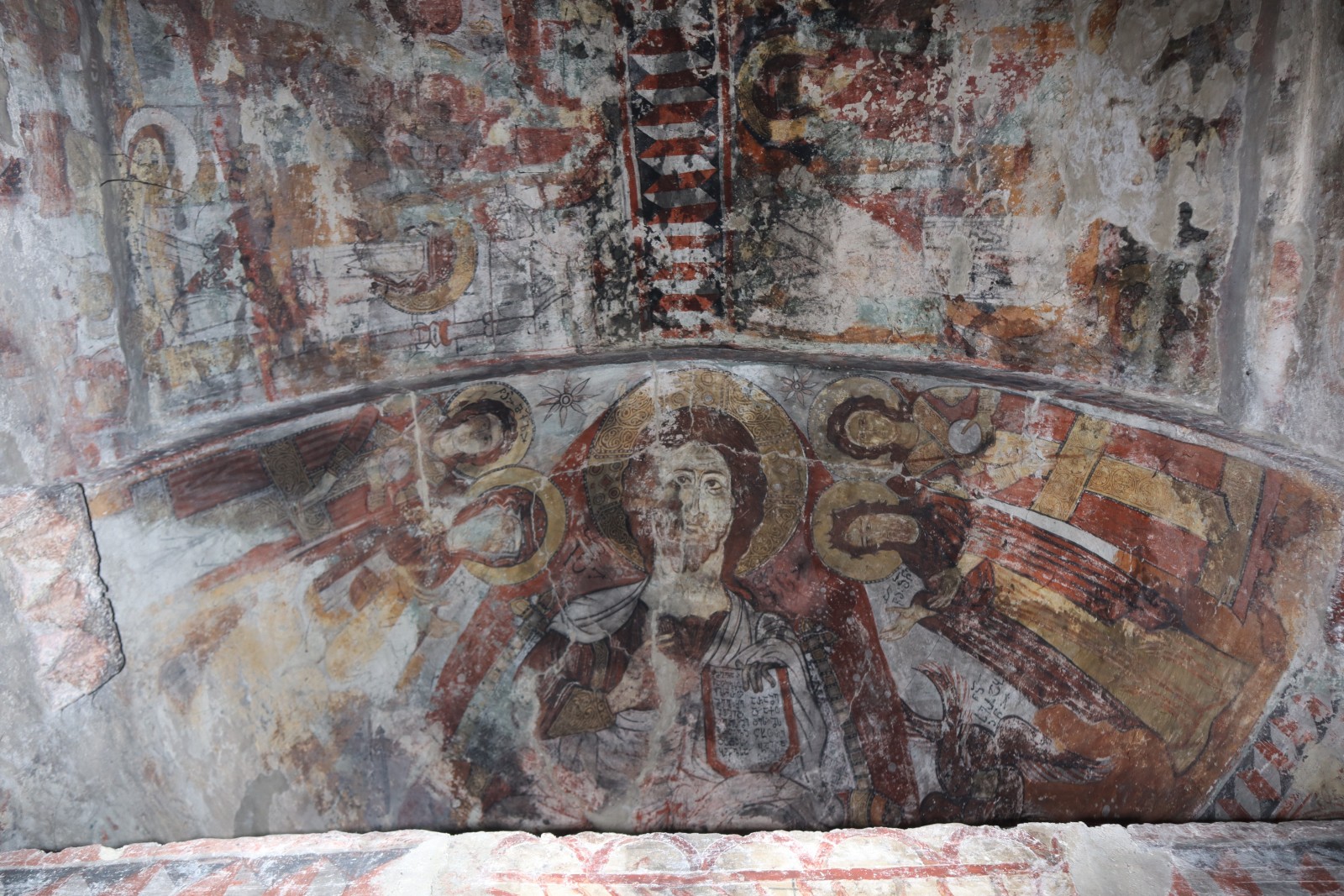
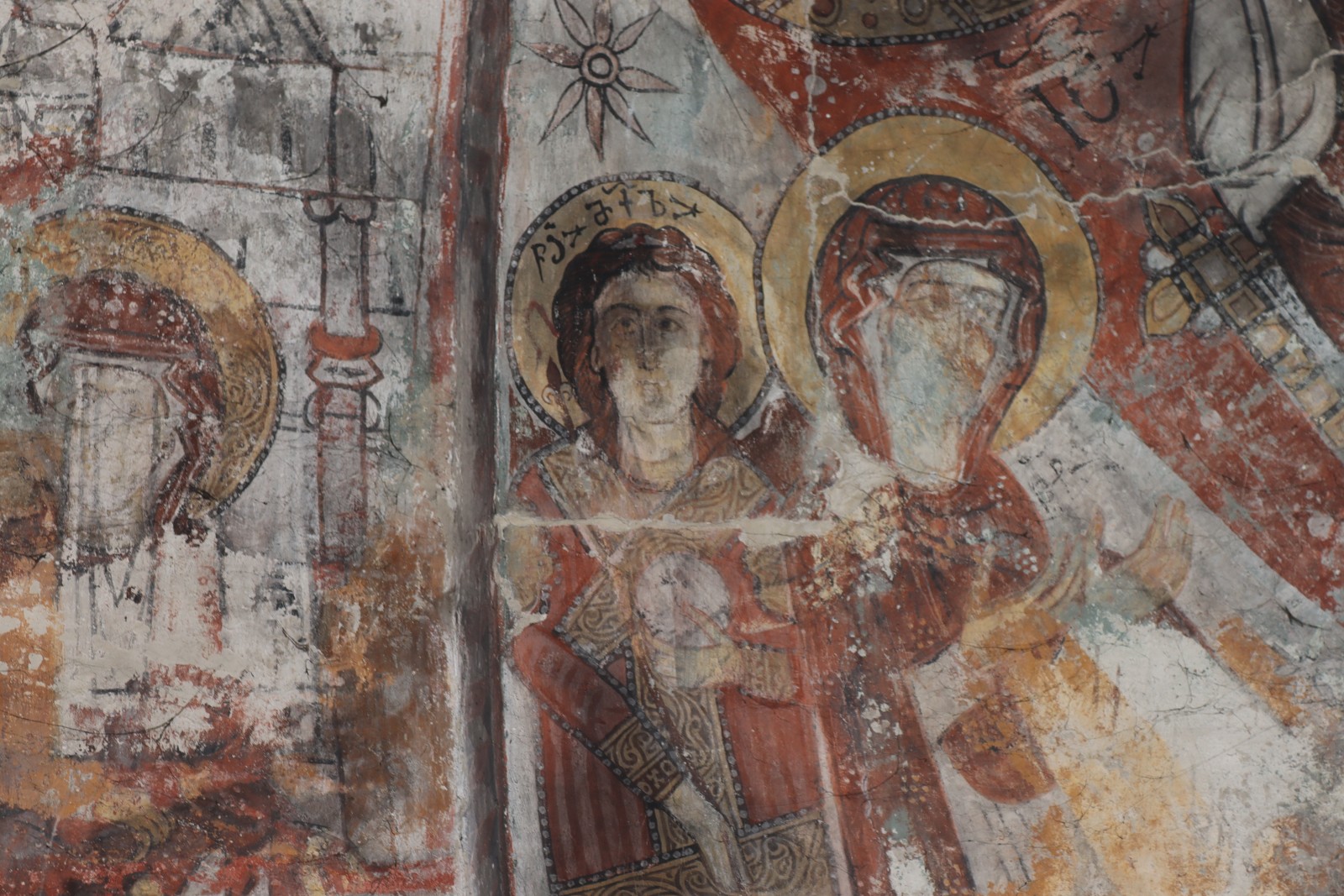
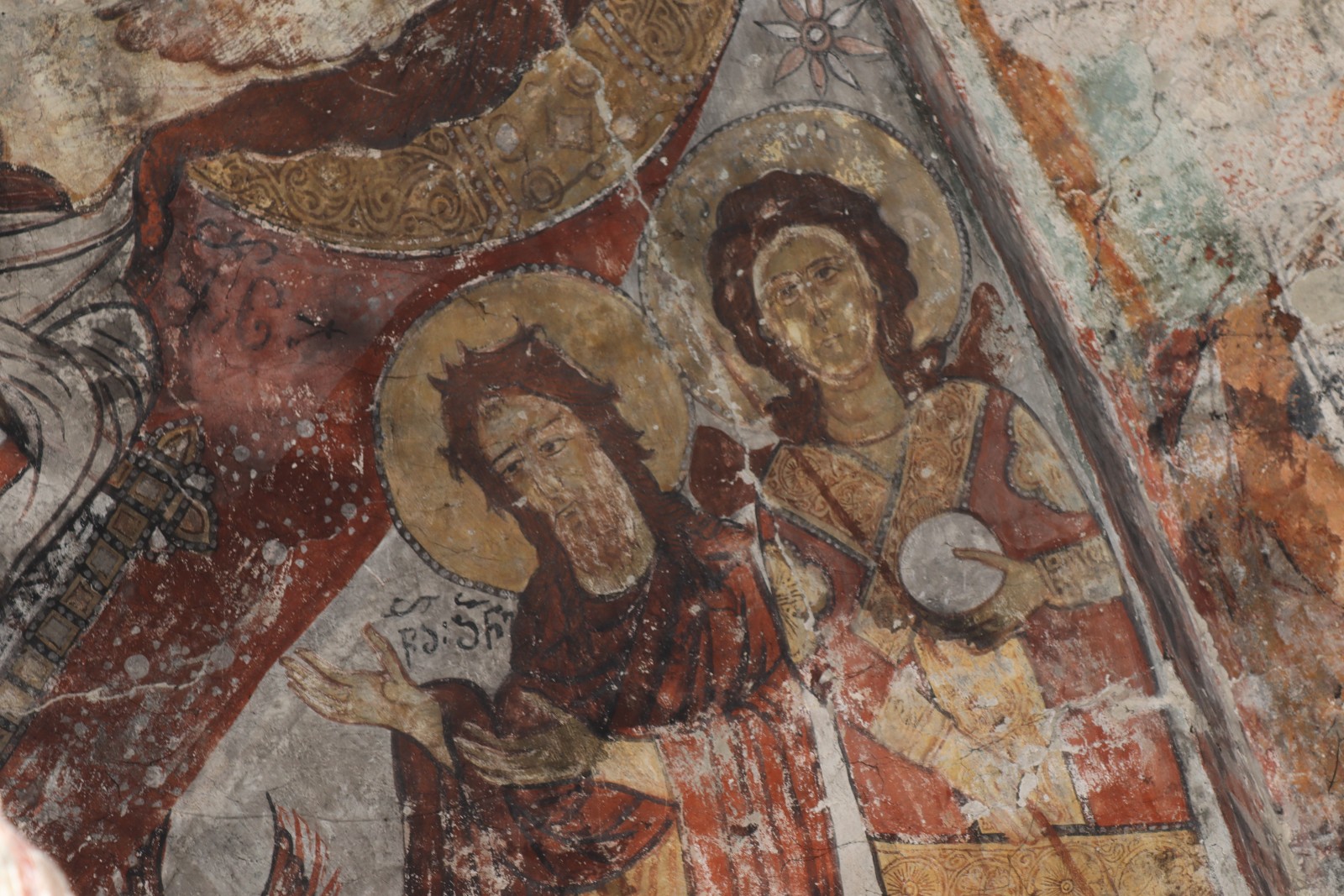
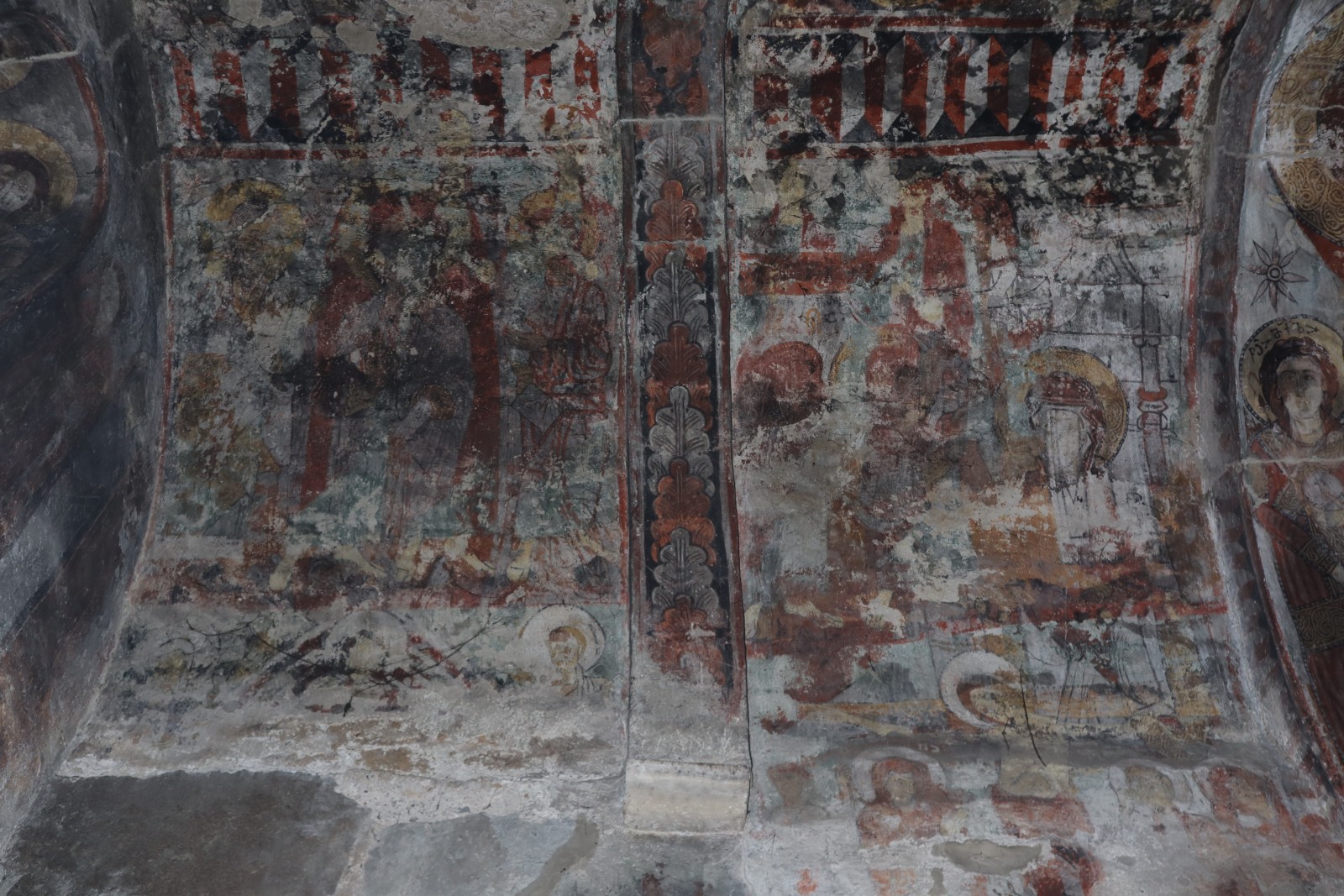

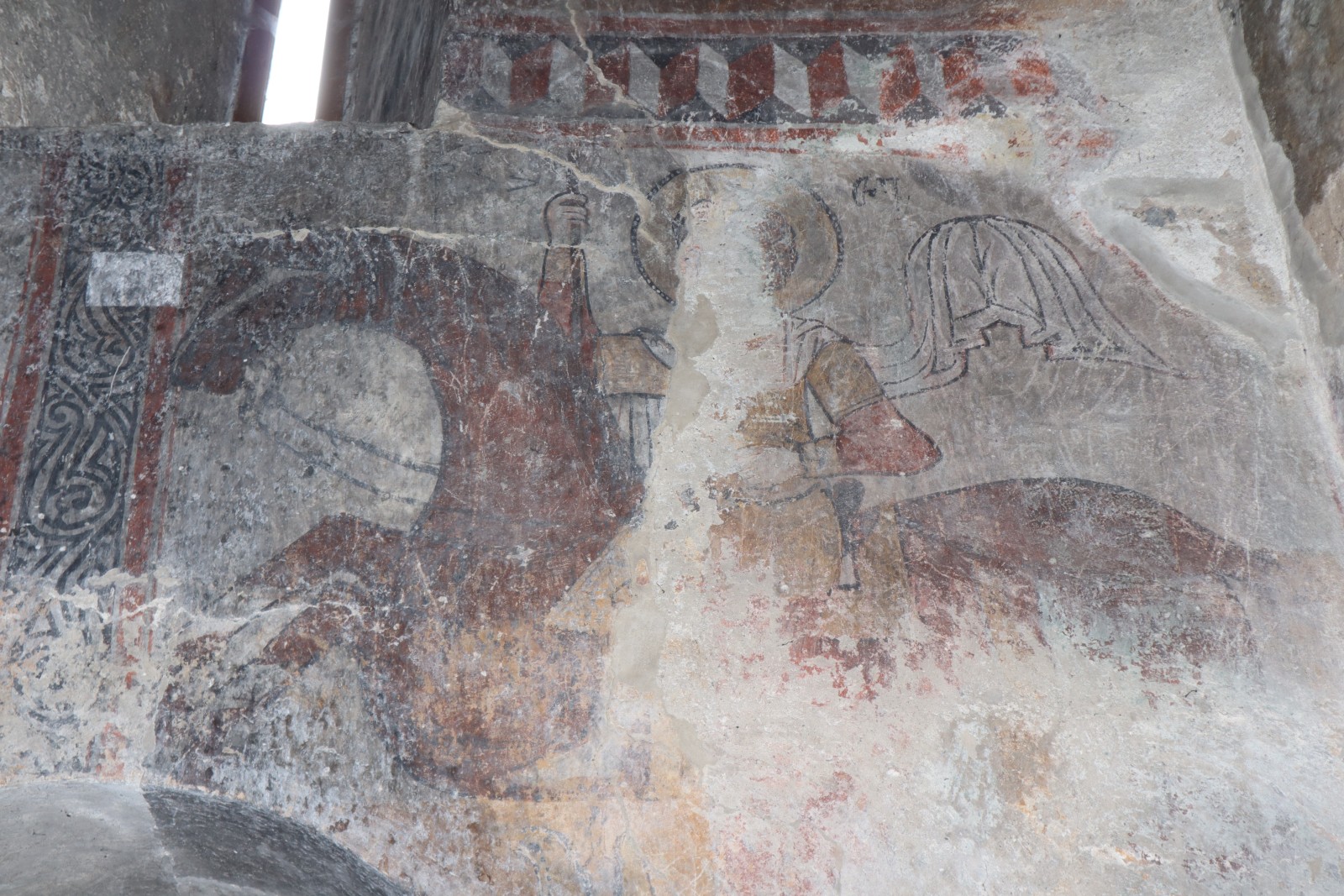
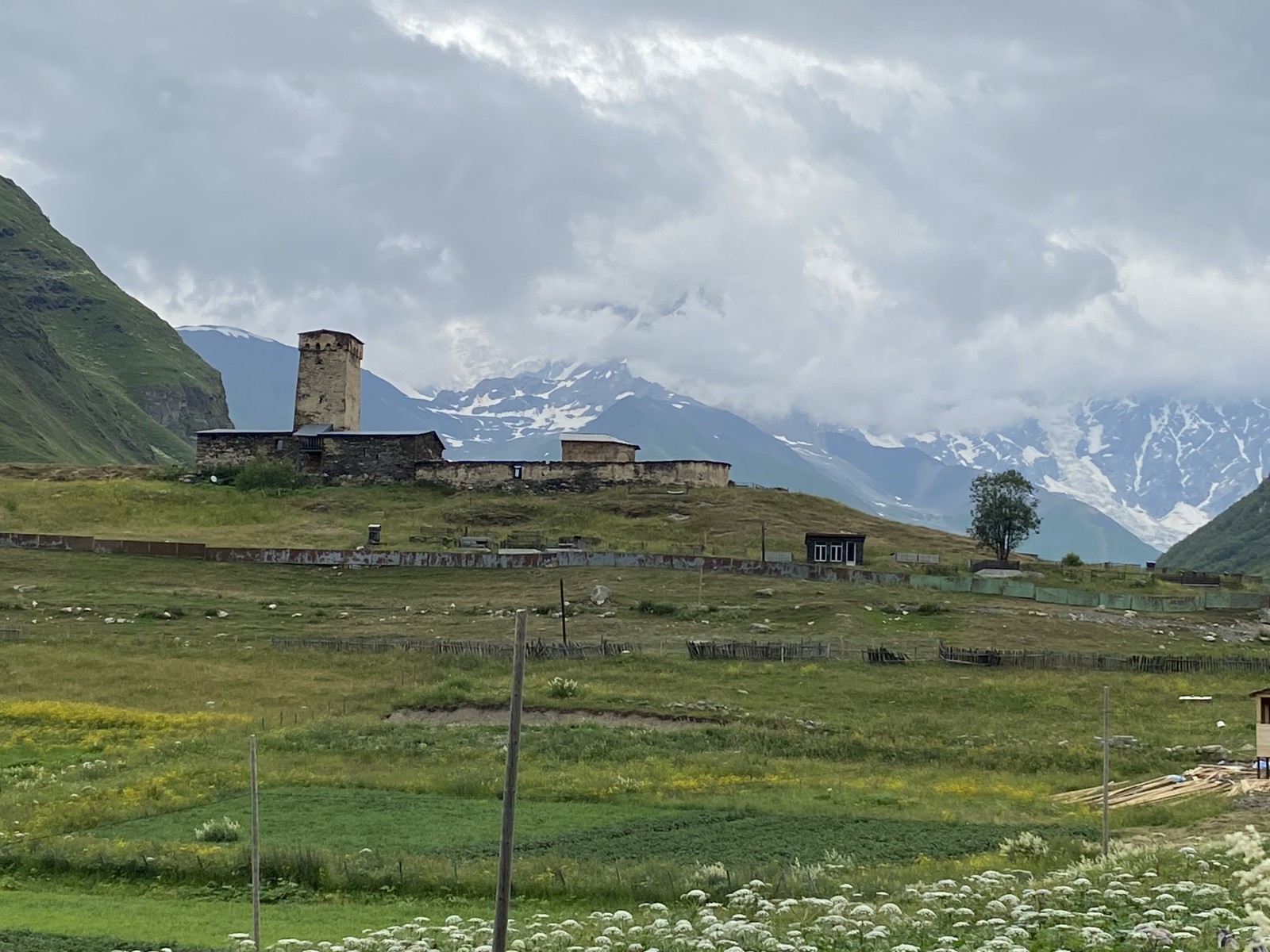
This is a large single nave church with an ambulatory on two sides (south and west), located above the village of Zhibiani in the Ushguli community. Built in the 10th century, the church is remarkable for its architectural forms and the decoration of its eastern façade. The interior is adorned with murals from different periods, the first layer dates back to the 10th century, while the second layer (including the interior of the ambulatory) belongs to the 13th century.
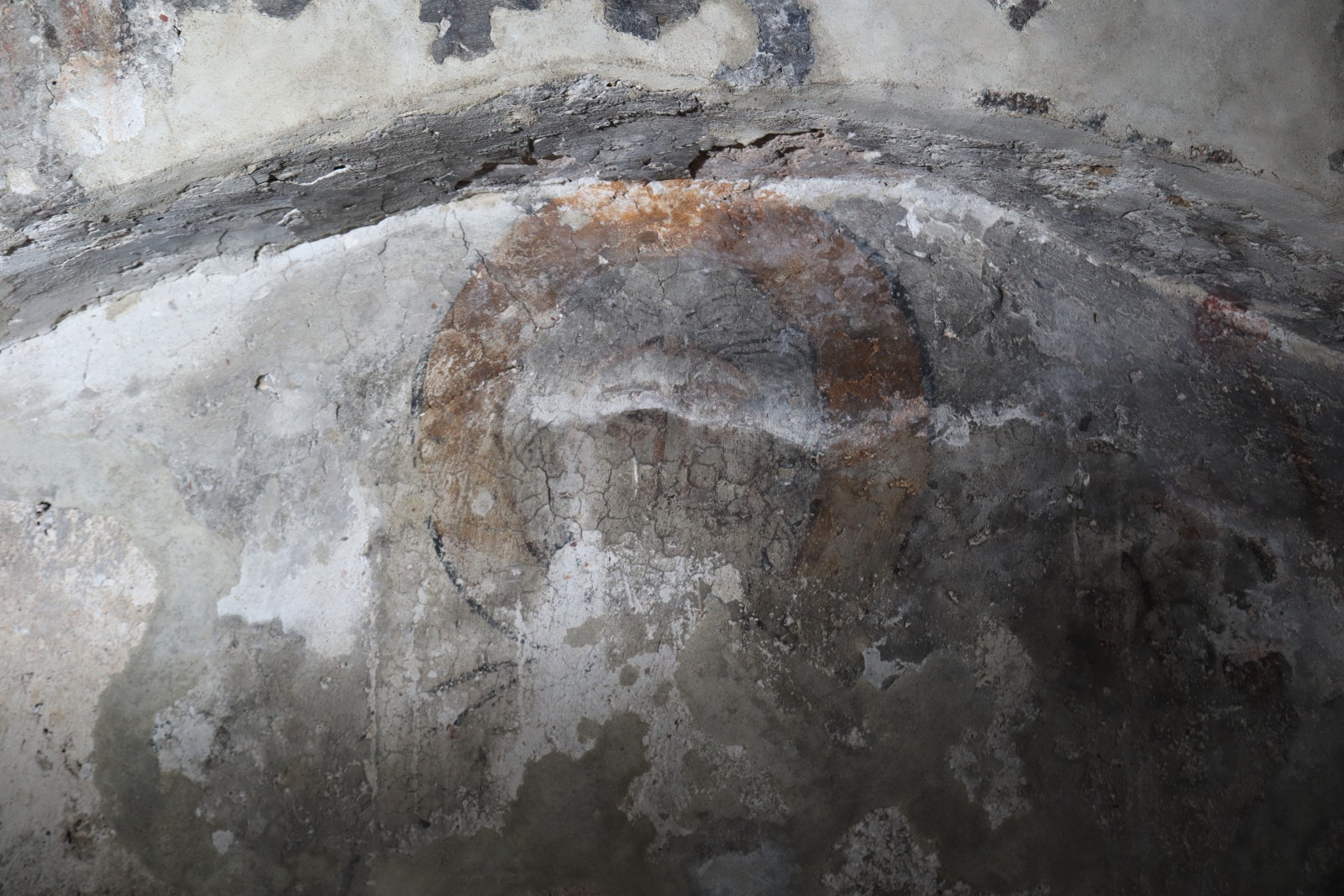
The first layer murals in Zhibiani are among the most important examples of early Svaneti wall painting. It should be noted that, apart from the murals that once fully decorated the interior, a lower layer of contemporary chancel-barrier painting is also preserved - one of the earliest examples of chancel-barrier painted decorations in Svaneti.
Similar to the chancel-barrier painting, the church’s initial murals have reached us in a heavily damaged and fragmentary state. Nonetheless, the preserved portions provide valuable insight into the creative strivings discernible on the initial stage of development of Svaneti school and artistic objectives and approaches of the painters. Especially noteworthy are the expressiveness of the figures, their emotional impact, the bright color, gamut and the general decorativeness typical of the period - evident, for instance, in the way “pearls” adorn not only the halos but also the cross on which Christ is crucified.
The second layer murals are also severely damaged, but in the relatively better-preserved parts (particularly in the sanctuary), one can still discern their artistic merits - such as the peculiar mode of execution of faces and clothing, and the spiritualized expressions of the figures. Murals of the ambulatory are remarkable, since this is the only example in Upper Svaneti mural painting, when entire interior of the ambulatory is adorned with the mural decoration featuring only one scene - the Last Judgement. It should be underlined that depiction of the Last Judgement is quite rare in Svaneti and, judging from the preserved fragments, quite a vast iconographic version of this scene should have been represented in Zhibiani.
| Location | The church is located at the outskirts of the village Zhibiani set on the hill, dominating over Ushguli settlement. |
| The Key Holder | The Church is open during the day-time |