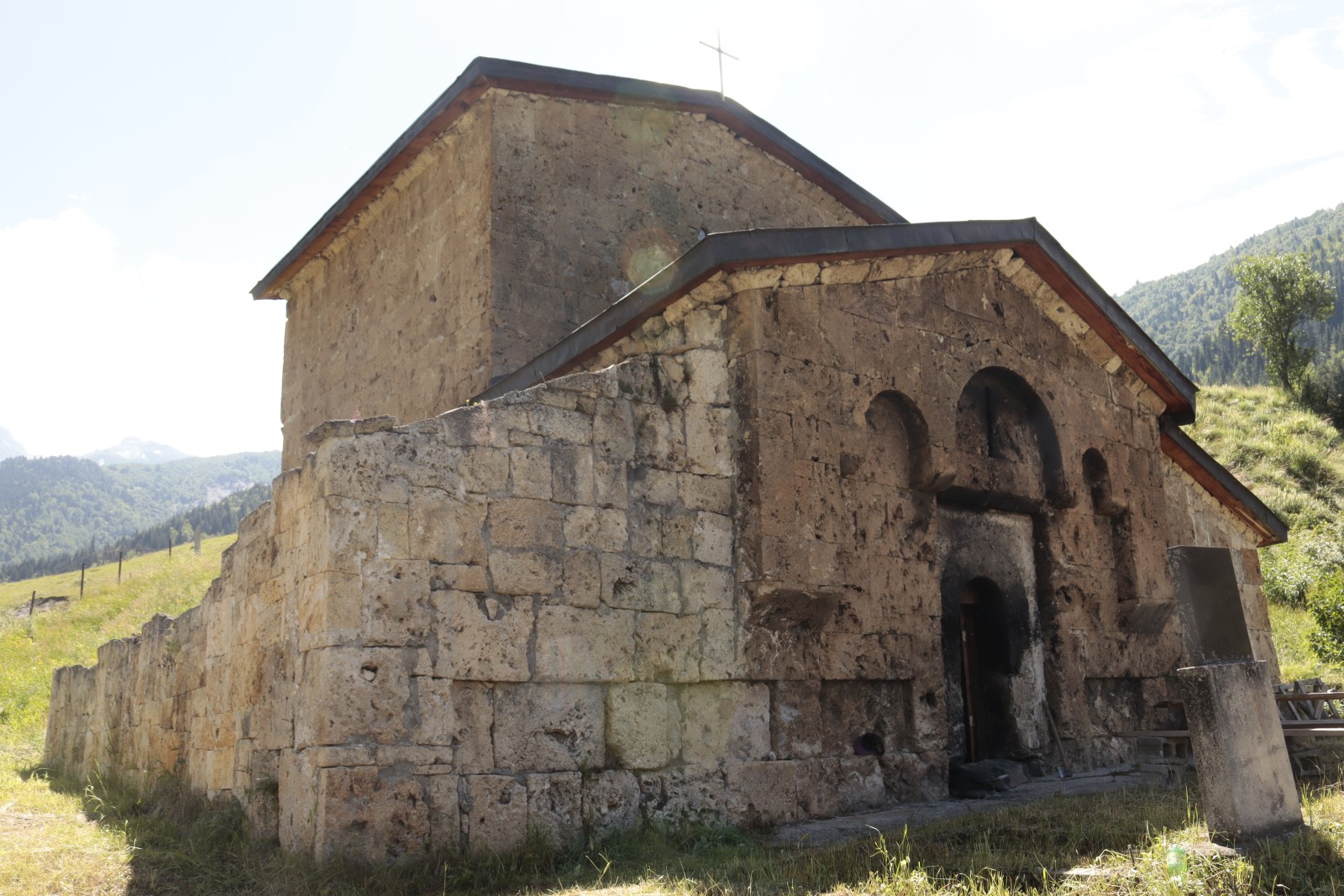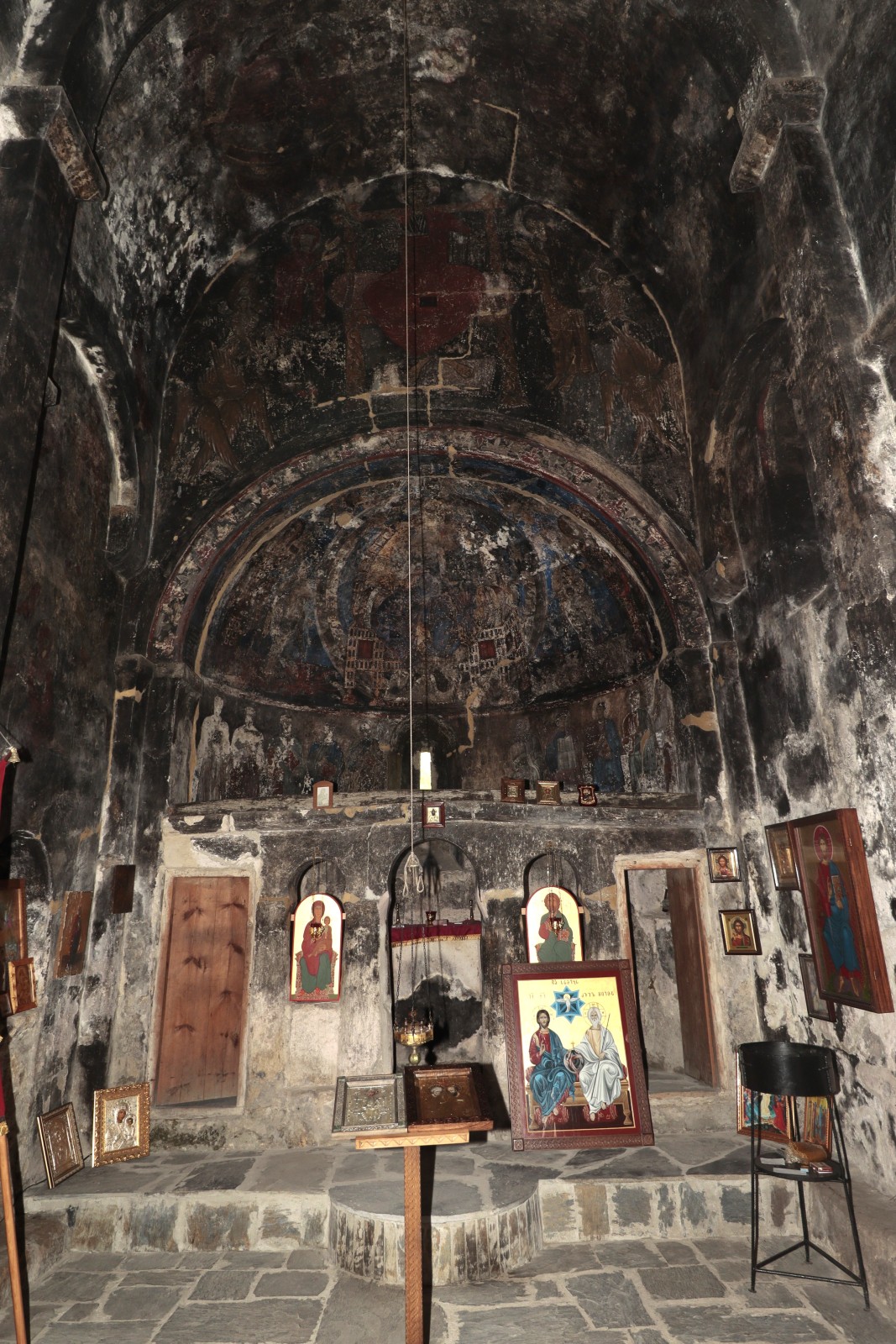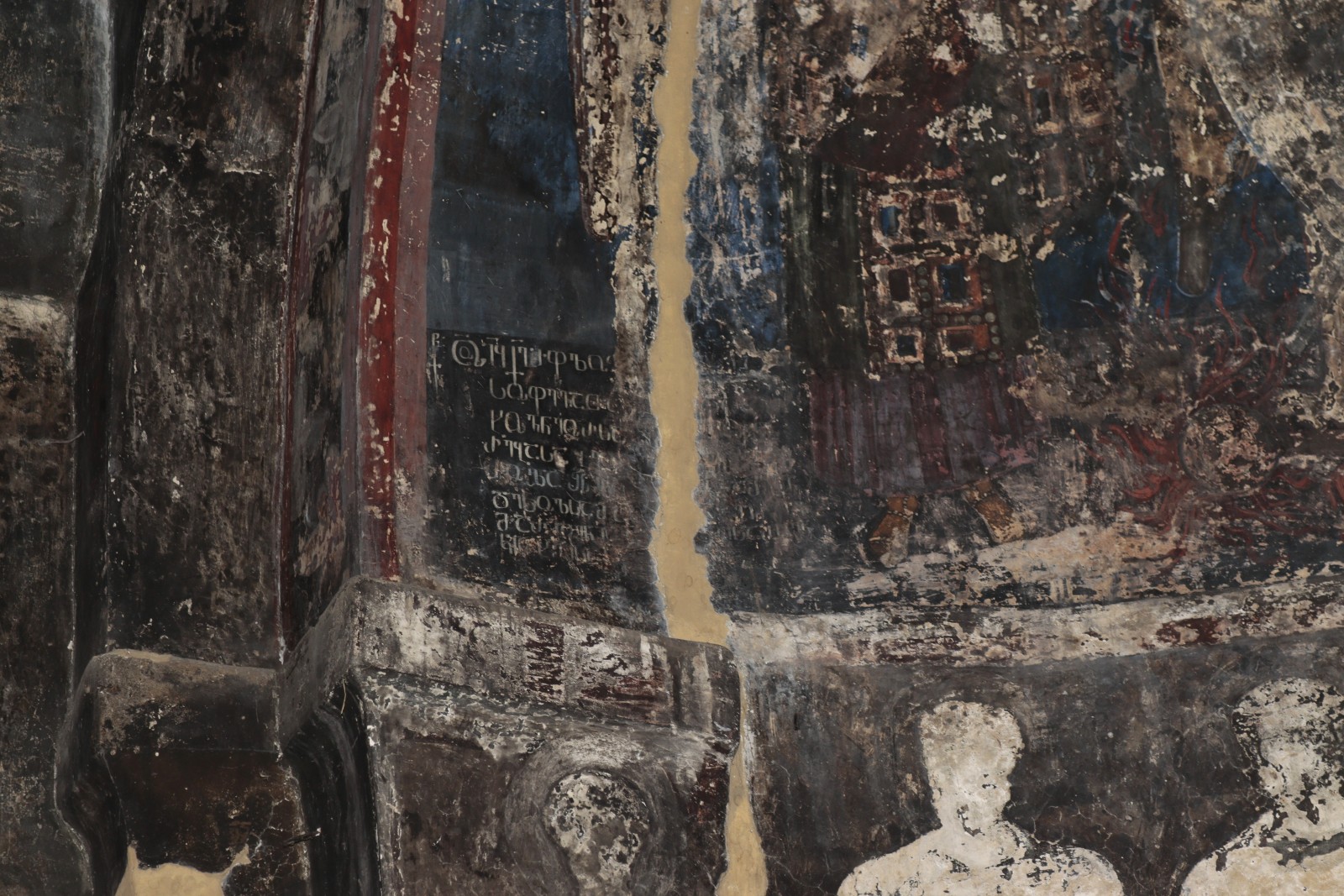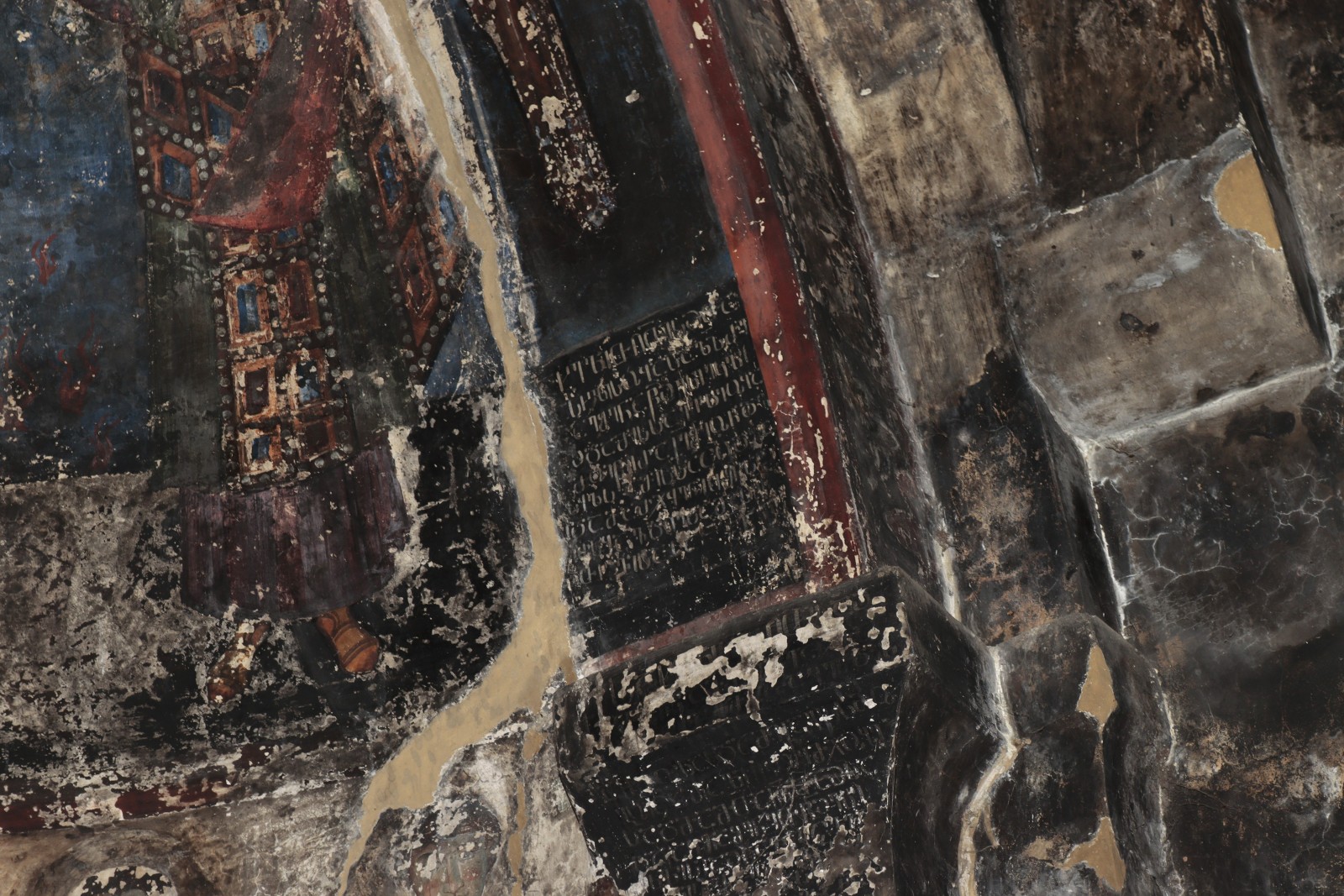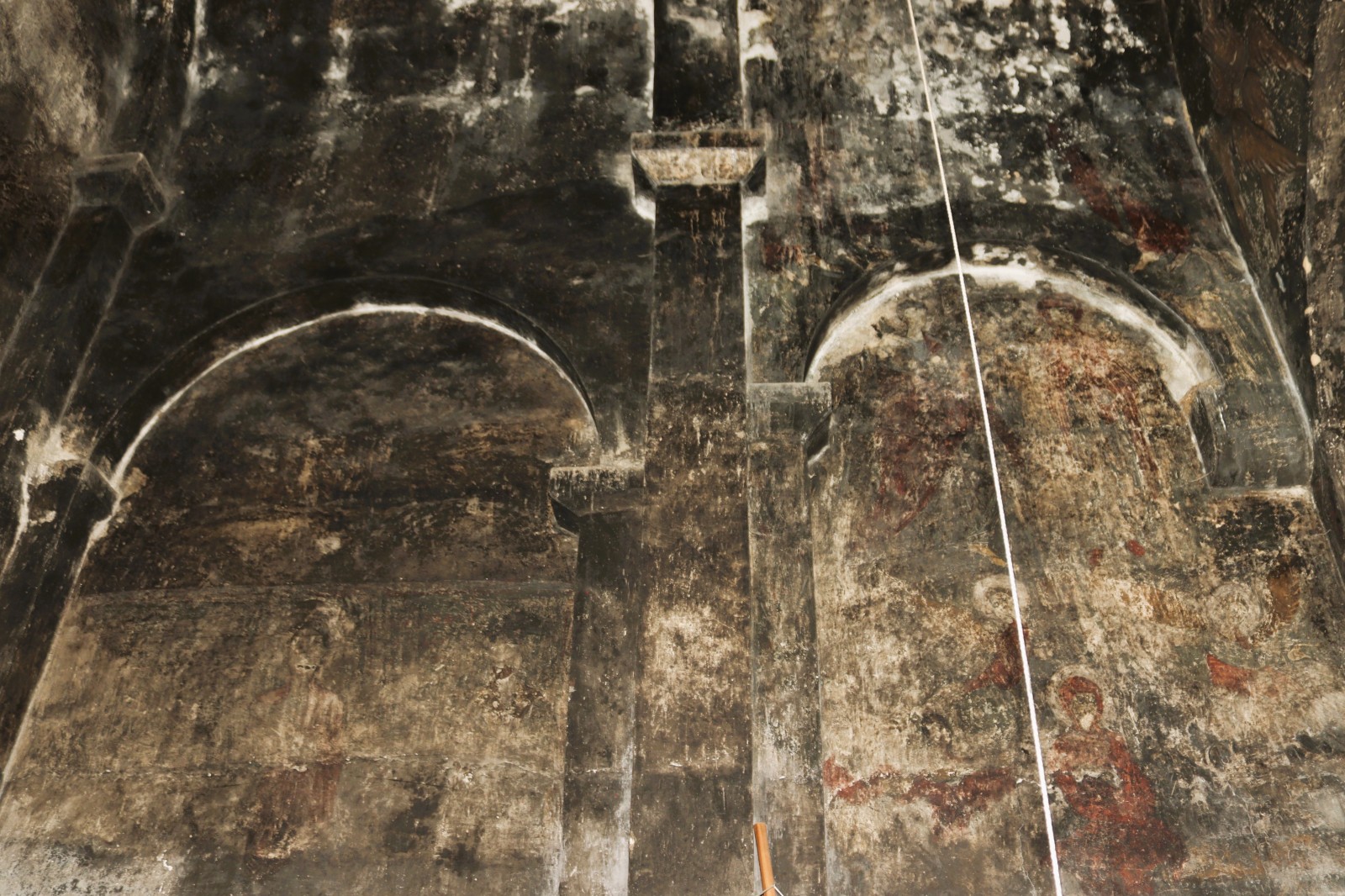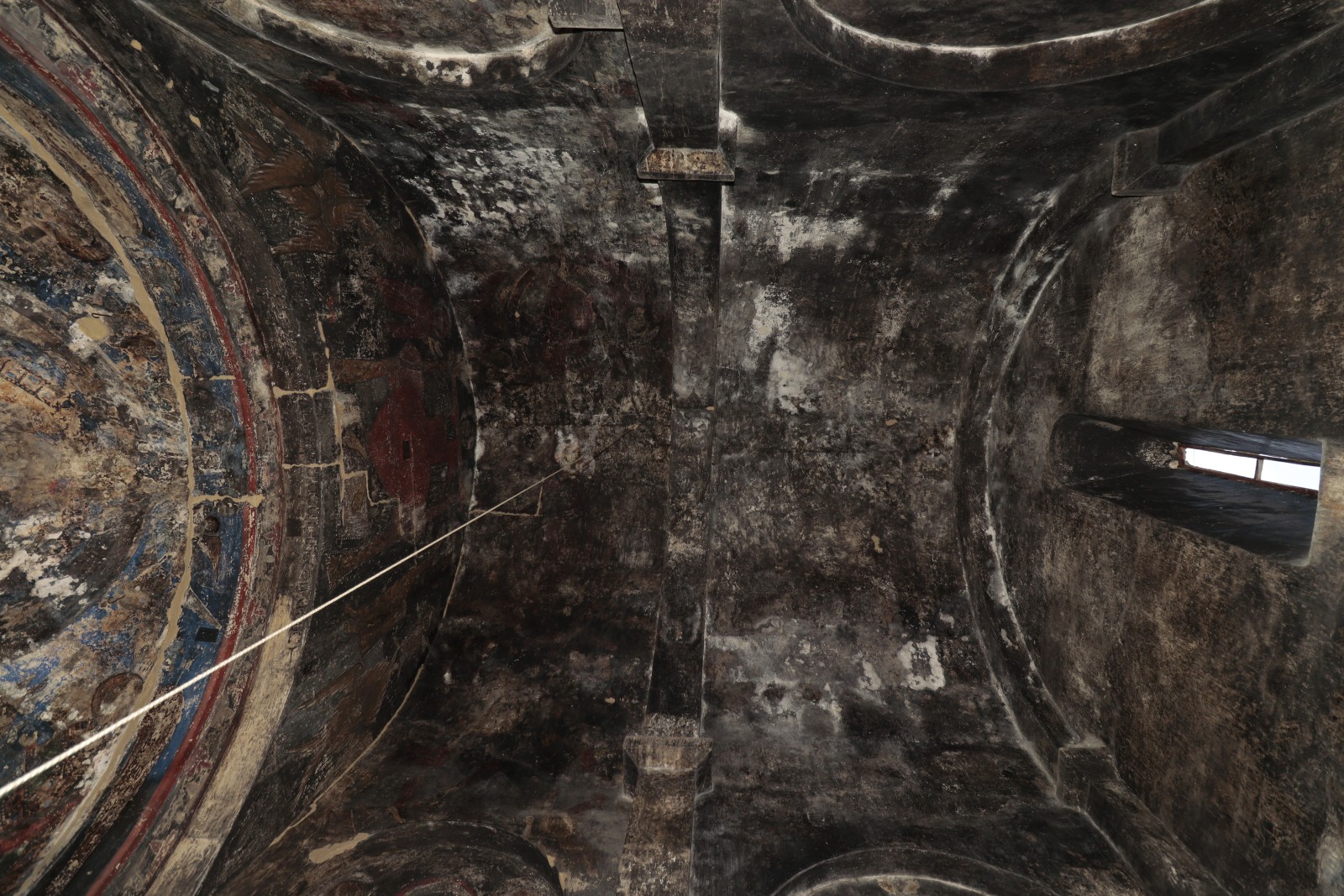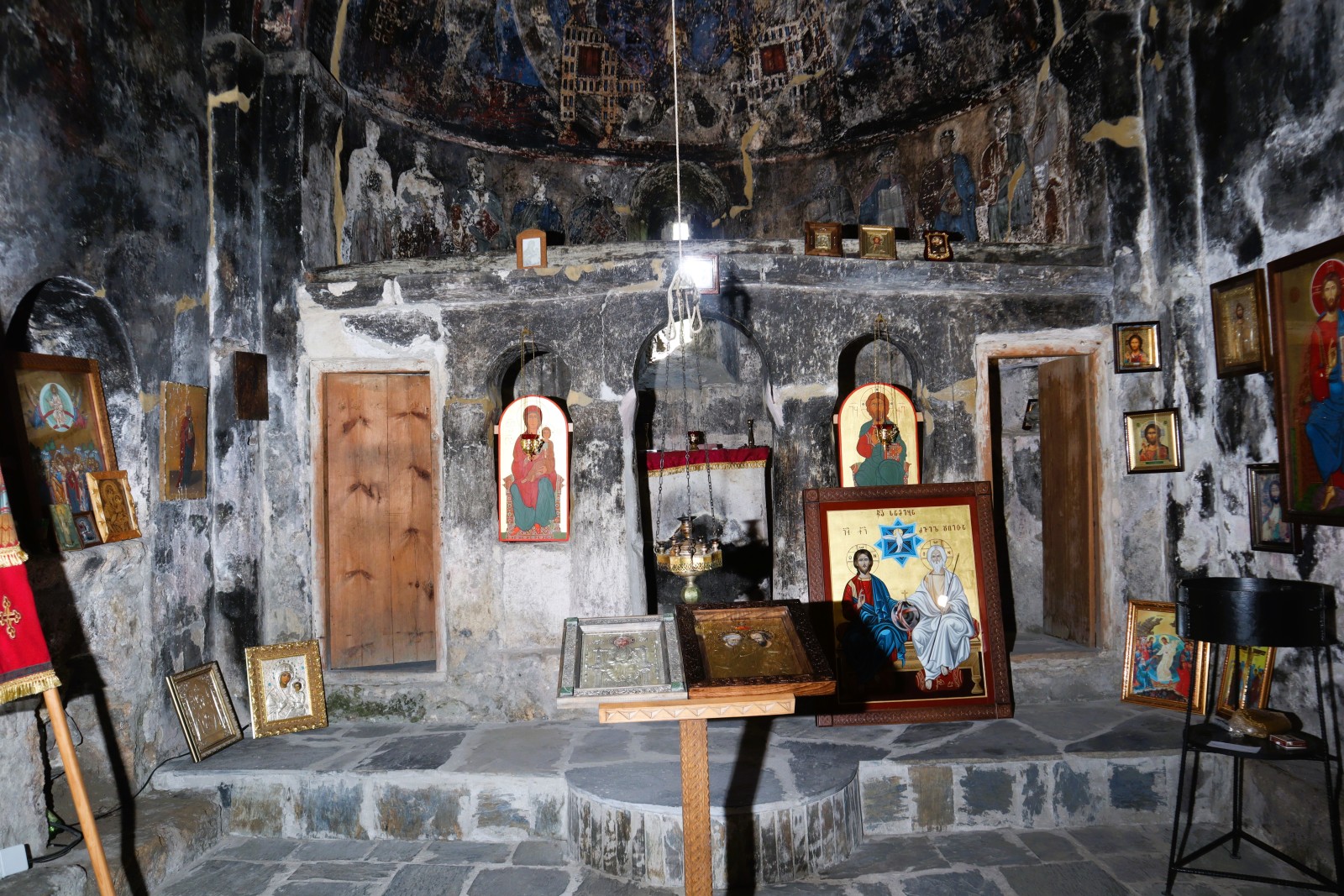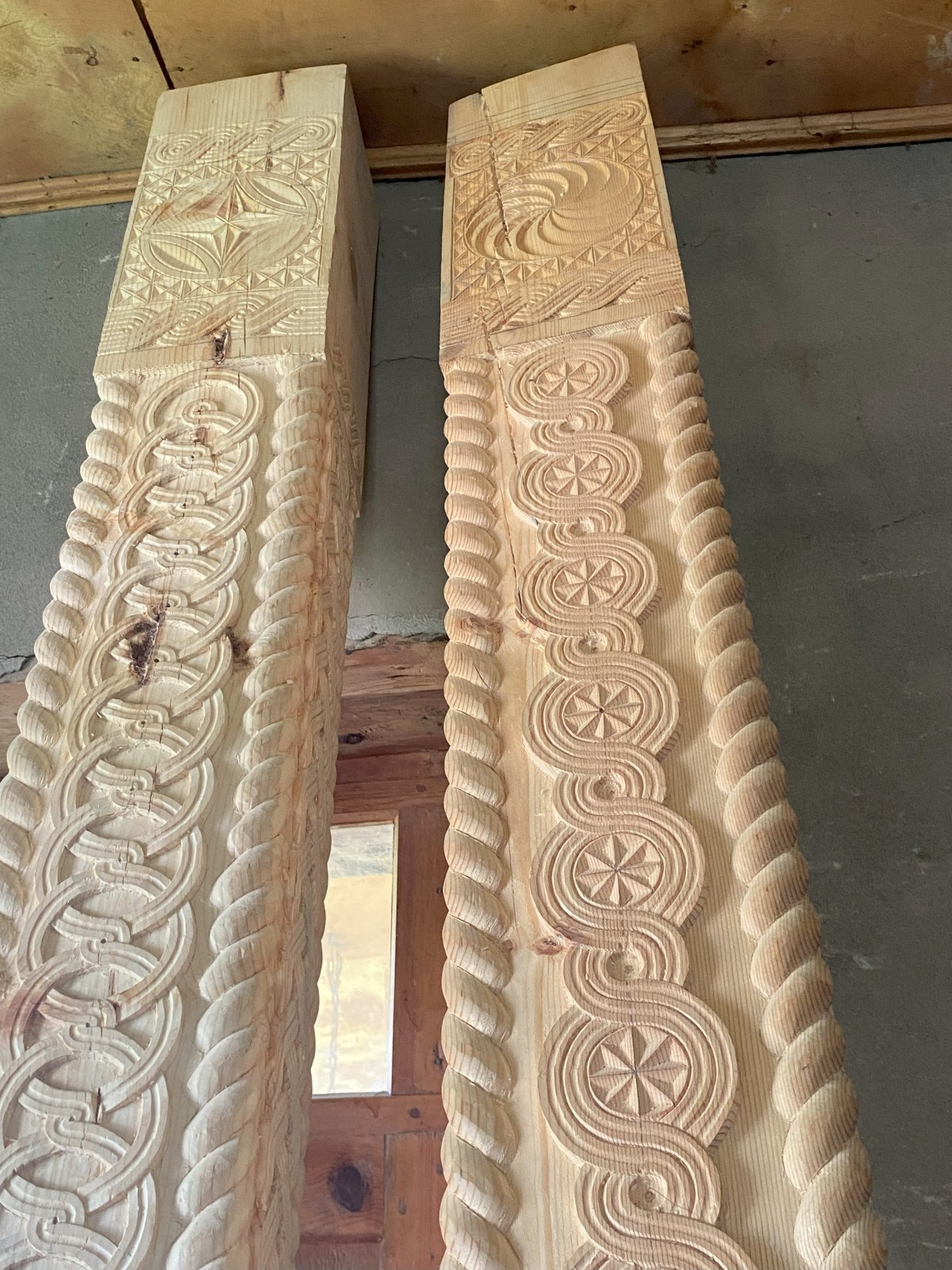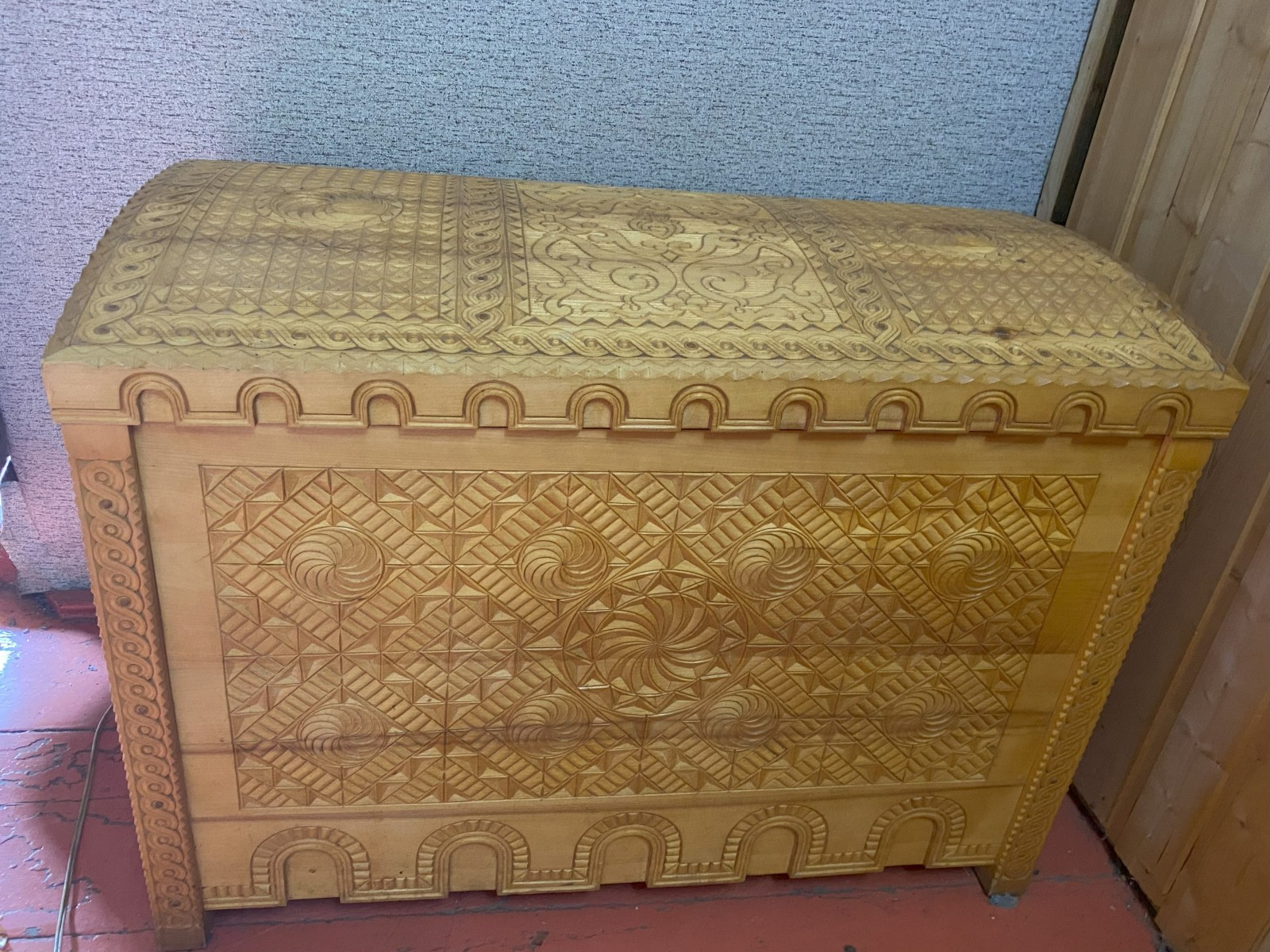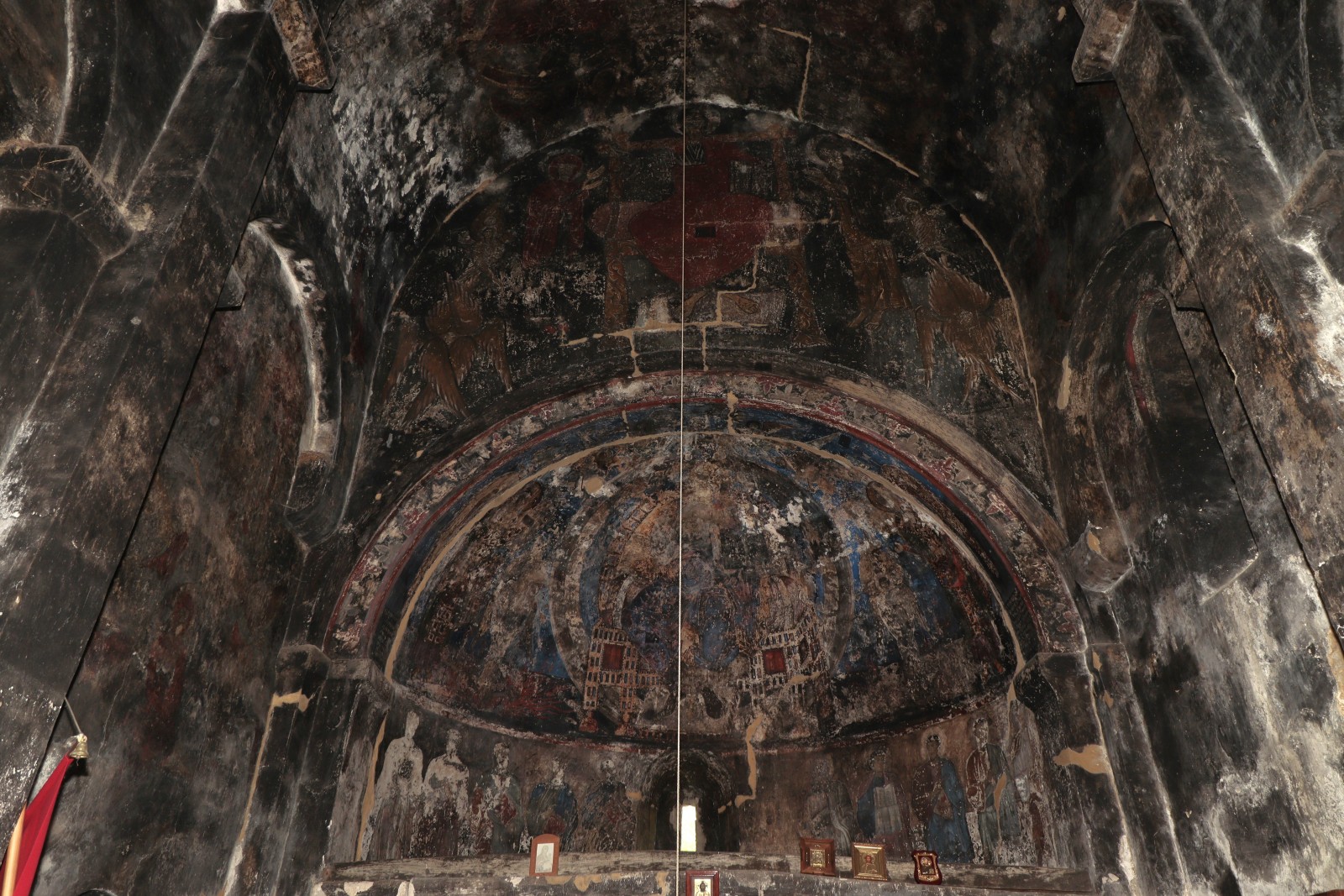
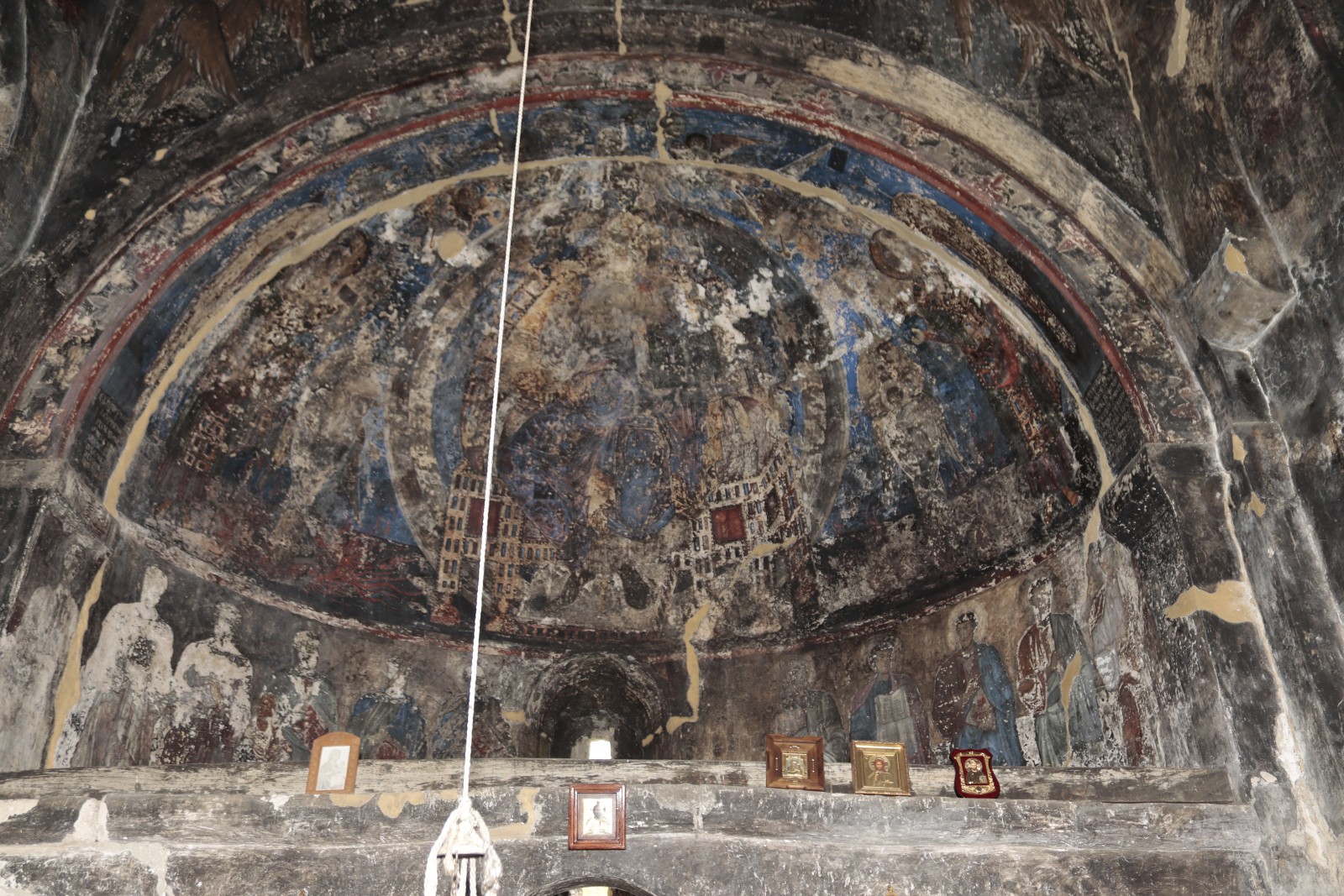
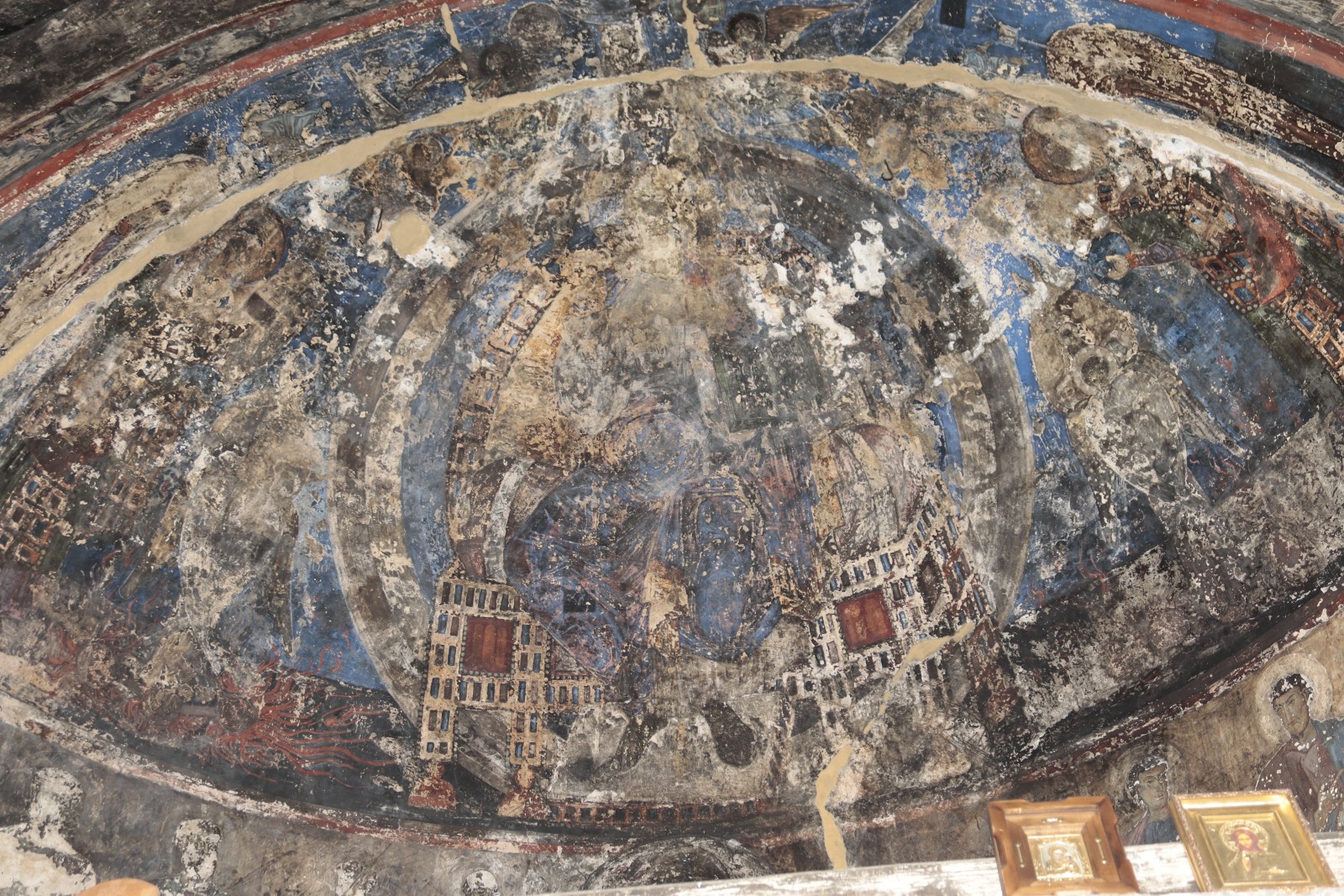
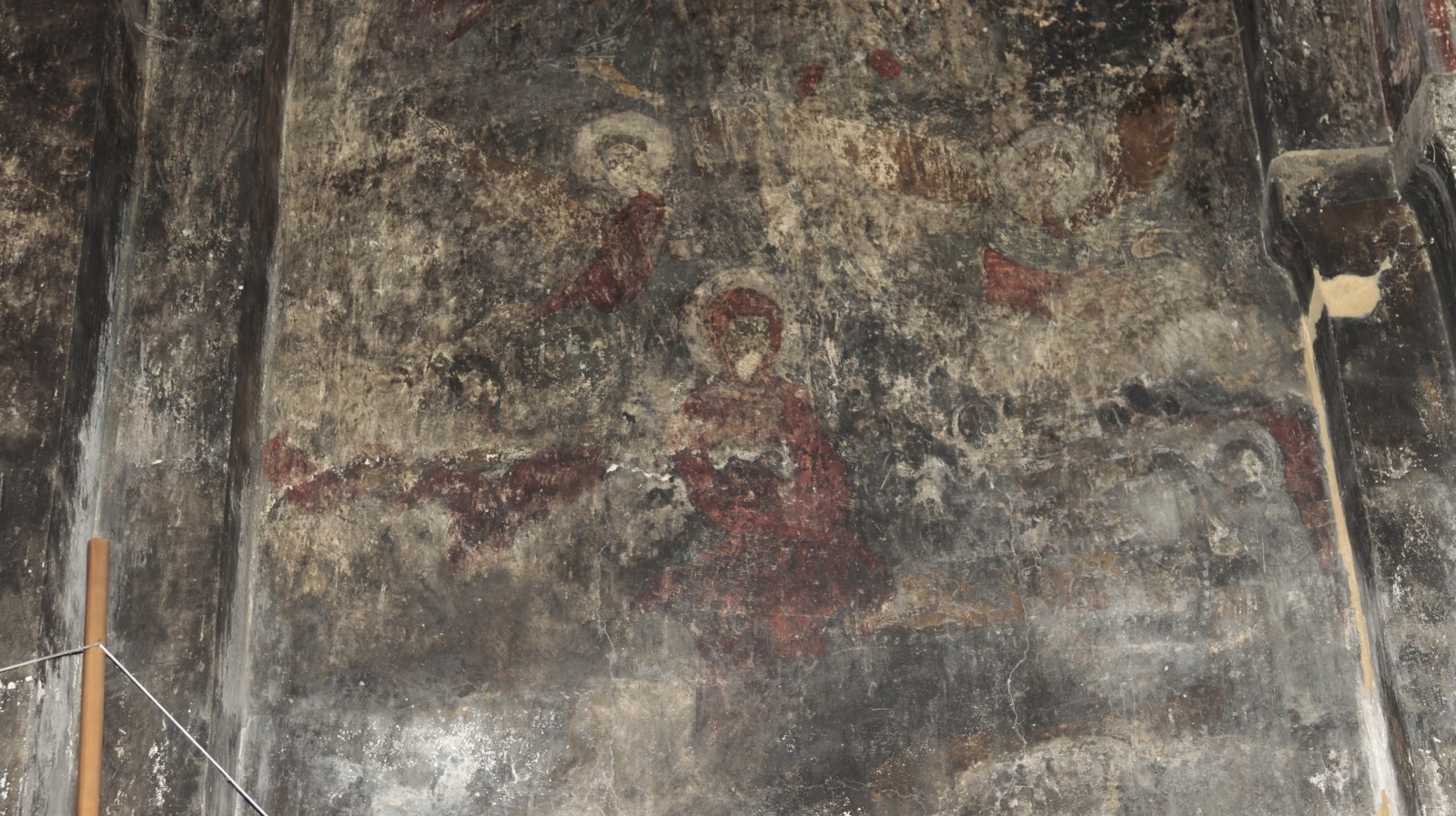
A large single nave church with a three-sided ambulatory (the northern part of which is now partially ruined) and a projecting apse is located in the village of Chvabiani, in the Mulakhi community. The western façade of the church is remarkable for its peculiar architectural decoration. The church was built in the first half of the 10th century, and its interior features wall paintings from different periods. The chancel (including the wall above the apse) is dated to the 10th century, although the apse wall tier and the wall above the apse show clear traces of later repainting. The paintings in the naos are from a later period, but due to their severely damaged condition, accurate dating is impossible. In some cases, even identification of the depicted figures is very difficult.
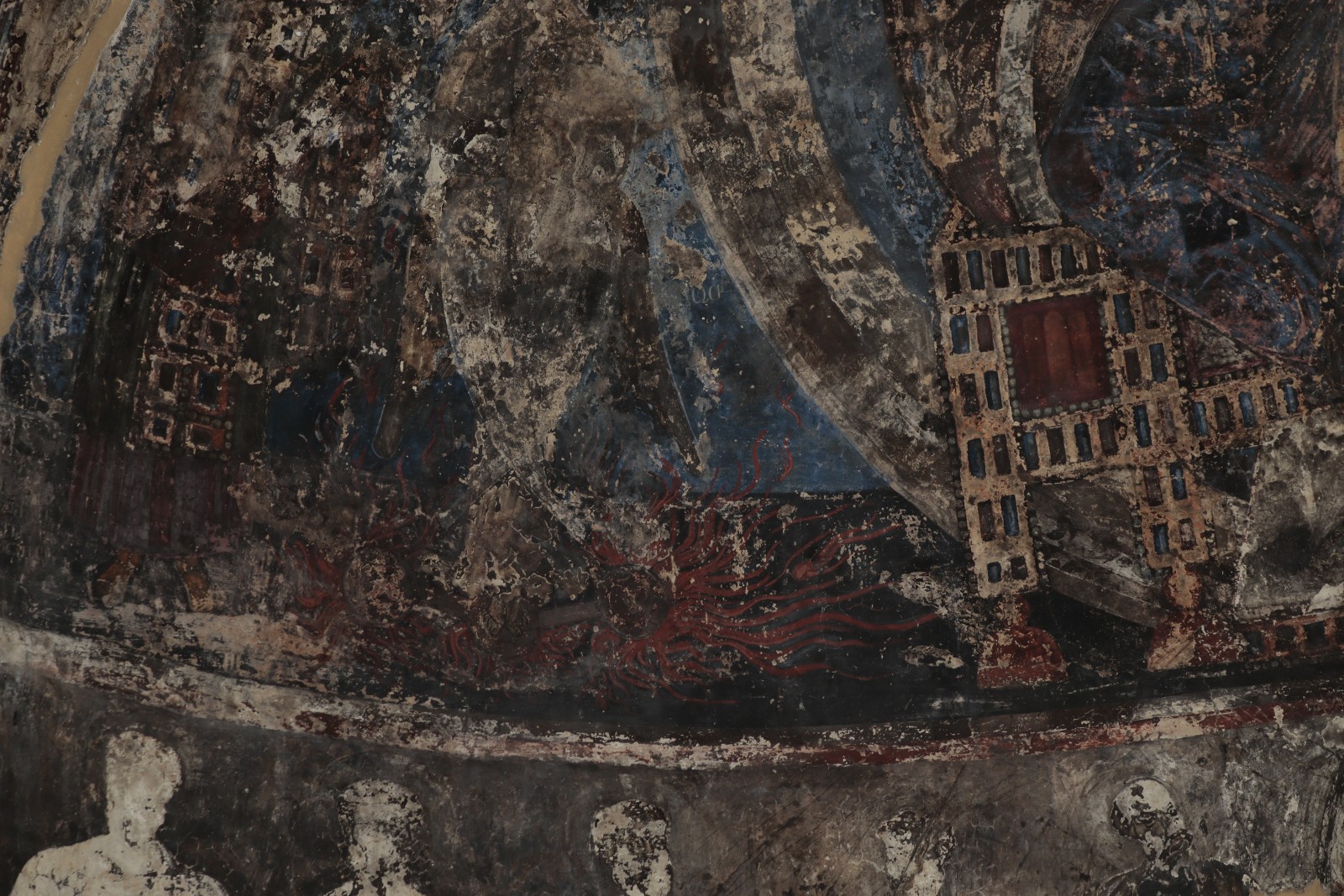
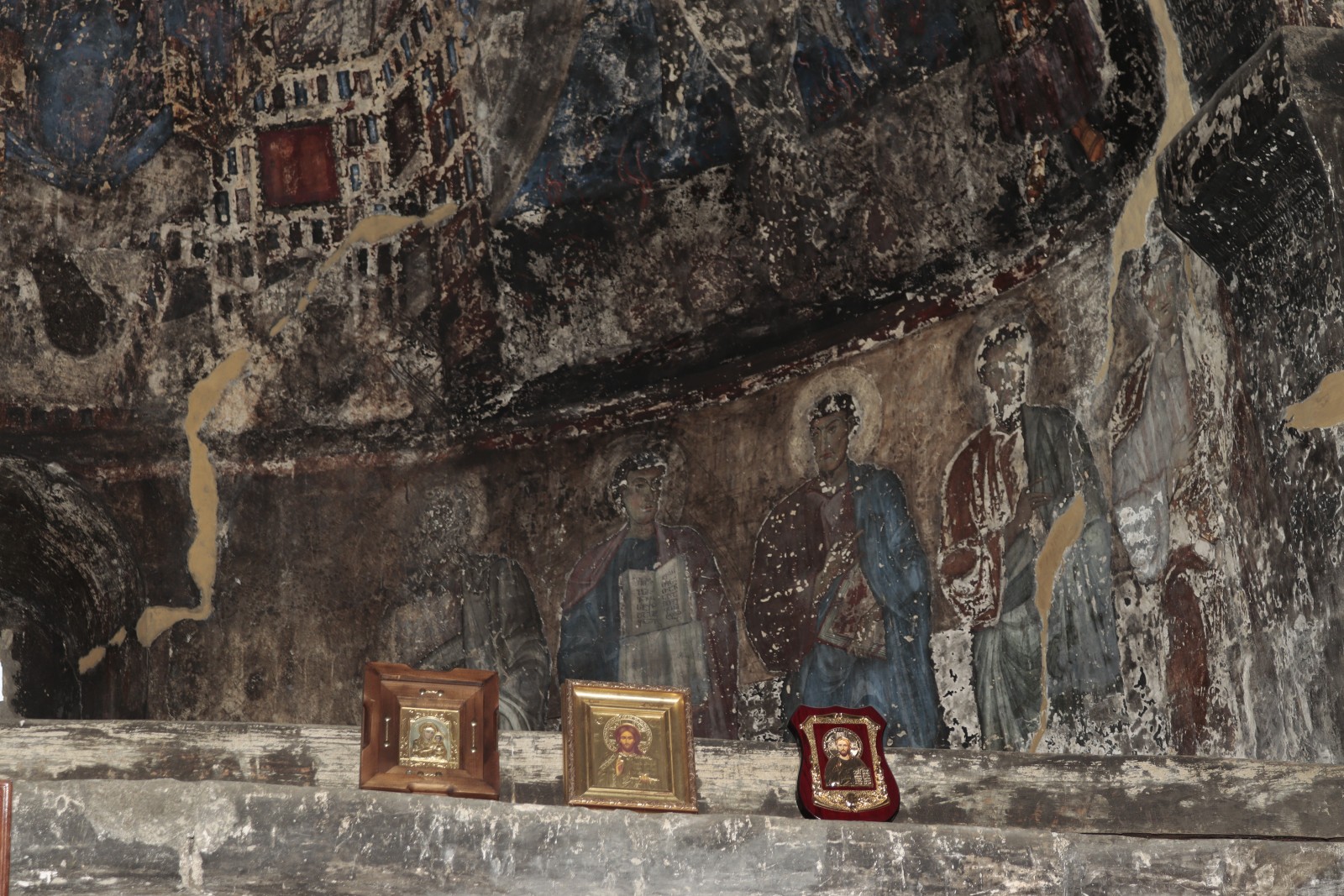
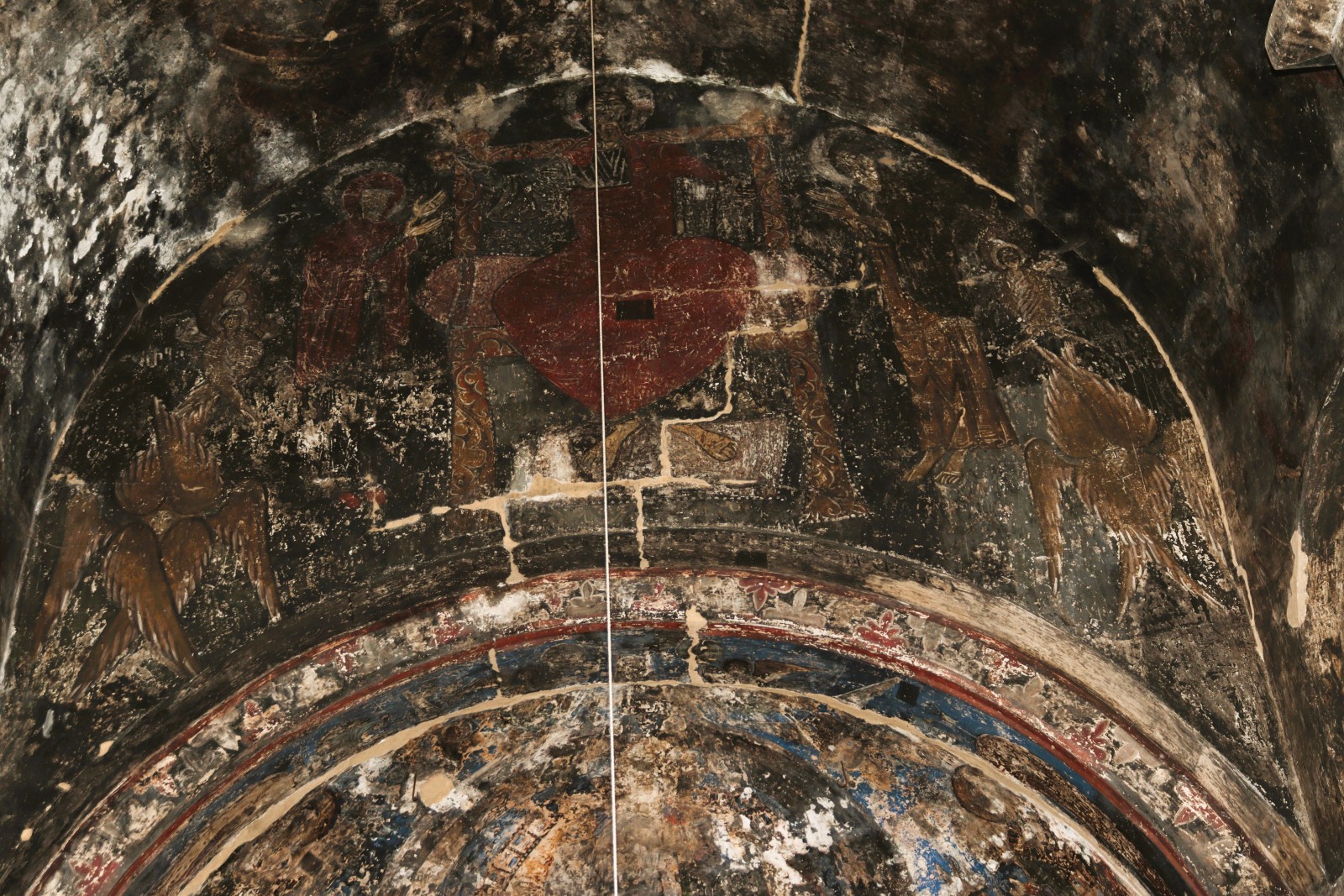
The chancel of the Chvabiani church, bears a relatively enlarged version of the Majestas Domini composition, which is distinguished by a number of iconographic peculiarities. Among these, especially notable is the absence of the traditional figure of the Virgin Mary among the row of Holy Apostles, and the depiction of St. John the Evangelist holding an open codex inscribed with the beginning of the Gospel of John. This detail, together with the inscription on the triumphal arch (Psalm 92:5), serves to emphasize the Incarnation dogma within the Majestas Domini composition, thereby highlighting the theological importance of the Virgin Mary. This reflects the same tendency characteristic of 10th-century spiritual life in Georgia. It is also noteworthy that on the wall above the apse the Deesis scene is depicted, whose iconographic peculiarity (the inclusion of two pairs of multi winged angelic beings, instead of one pair) finds a parallel in the Majestas Domini composition at Tbeti. Thus, the idea of the Lord’s glorification, presented here in a particularly striking manner, is further expanded and enriched through the theme of intercession, which represents an unprecedented case in Georgian wall painting of this period. It should also be especially emphasized that the mural decoration of the chancel at Chvabiani is the only surviving painted ensemble in Svaneti in which precious lapis lazuli pigment was used.
Thanks to a surviving, though damaged, donor inscription, we know that the builders of the church and the donors of the chancel paintings were three brothers from the Amroleani family — Bende, Amrola, and Mikael. The inscription reads:
“With the help of God, we, the three brothers of the Amroleani family — Bende, Amrola, and Michael—by the strength granted to us by God, greater than that of our ancestors, built this holy church for the salvation of our souls, and we painted it during the reign… of the King of Abkhazia, Christ praise [him], in the governorship of… may God protect them and the builders…”| Location | The church is located at the hill, in the outskirts of the village |
| The Key Holder | The Key is kept with Kakha Chekhani |