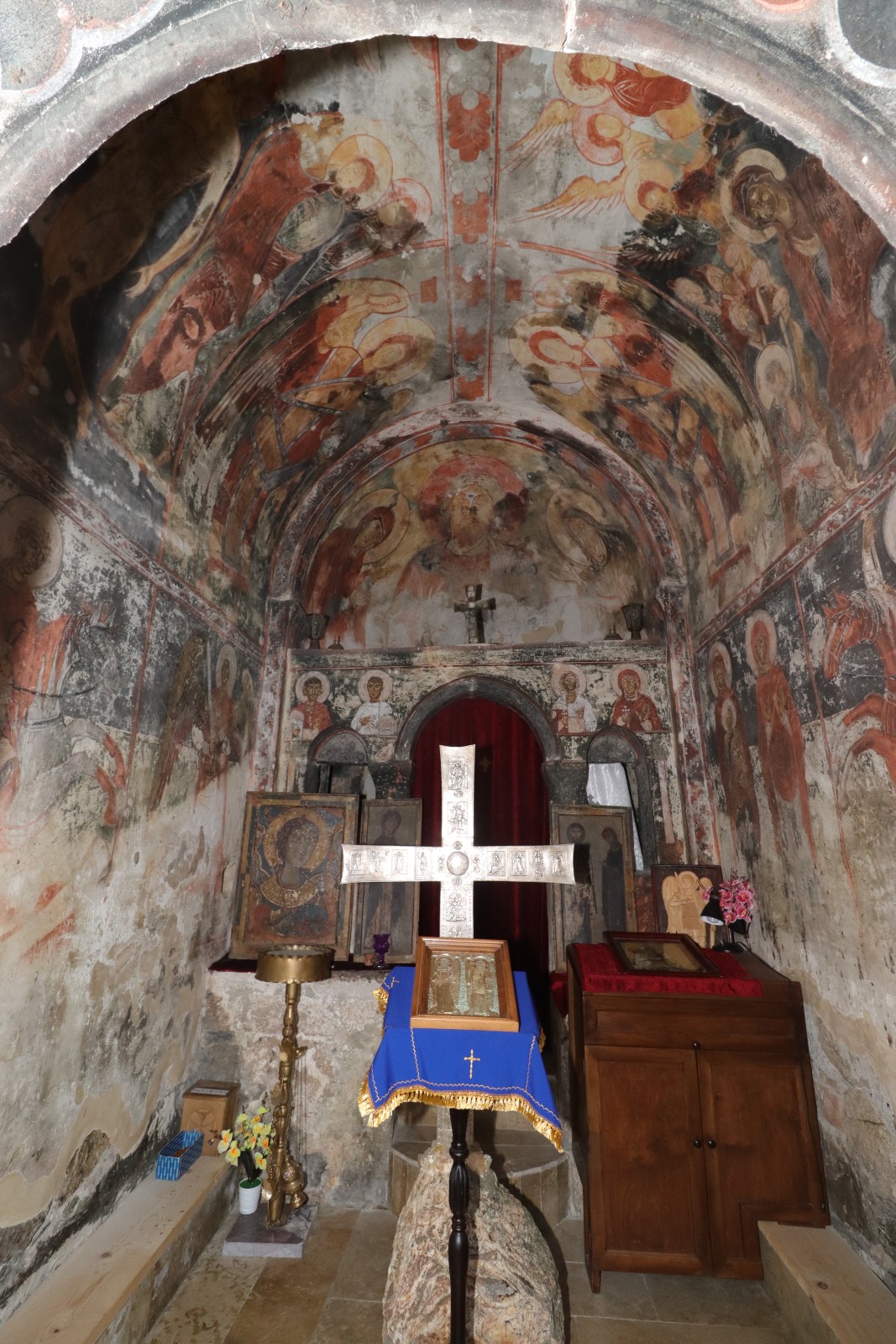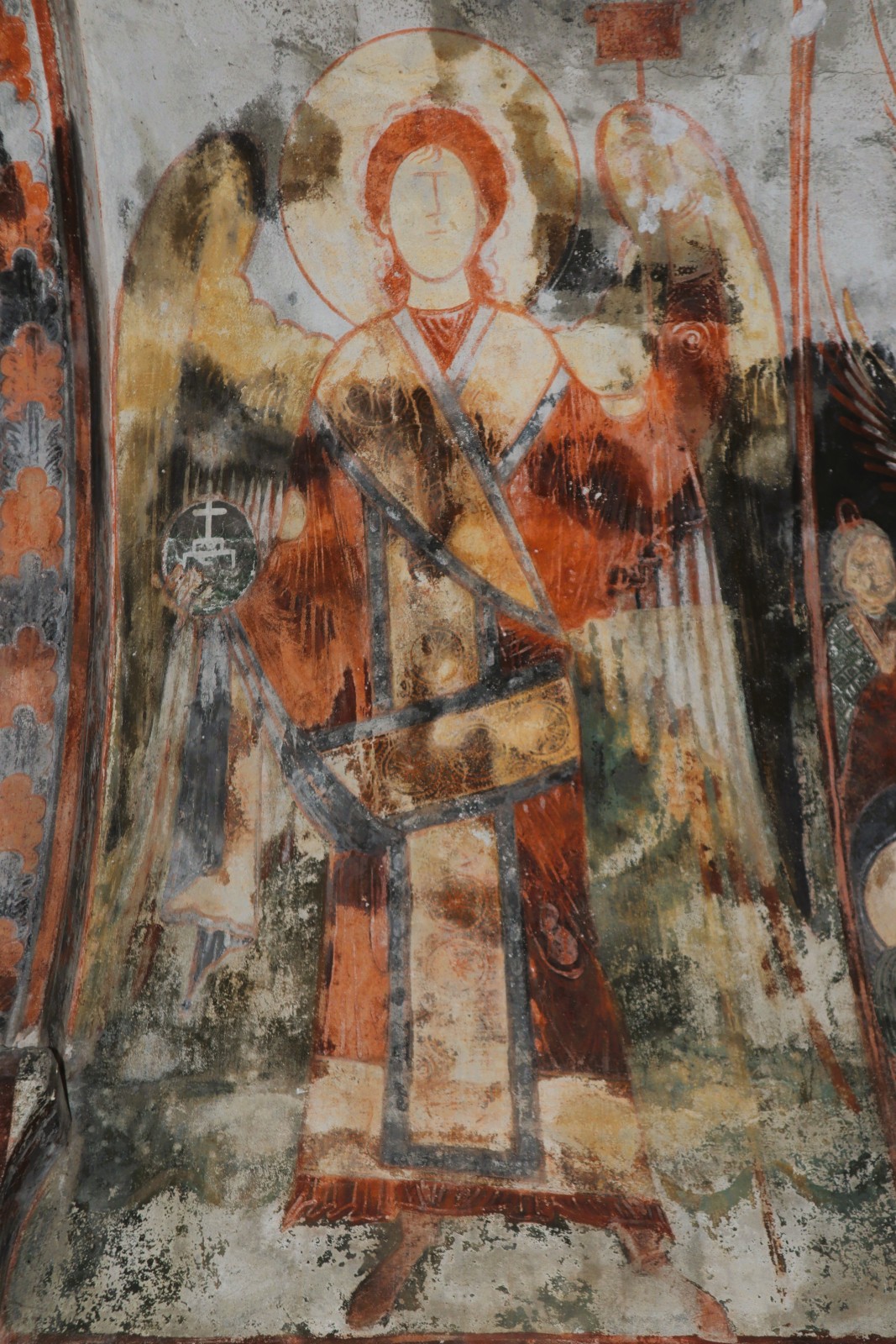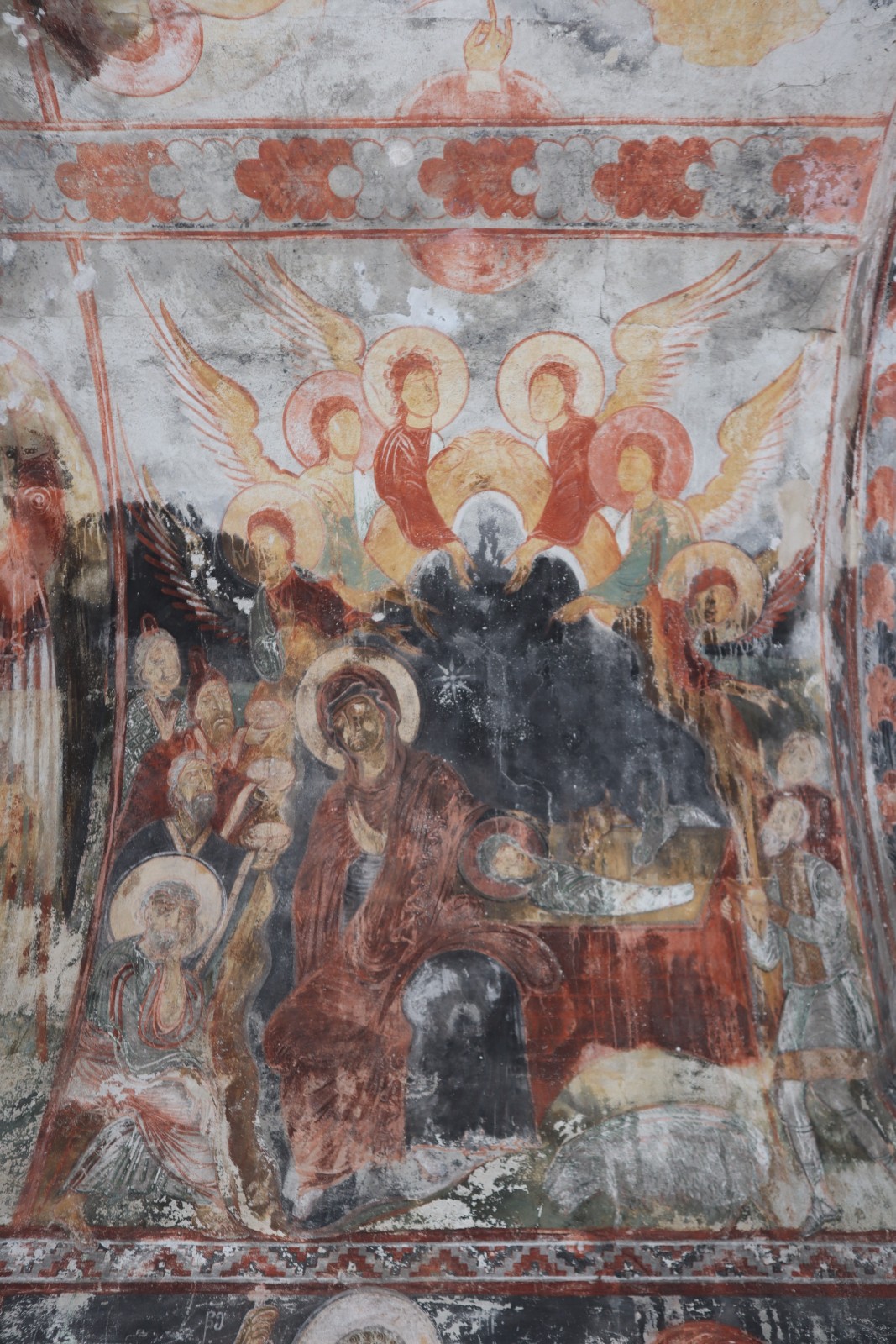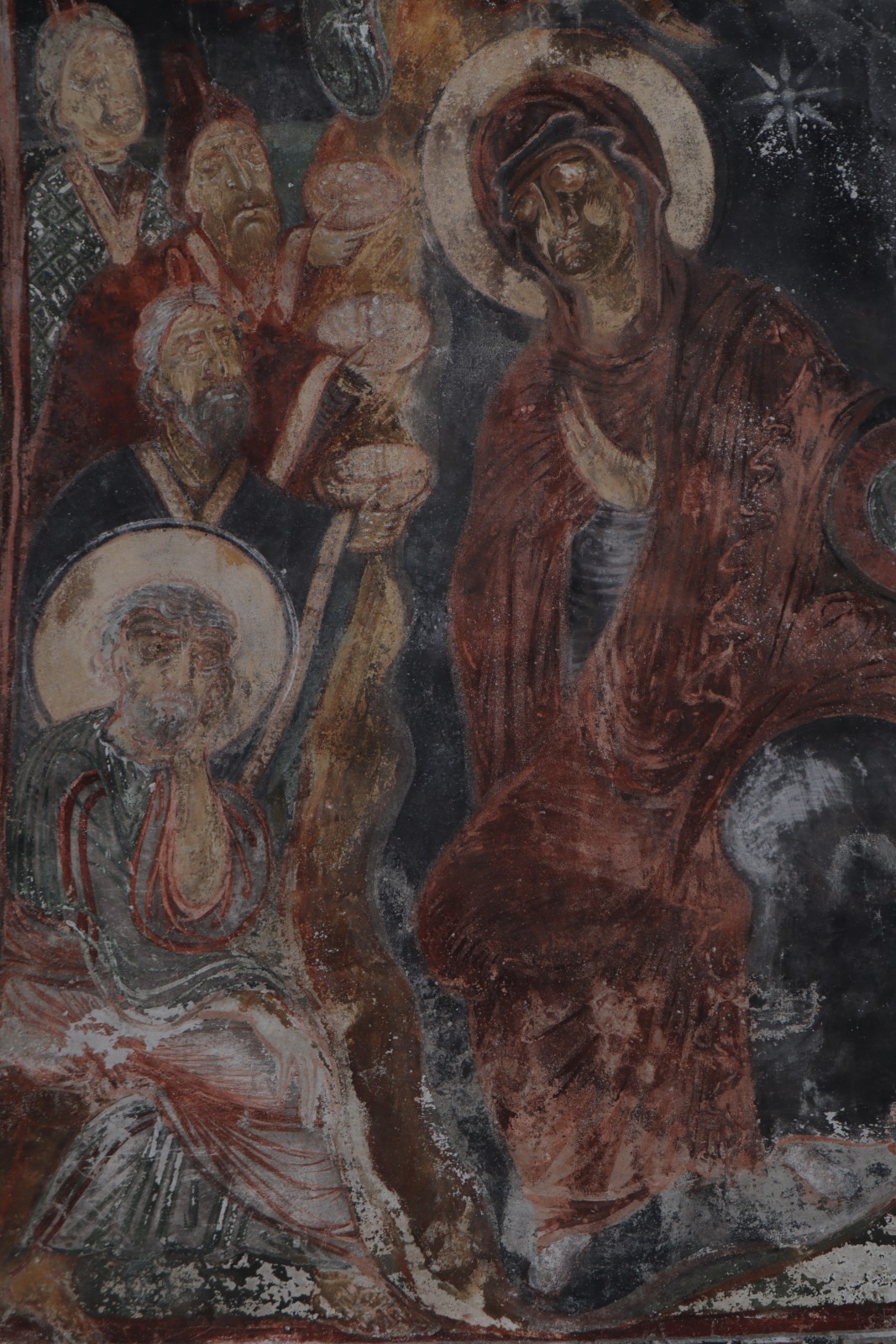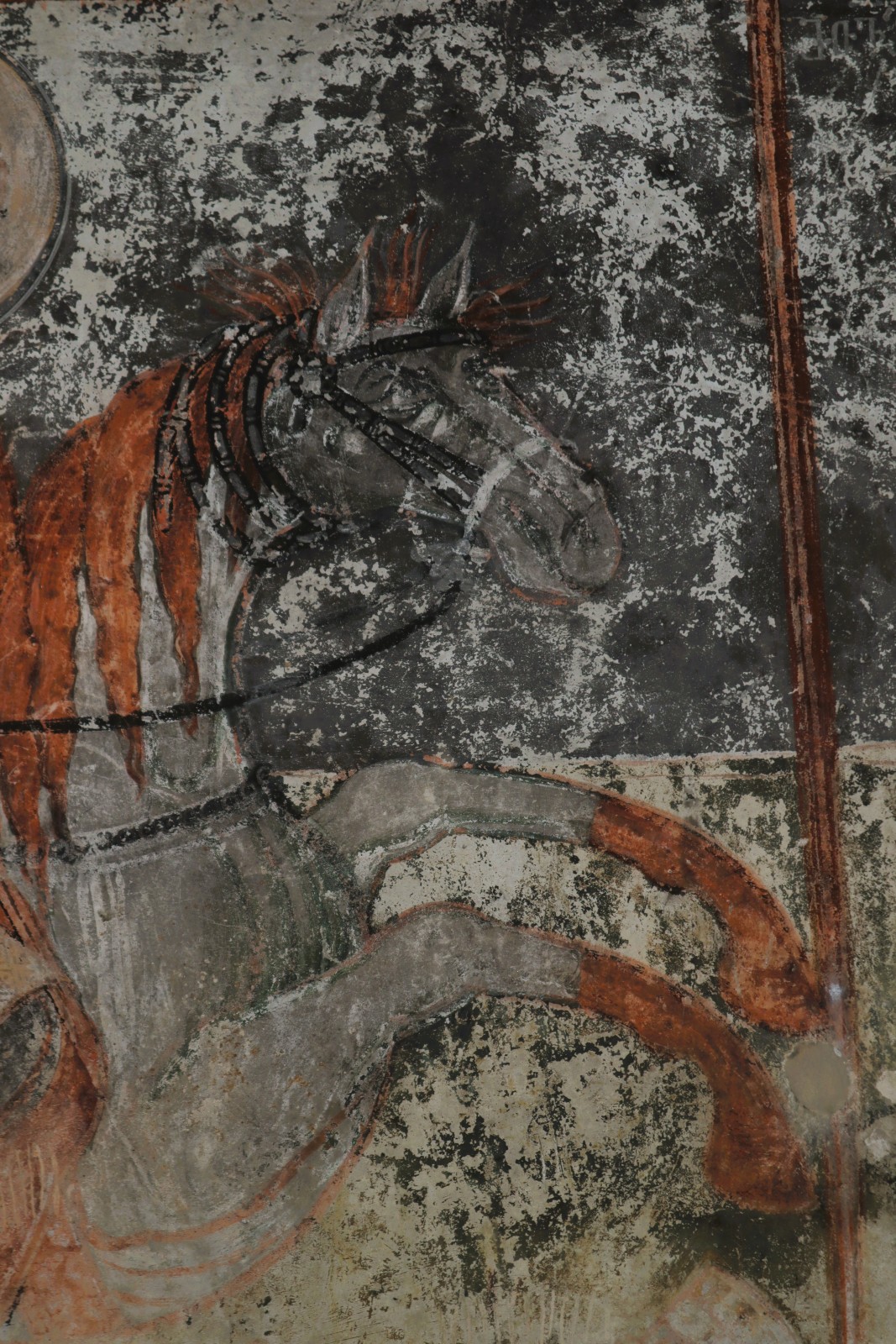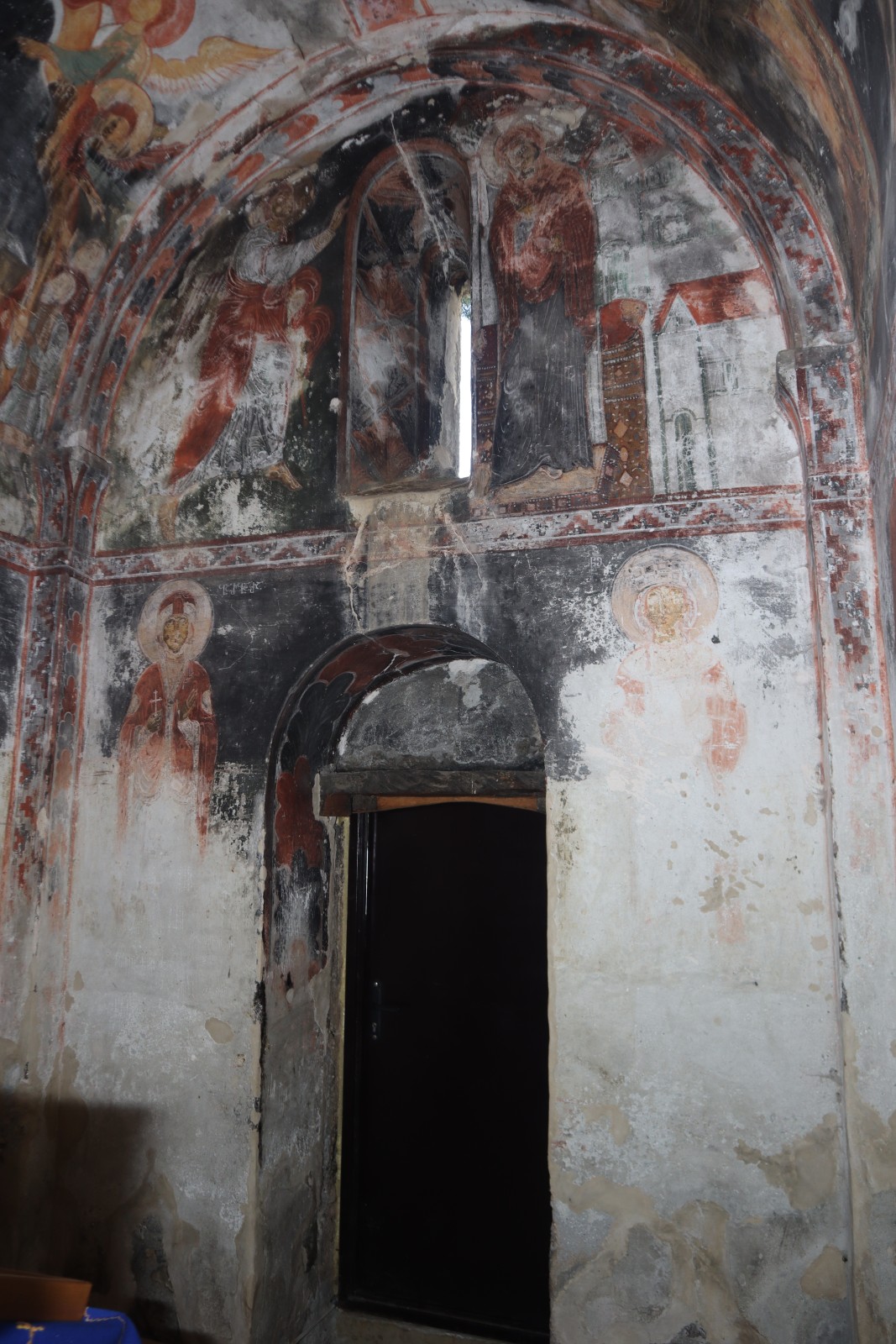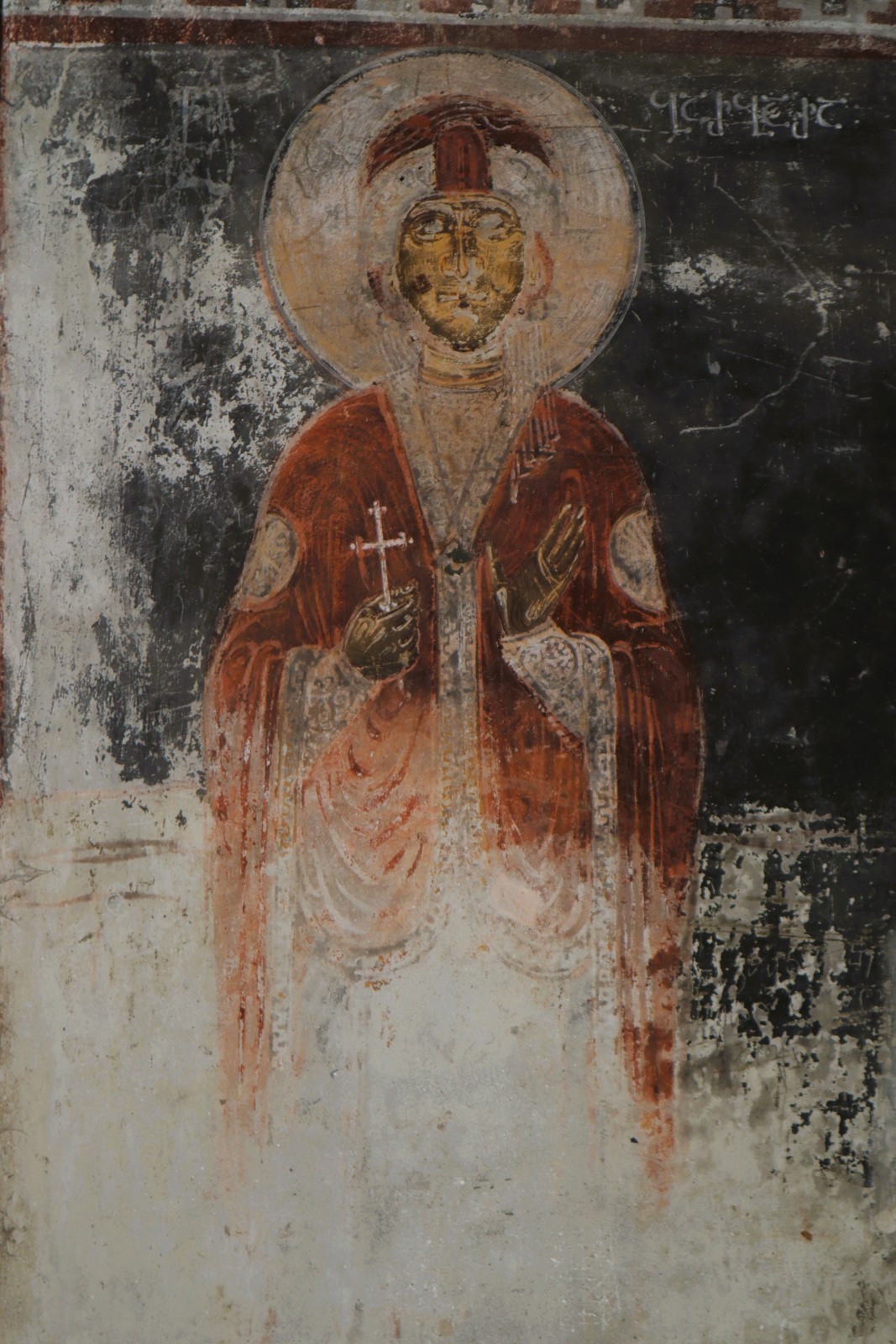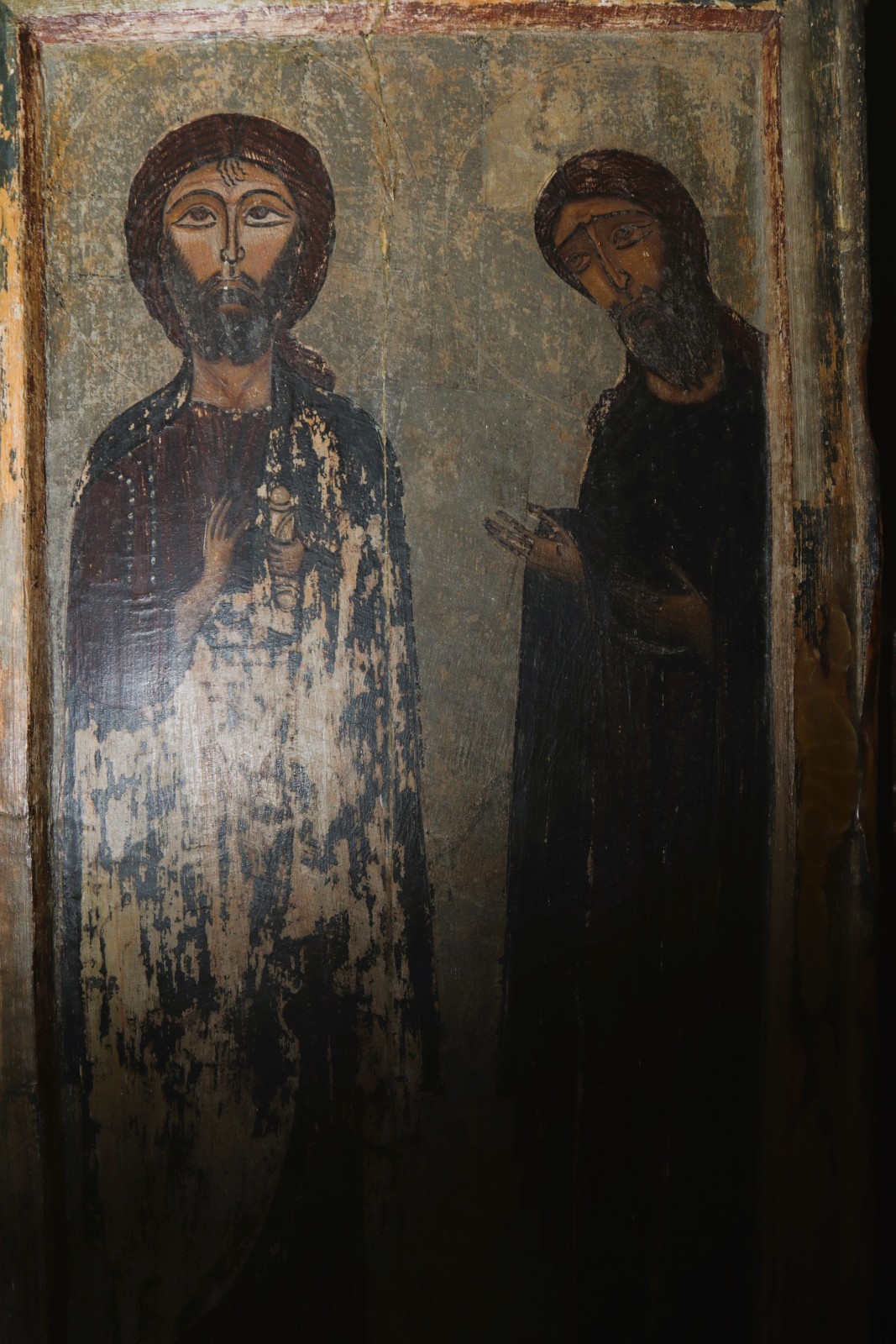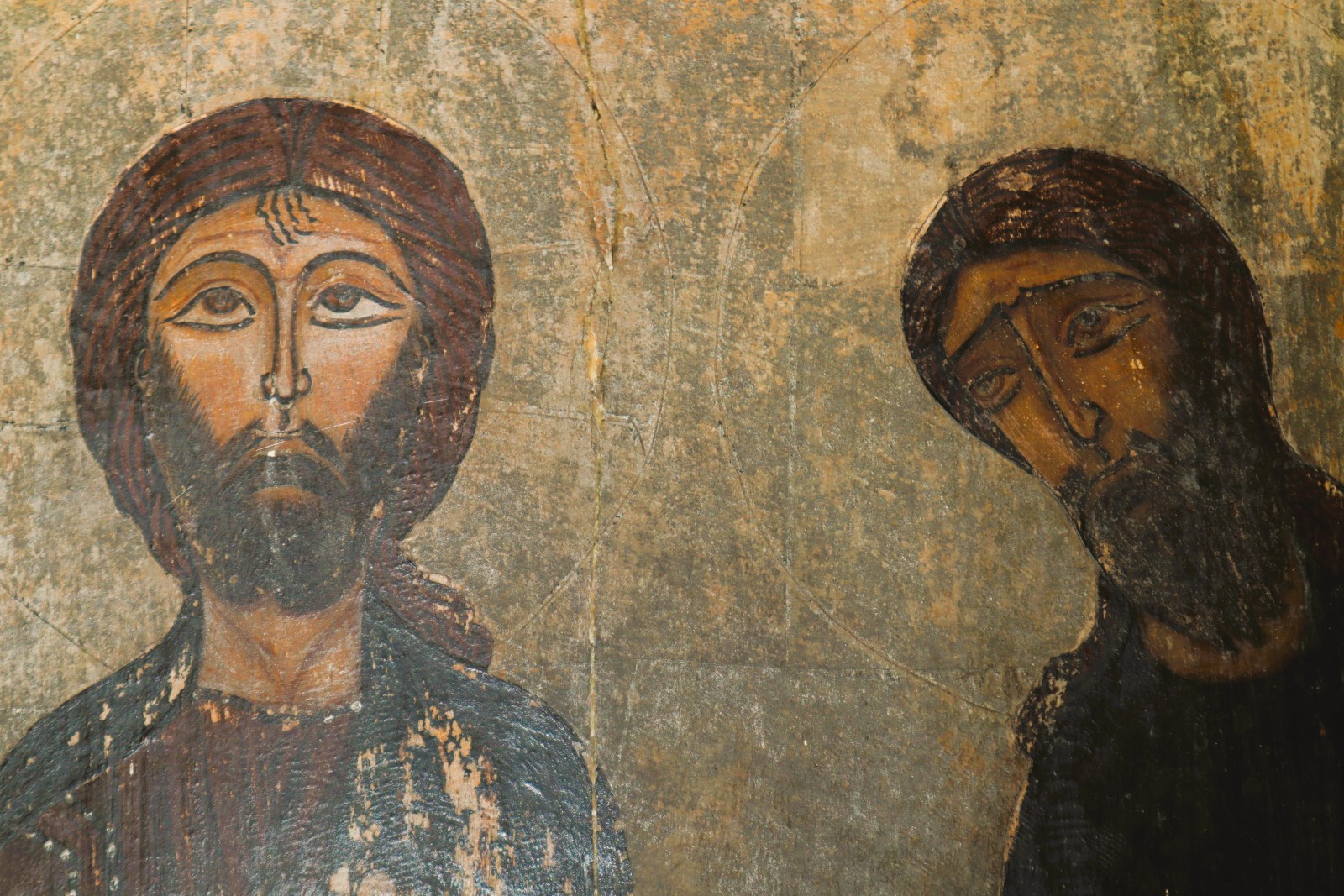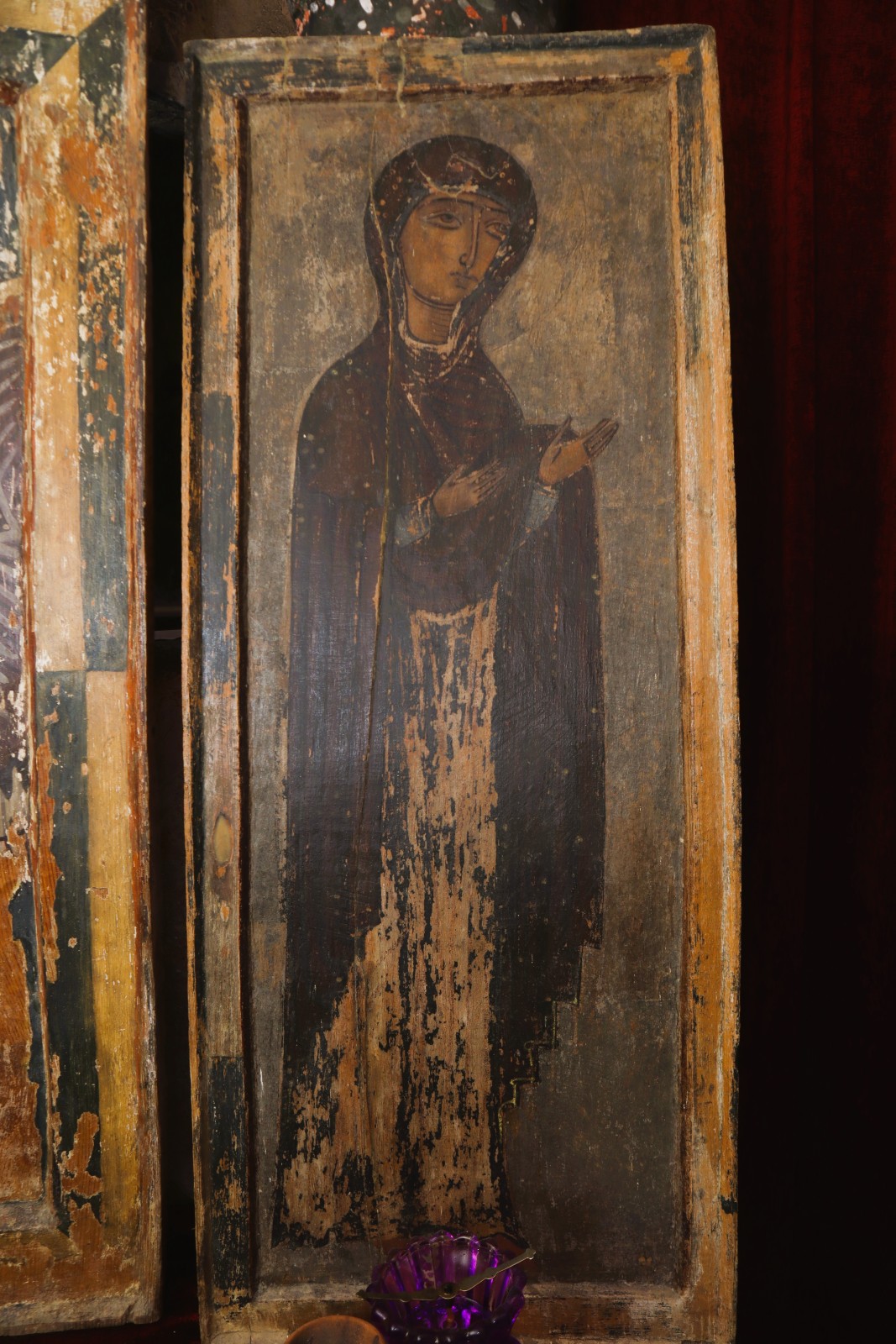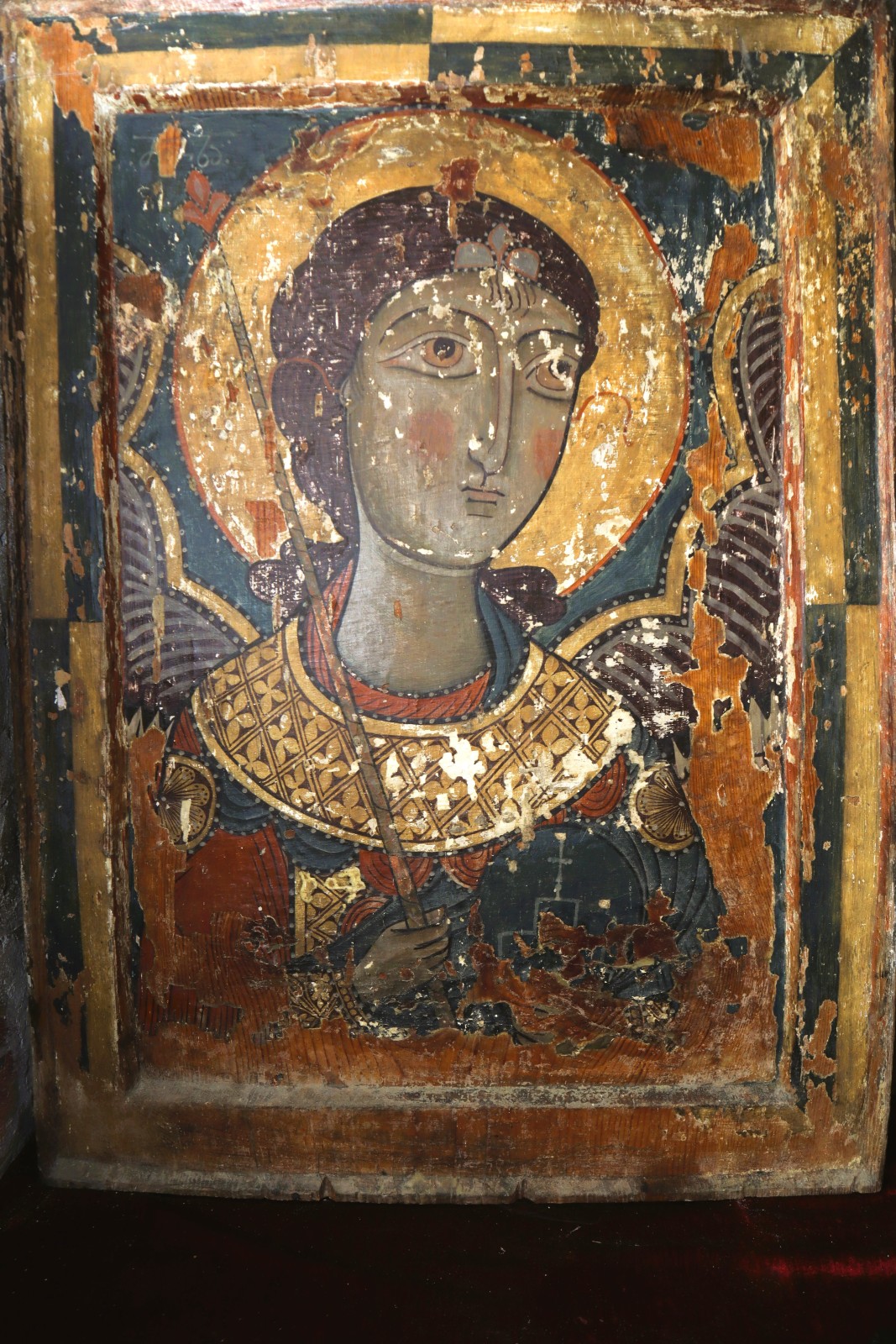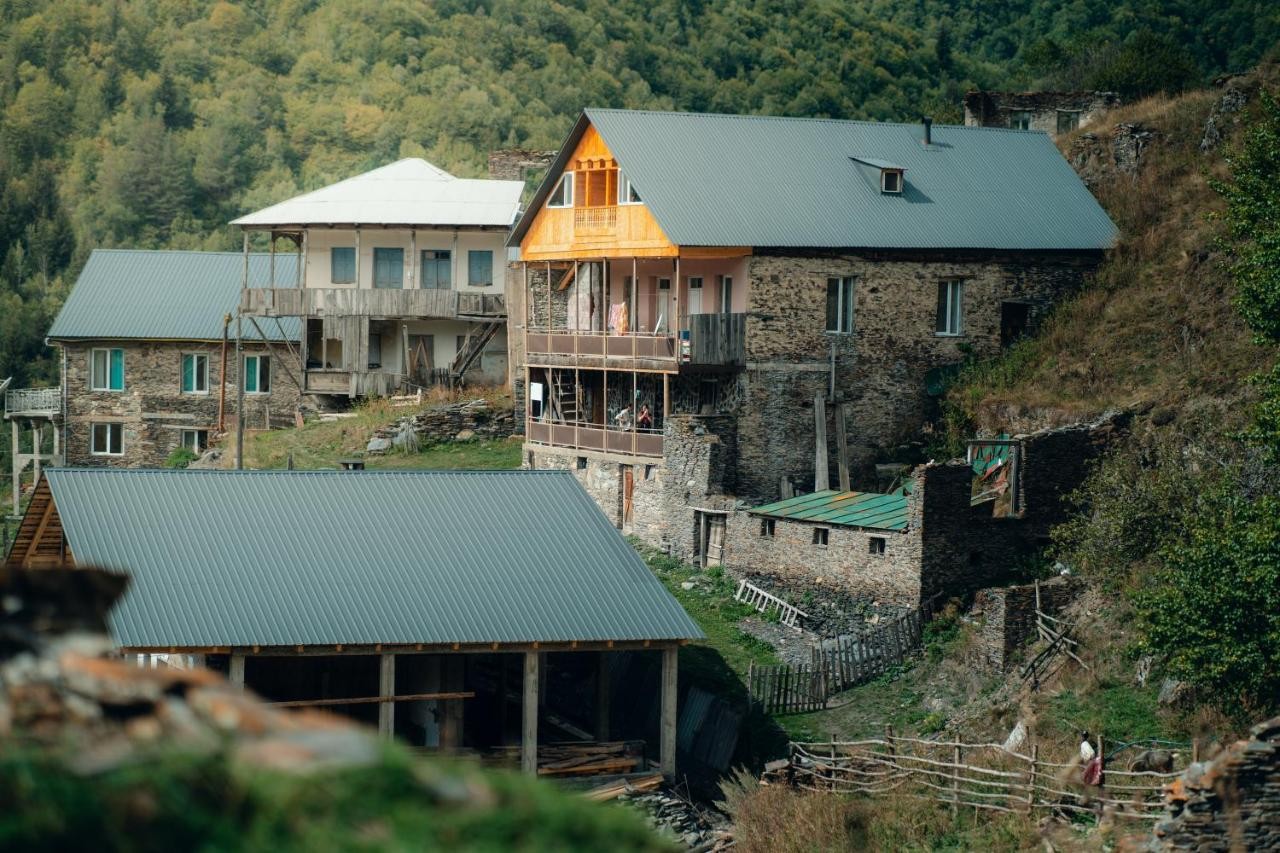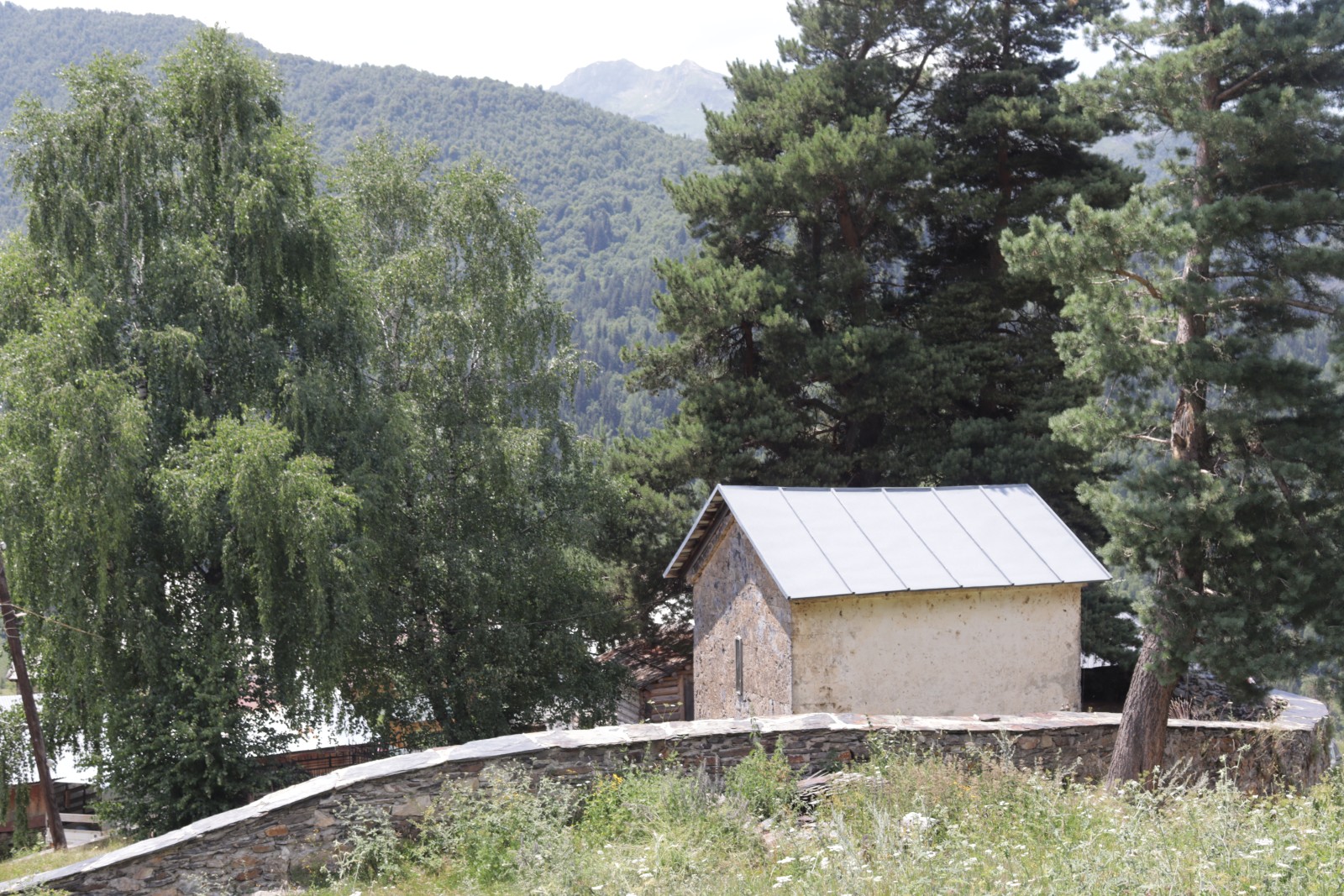
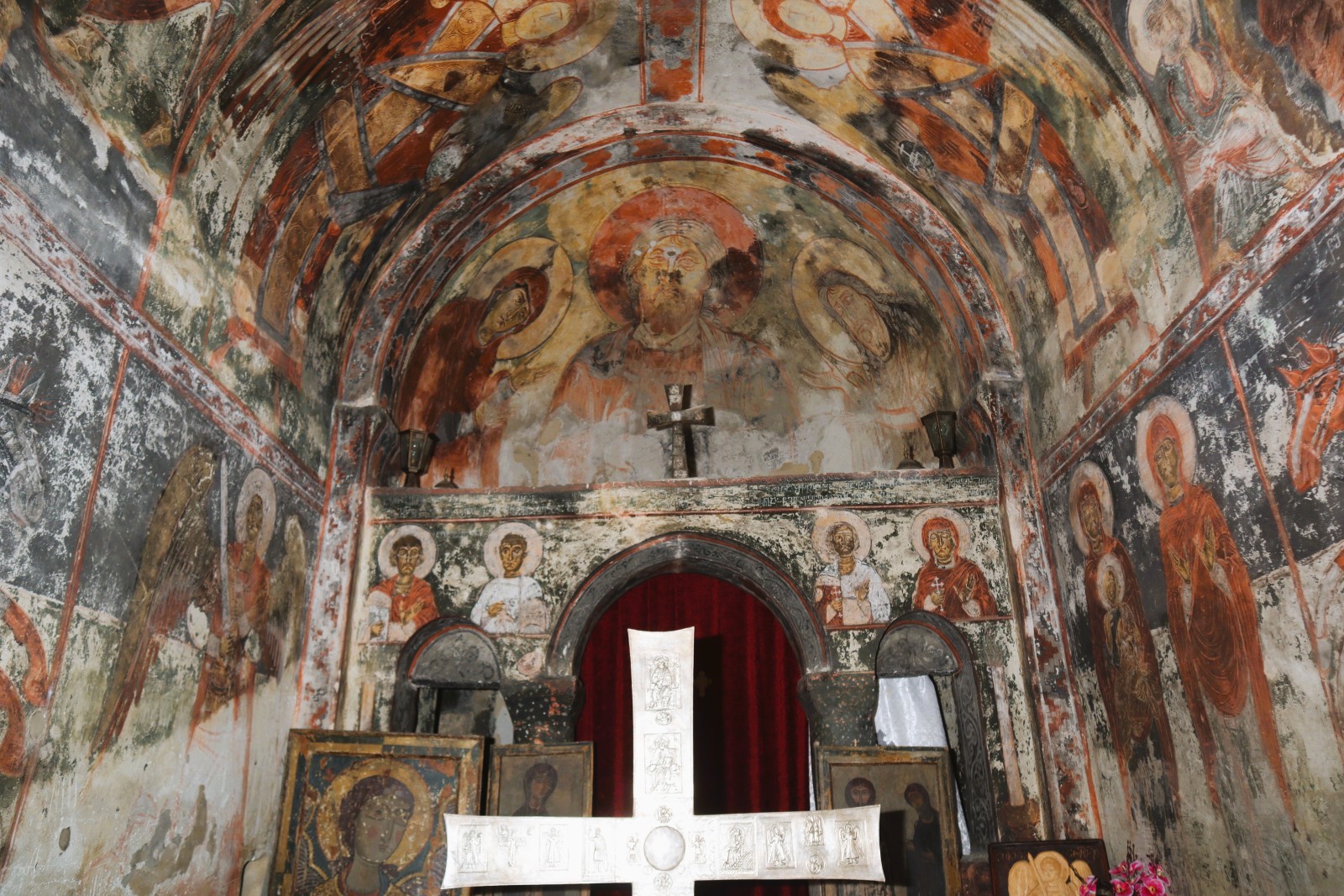
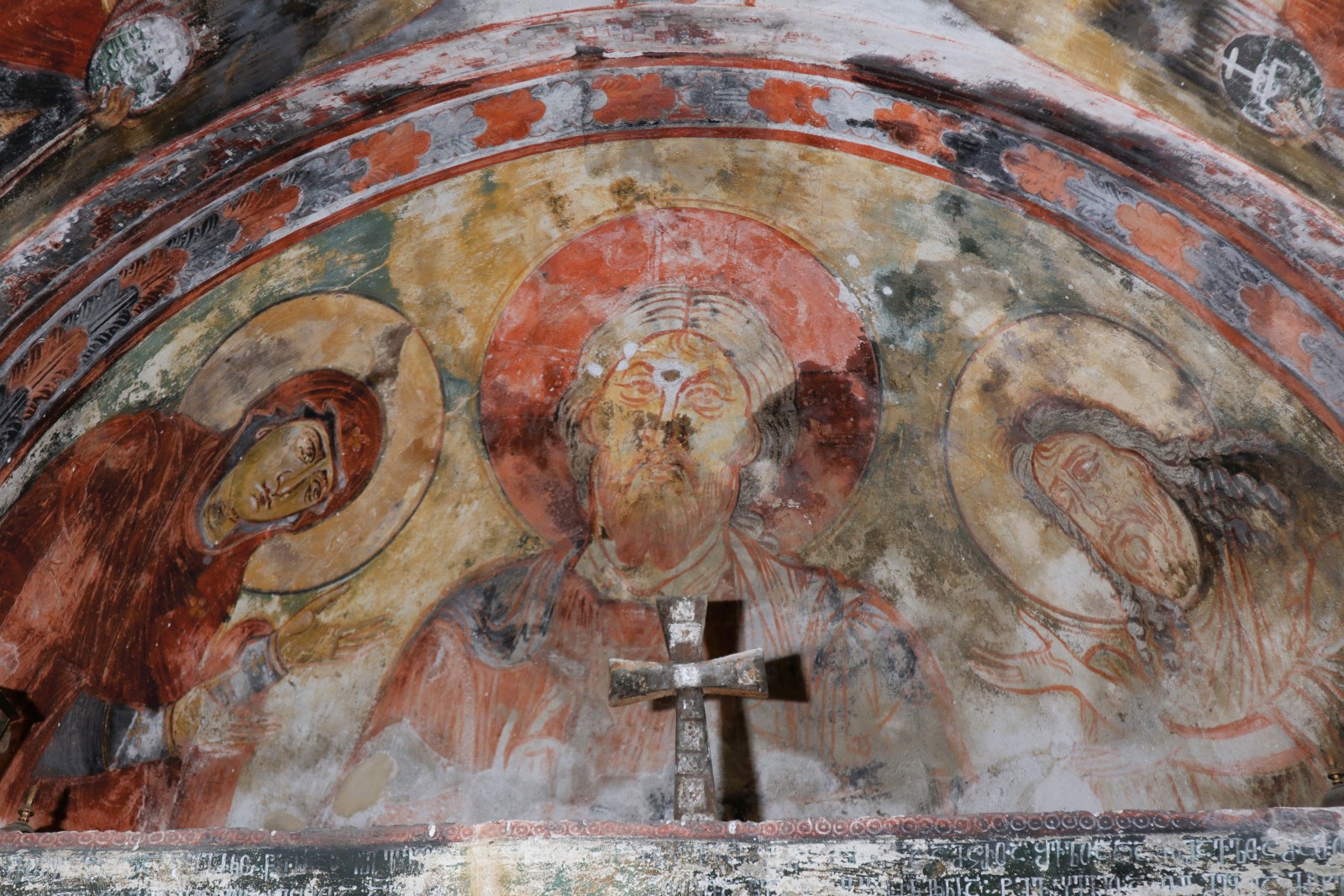
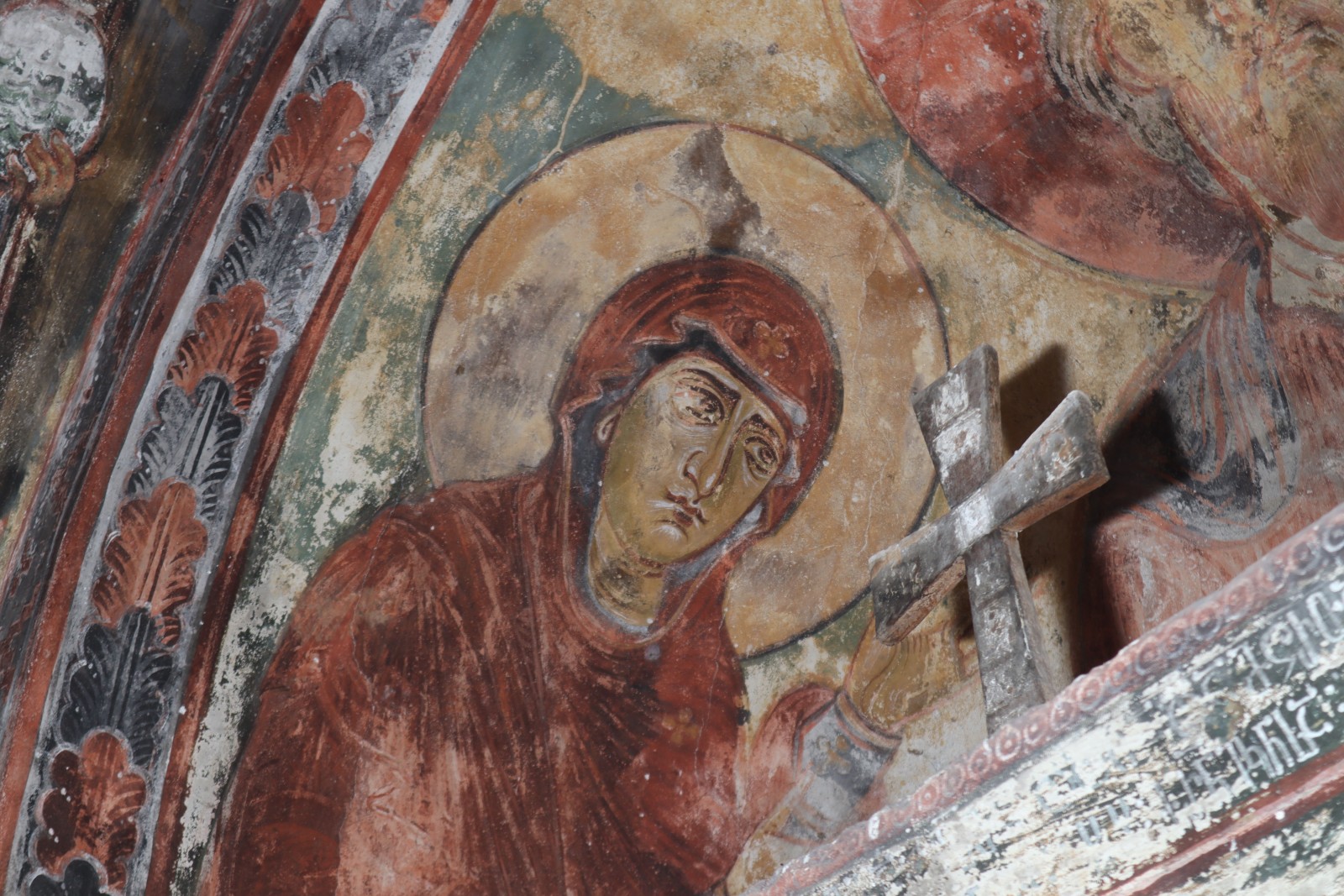
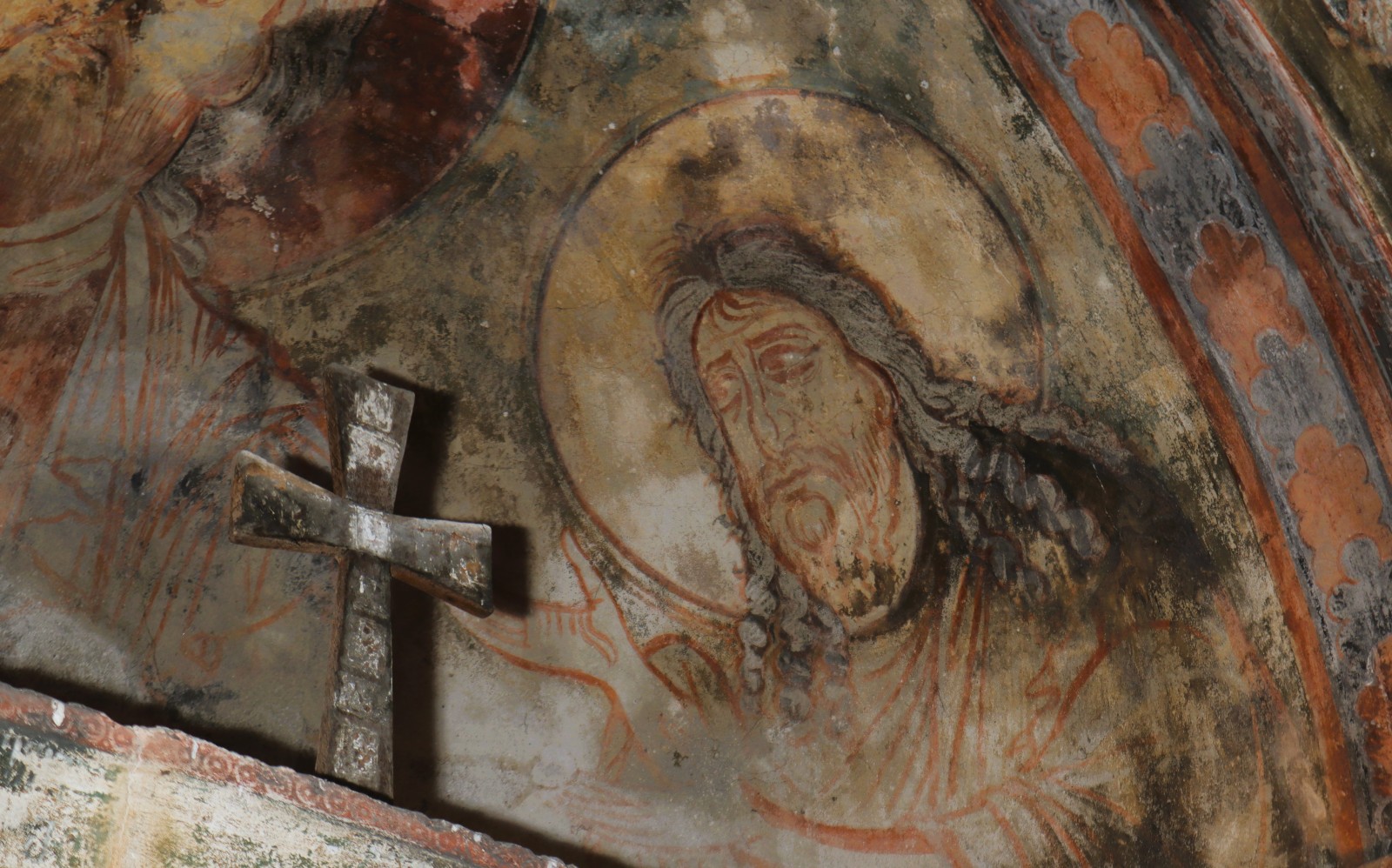
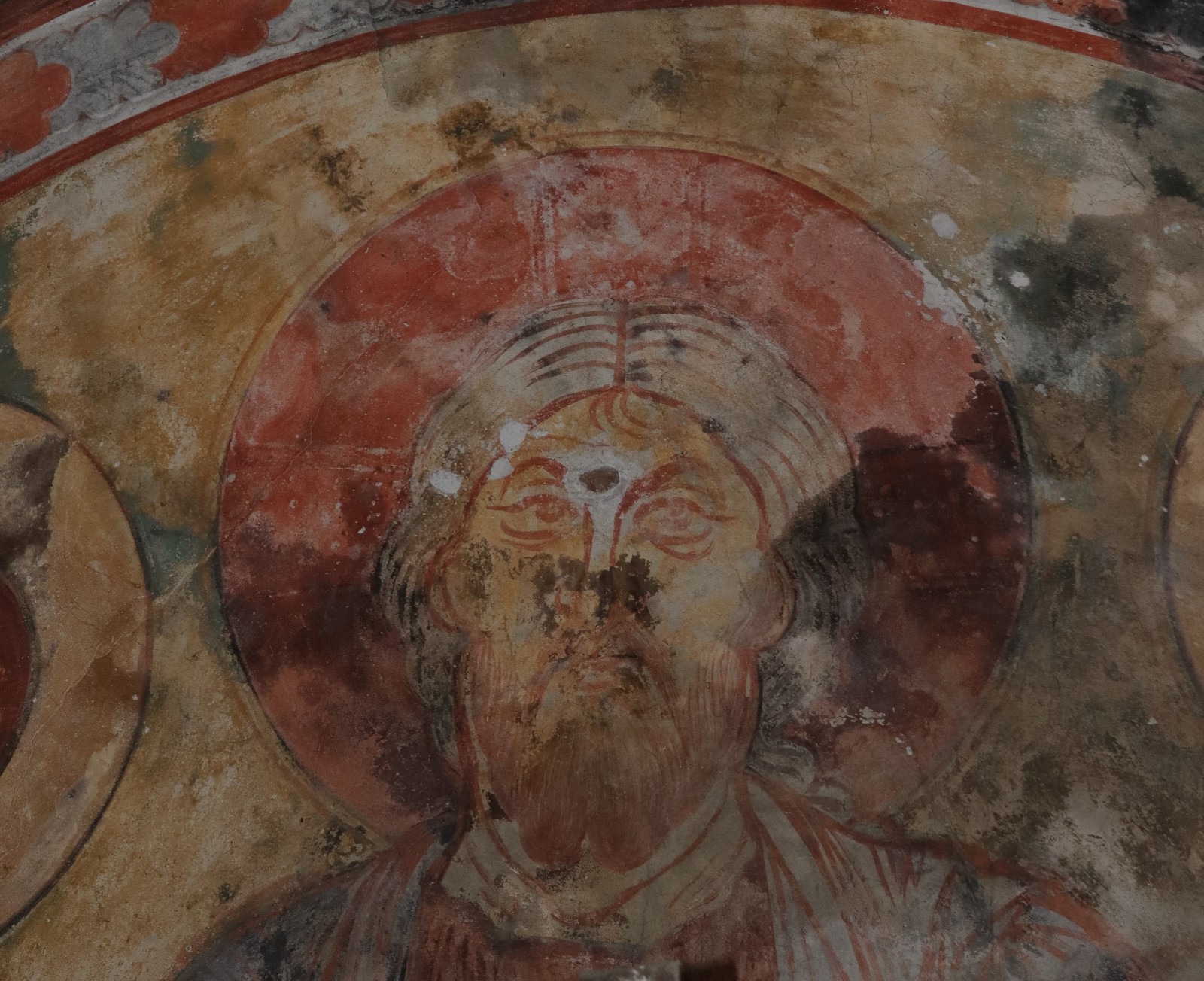
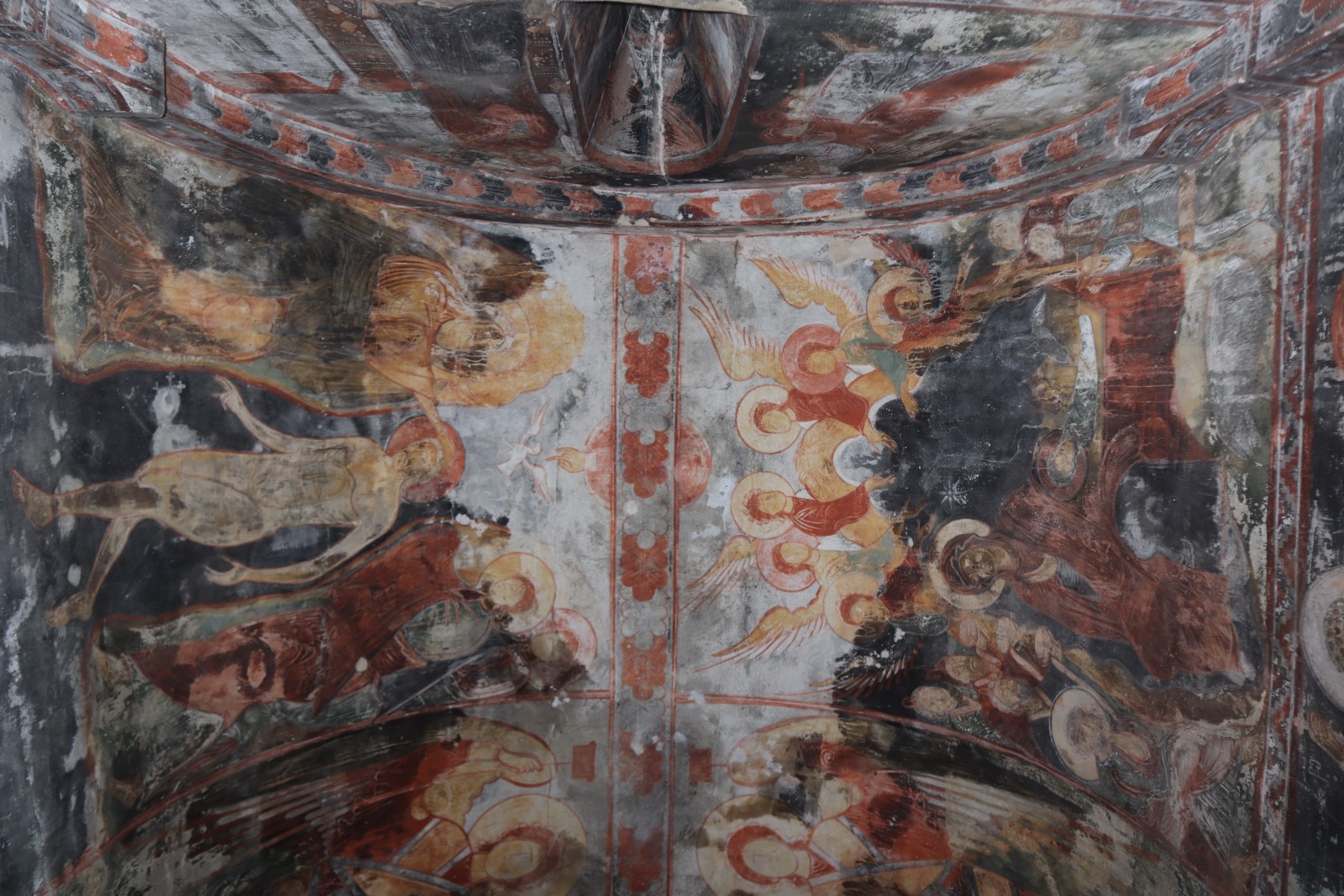
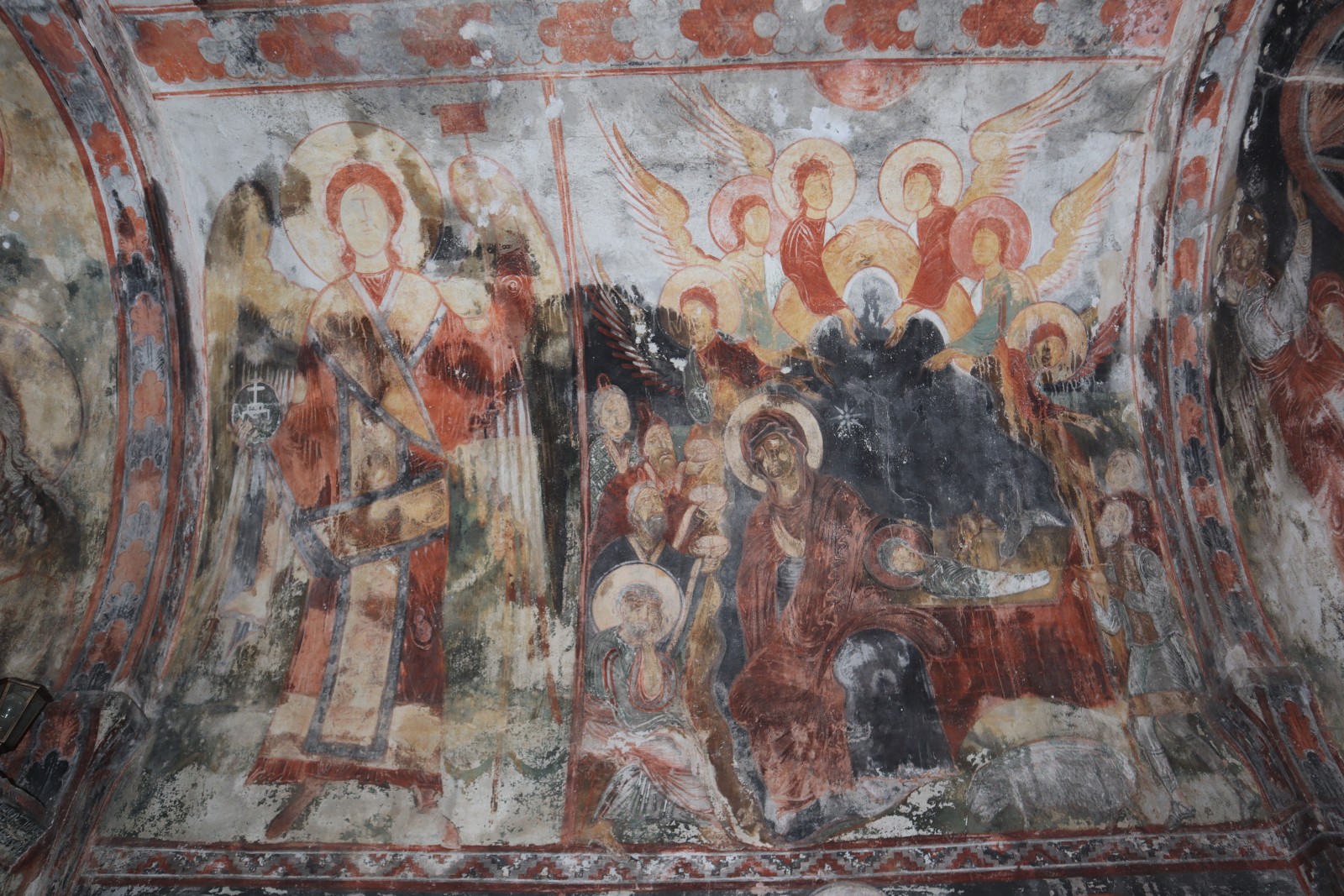
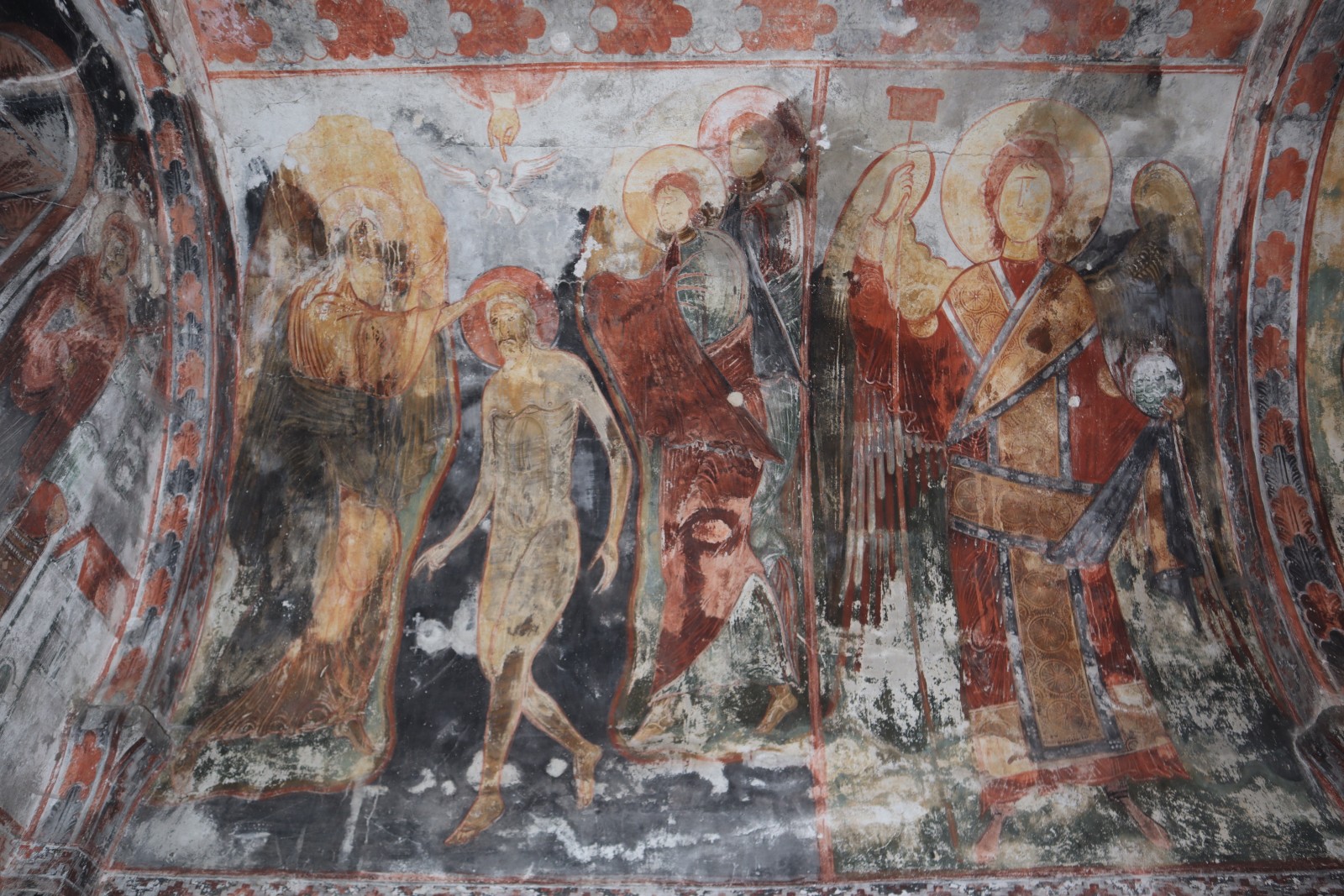
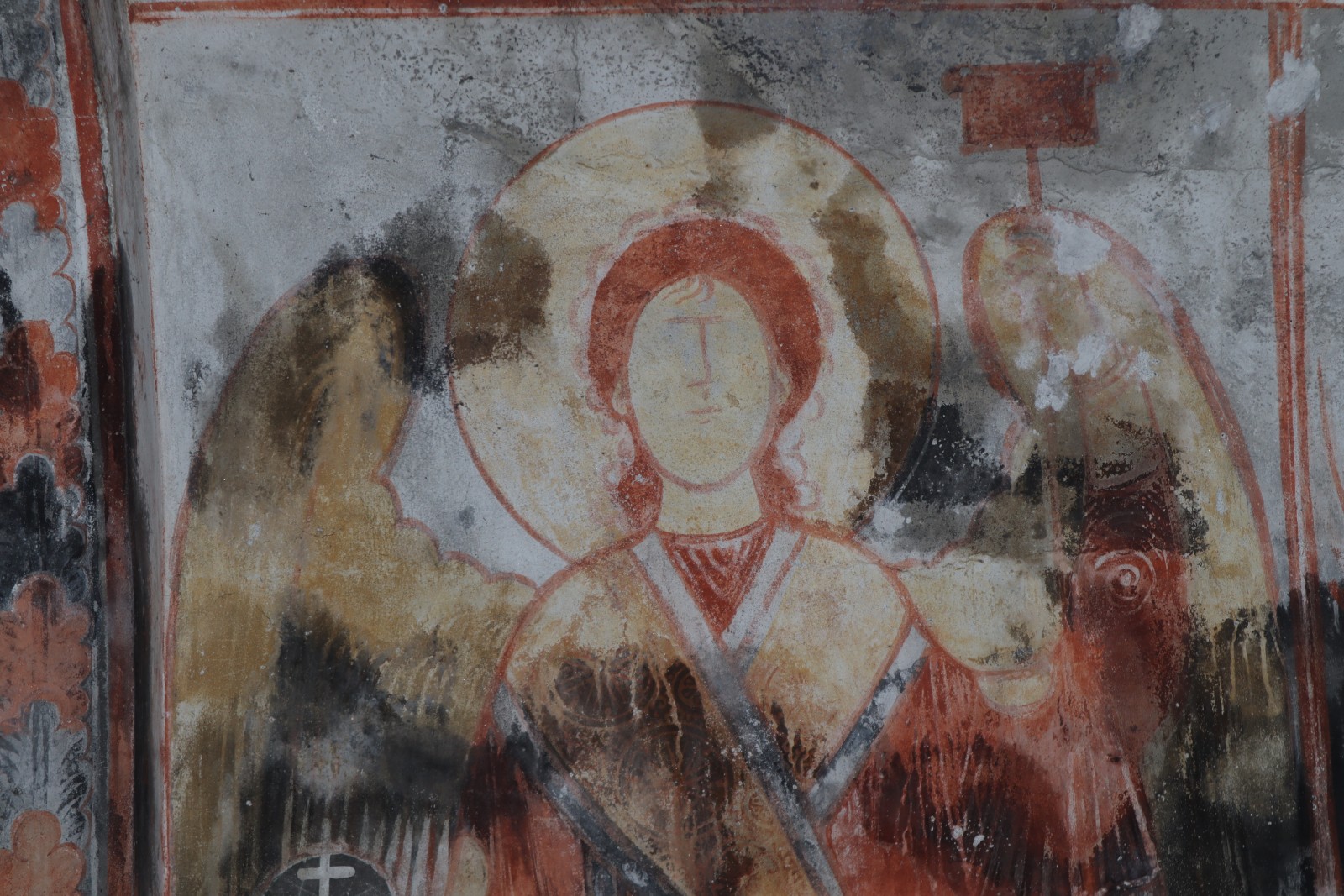
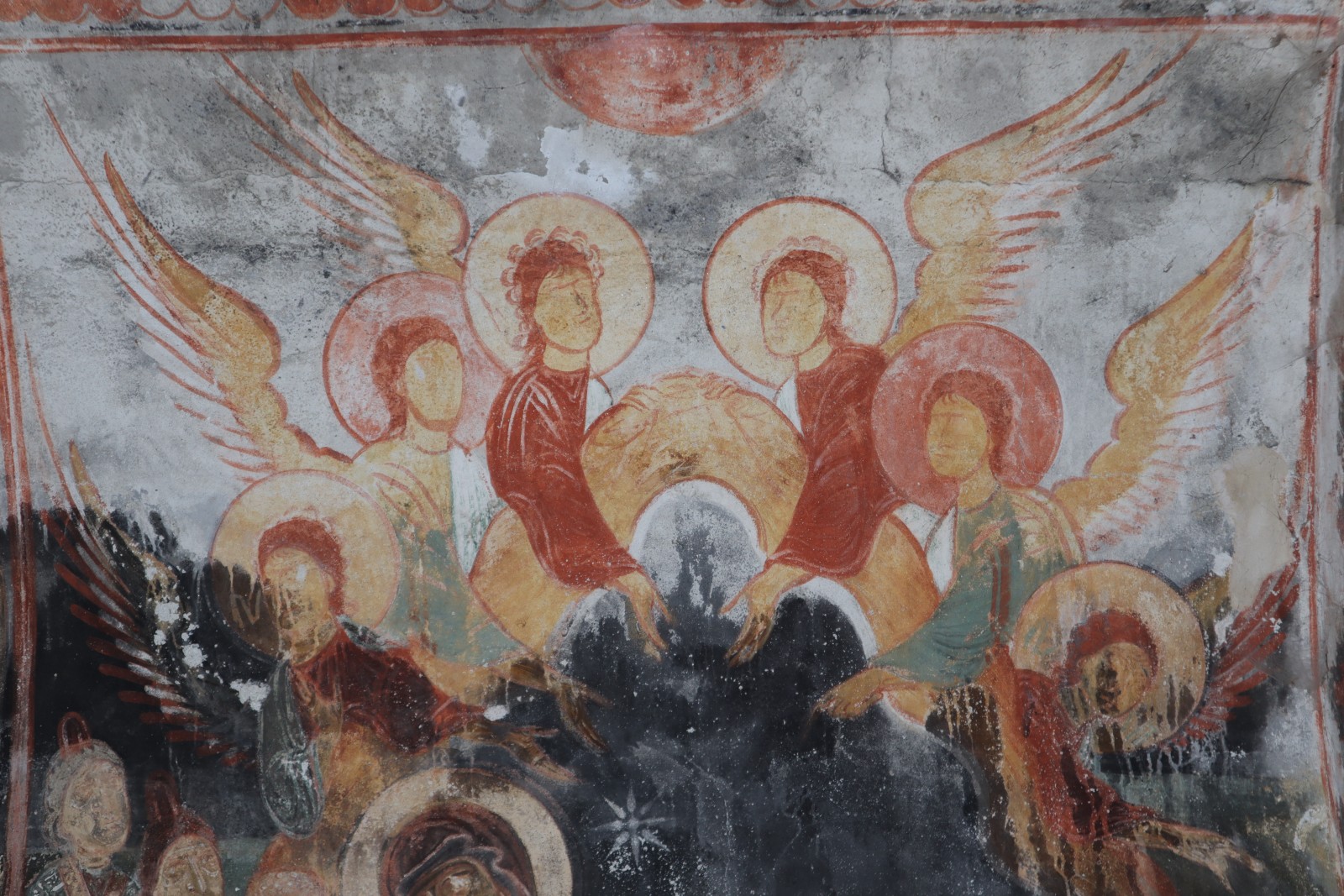
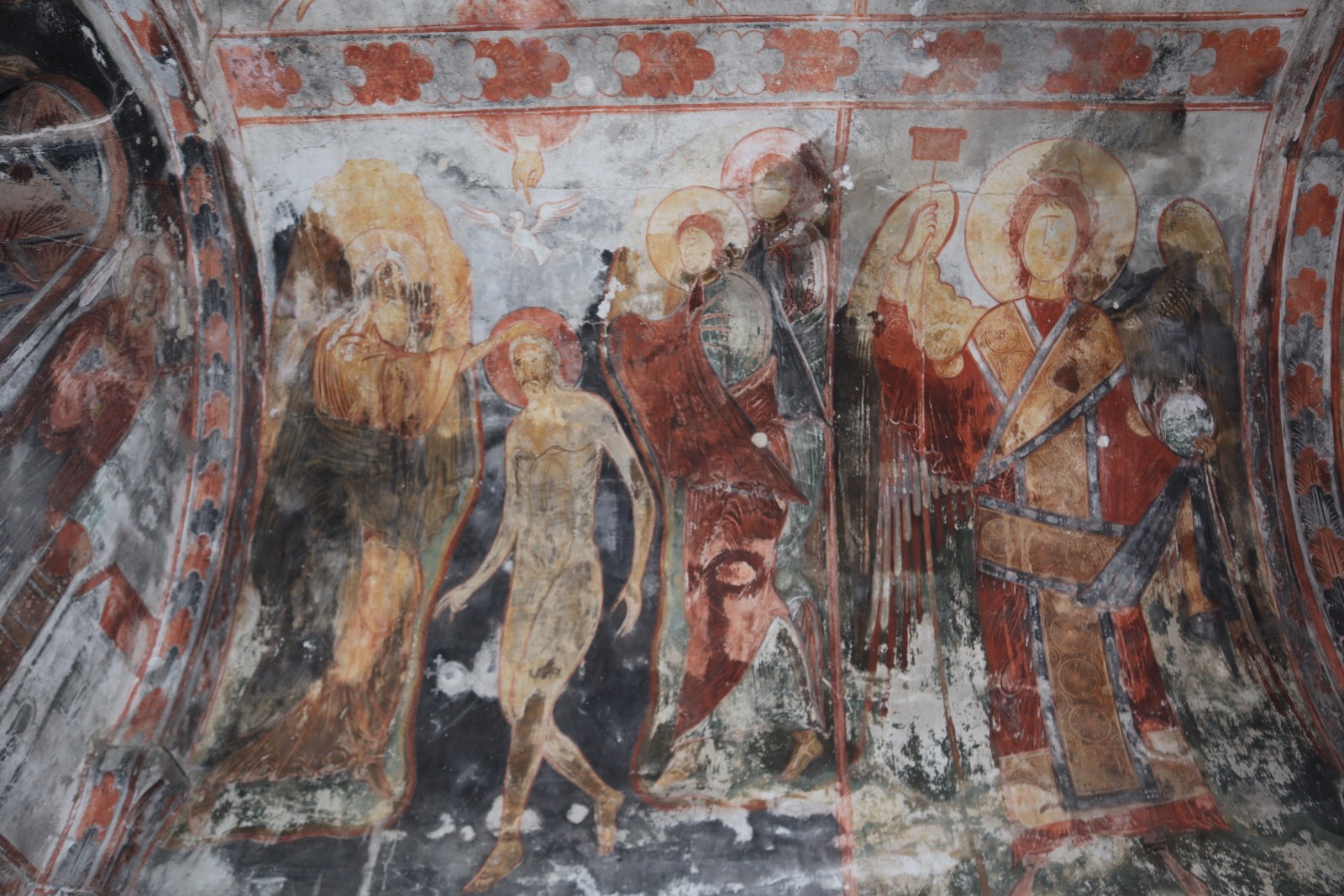
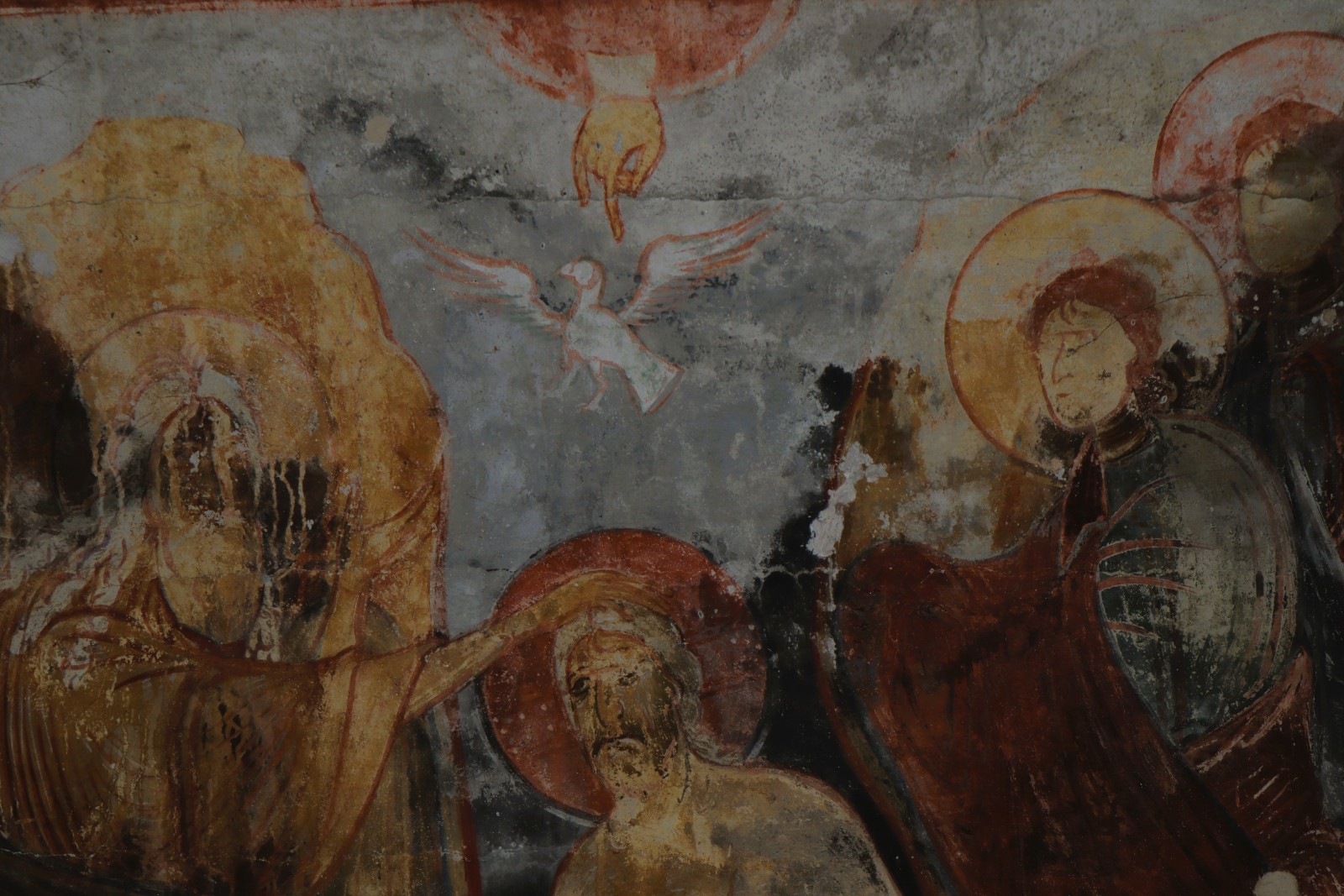
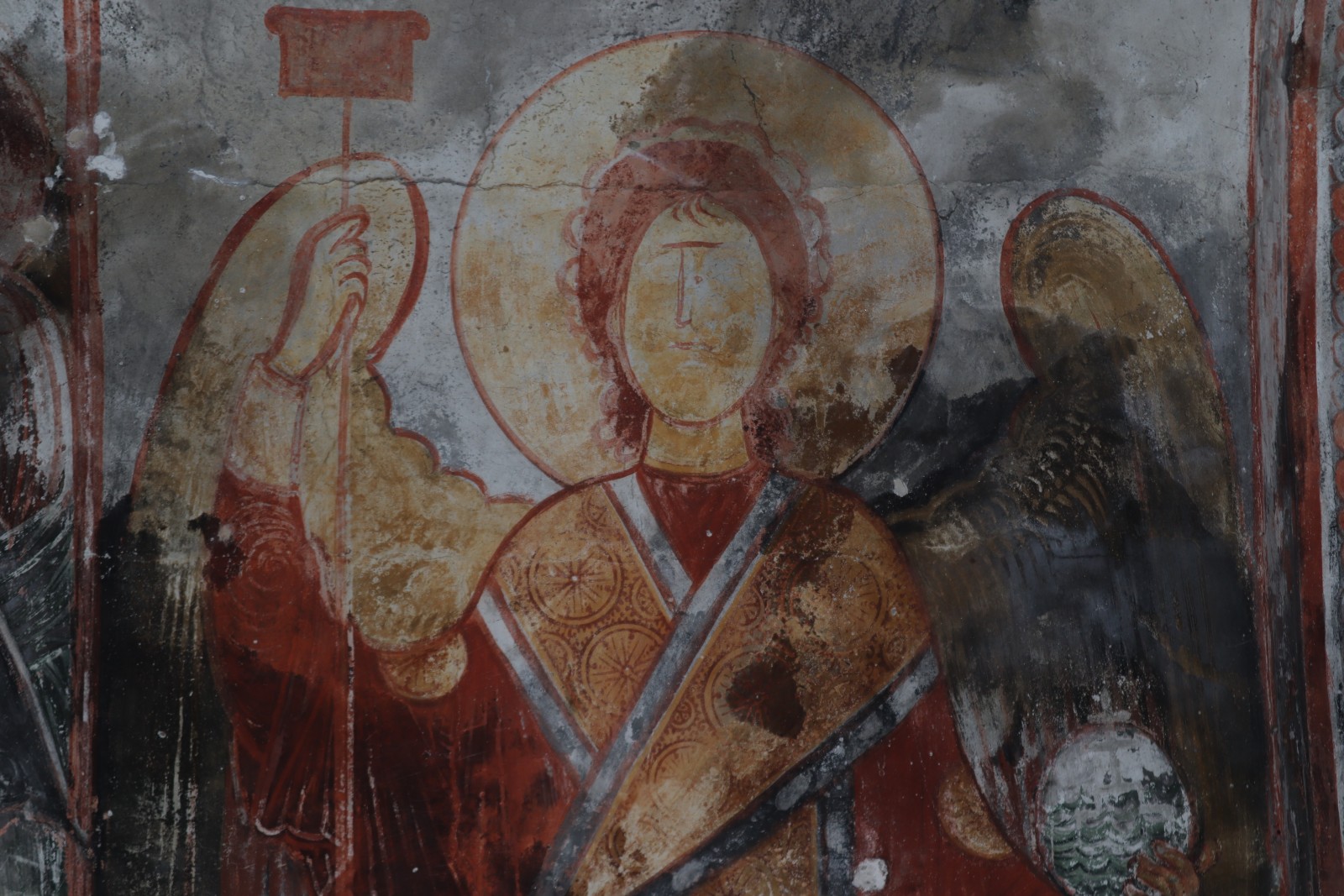
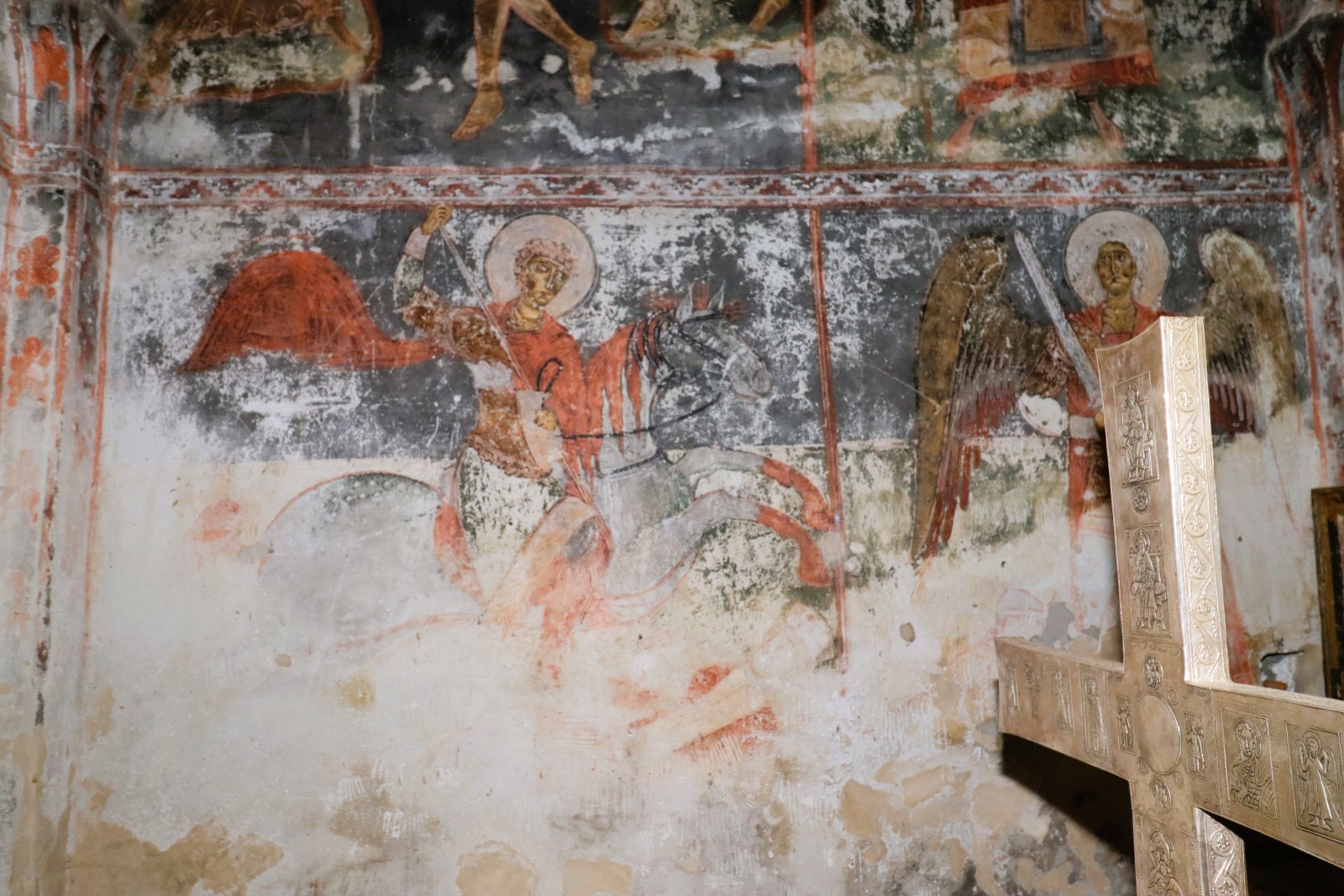
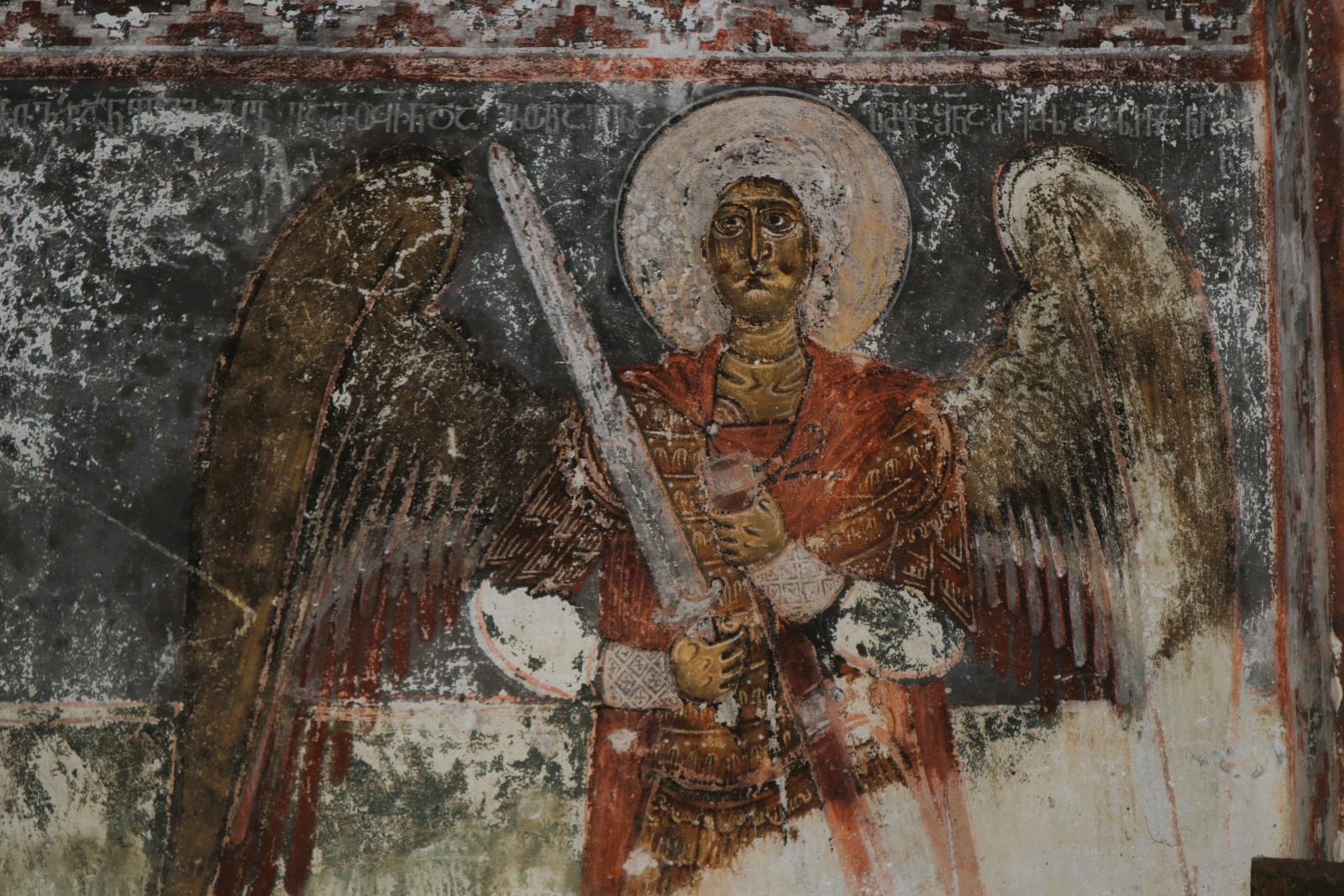
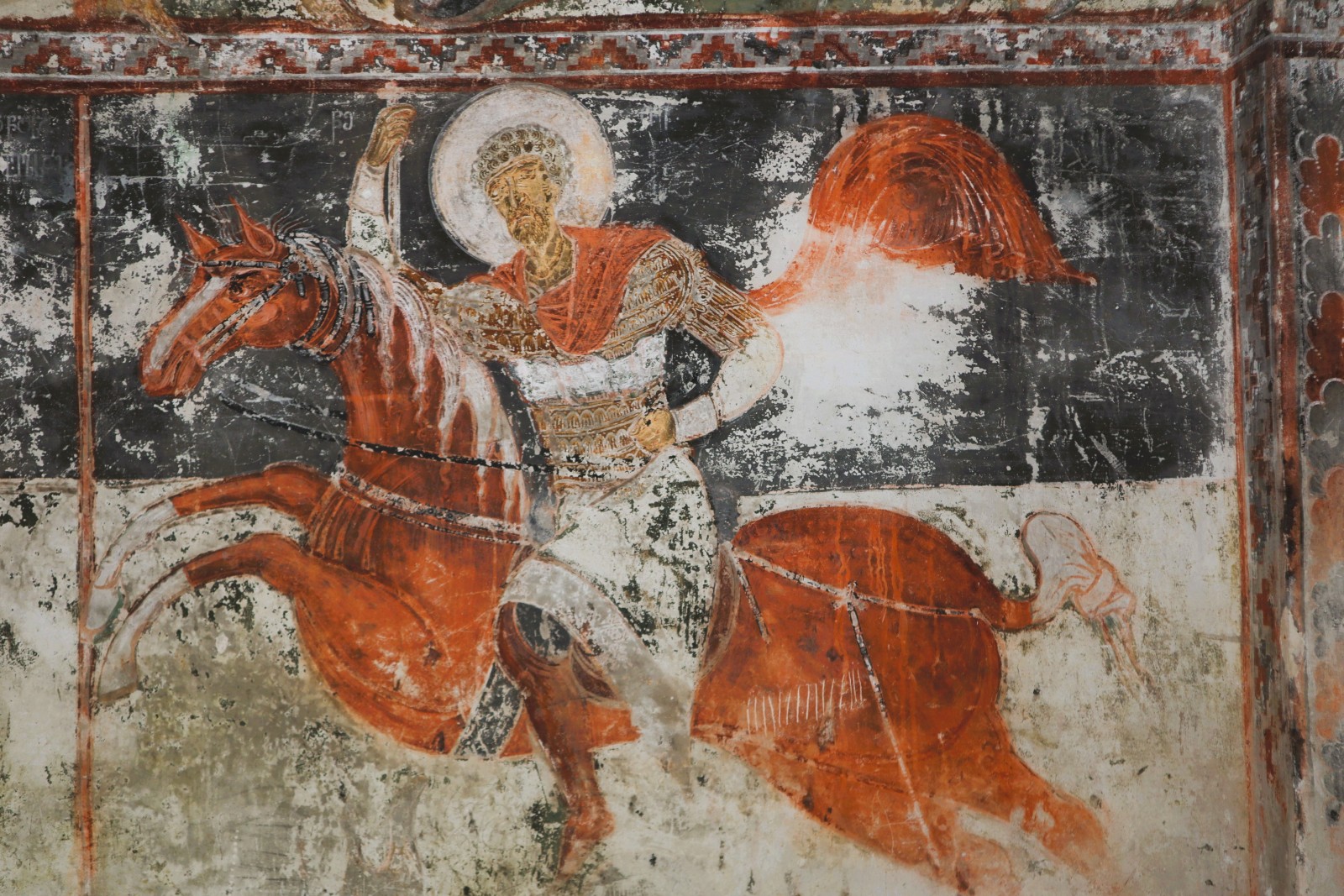
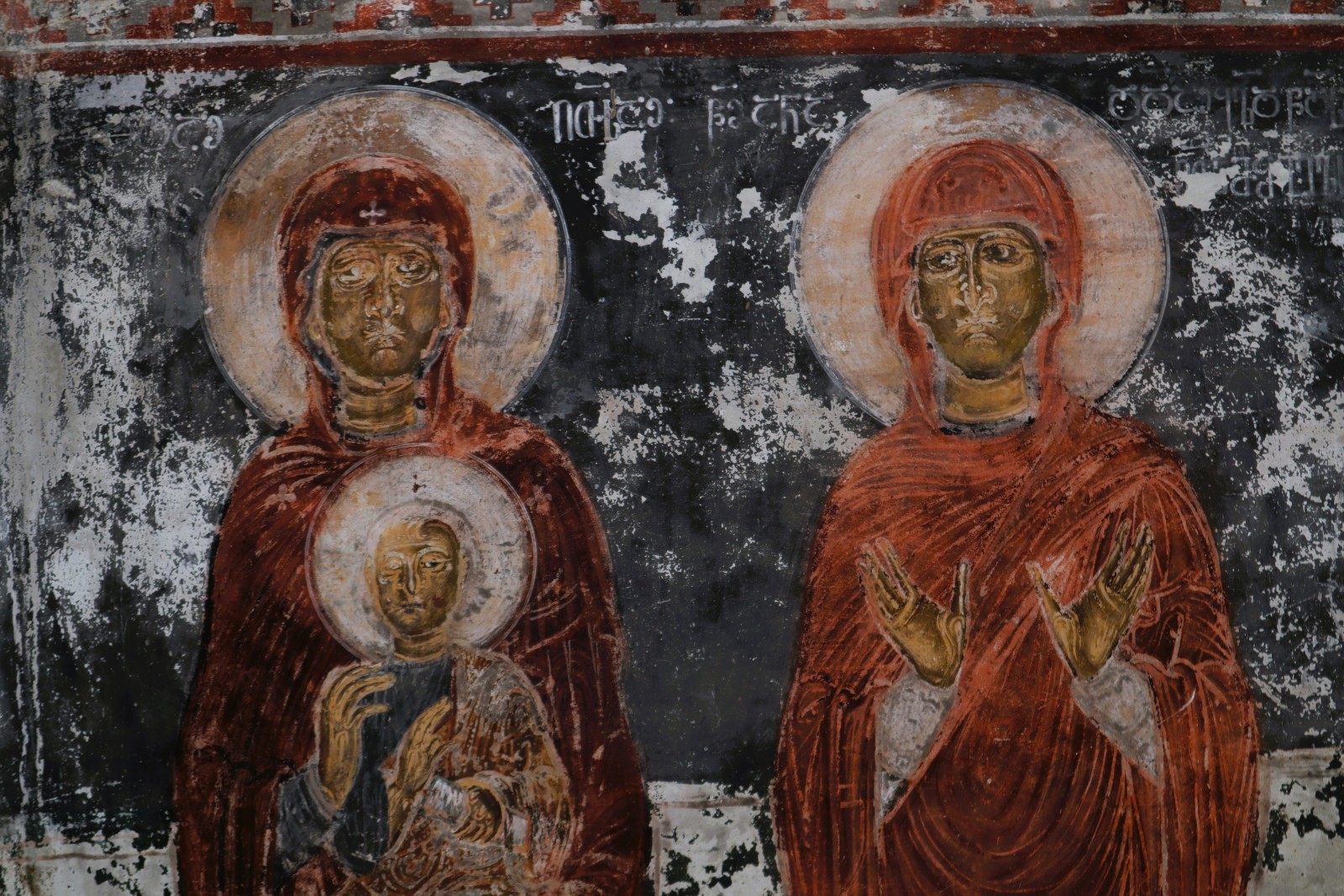
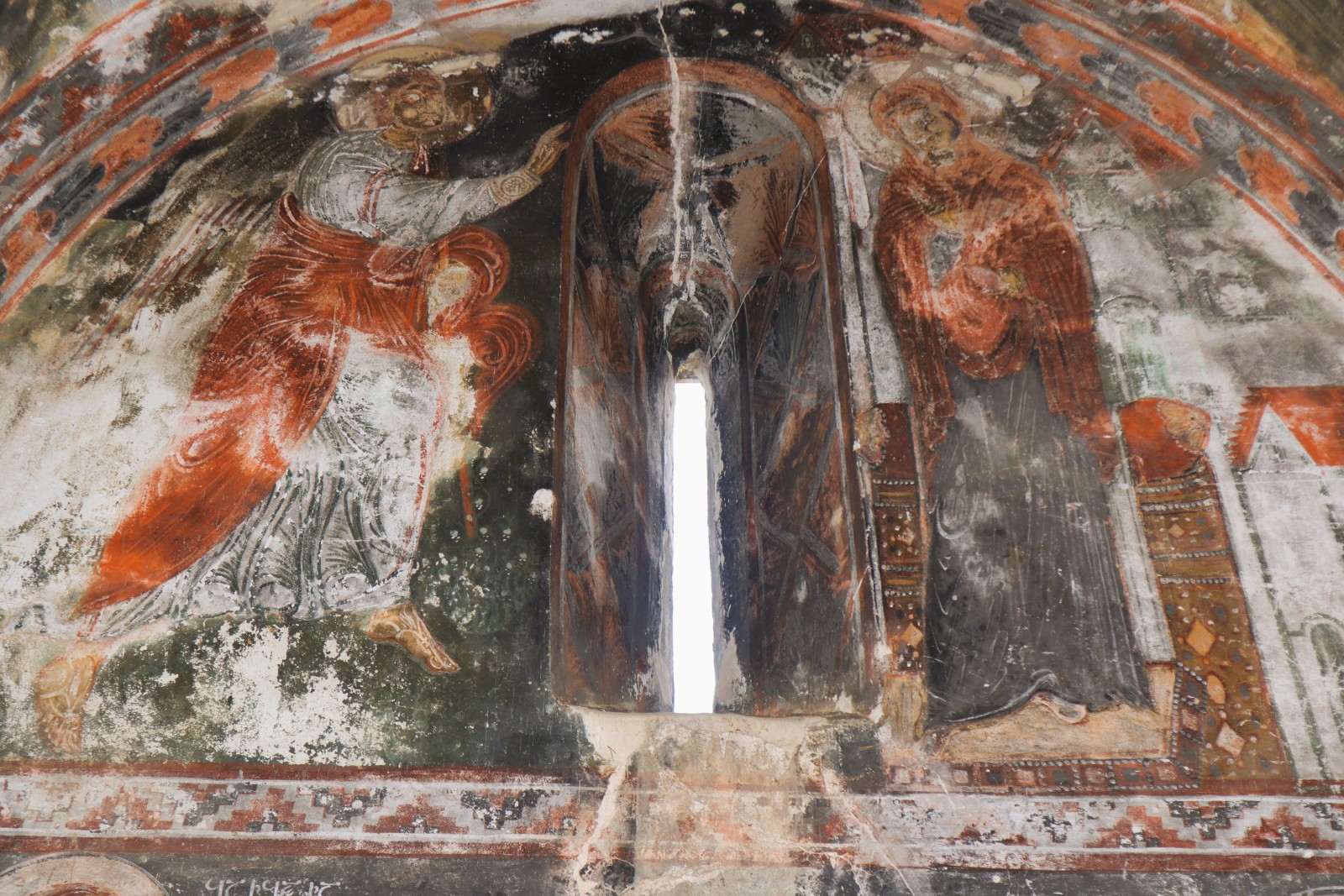

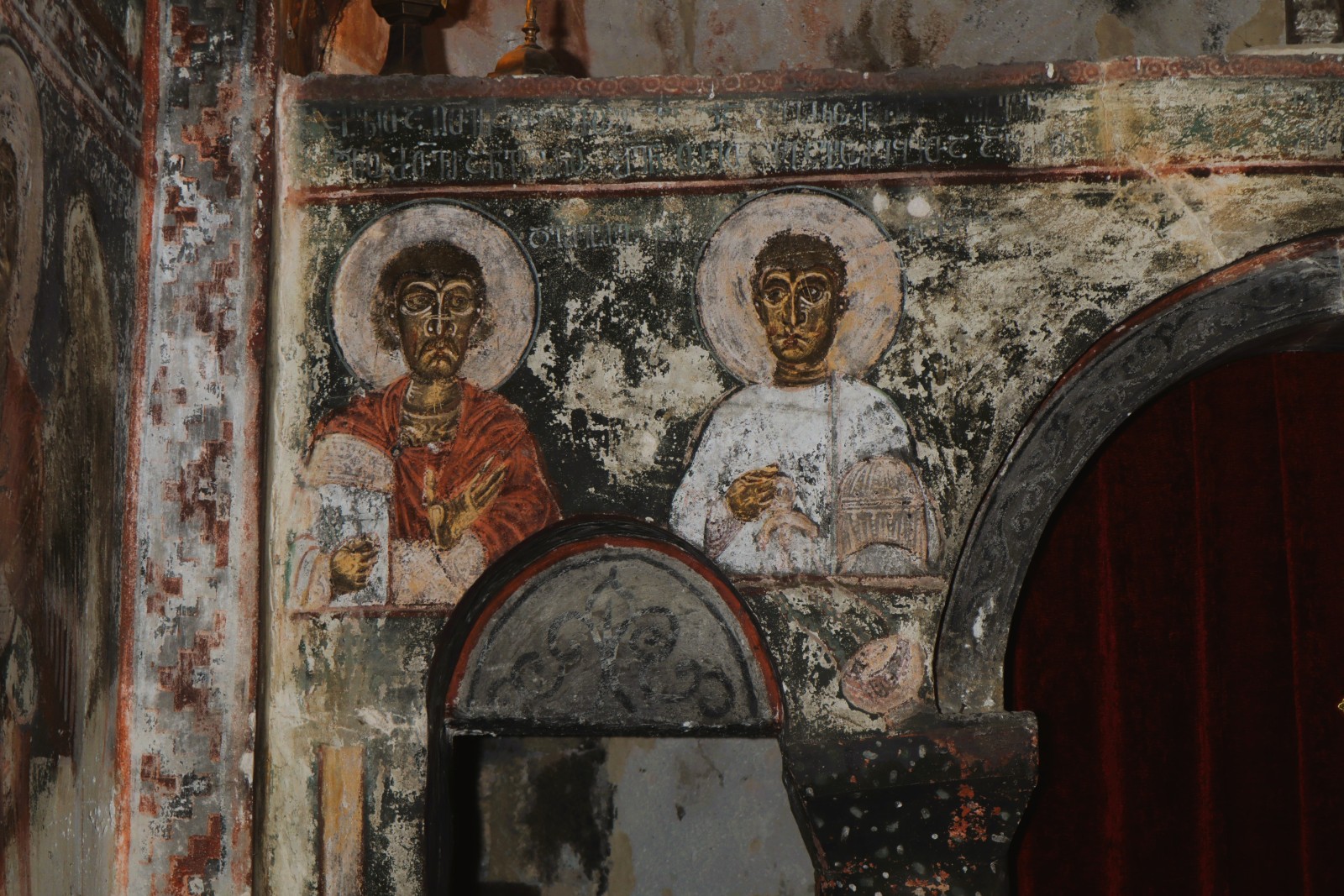
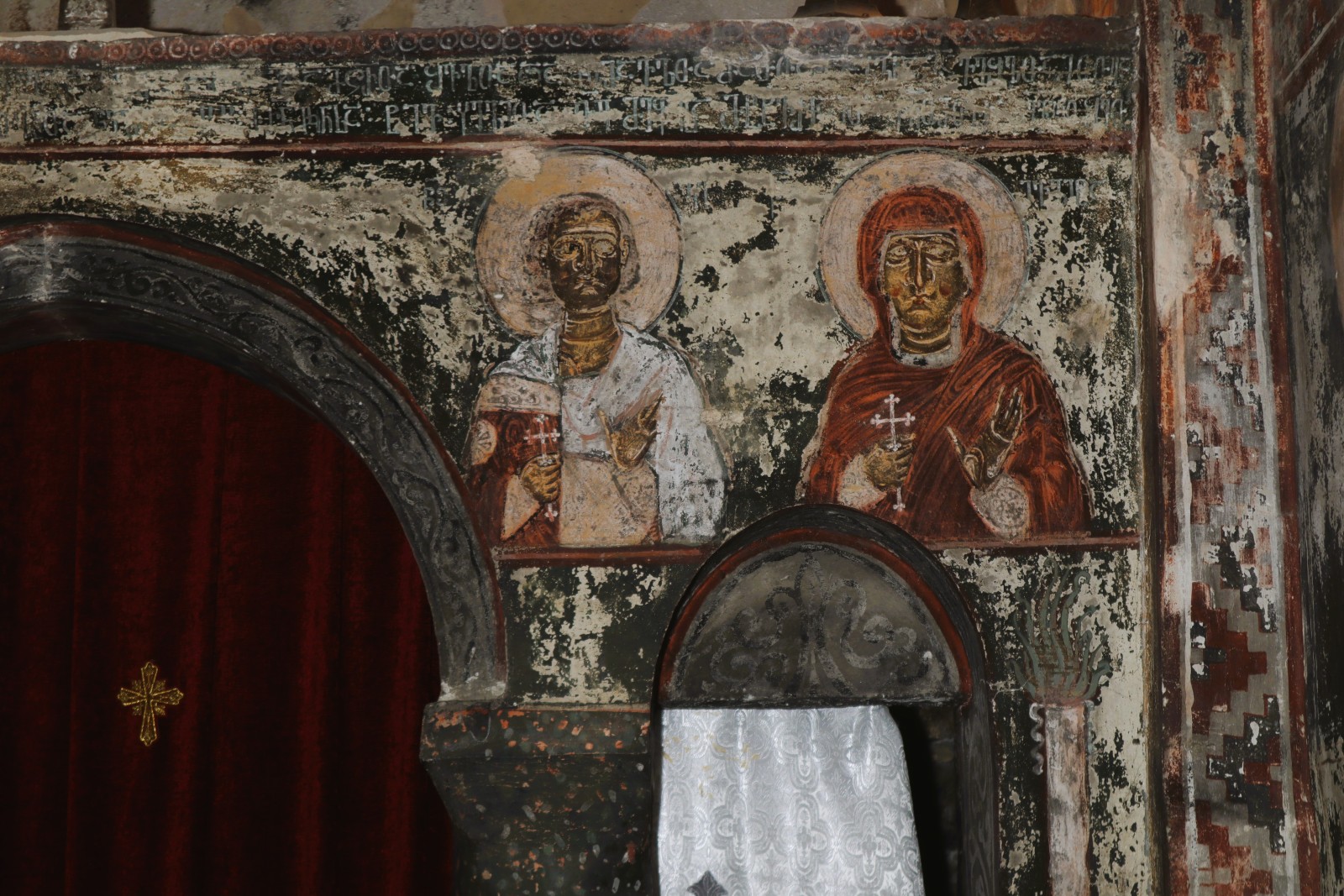
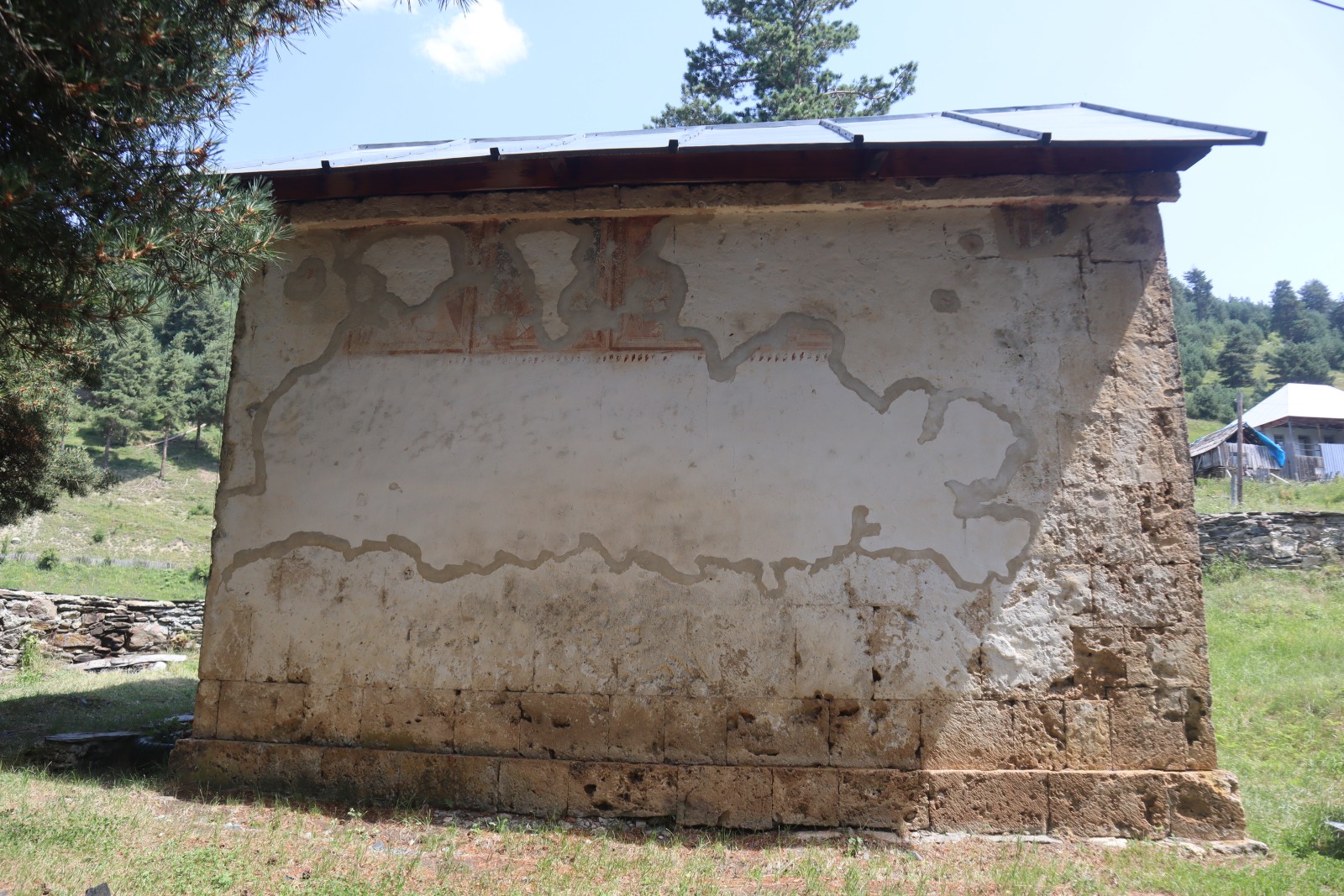
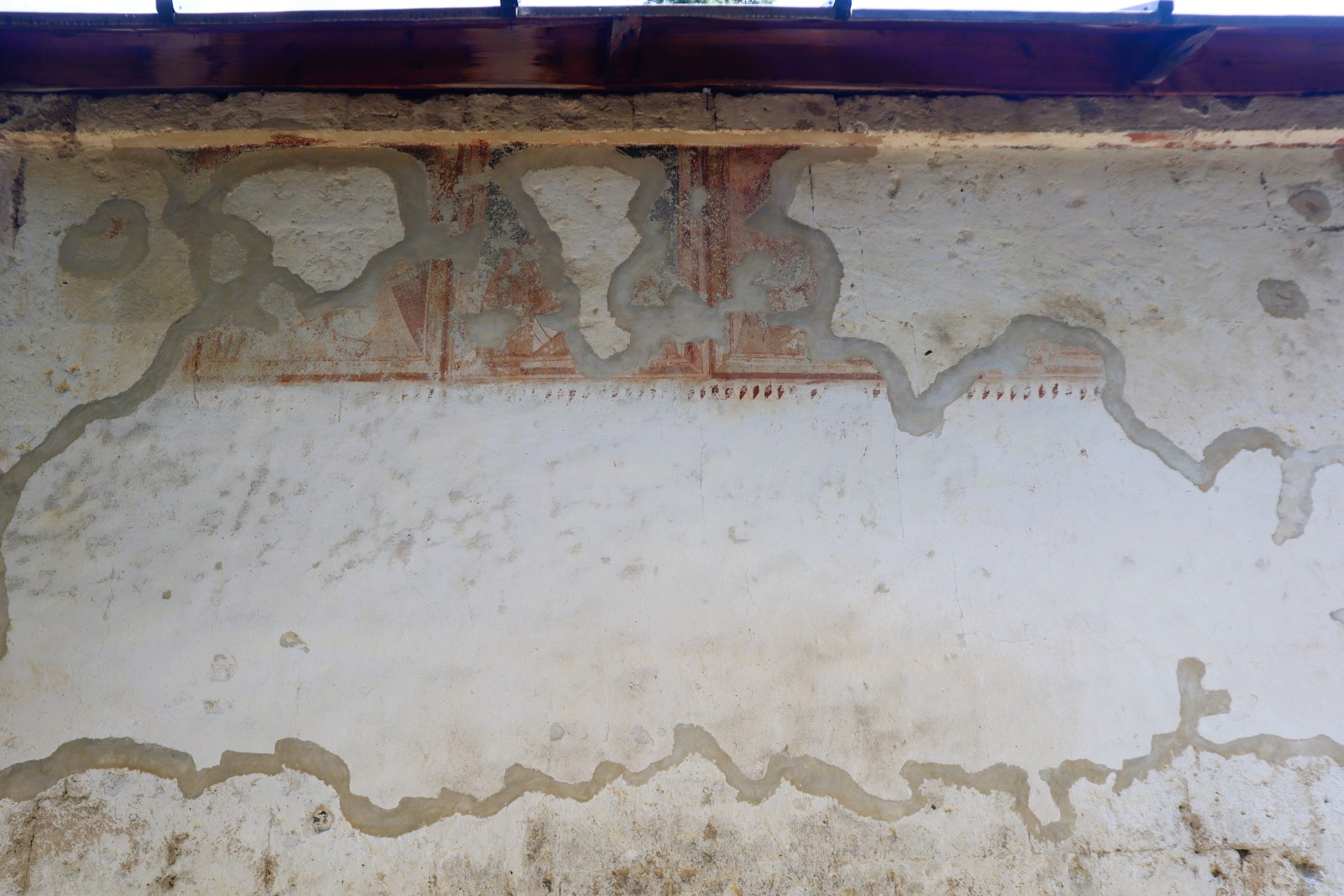
The Church of the Archangels in Iprari is a relatively large single nave church located in the village of Iprari in the Kala community. It was presumably built in the 10th –11th centuries. The church's interior is adorned with murals created in 1096, while the paintings on the southern façade date from the 12th century.
The interior decoration in Iprari is the earliest of all the murals created in Upper Svaneti by the royal painter Tevdore. This is confirmed by a long inscription preserved on the entablature of the chancel-barrier, which not only states the exact date of the painting and the name of the painter but also identifies the donor —the entire Kala community. The inscription reads:
“In the name of God, this holy church was painted and adorned in supplication for all of this gorge —for the great and the small, their children and descendants, and for the souls of their deceased. Holy Archangels, have mercy in both lives. Amen. It was painted in the year 6564 (1096), from the creation of the world, chronicon TIV by the hand of Tevdore, the royal painter. Holy Archangels, have mercy.”
It is important to note that the inscription includes Tevdore’s title - “royal painter” - which on the one hand confirms his close relationship with the royal court, and on the other, provides evidence of such a title's formal existence at the court. Also noteworthy is that the commissioner of the murals was the entire Kala community, regardless of social status—something quite rare in mural painting tradition.
The Iprari wall painting clearly reveals the peculiarities of Tevdore’s creative activity. On the one hand, this is manifested by the further development, and generalization of the approaches and traditions established during the initial stage of the Svaneti painting school. On the other hand, he brought these to the acme of the artistic perfection, organically connecting them with the cultural and spiritual demands of his time.
This is evident both in the general concept of the painting - featuring a complex program unified by deep theological and symbolic accents that serves as a kind of "apologia" for Orthodoxy - and in the structural harmony and clarity of the ensemble, where the individual parts are classically balanced and symmetrically inter-related.
Tevdore’s distinctly individual and easily recognizable manner is especially felt in the monumental, powerful figures, and in the mode of execution of faces and garments. This gives the images with deep inner energy, created by him, an emphatic expressiveness and a strong emotional impressiveness.
| Location | The church is located in the outskirts, north to the village |
| Booking | https://www.booking.com/hotel/ge/vichnashi.html |
| https://www.facebook.com/kitchenvichnashi | |