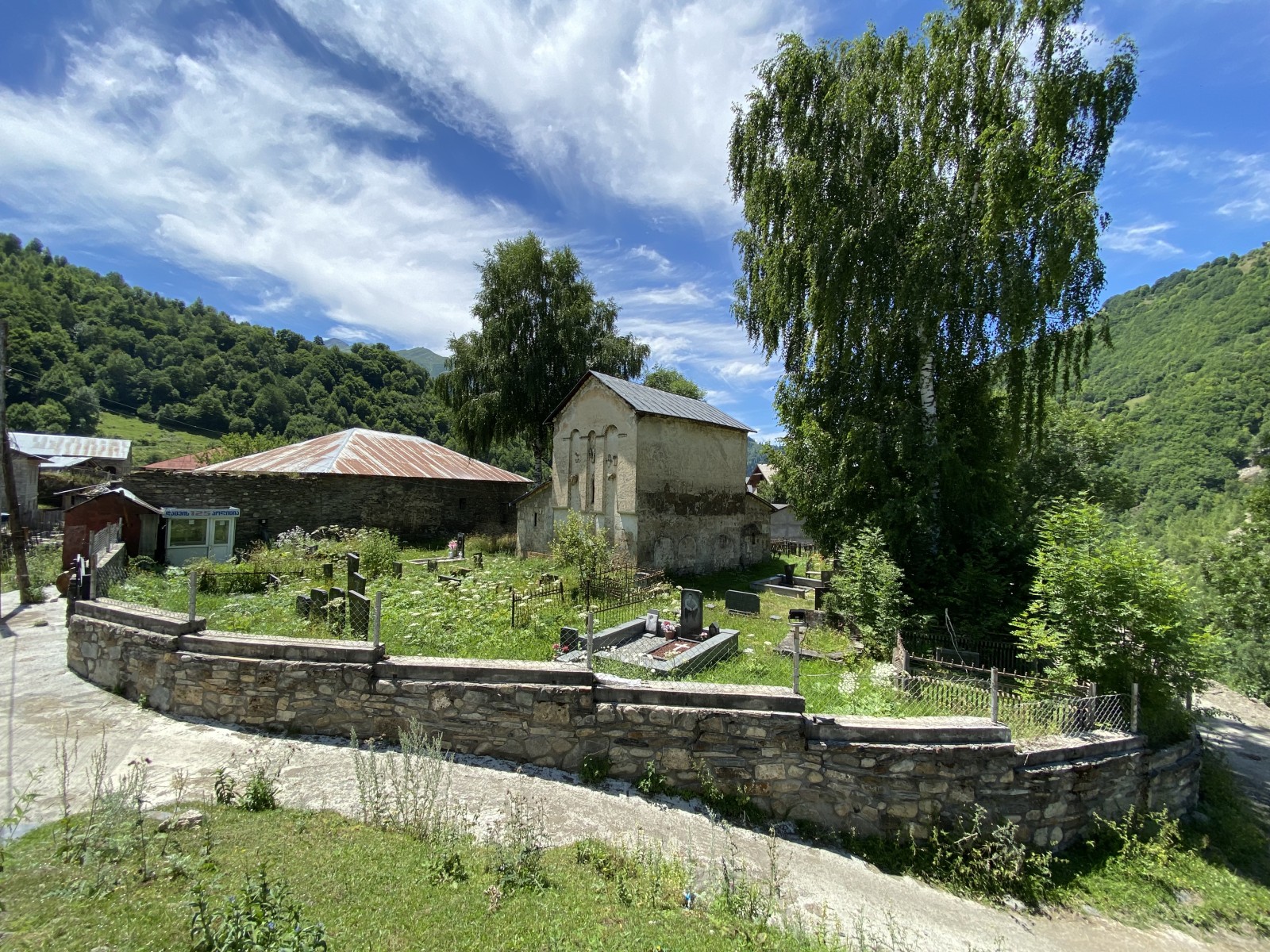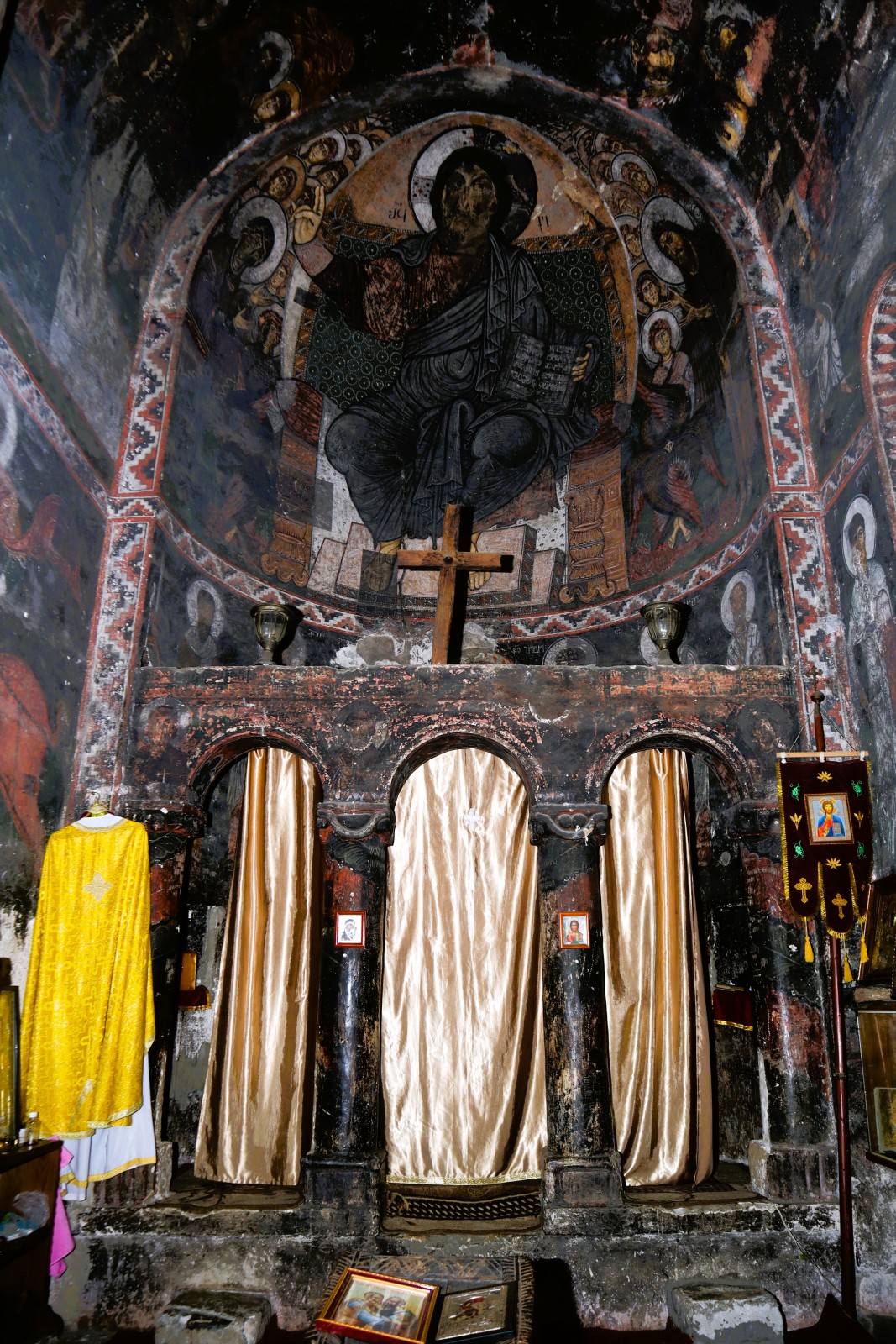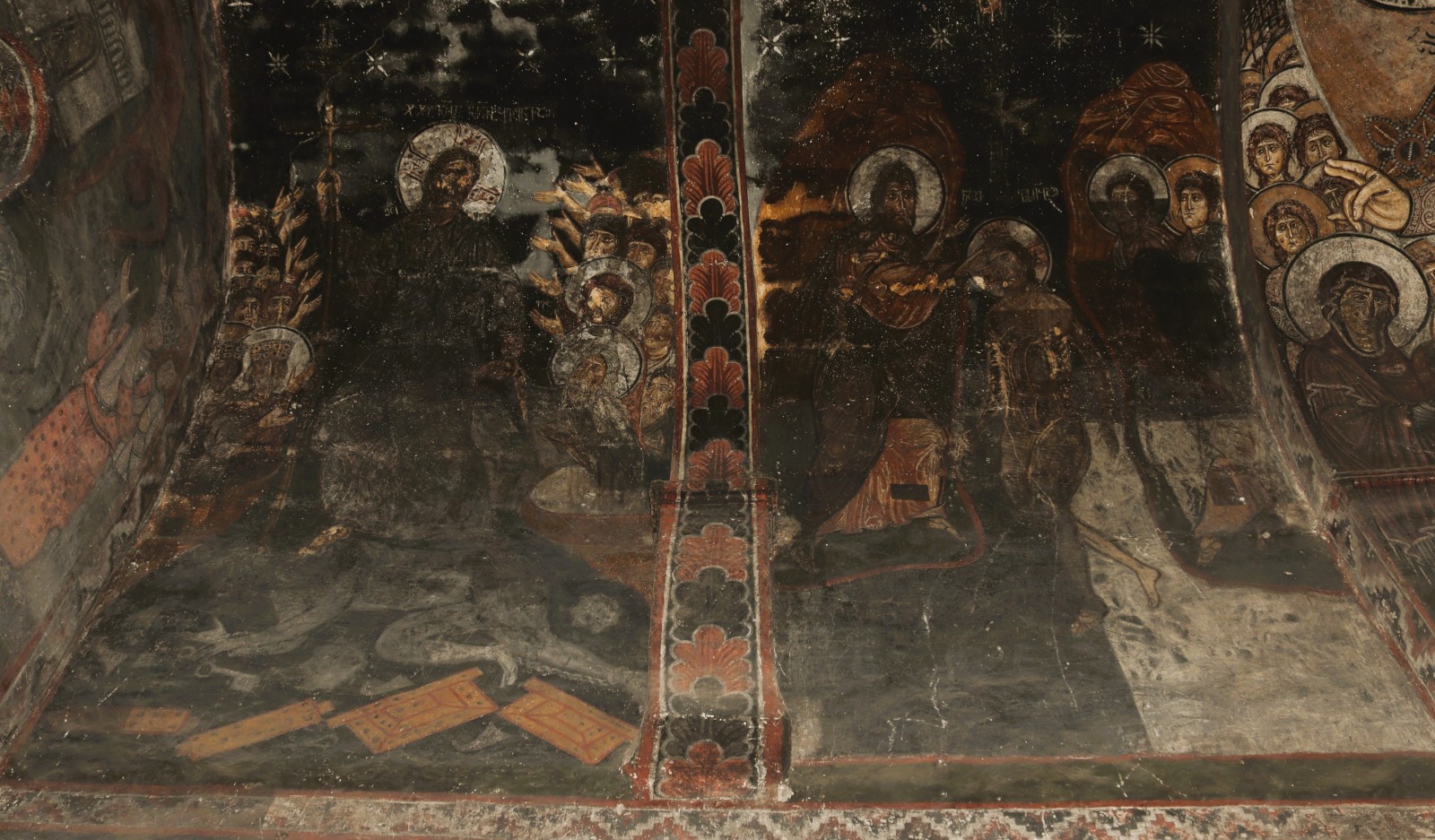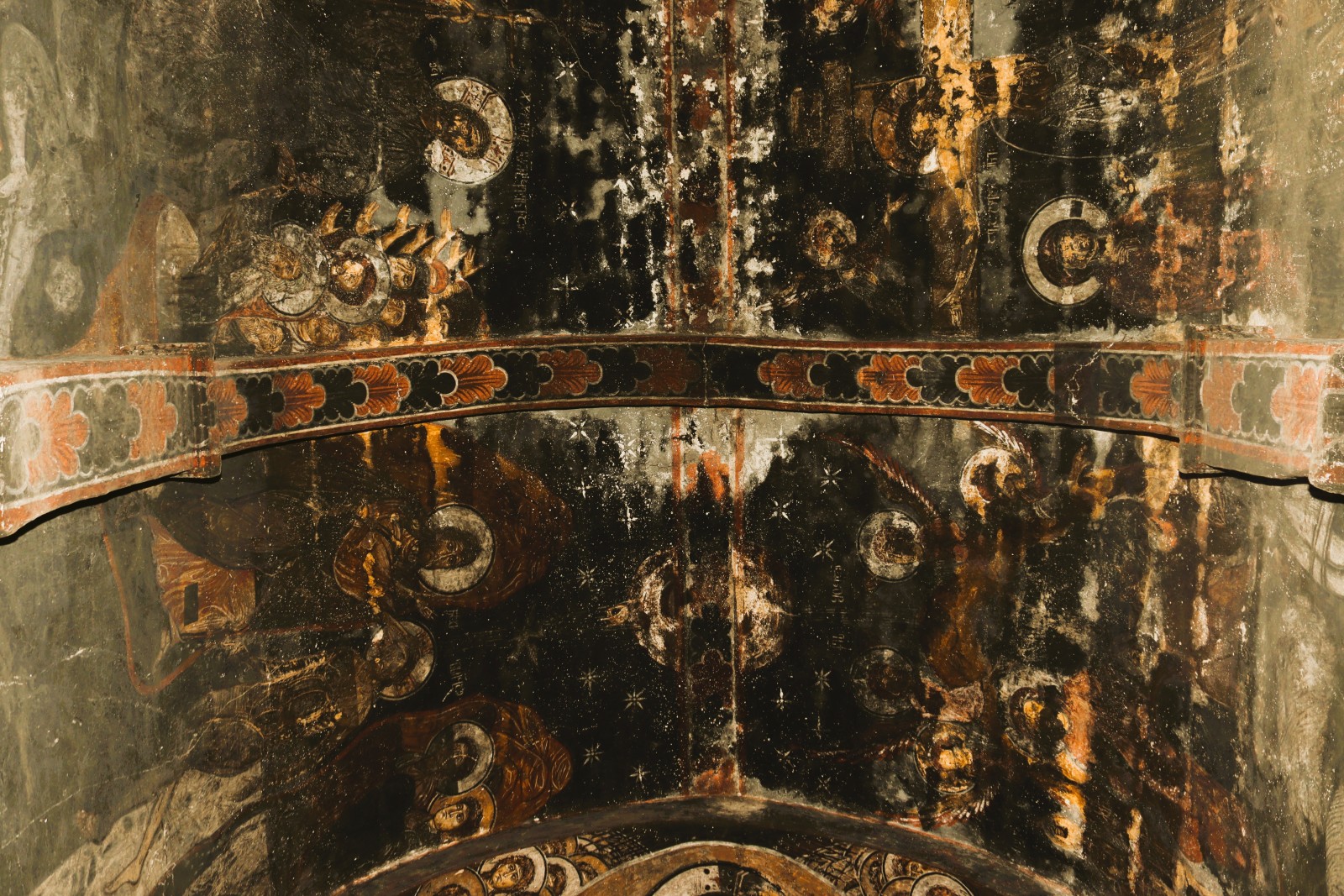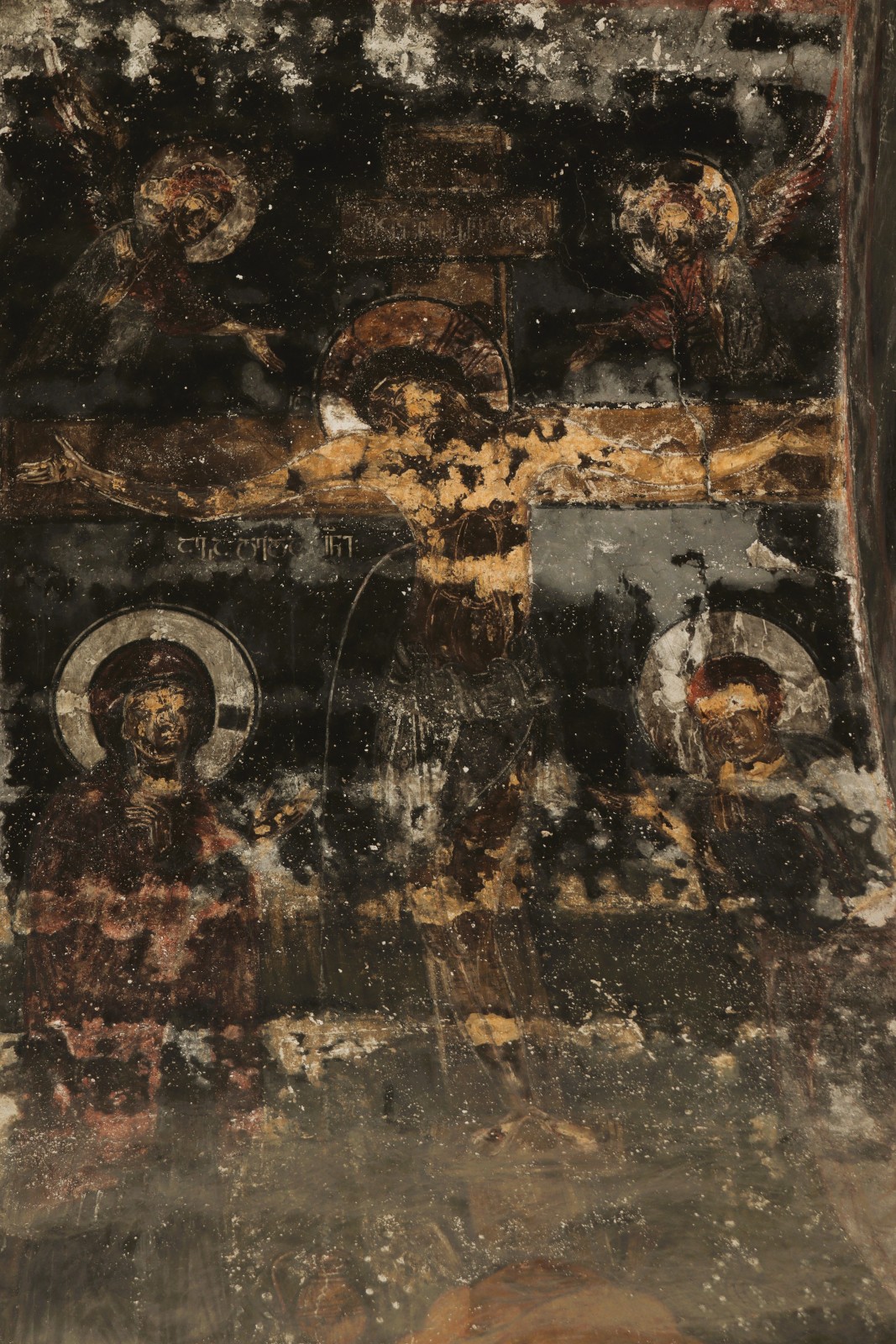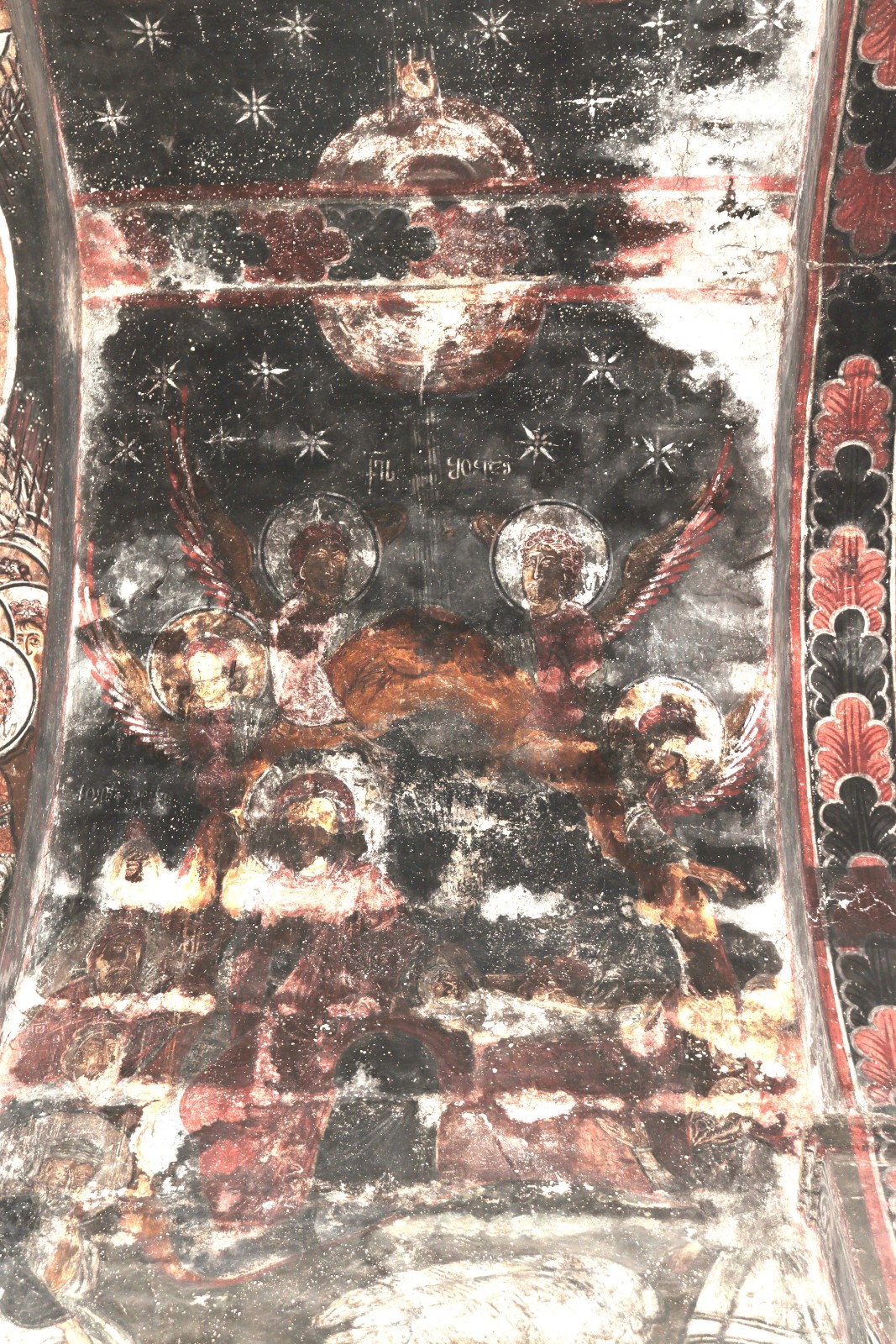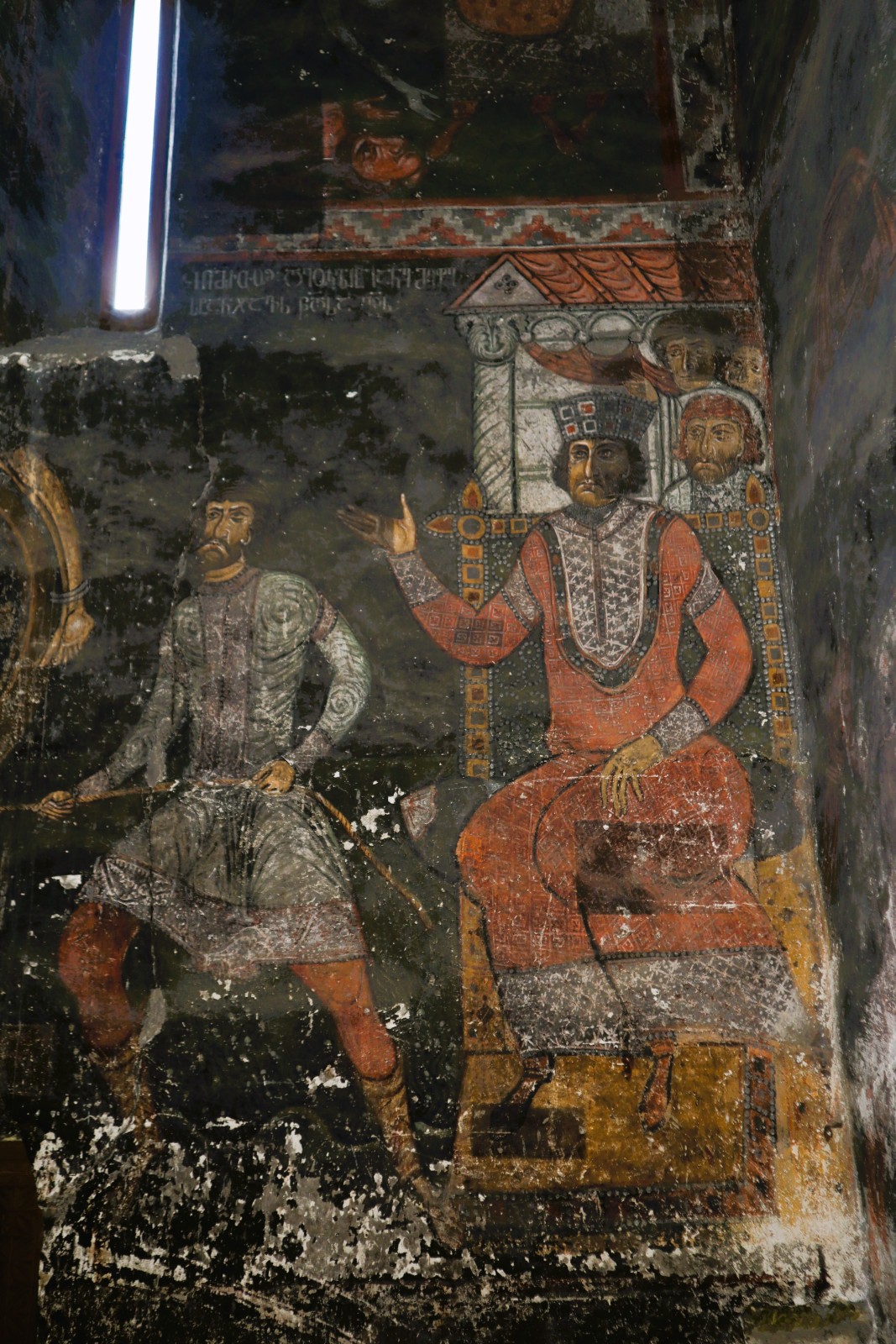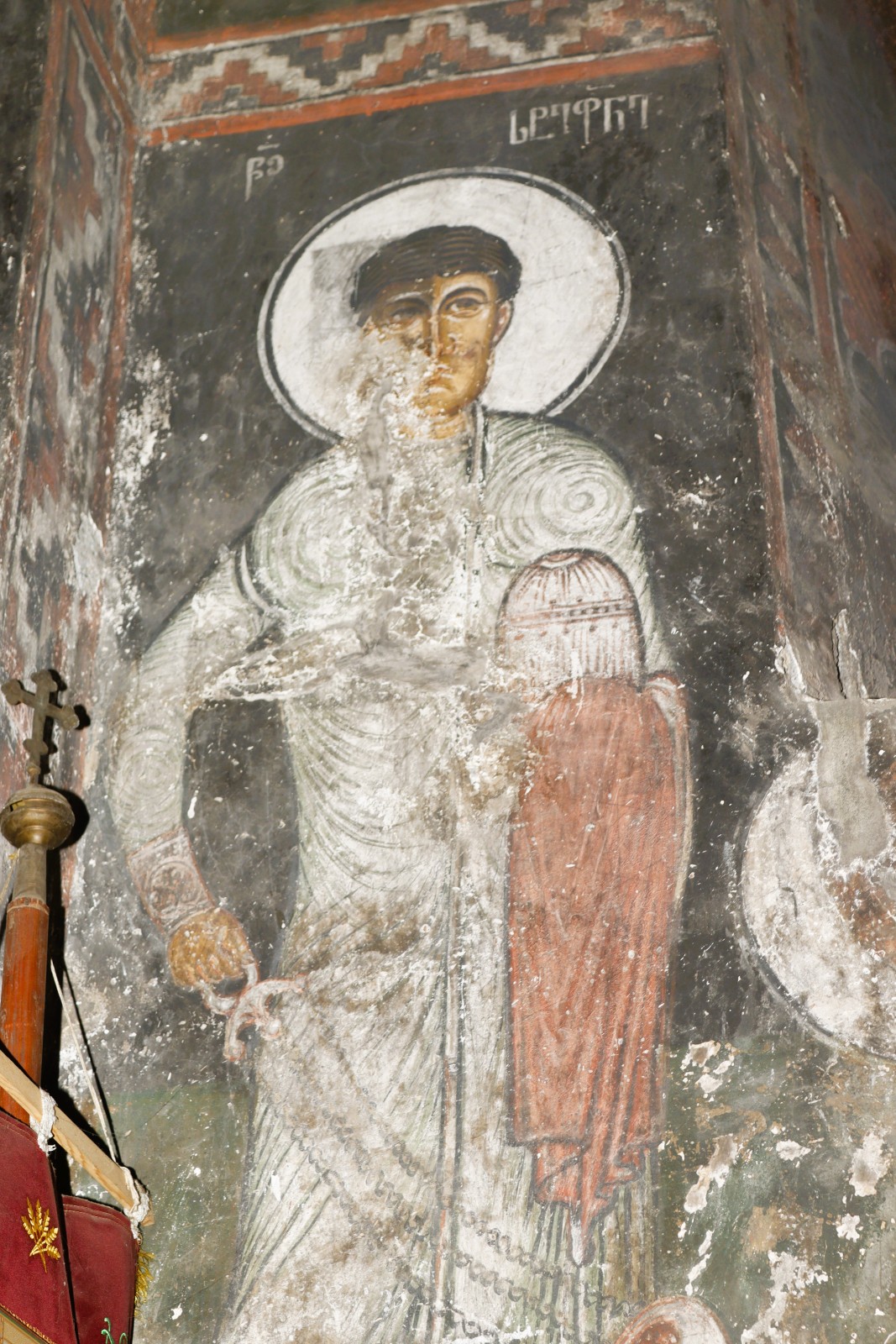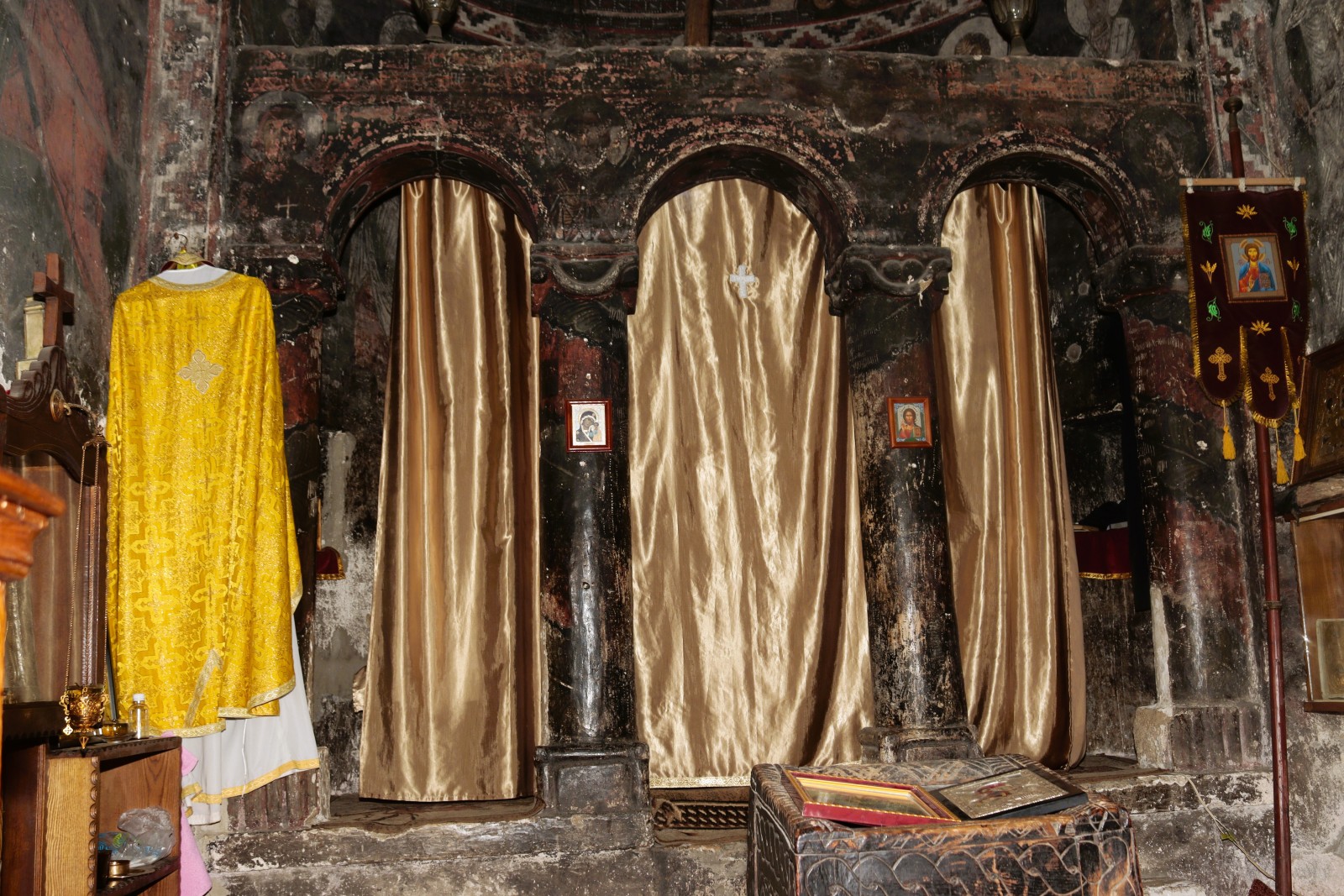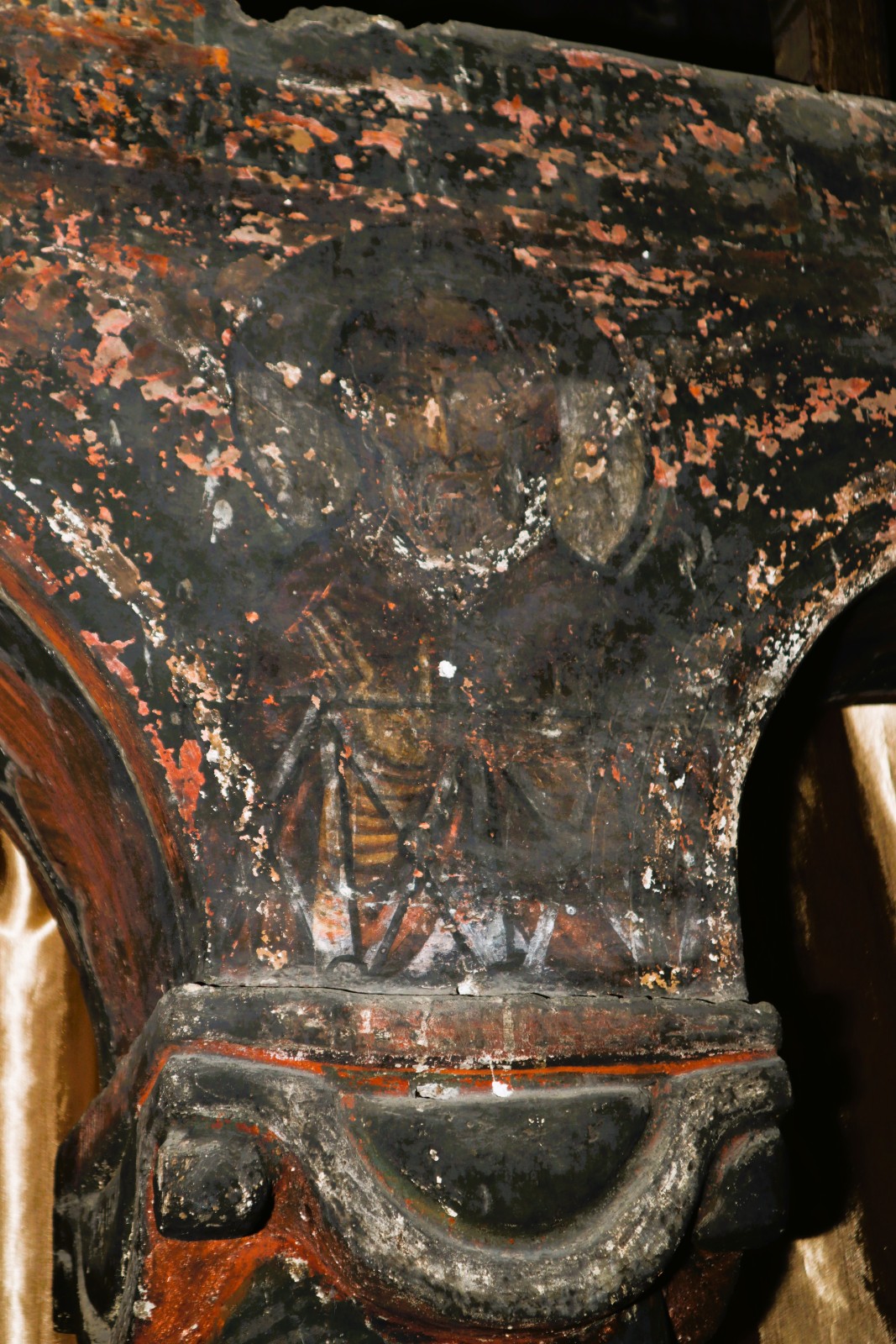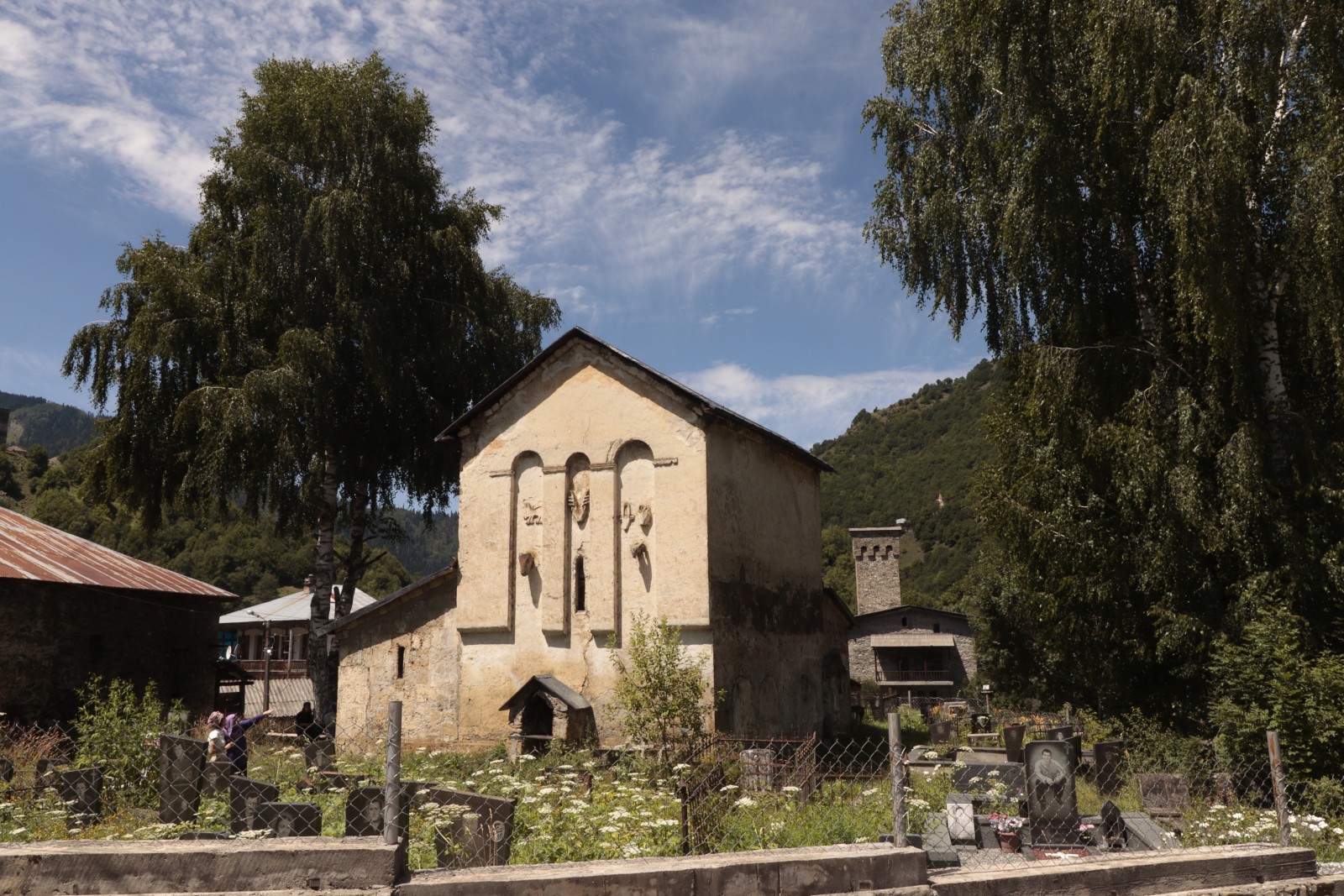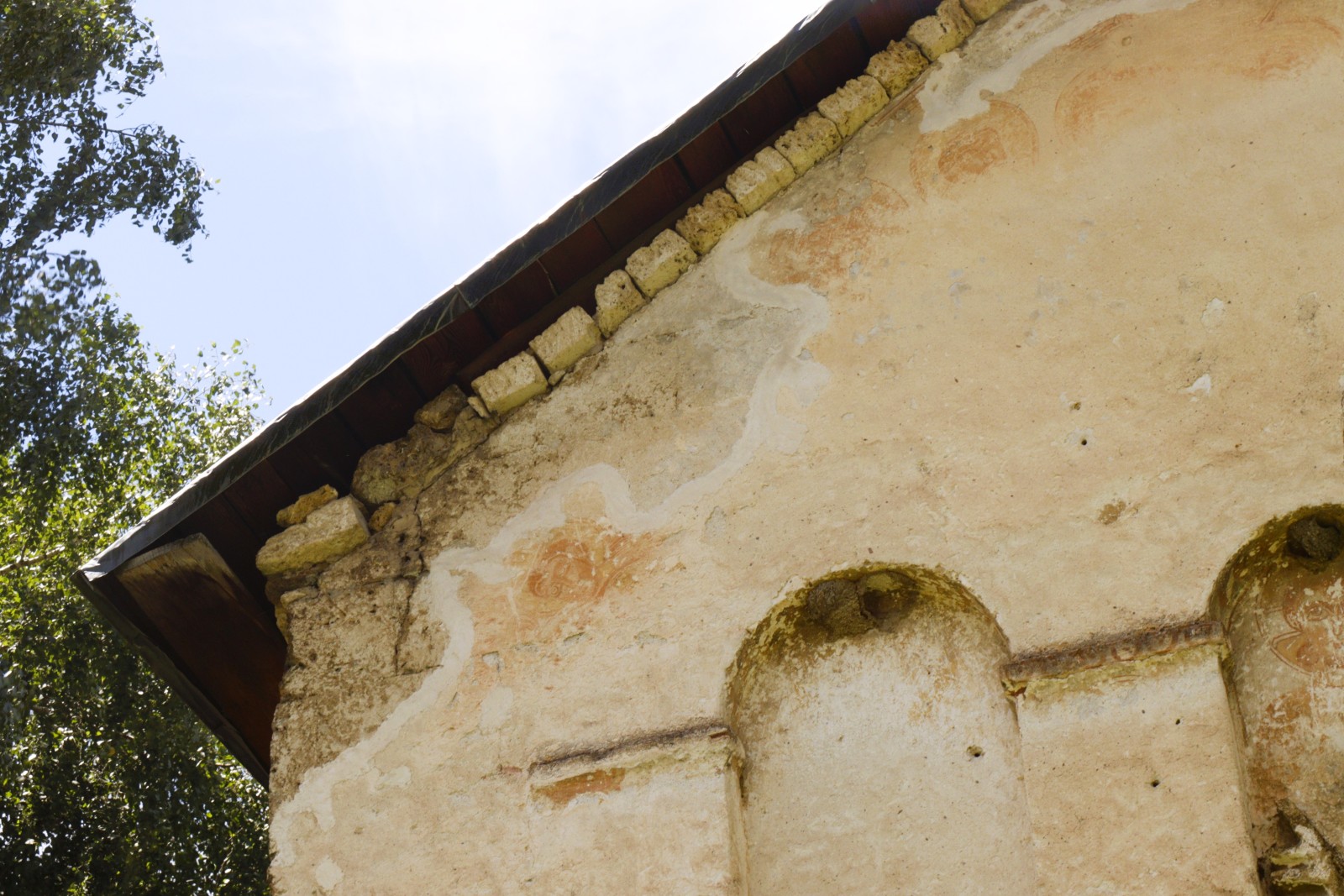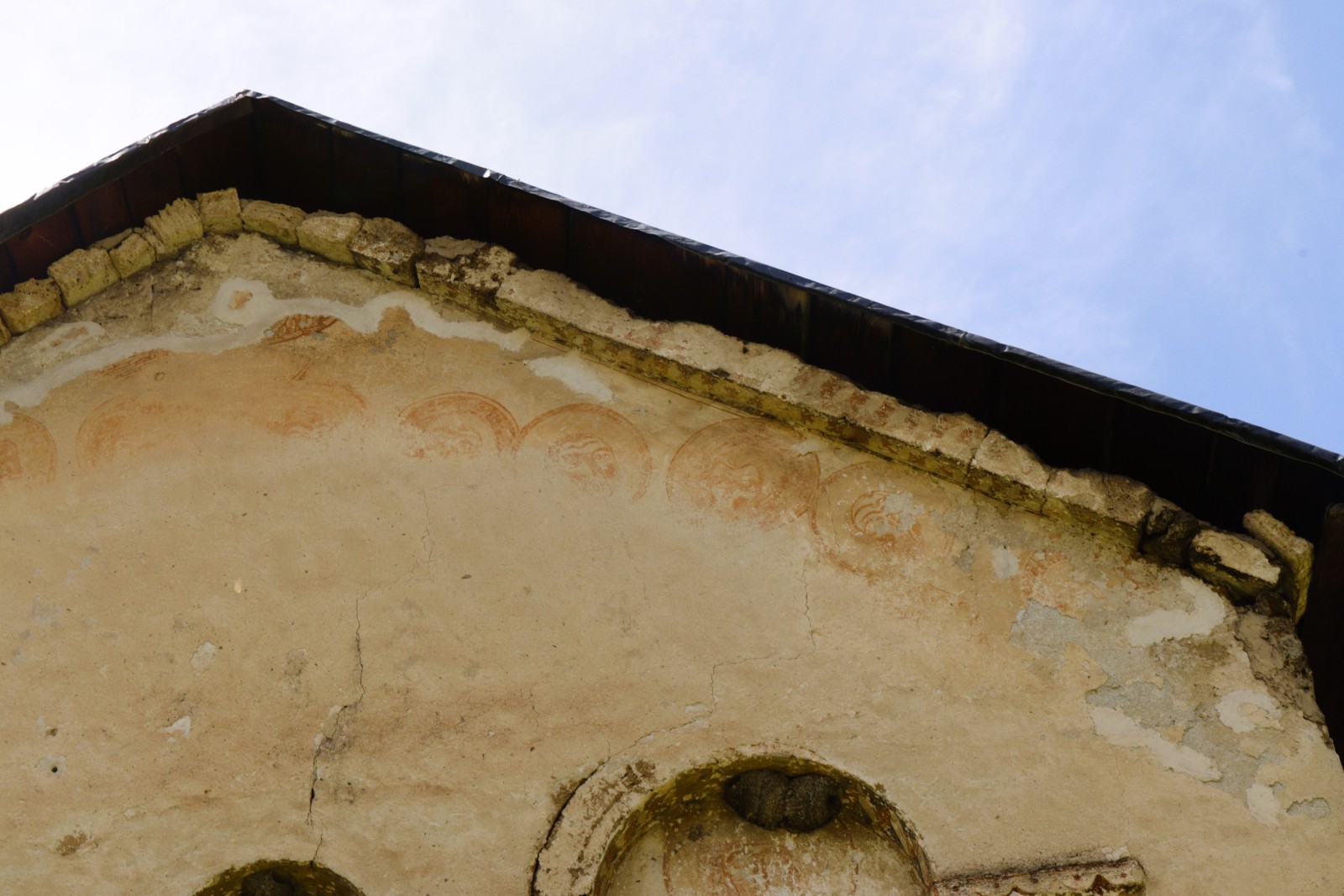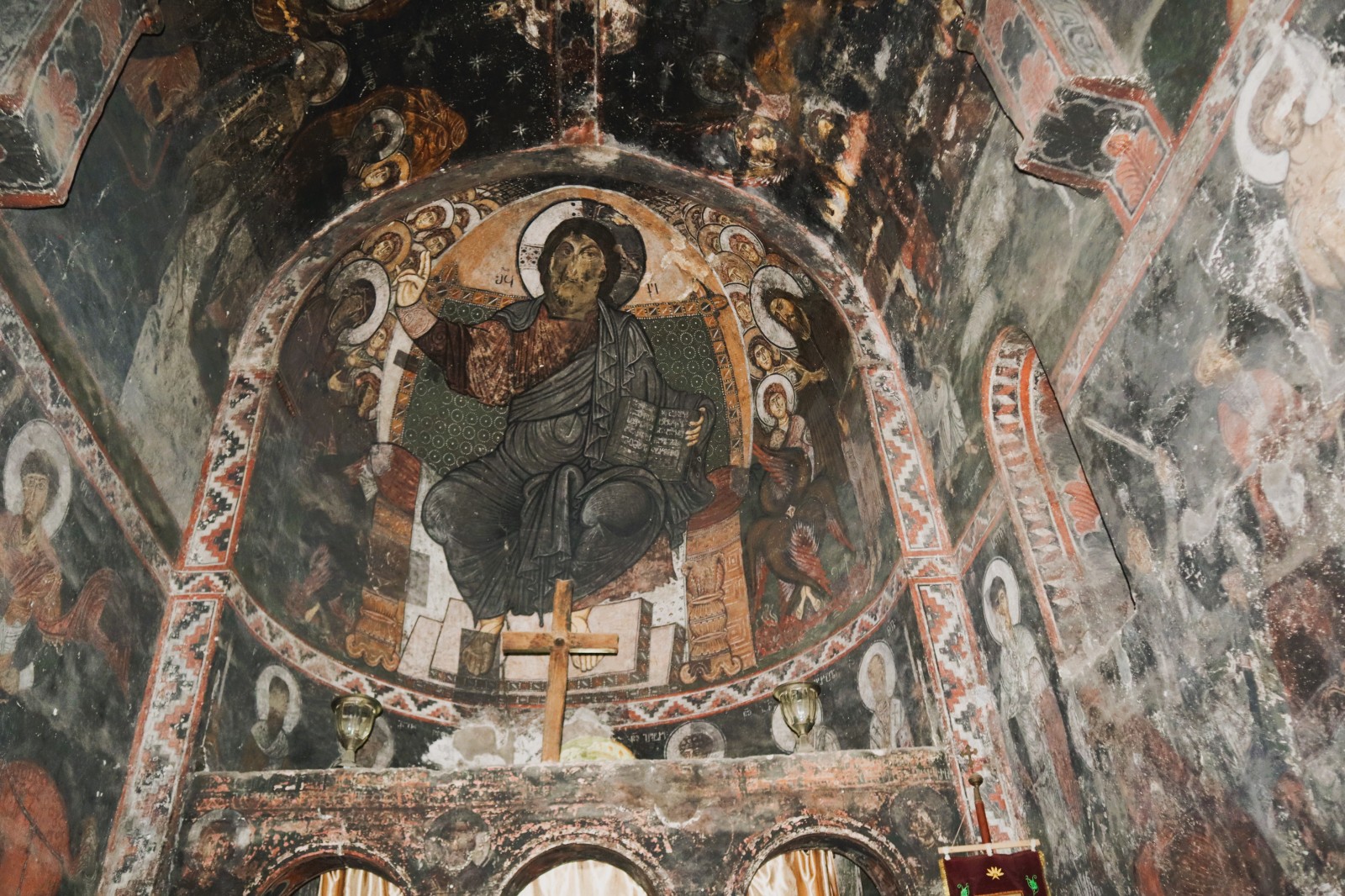
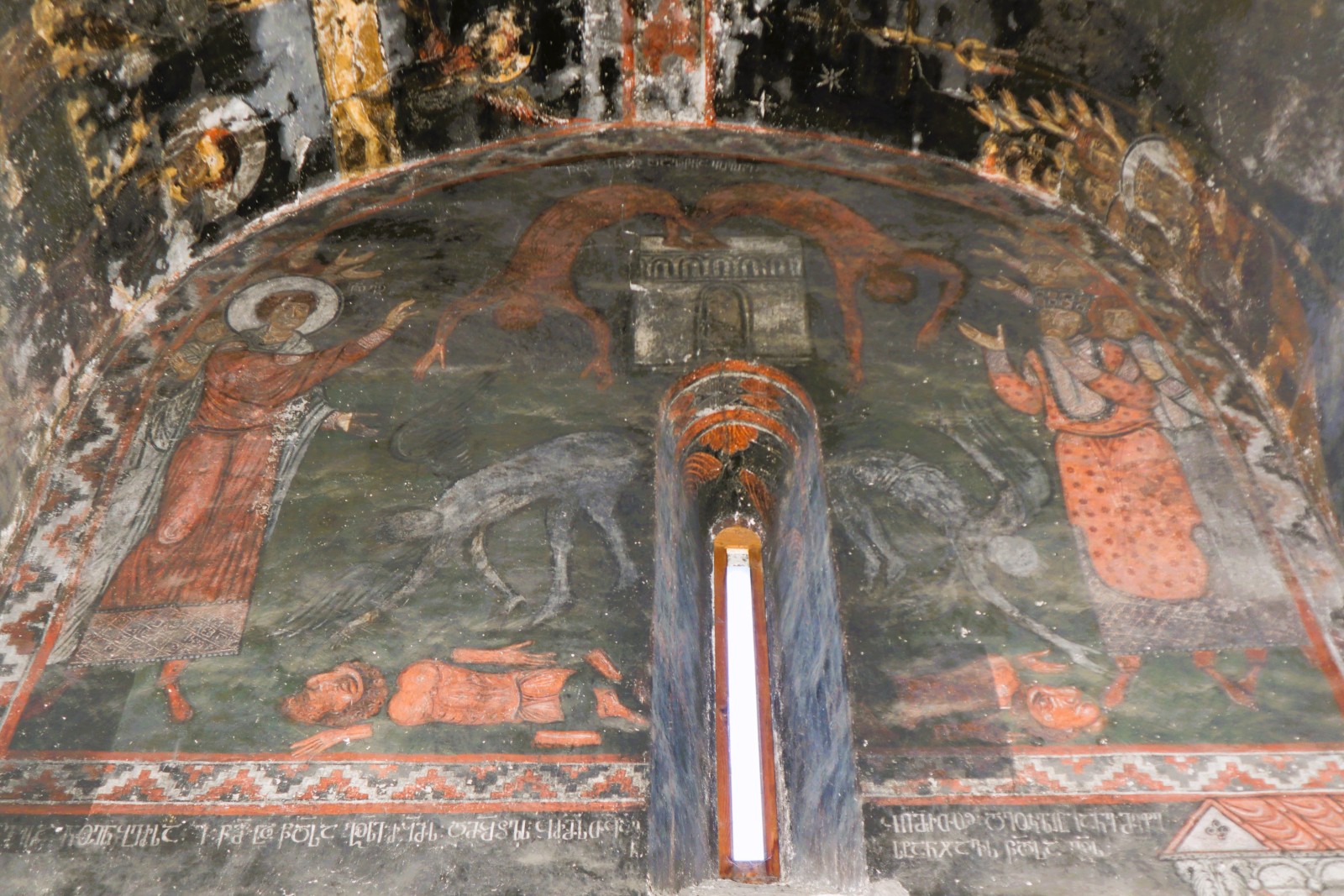
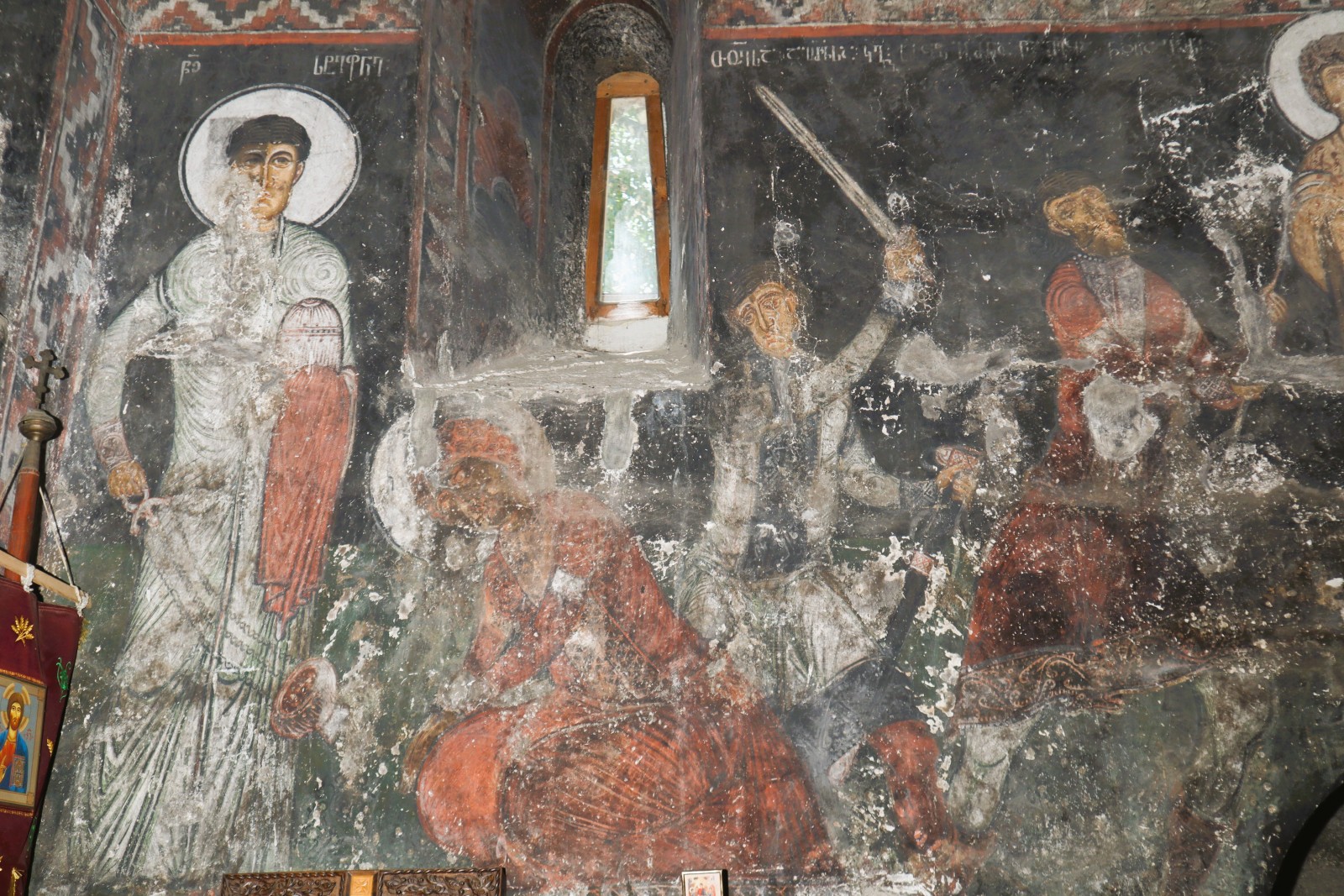
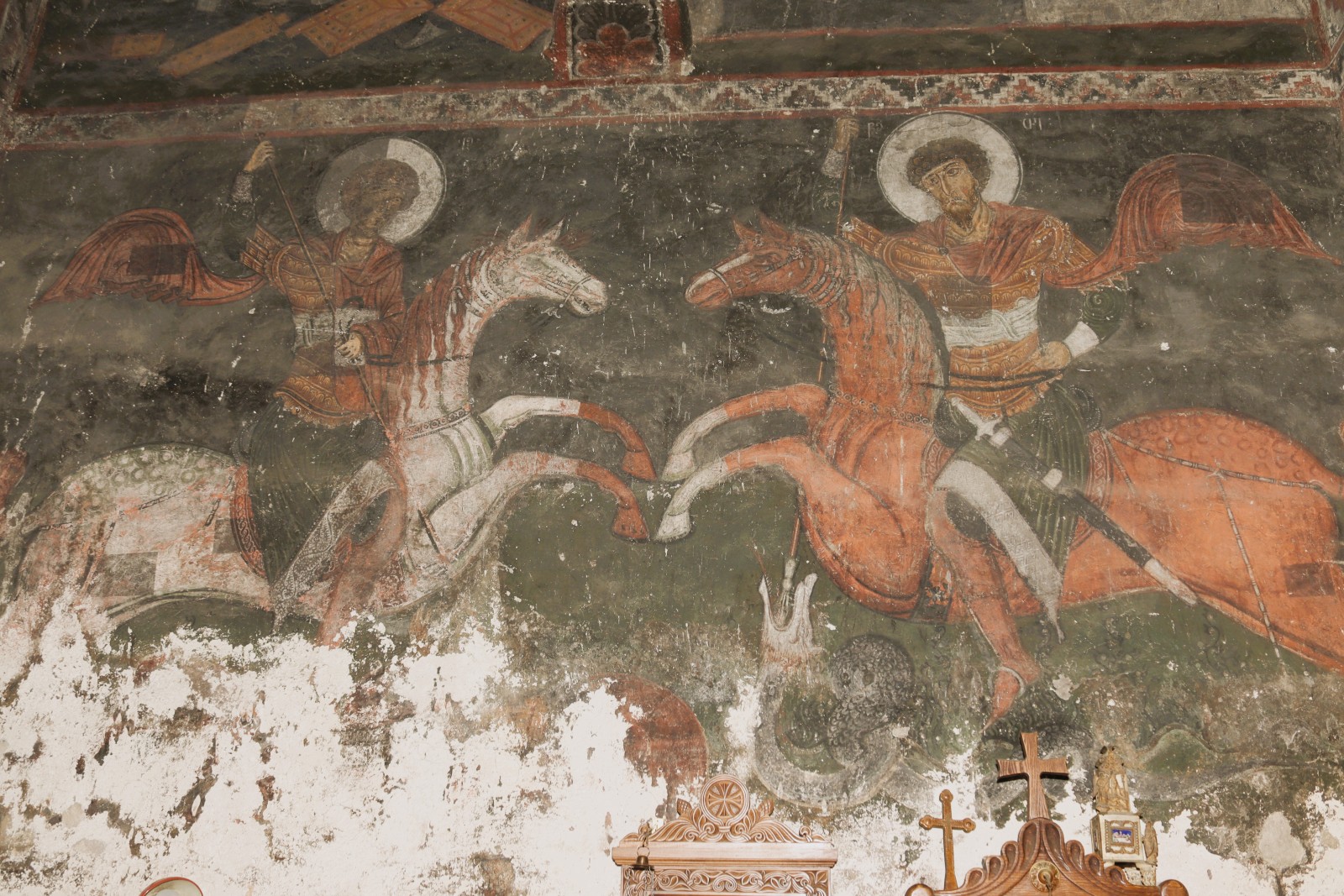
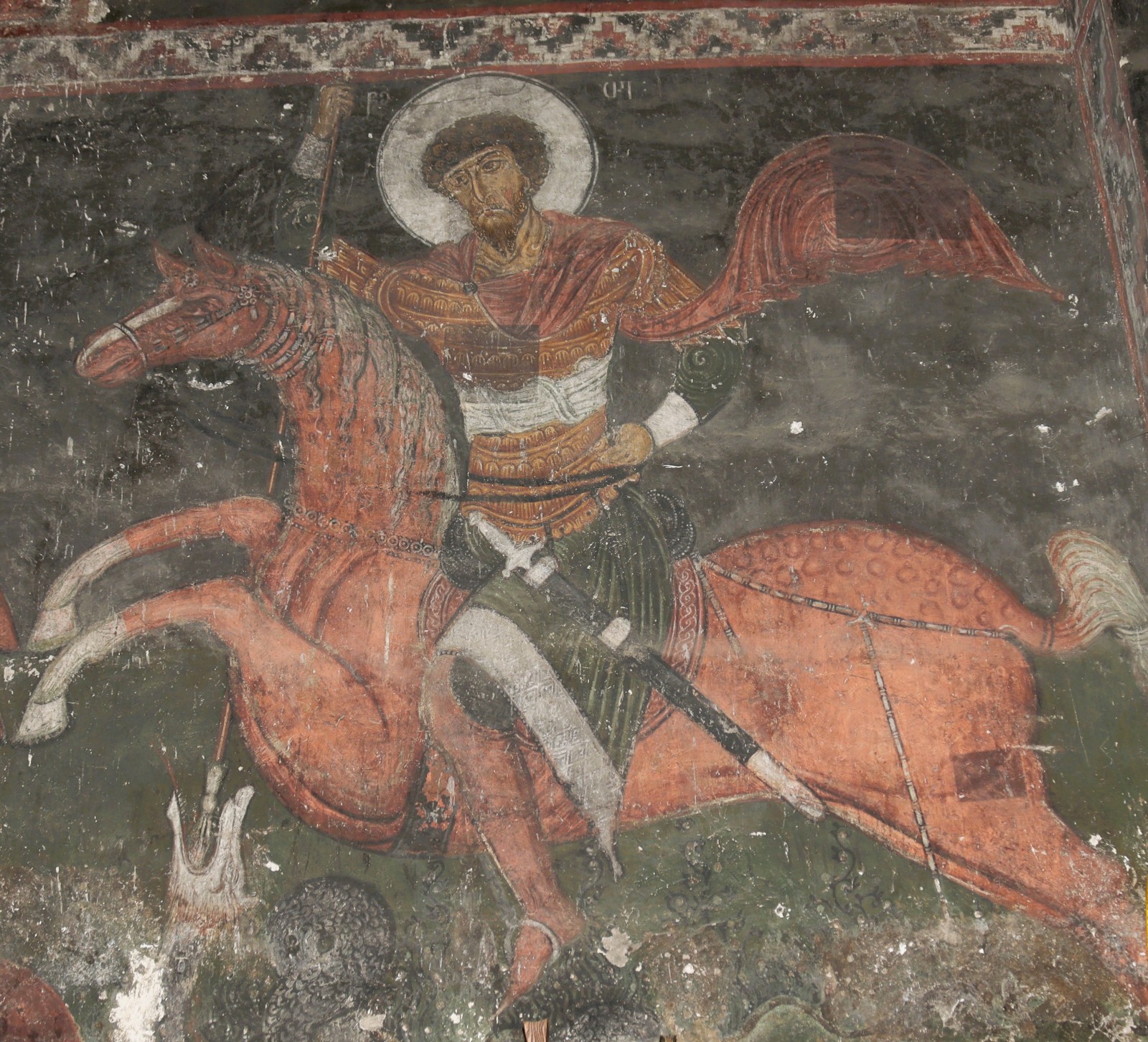
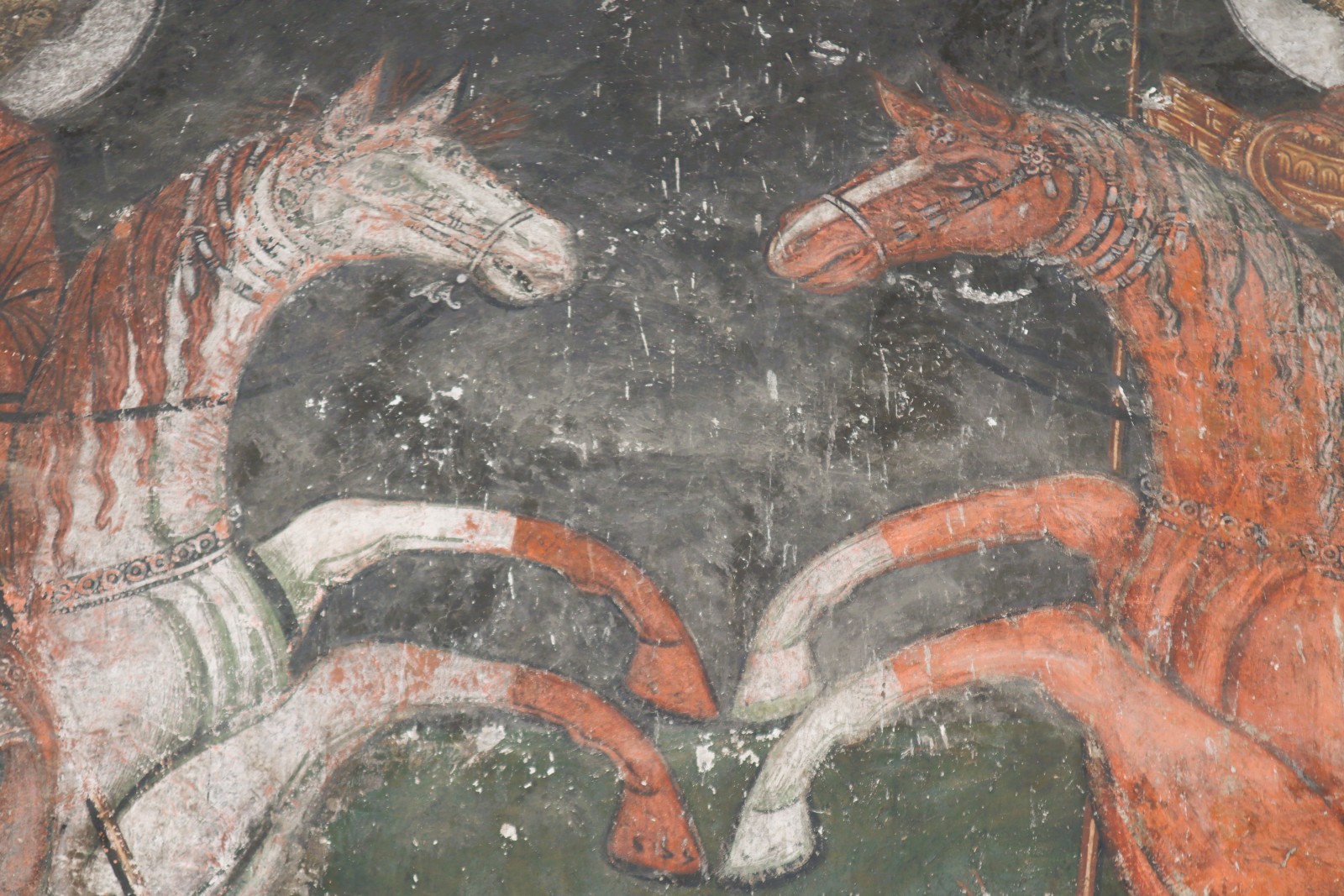
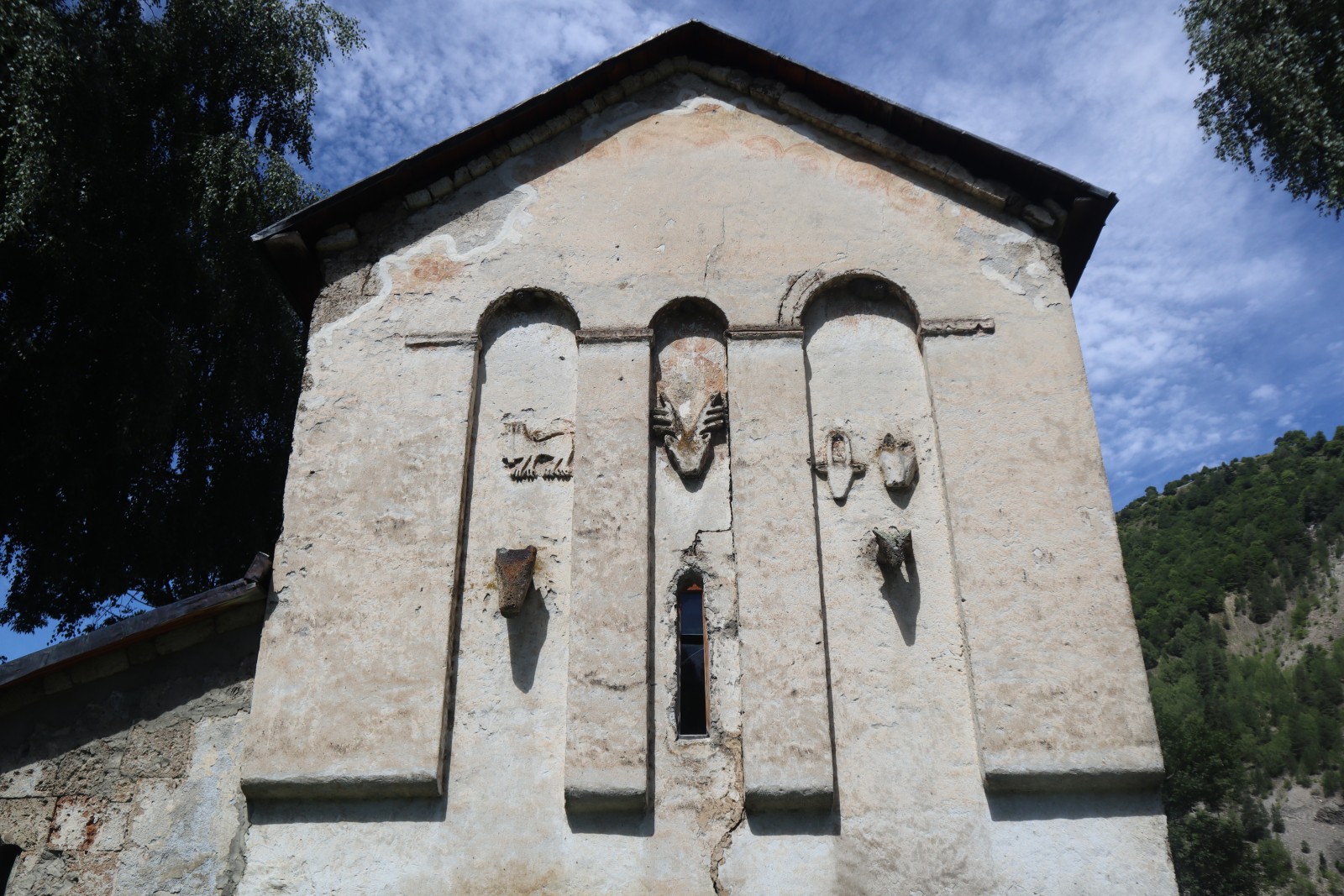
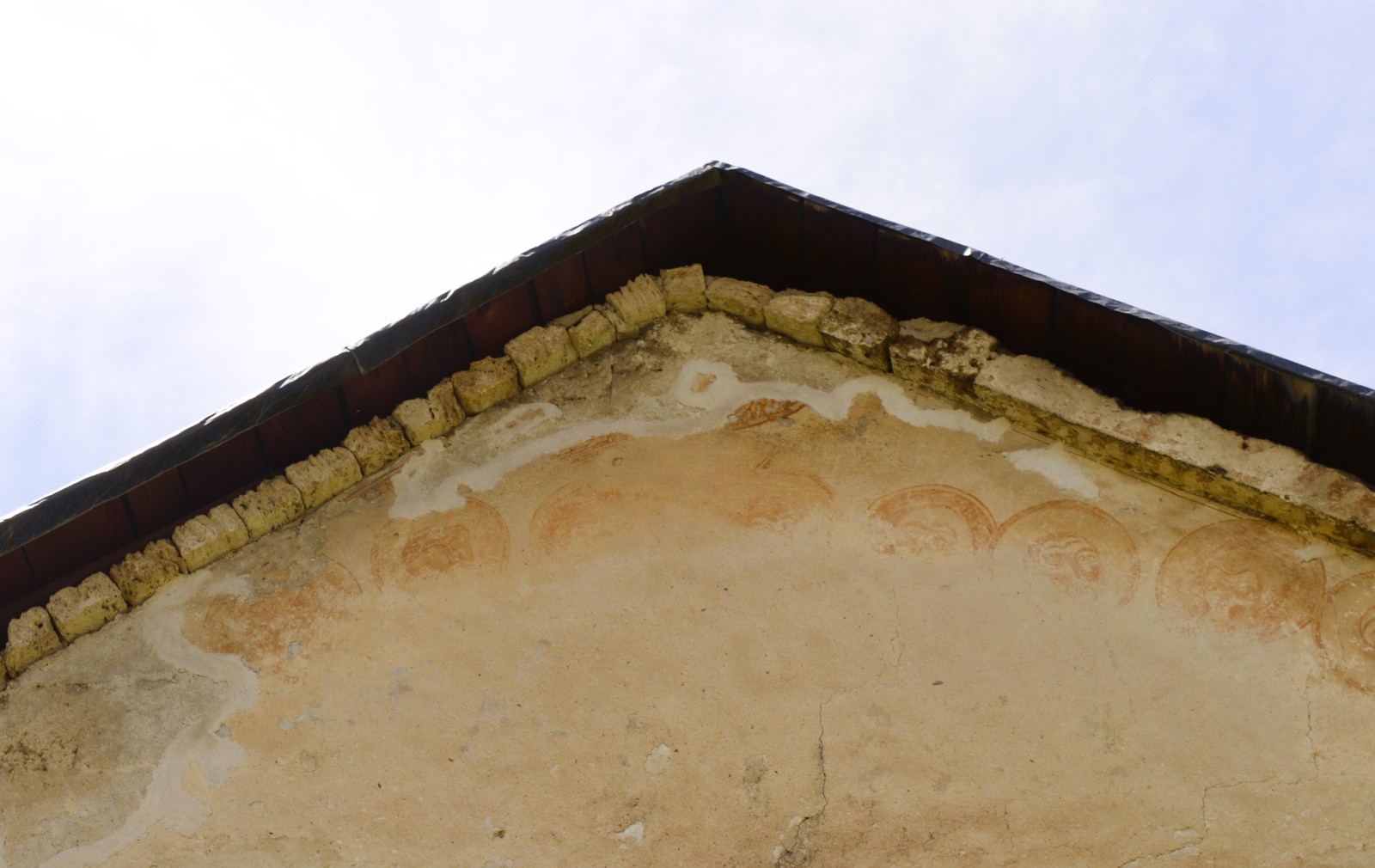
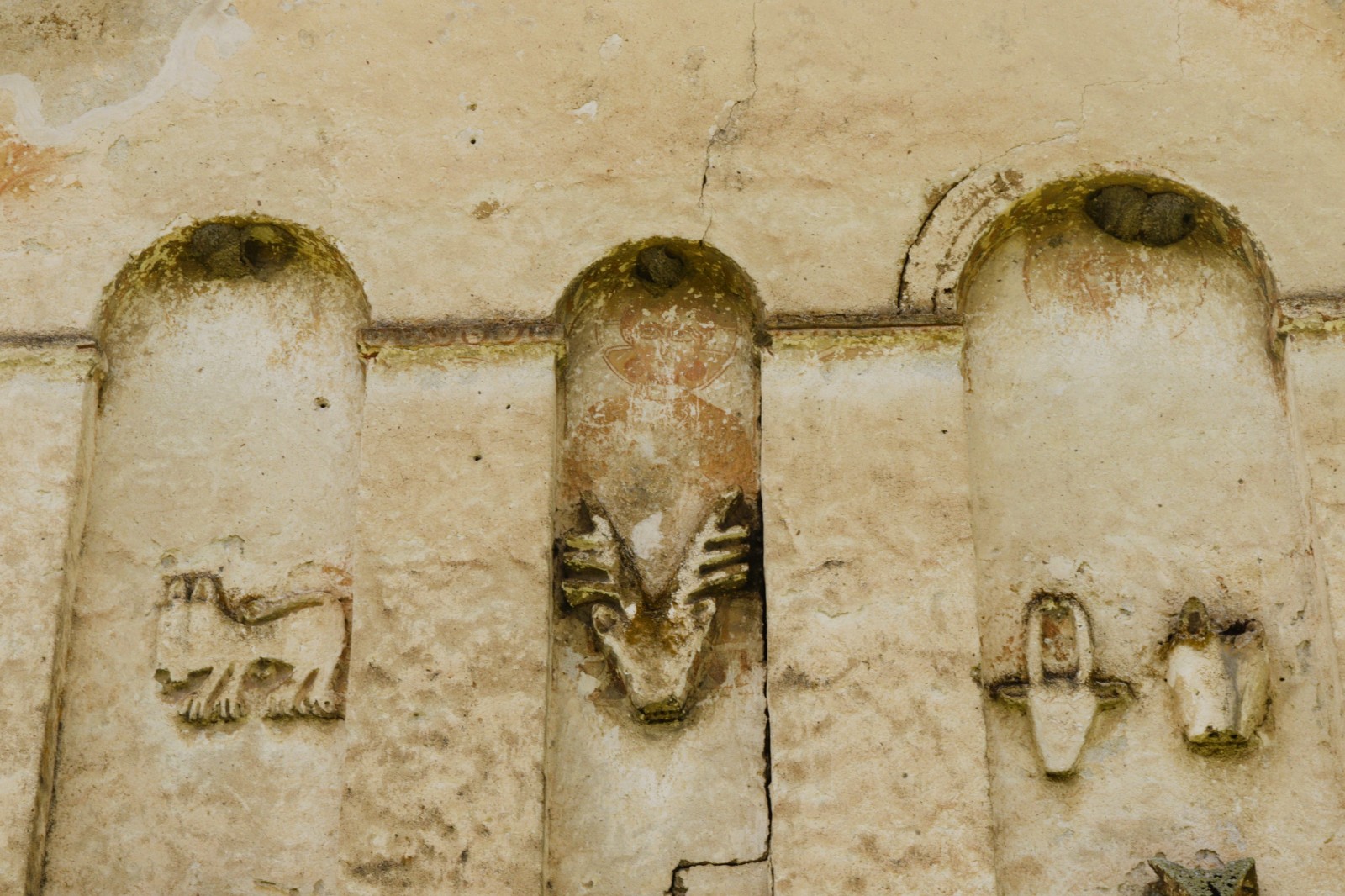
This large single nave church, with three-sided annexes (the northern annex now ruined), is located in the village of Nakipari, in the Ipari community. Built in the 10th century, the church is adorned with both wall paintings and sculptural decoration, dating from various periods. The first layer of paintings on the chancel-barrier and the murals on the eastern façade—as well as the reliefs on both the eastern and western façades—date to the 10th century. The interior wall paintings, including the second layer painting of the chancel-barrier, were created in the early 12th century.
The interior of Nakipari Church, according to the inscription, now fragmentary preserved on the chancel-barrier, have been painted in 1130 by the royal painter Tevdore. The inscription reads:
"In the name of God, this church of St. George was painted and adorned for the glorification and in supplication for the noblemen of St. George, by the unity of all. Saint George, the Great Martyr, have mercy and strengthen them, Amen. This church was painted and adorned chronicon TN by the hand of Tevdore, royal painter."
This church features the third and final known mural decoration signed by the royal painter Tevdore. The survival of three ensembles attributed to a single painter is quite rare in medieval mural painting. Of particular importance is Tevdore’s title, royal painter, which confirms his connection to the royal court. Likewise, significant, however, is the fact that the painting of Nakipari Church was not commissioned by a single donor or a noble family, but collectively by the noblemen of the entire Ipari community, which encompassed five villages. This offers valuable insight into the cultural and social context of medieval Georgia.
As in his other known works, in Nakipari, Tevdore applies the same principles of the general arrangement of the ensemble reflecting a refined continuation and reinterpretation of approaches found on the initial stage of development of the Svaneti painting school. These align with broader artistic tendencies of the time, common not only in Georgian but also in Byzantine wall painting.
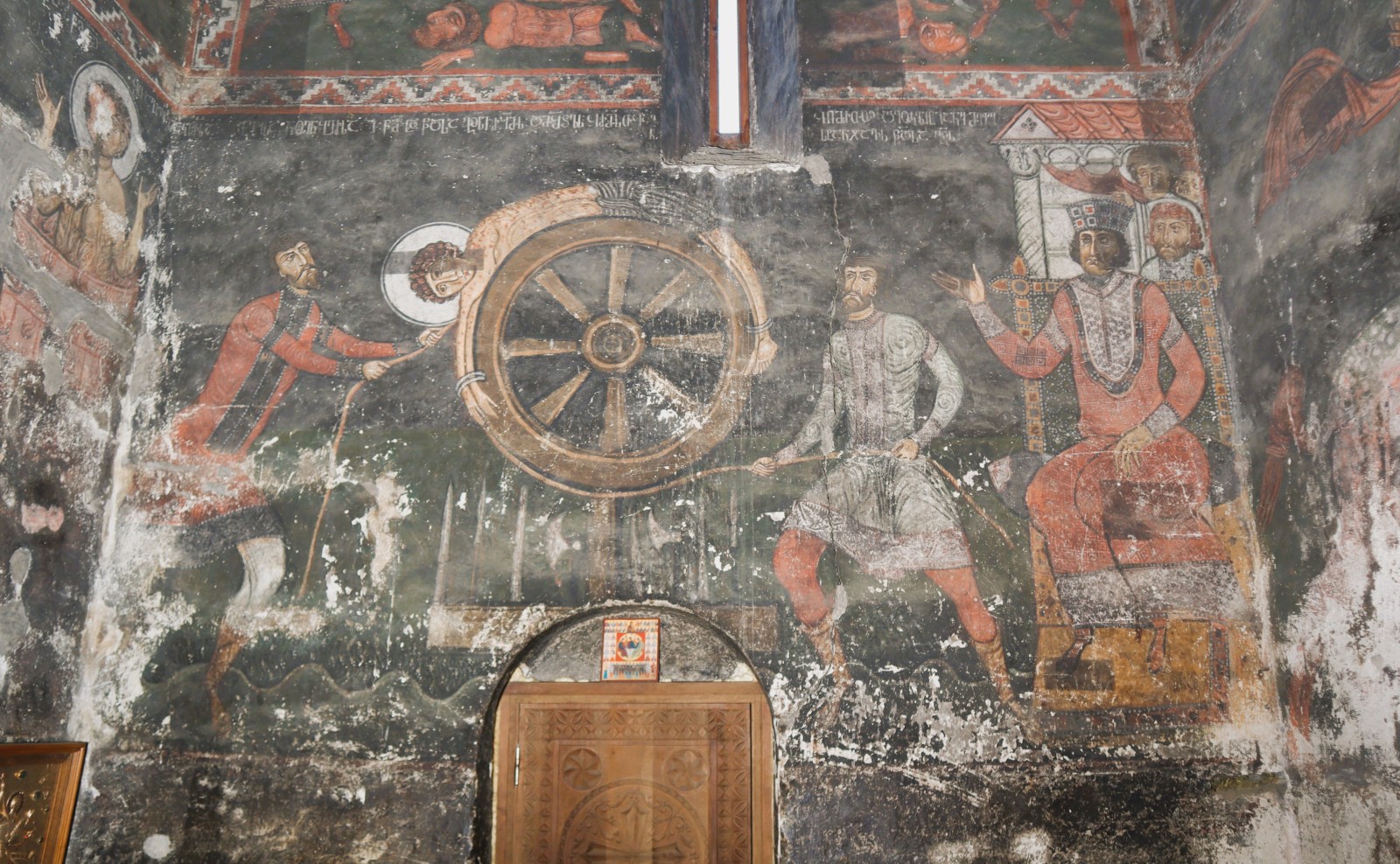
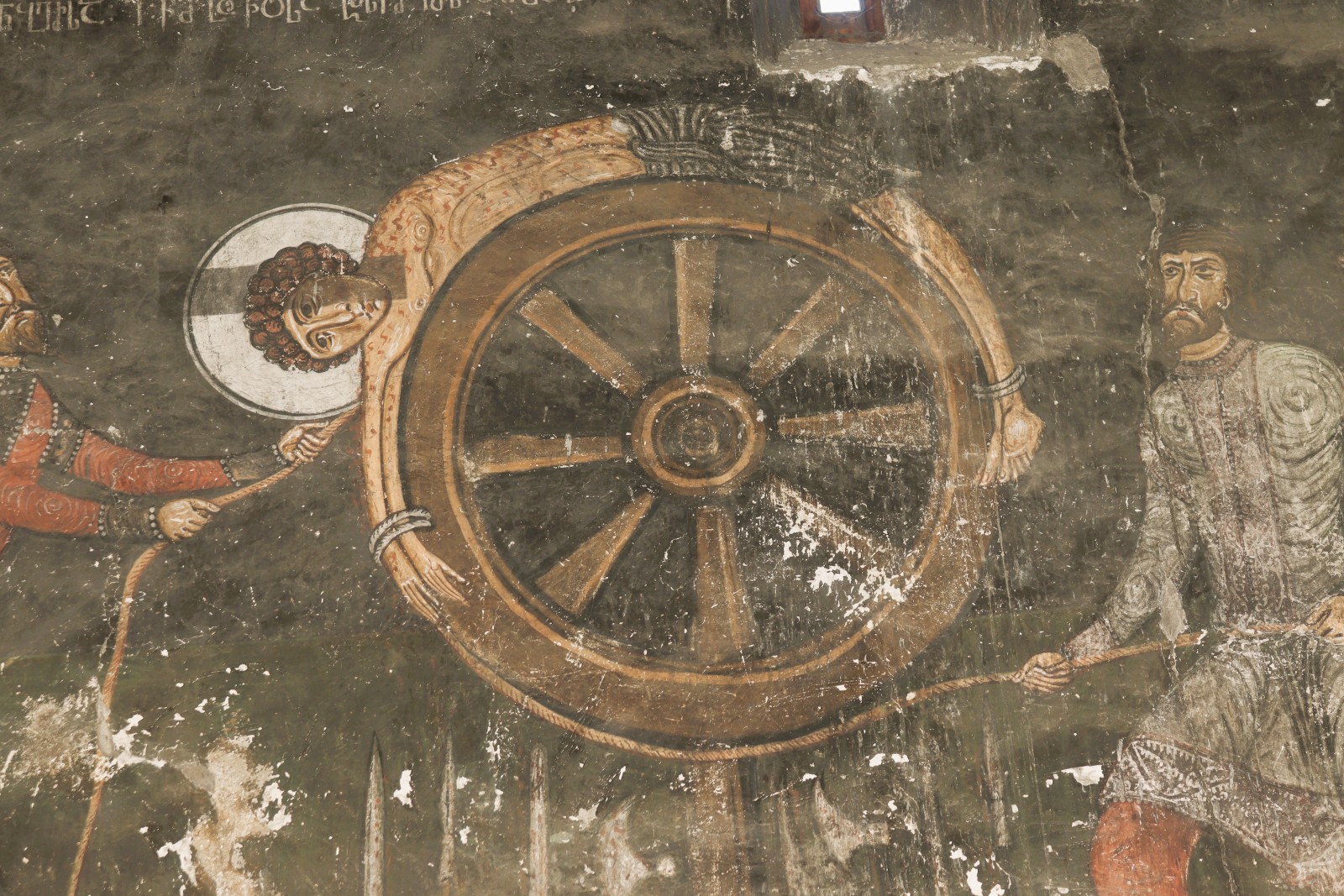
A notable aspect of the iconographic program is the limited selection of Great Feasts scenes, only four are depicted, while special emphasis is laid on the Life of St. George, making it one of the earliest visual narrations of the Saint’s life in Georgian wall painting. The selected scenes highlight St. George’s martyrdom.
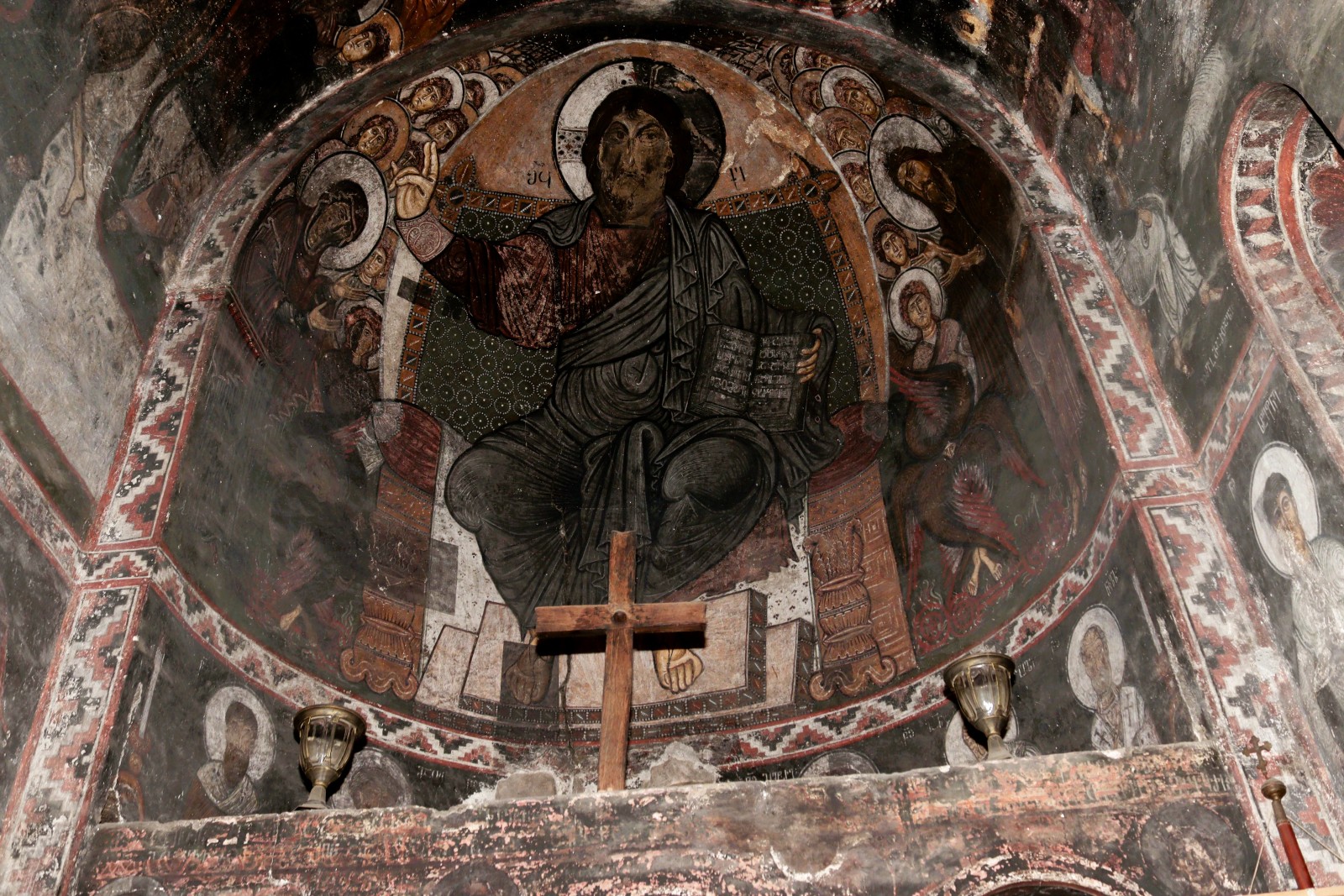
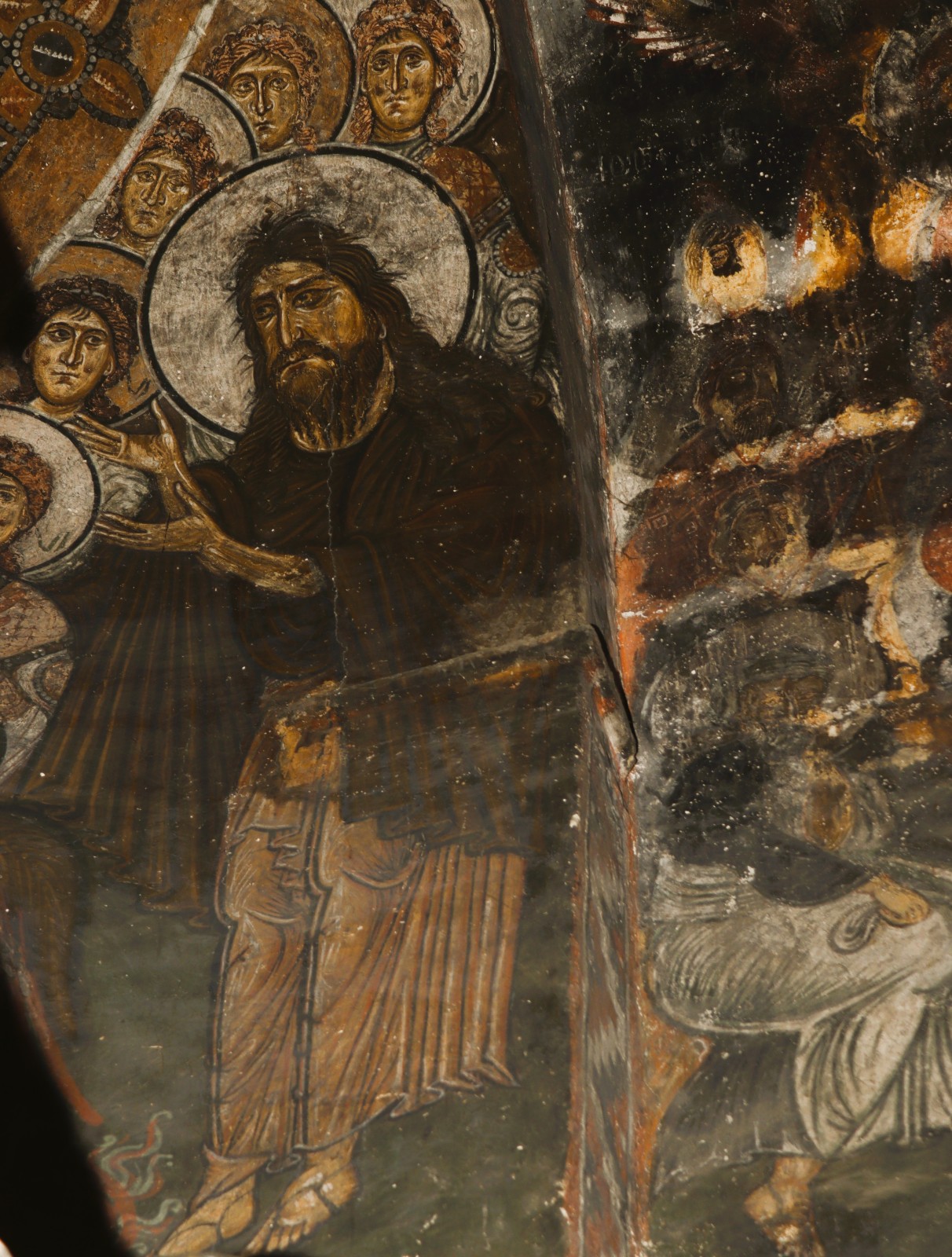
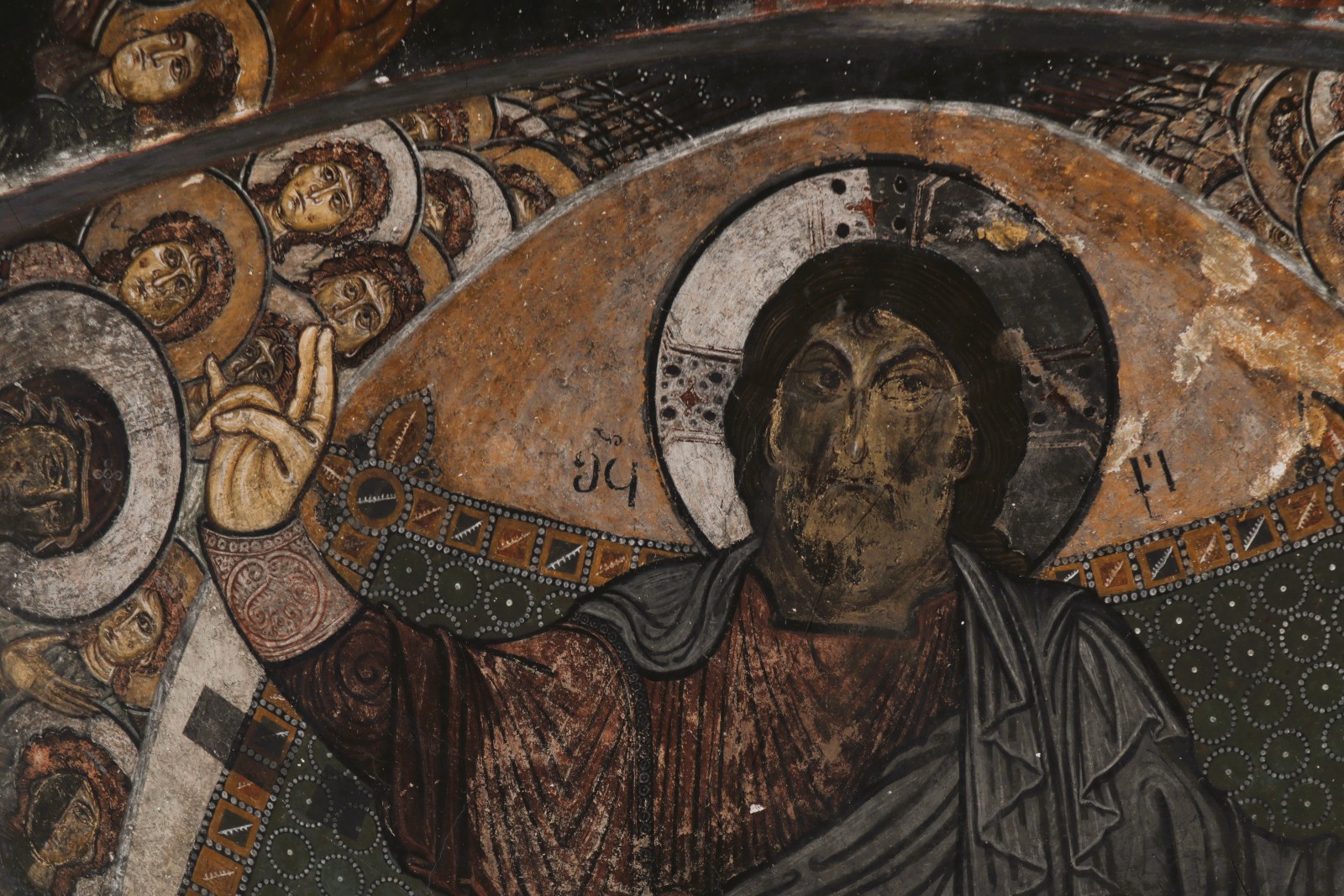
Particularly striking is the grand conch composition, the so-called Deesis Vision. Alongside the traditional motifs, it includes a multitude of angelic hosts and elements of the prophetic visions. Together with the theme of supplication and intercession this composition emphasizes majestic glorification of the Lord. Such a unity of Deesis and the Majestas Domini in a single composition has no known direct parallels; however, some individual elements are found in both early Svanetian and Tao-Klarjeti mural painting, indicating a definite connection between these two important schools of Georgian mural painting. It should also be kept in mind that the conch composition of Nakipari became further on widespread in the 12th and 13th centuries mural decorations in Upper and Lower Svaneti.
The first layer of paintings on Nakipari’s chancel-barrier, as well as the decoration of the eastern façade, represent some of the earliest examples of the traditional direction of the Svaneti school of painting. Additionally, the façade decoration is a rare and outstanding case of combining both painted and sculptural elements into a single unified composition.
| Location | The church is located in the village cemetery |
| The Key Holder | The key is kept at Khvistanis\' Family |