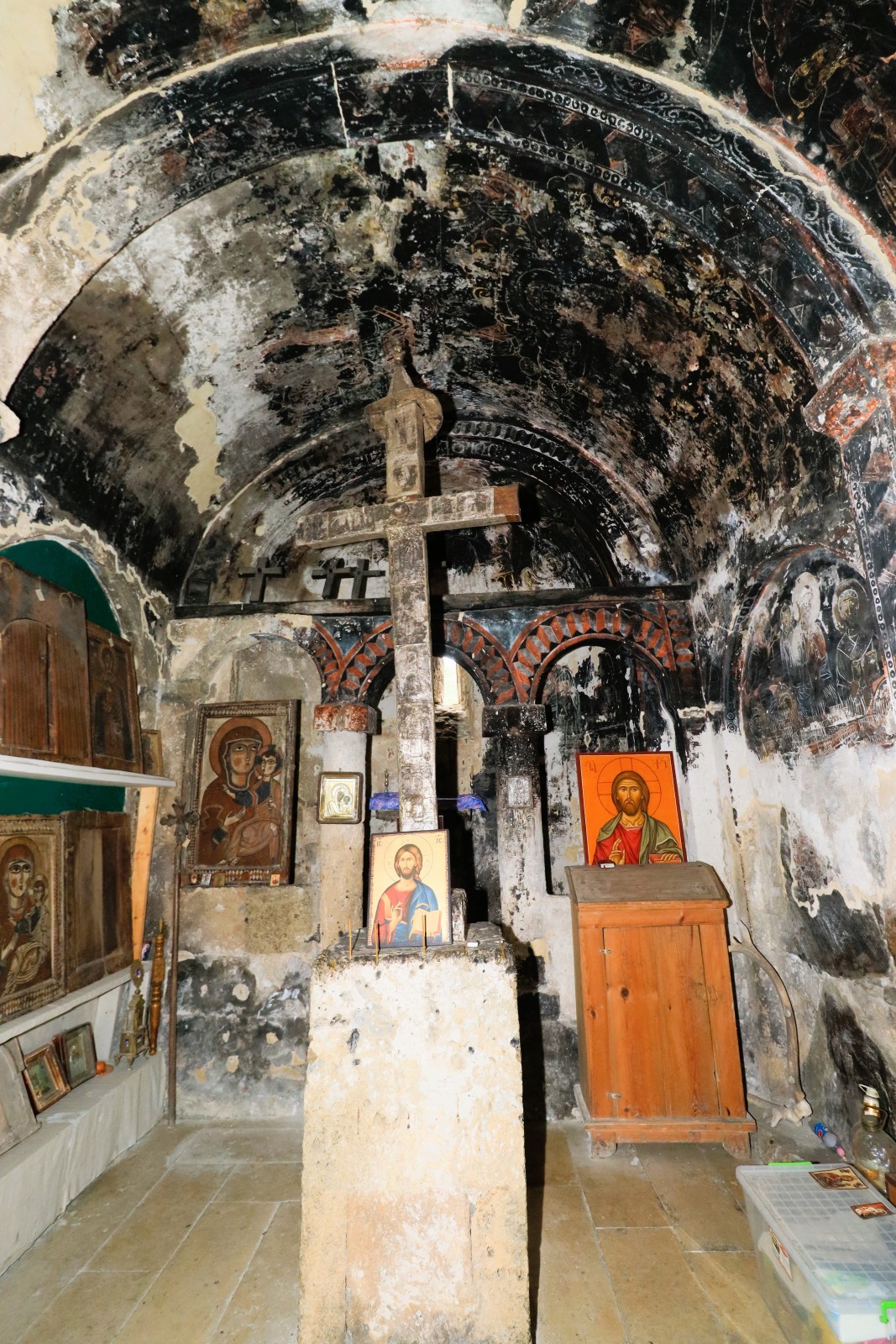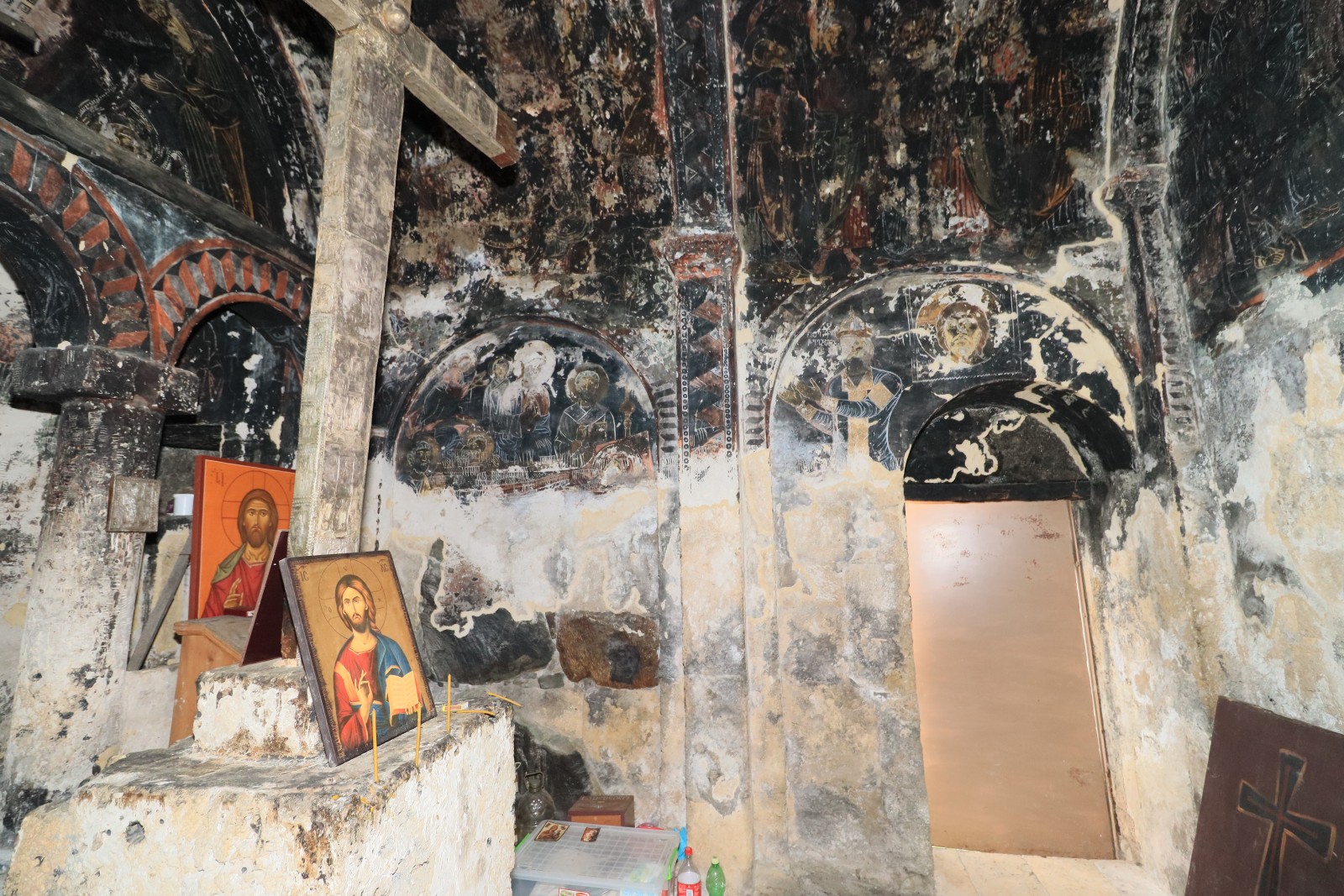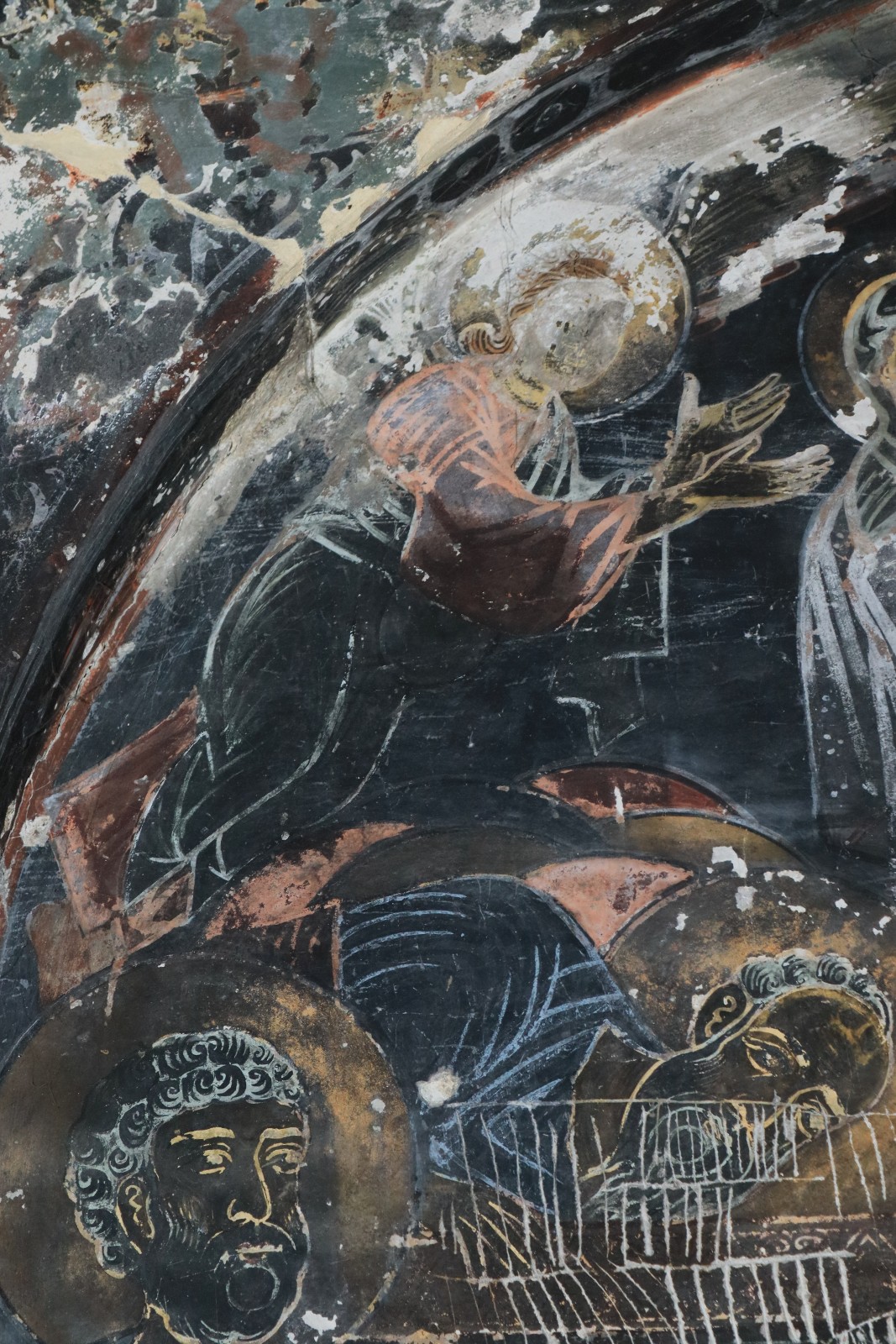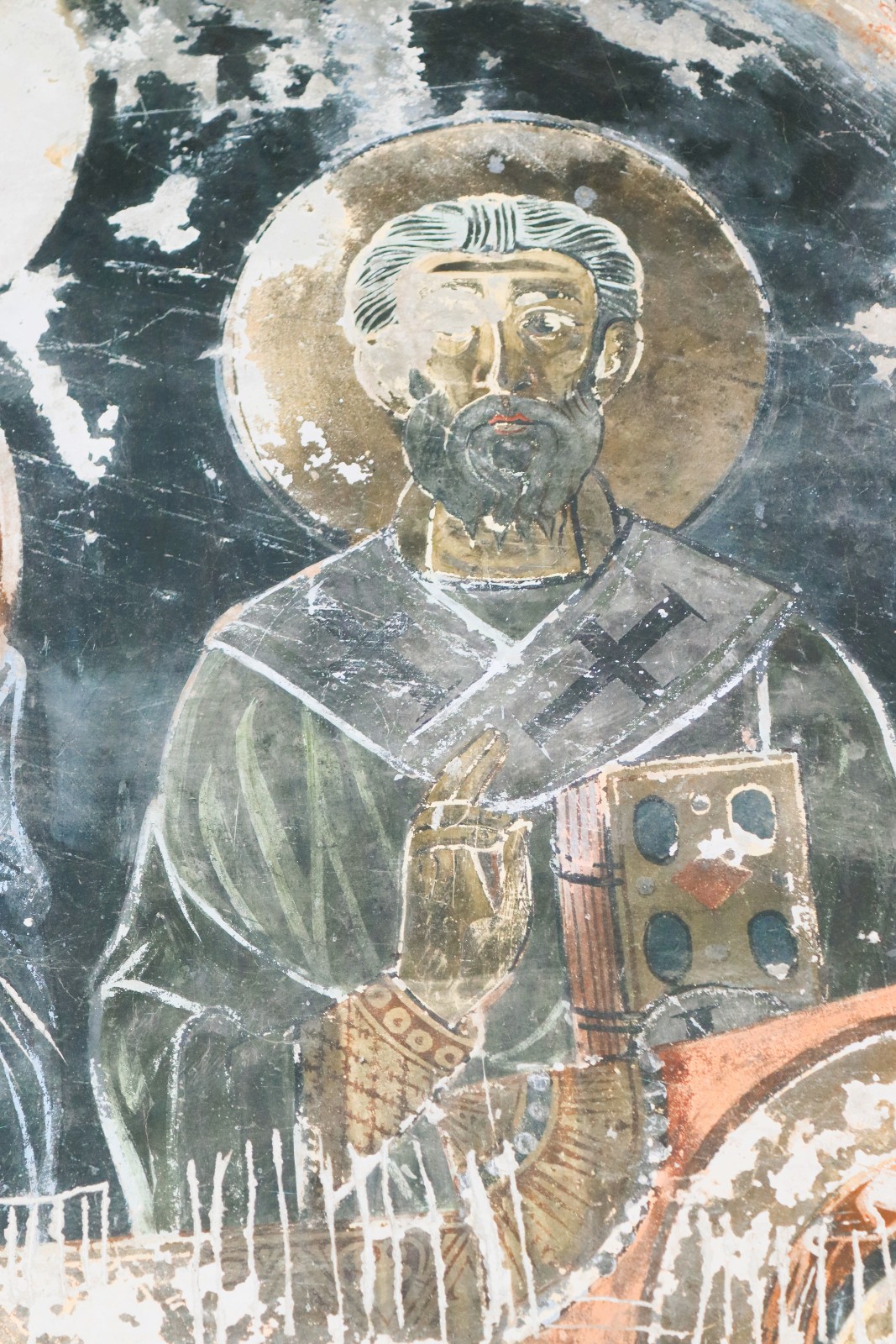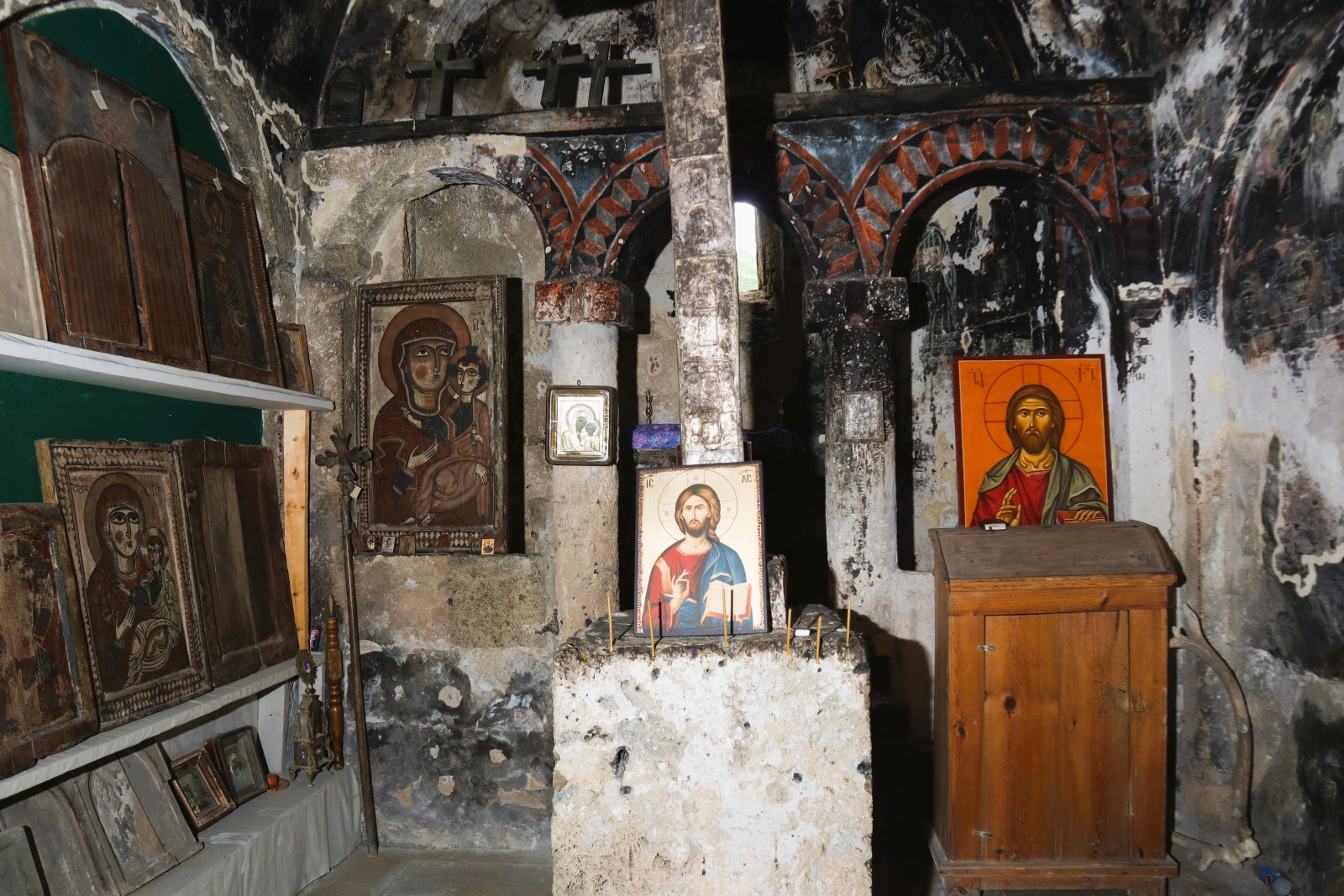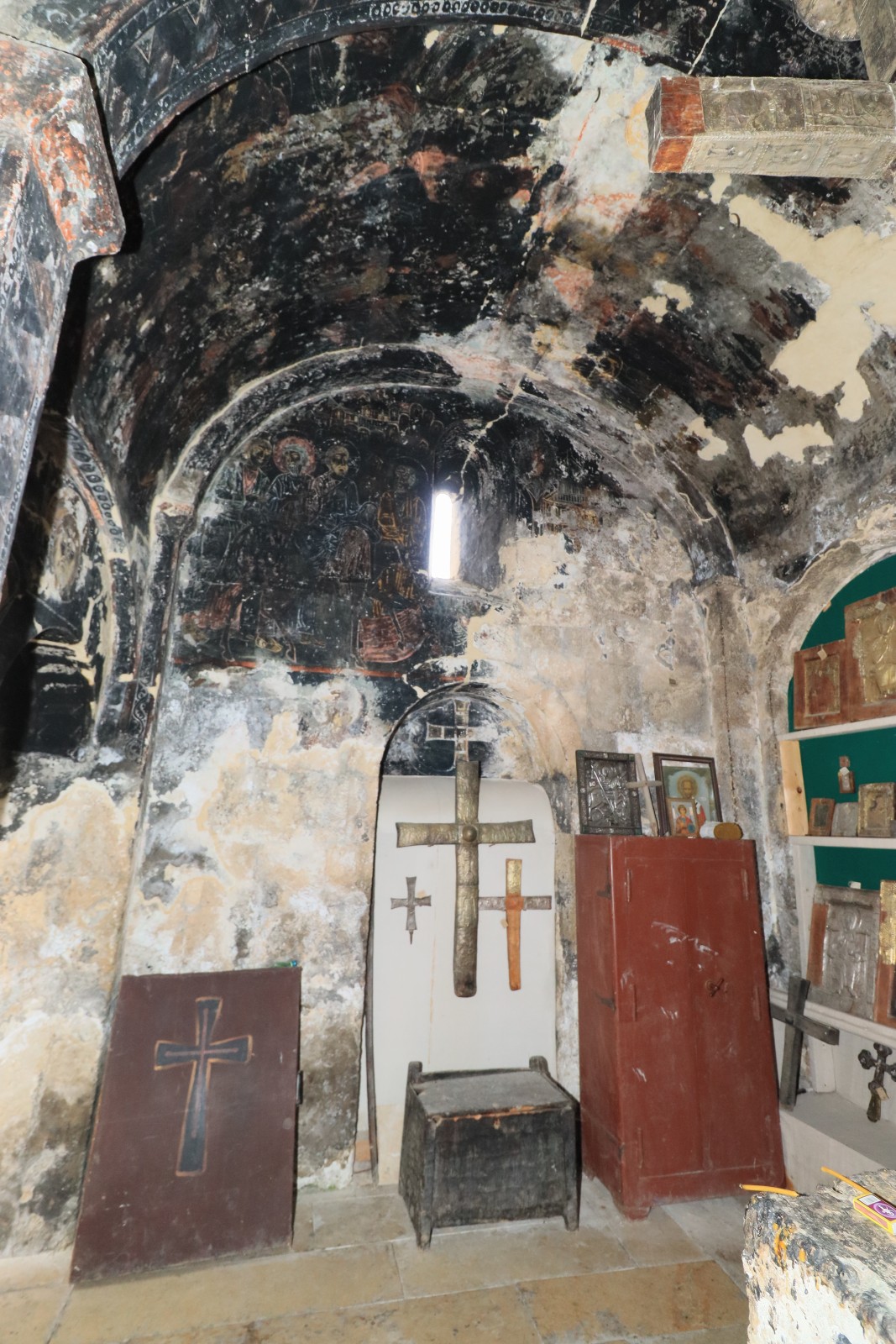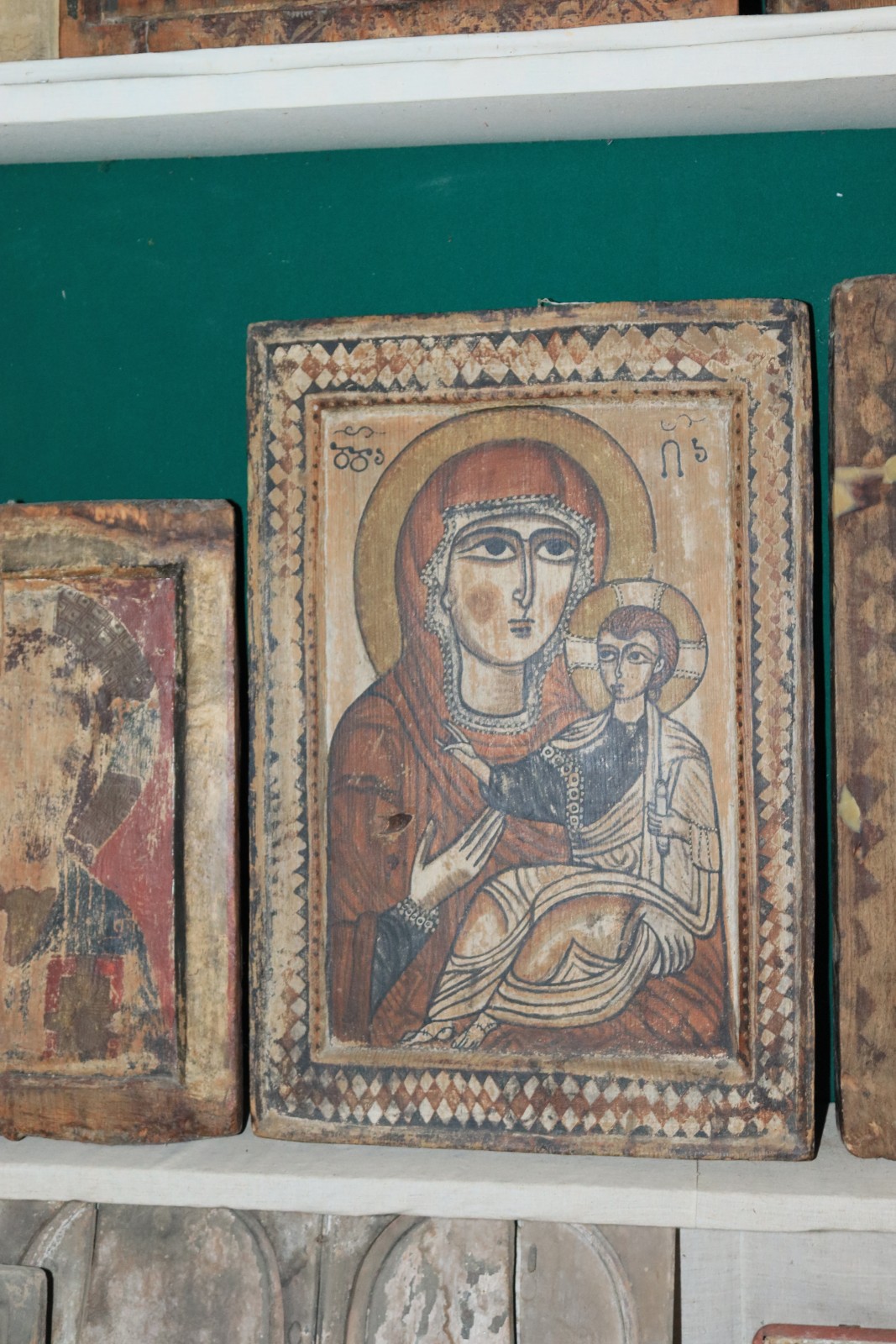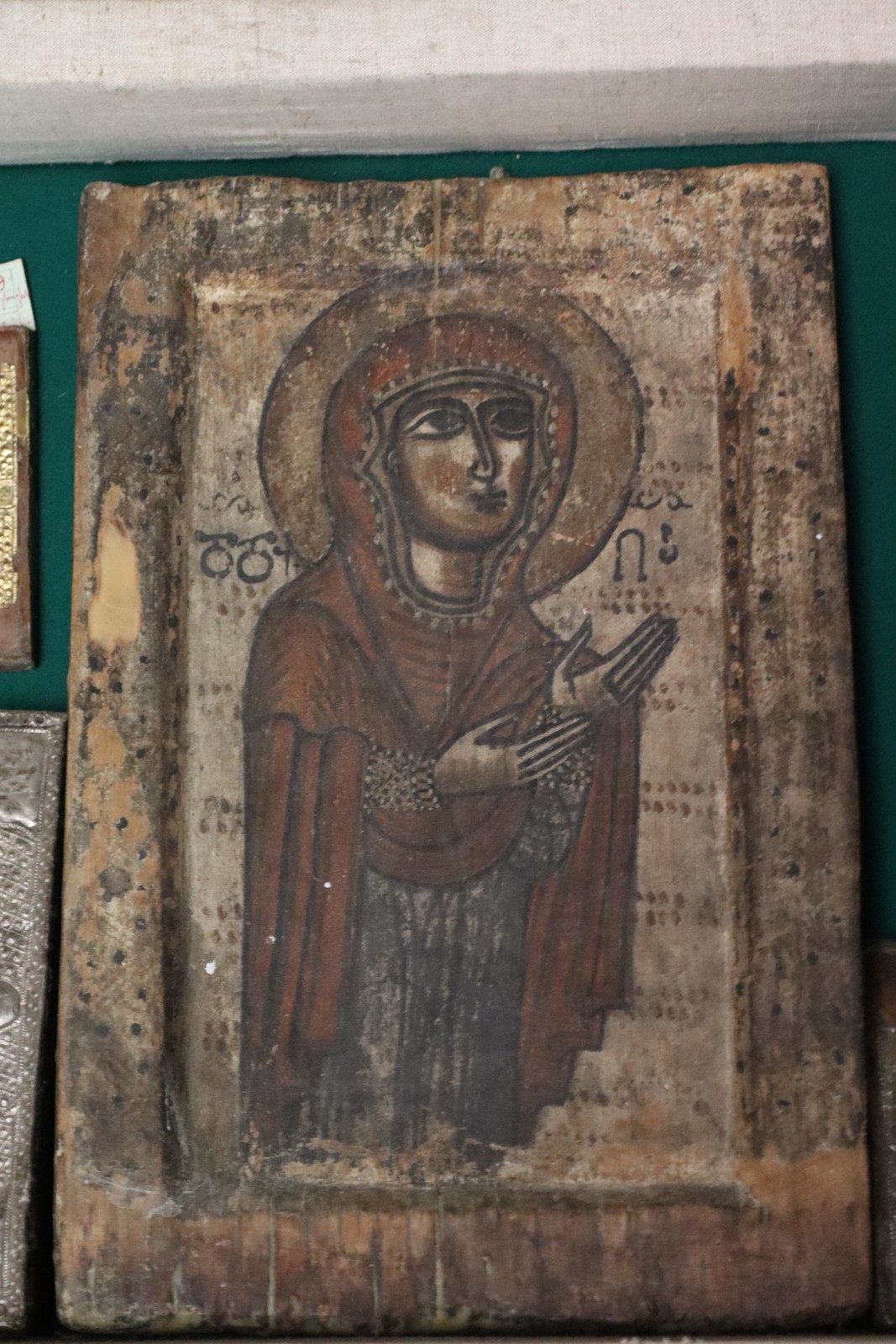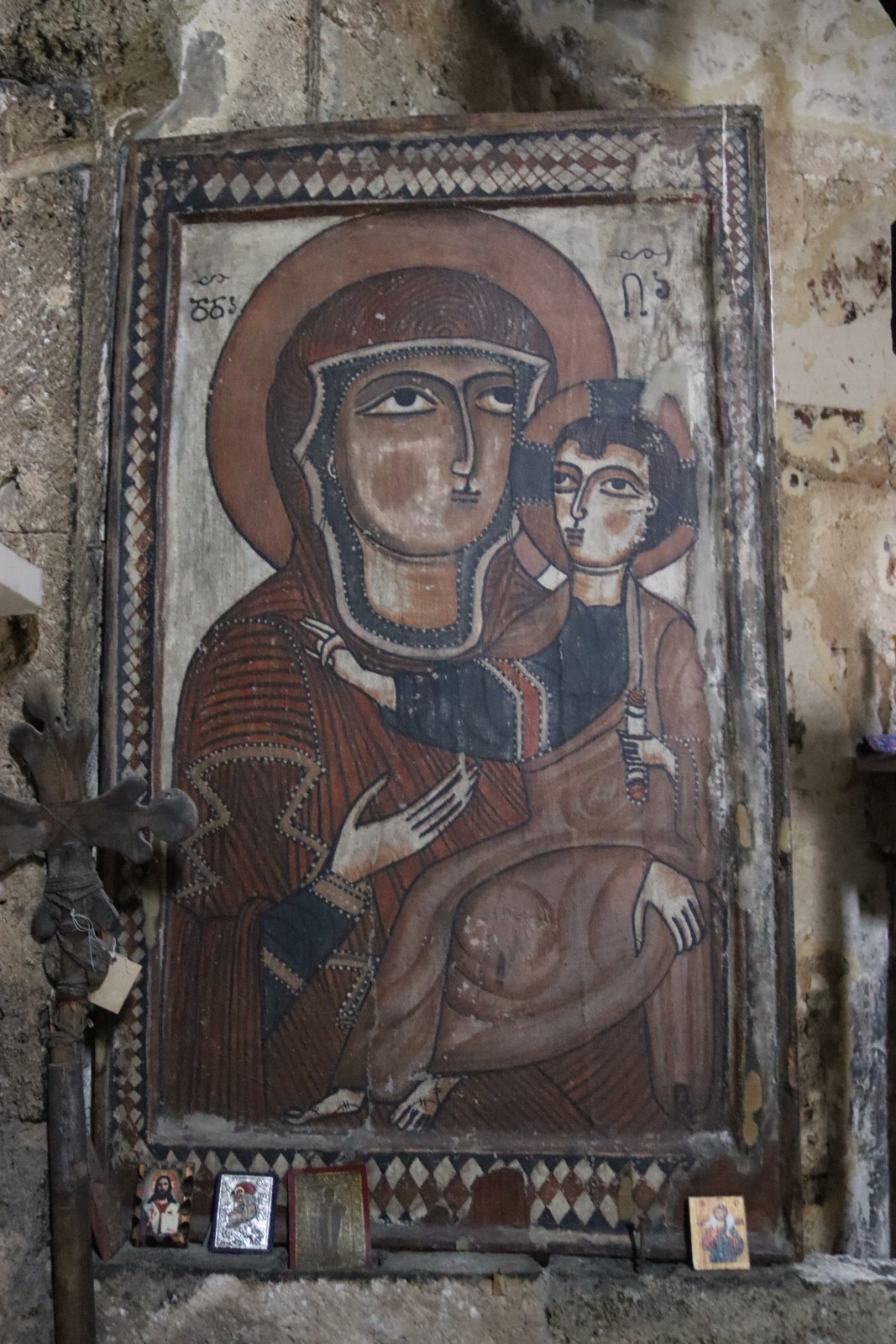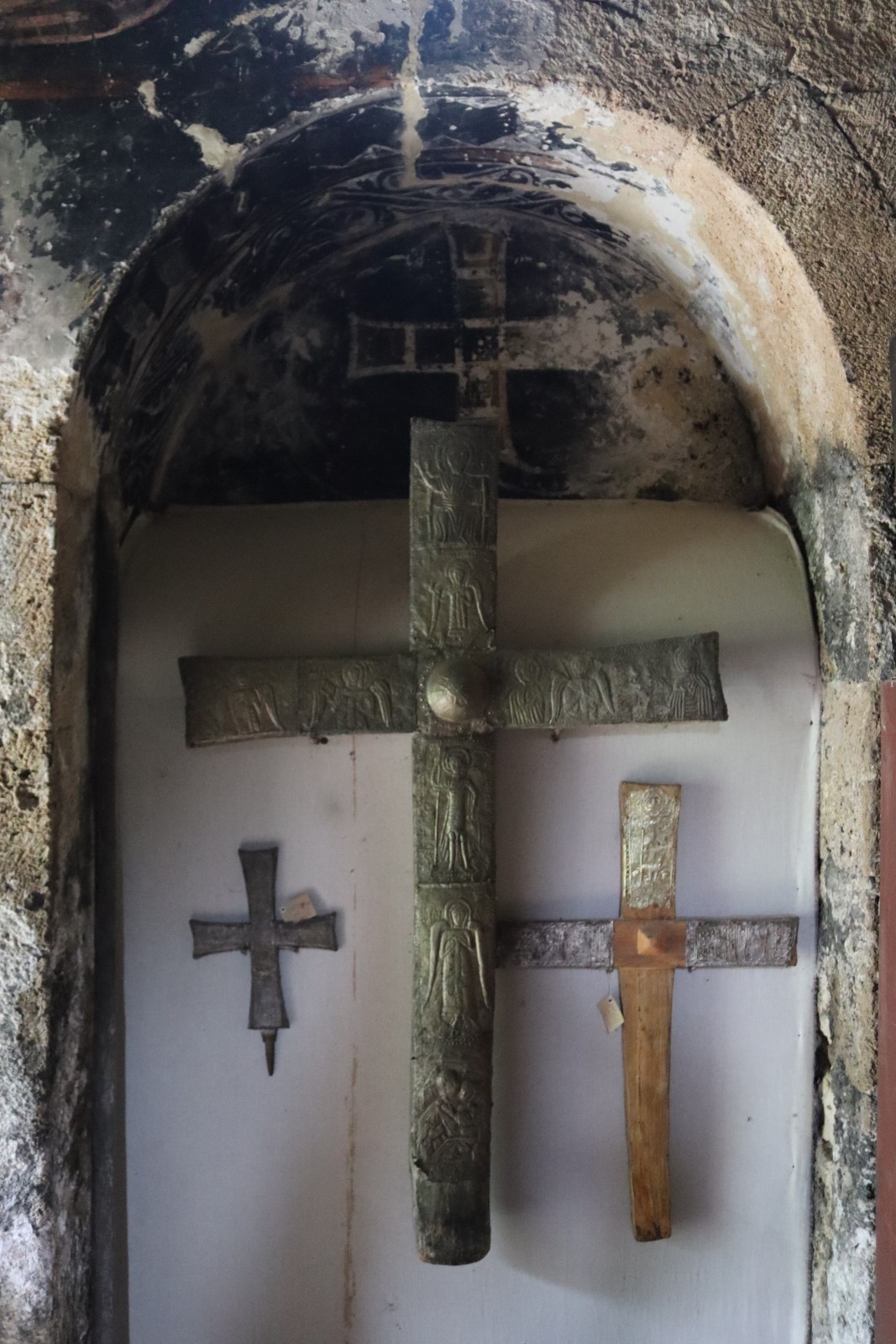
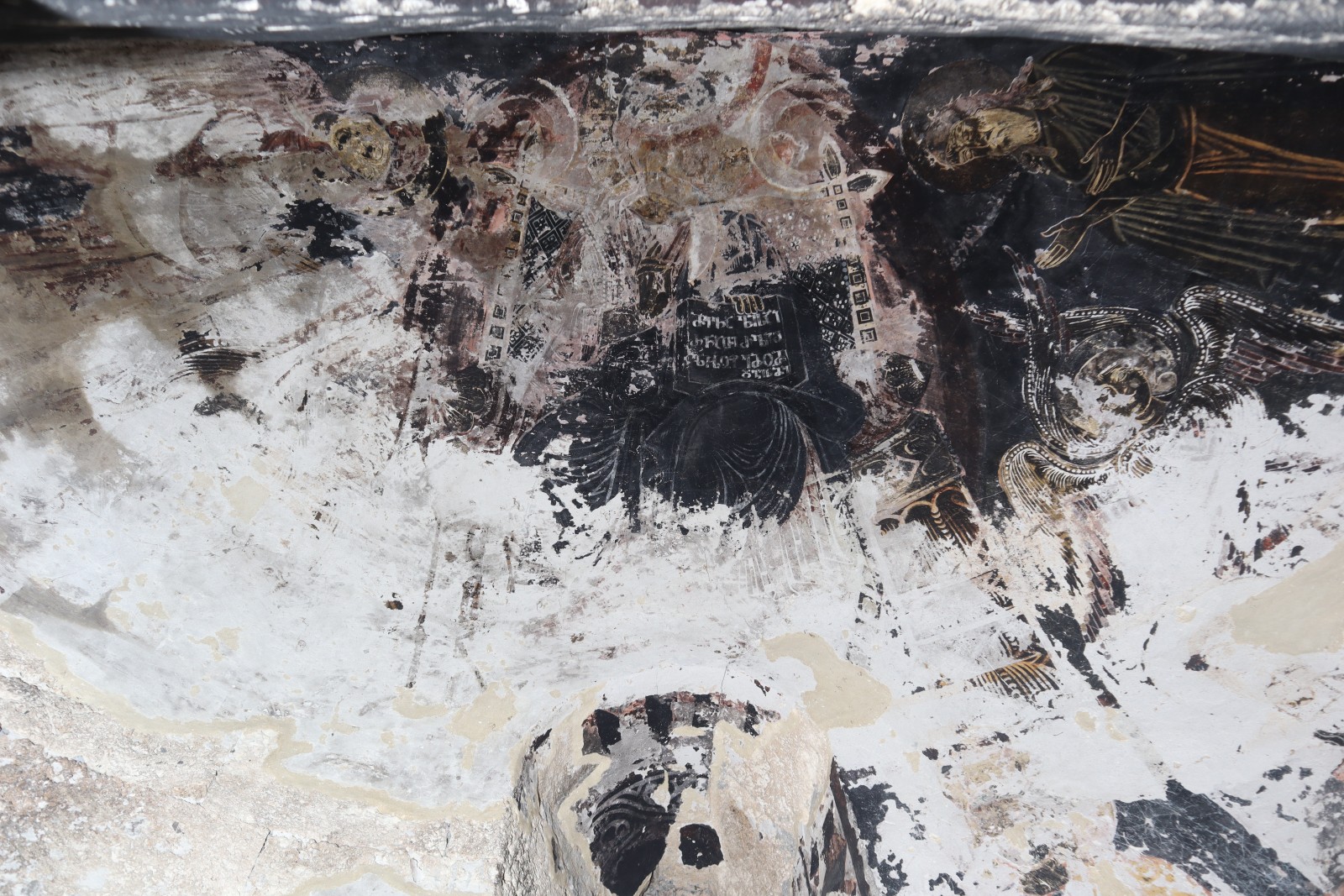
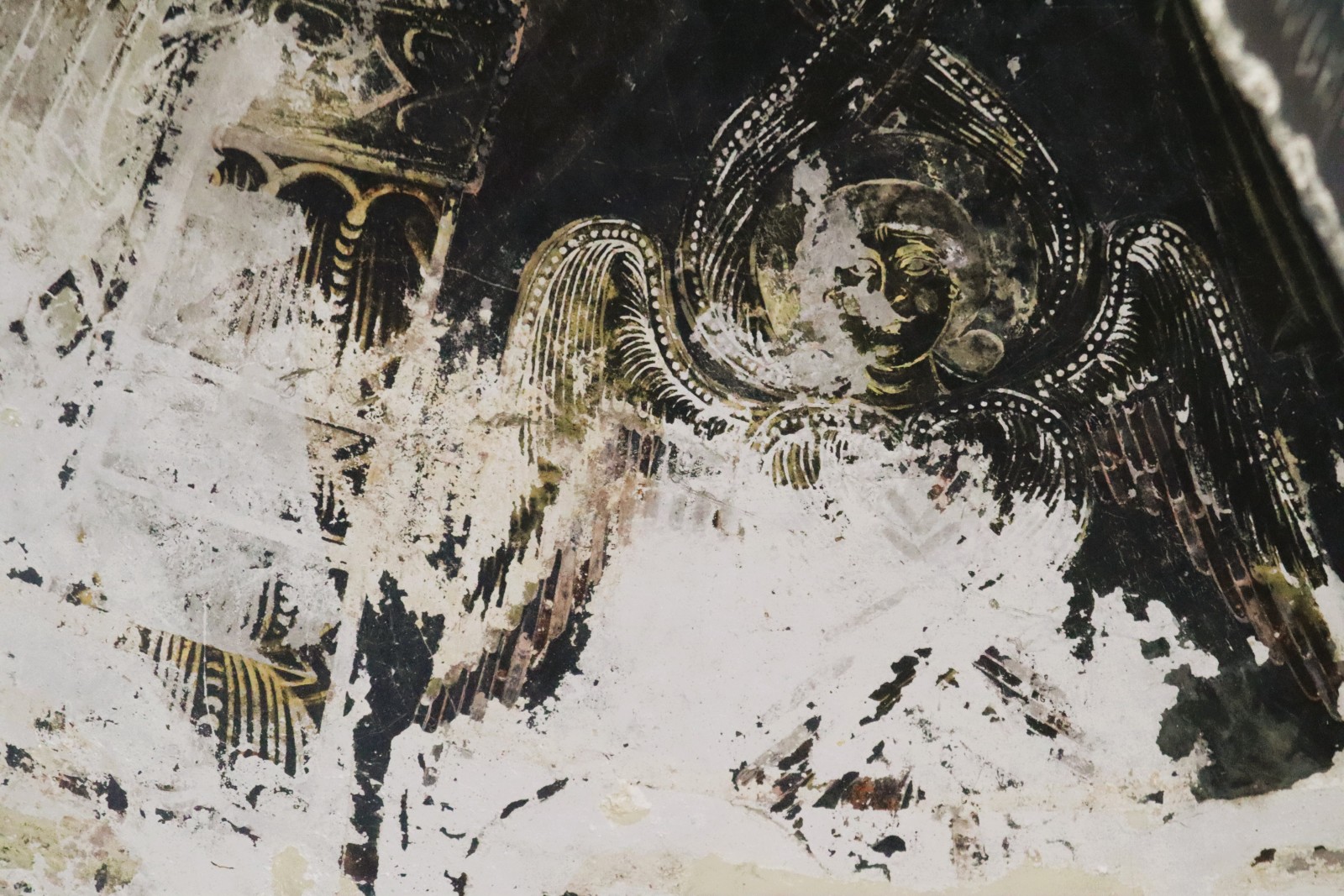
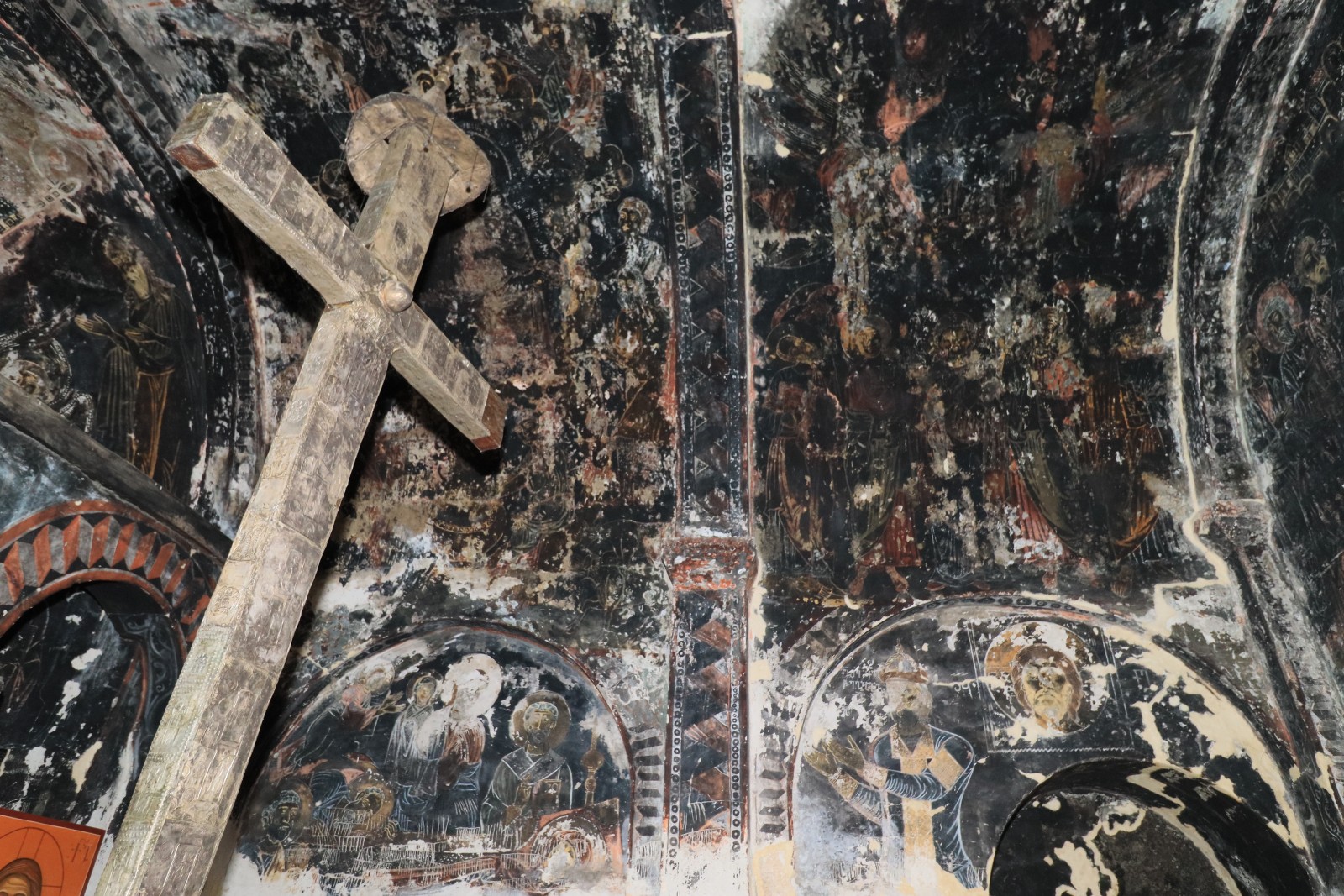
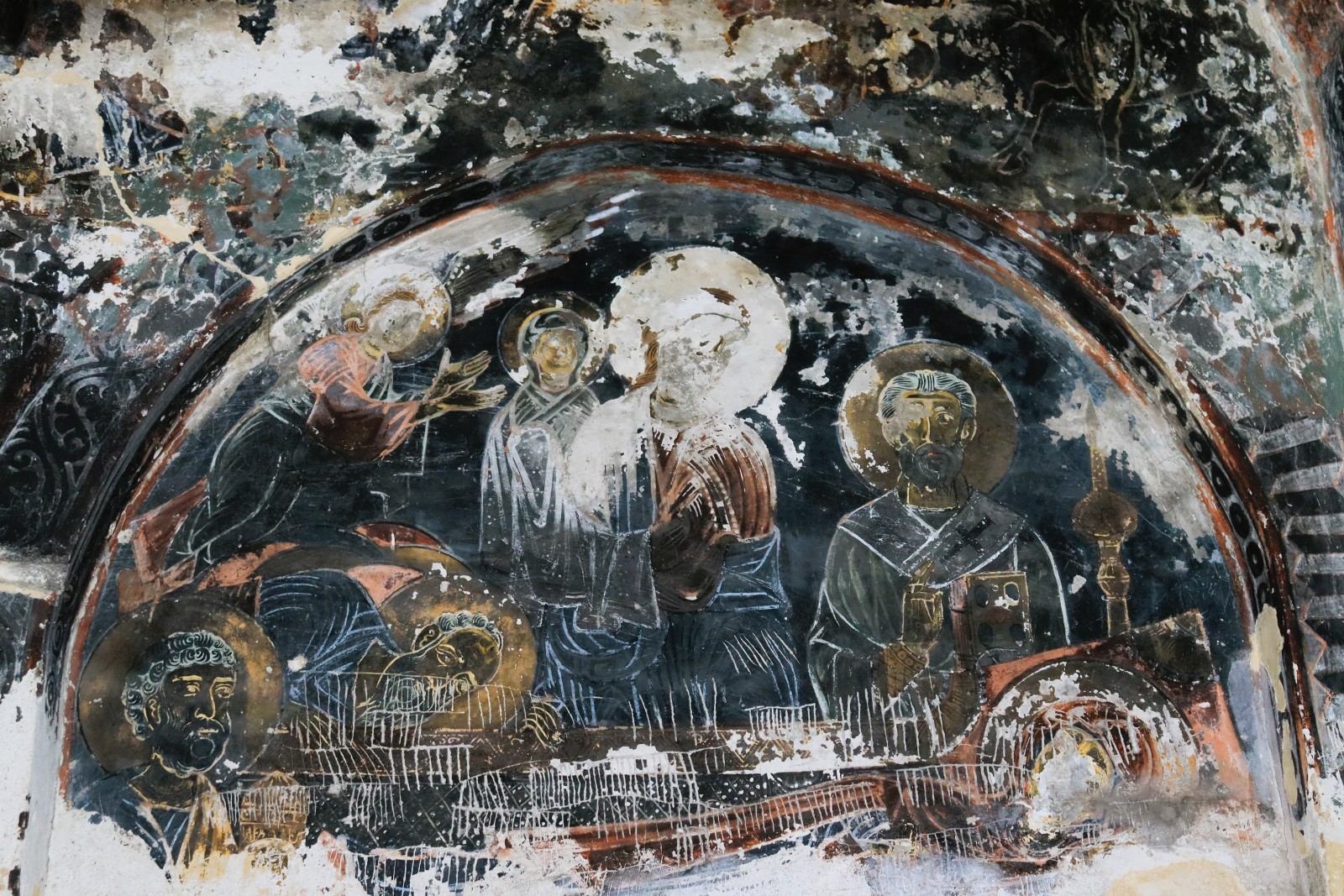
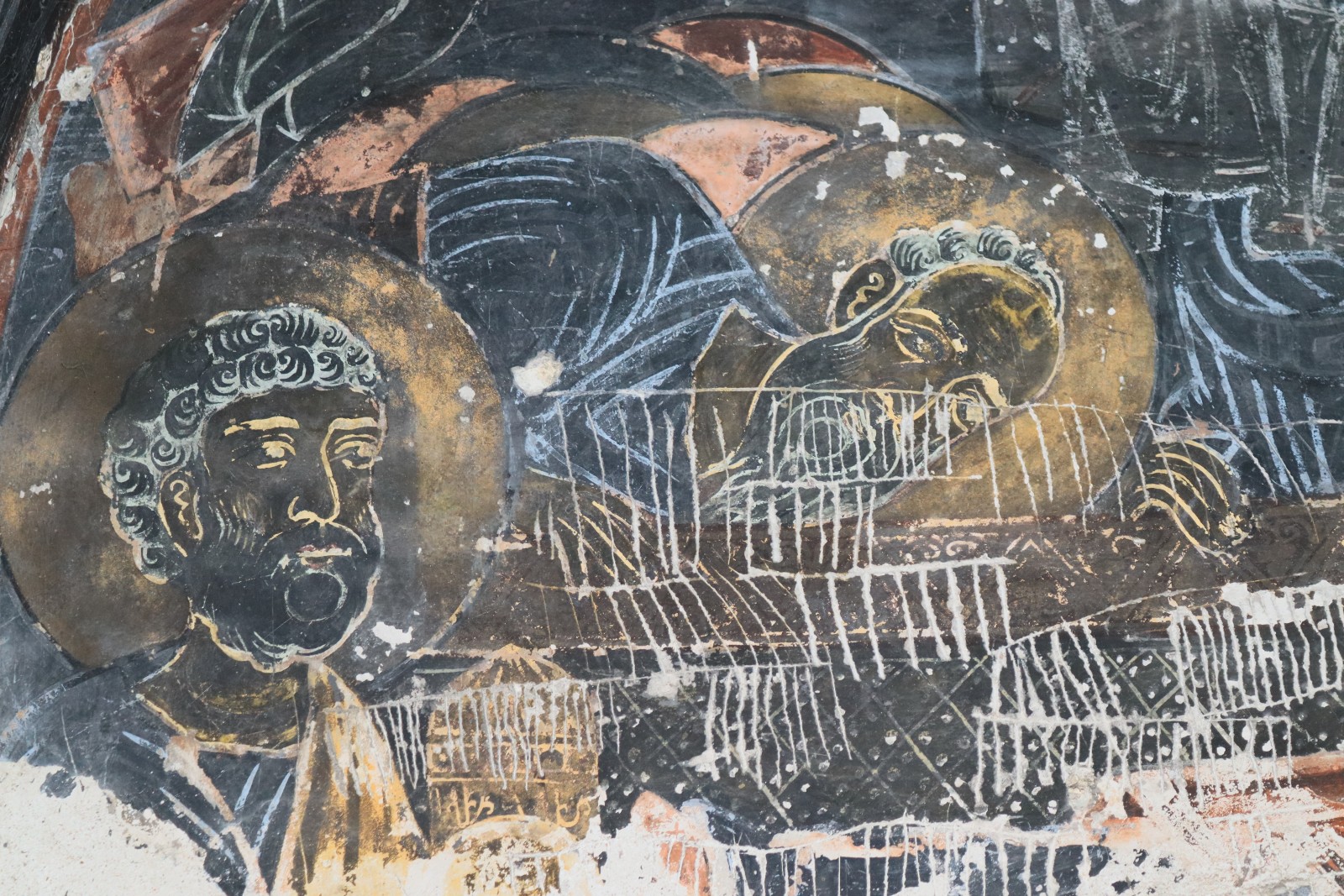
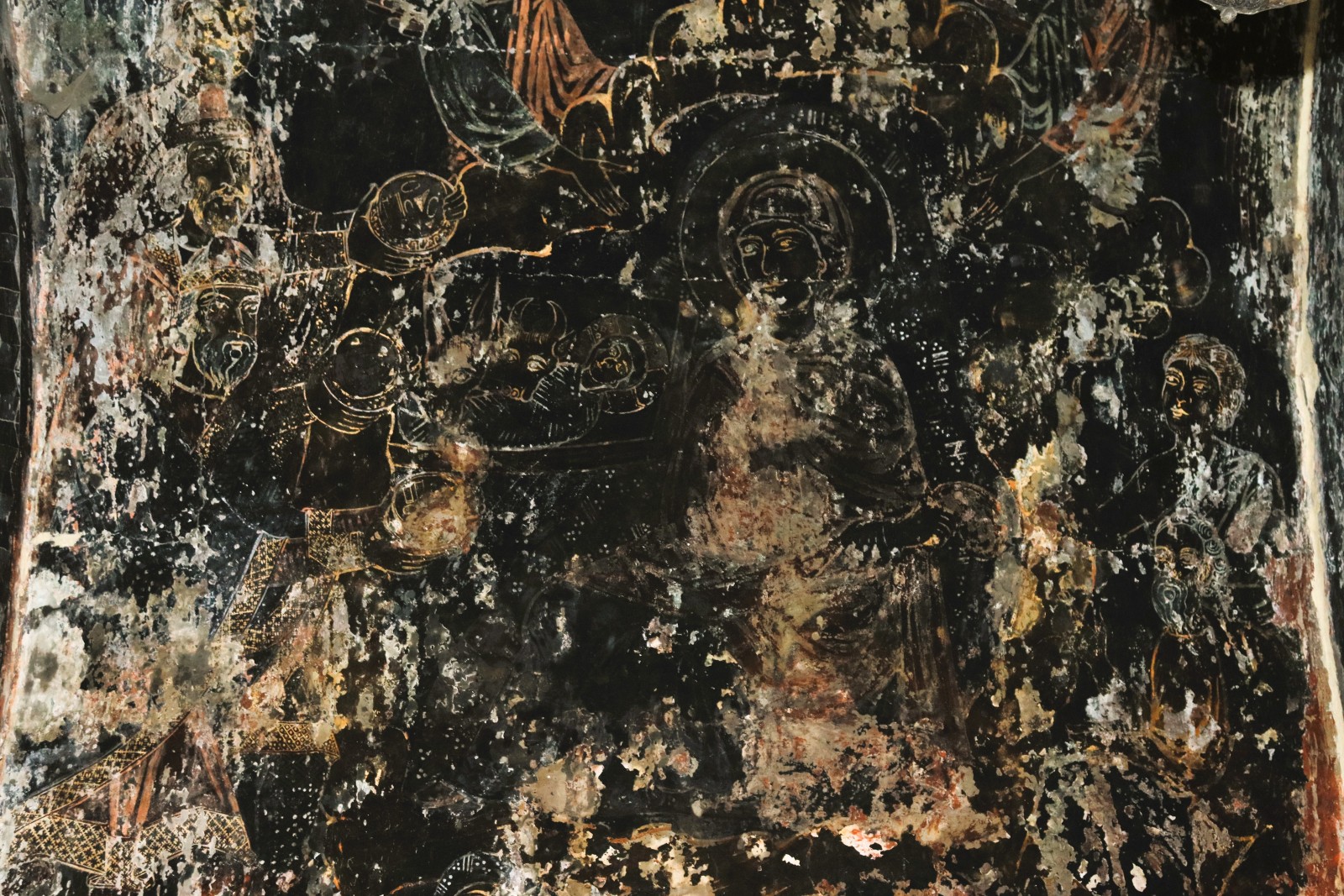

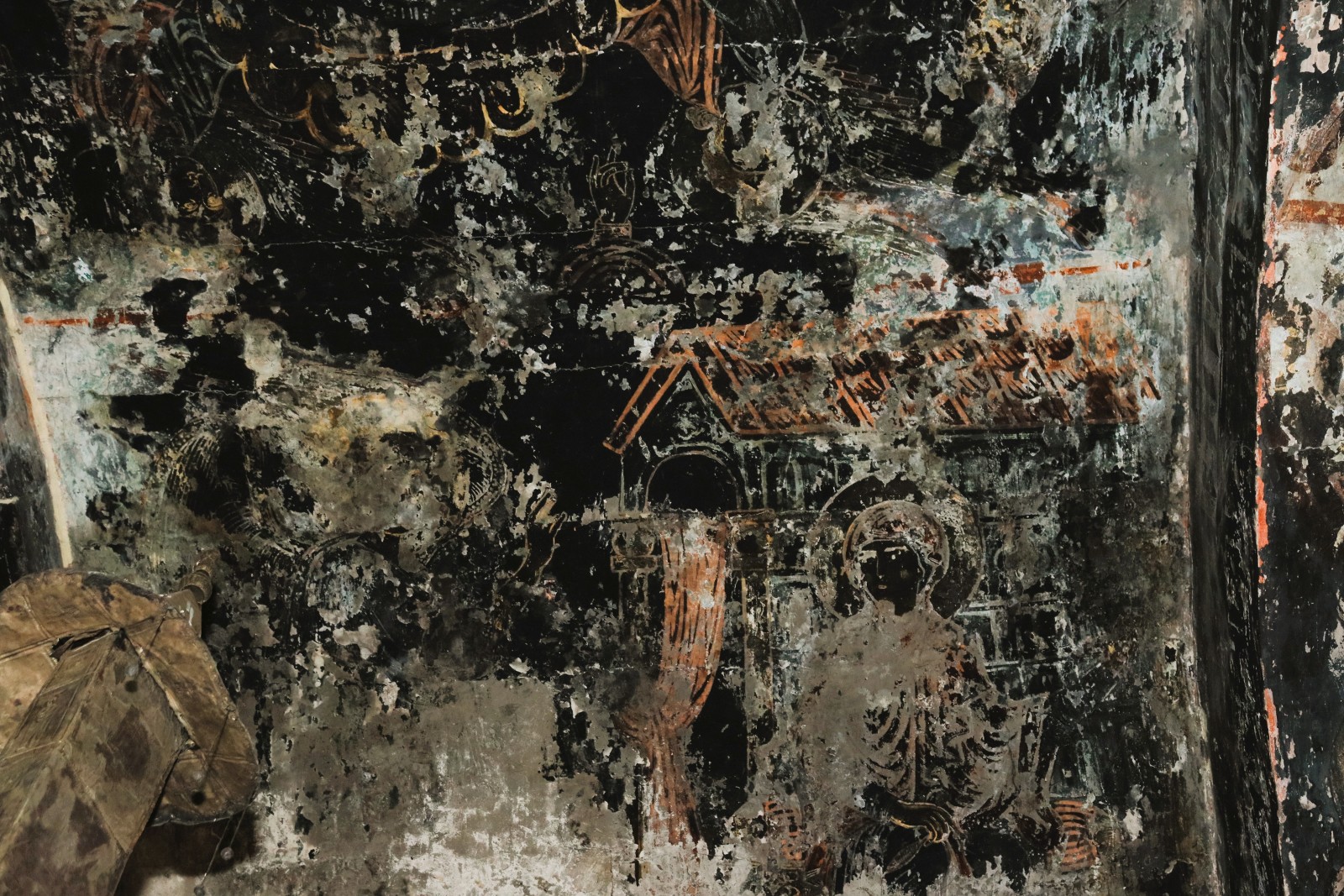
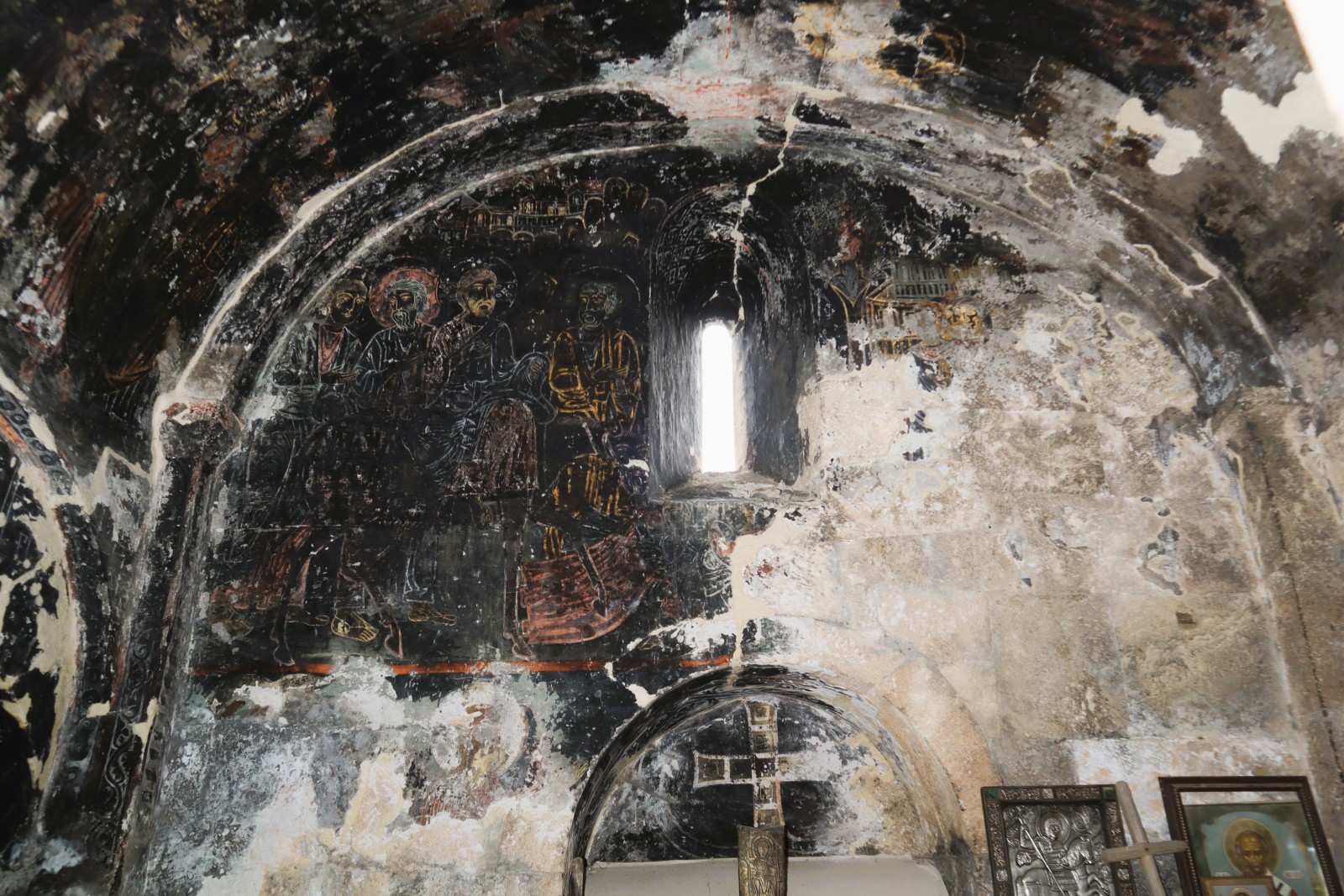
This large single nave church, with an annex on its northern side, is located in the village of Hadishi, in the community of Ipari. It was built in the 10th century, and its interior features murals from two distinct periods: the 10th century and the 12th - 13th centuries. As the main church the village, the entire treasury of Hadishi’s churches is kept here, including repoussé and painted icons from various periods. For centuries, the church also preserved a richly illustrated Gospel manuscript - copied in 897 at the Shatberdi Lavra - known as the Hadishi Gospel, which is now housed in the Mestia Museum.
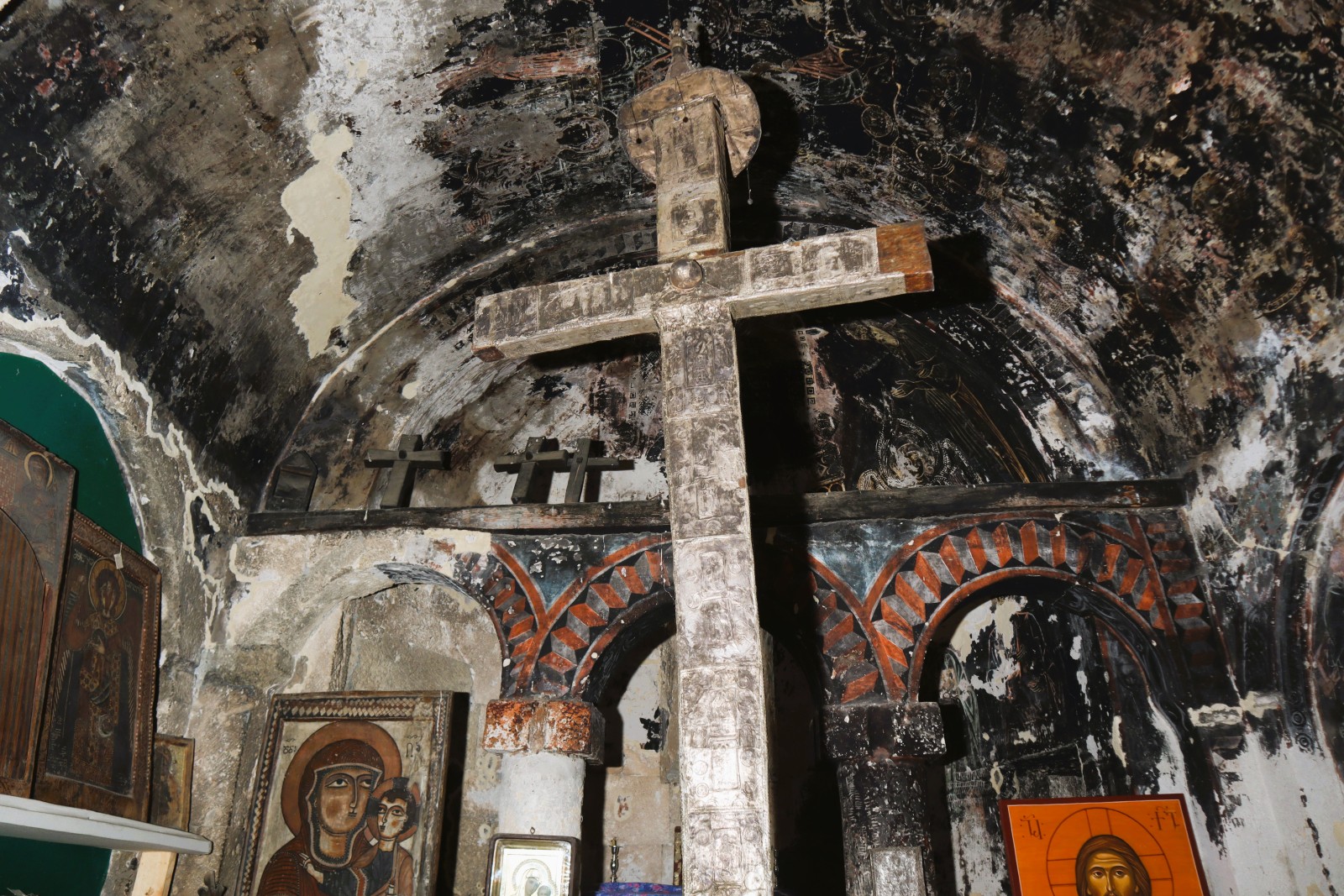
Of special note is the church’s large, wooden cross - silver-covered and mounted on a stone pedestal - which has survived in its original location in front of the chancel.
The original murals of the Hadishi Church belong to a group of early Svaneti murals that decorated only the chancel. Today, only small fragments of these paintings are visible, where the upper layer of painting in the apse conch has fallen down. Significantly, unlike other examples from this group, Hadish contains - based on current evidence - the earliest known use in Svaneti of the Deesis composition (Christ flanked by the Virgin and St. John the Baptist) in the conch, a theme that later becomes central in the programs of Svaneti decorations.
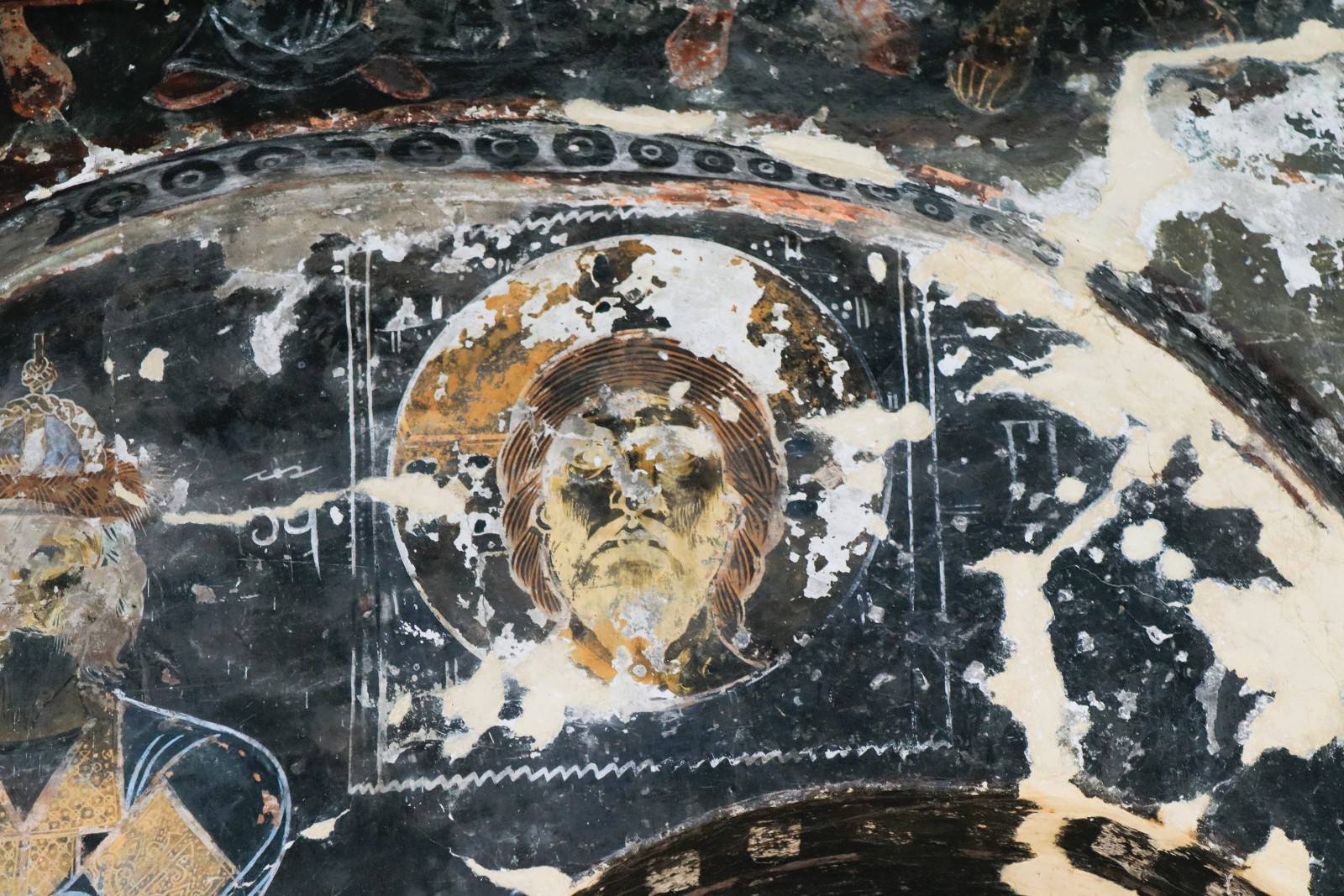
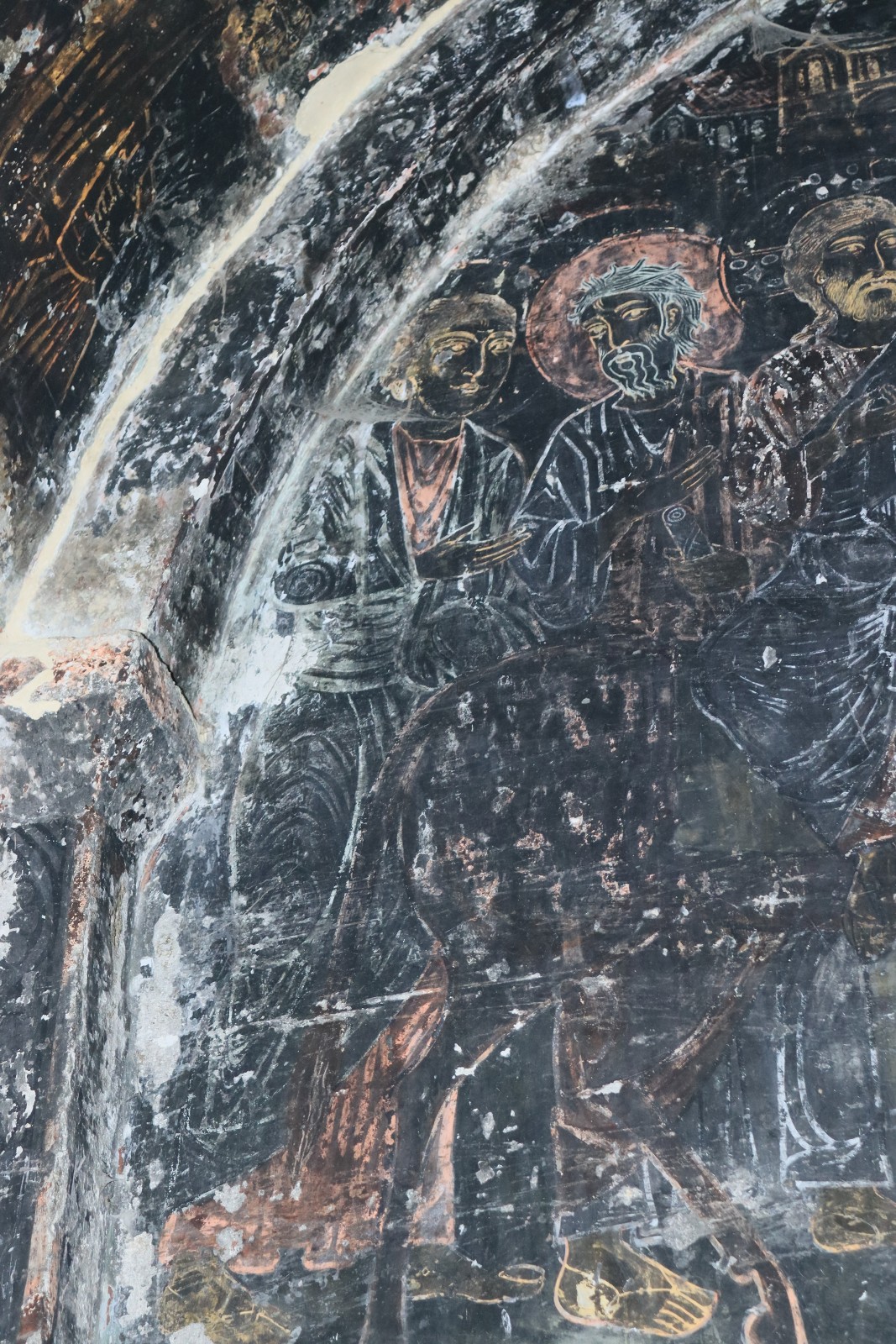
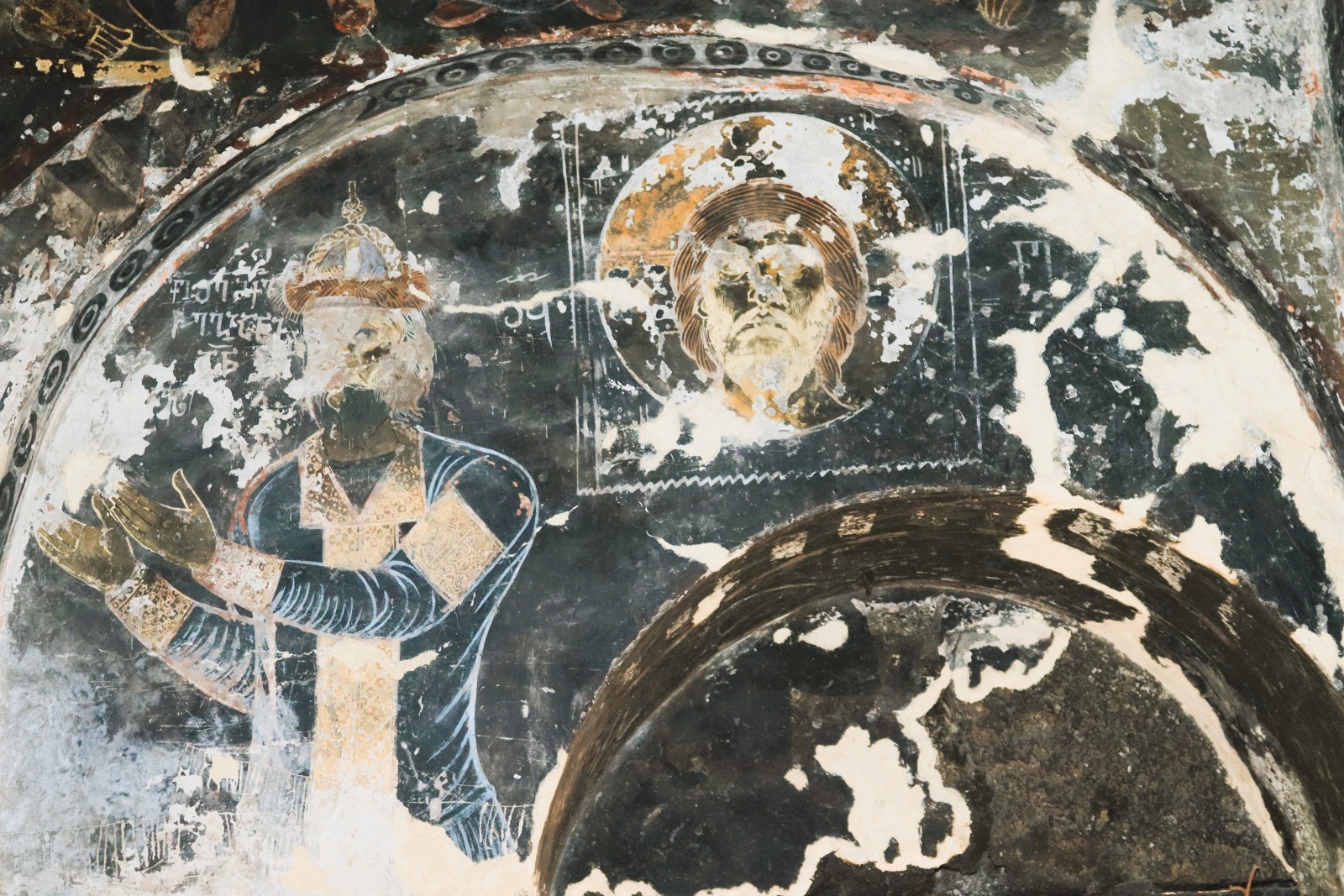
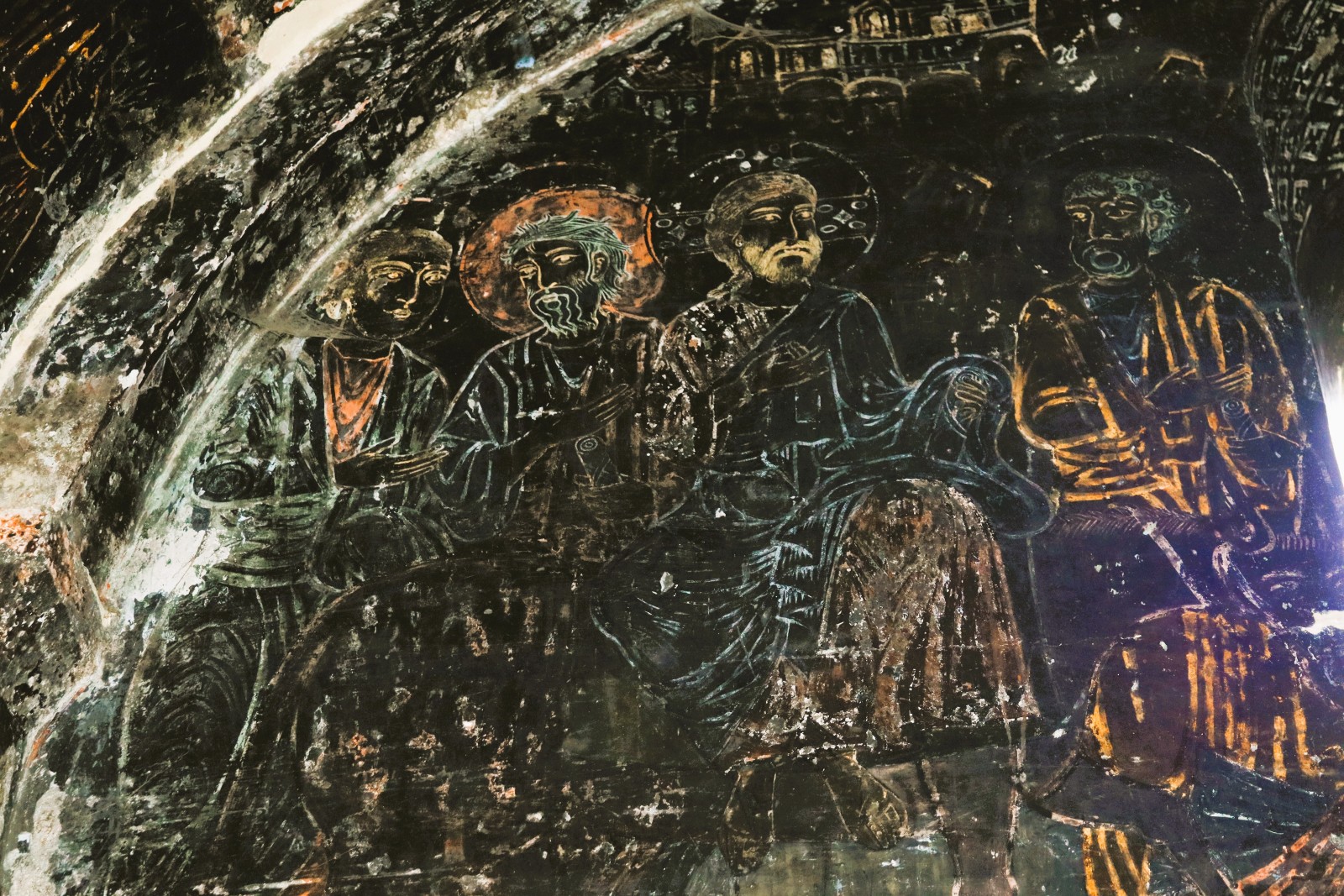
The second layer of paintings in Hadishi is one of the most important surviving ensembles from the epoch of King Tamar in Svaneti. Though it is now heavily damaged and completely darkened - so that the images appear almost like negatives on the church’s vault and walls - the remarkable artistic quality remains perceptible. One can still clearly sense the creator’s high professional skill, the harmony and expressiveness of the forms, and the overall visual impact of the work.
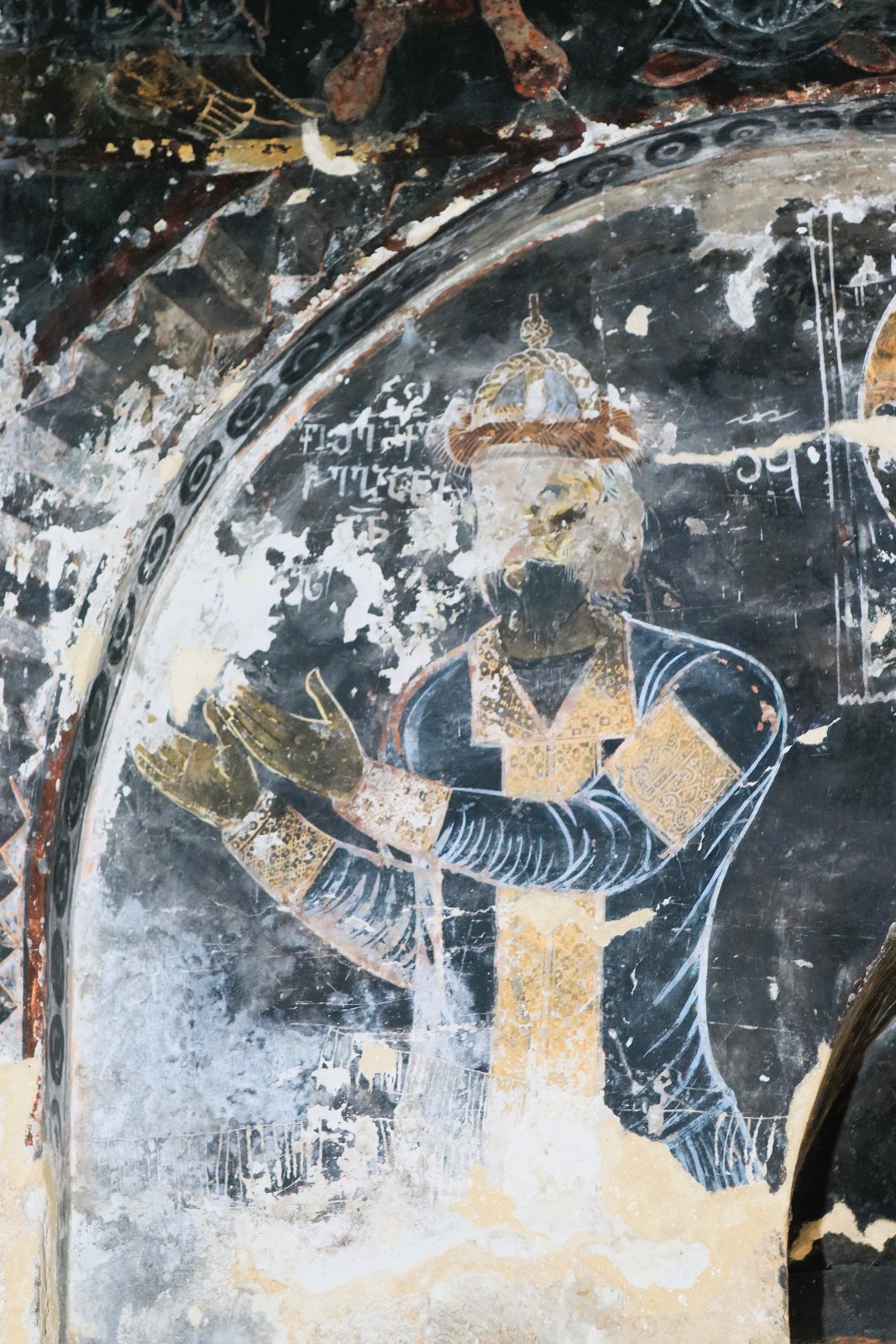
It is also important to note that, thanks to the inclusion of a donor portrait in the painting program, the identity of the donor of Hadishi’s second layer of painting is known. The accompanying inscription reads:
“Christ, have mercy on Mikel Chegiani. Amen. † This” (The inscription is left incomplete.)
| Location | The church is located at the cemetery of the village |
| The Key Holder | The key is kept by Omar Qaldani |