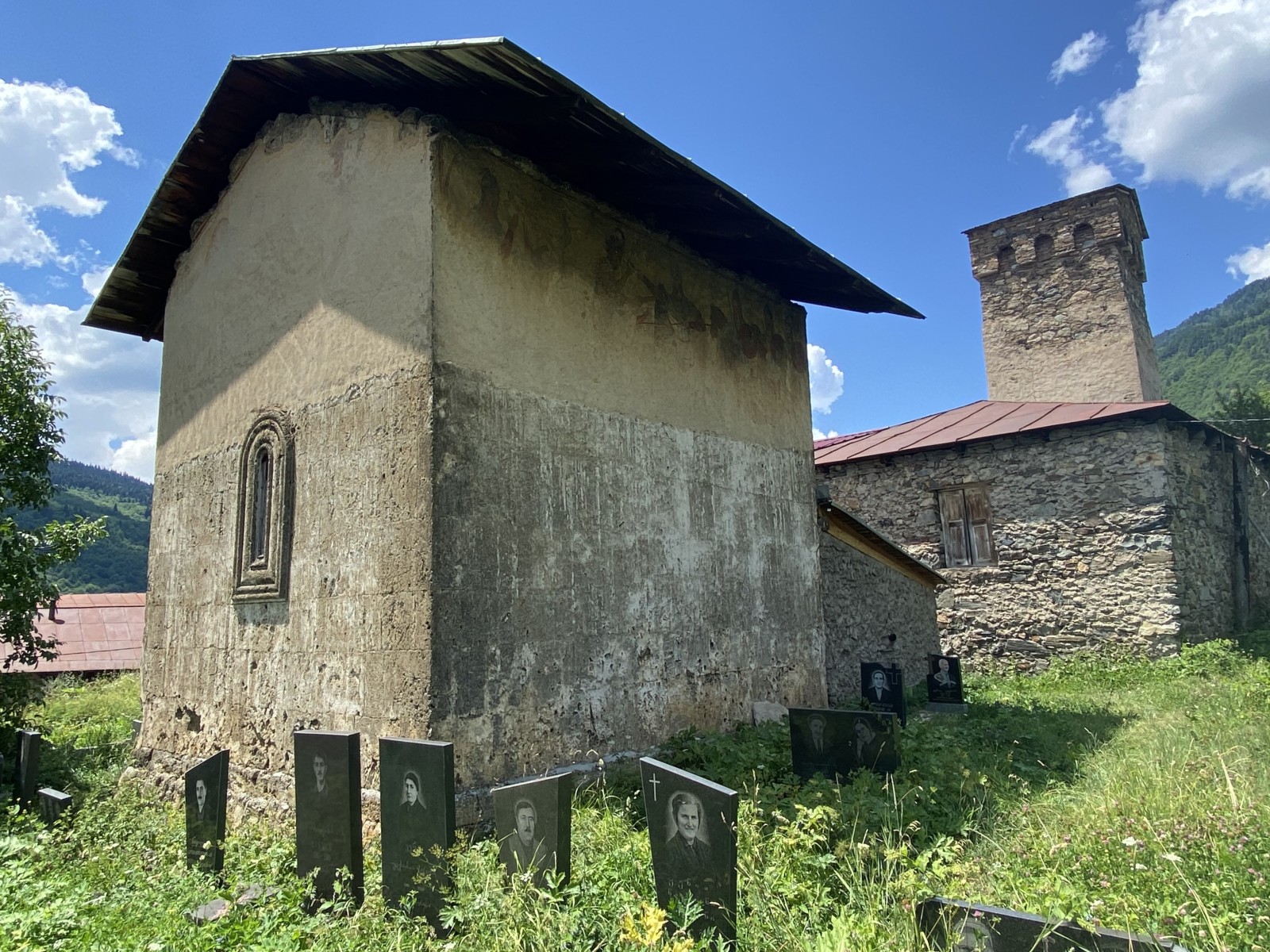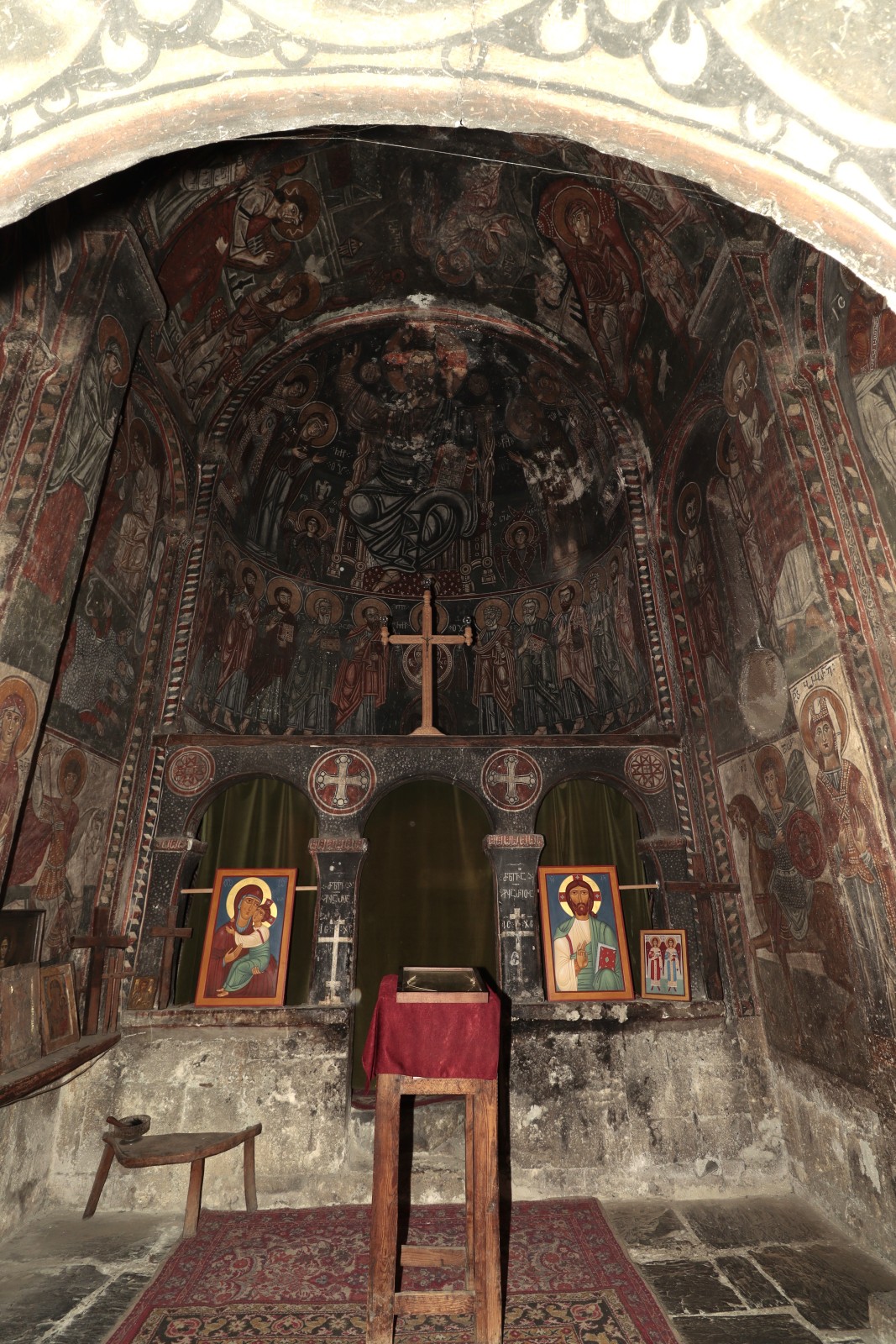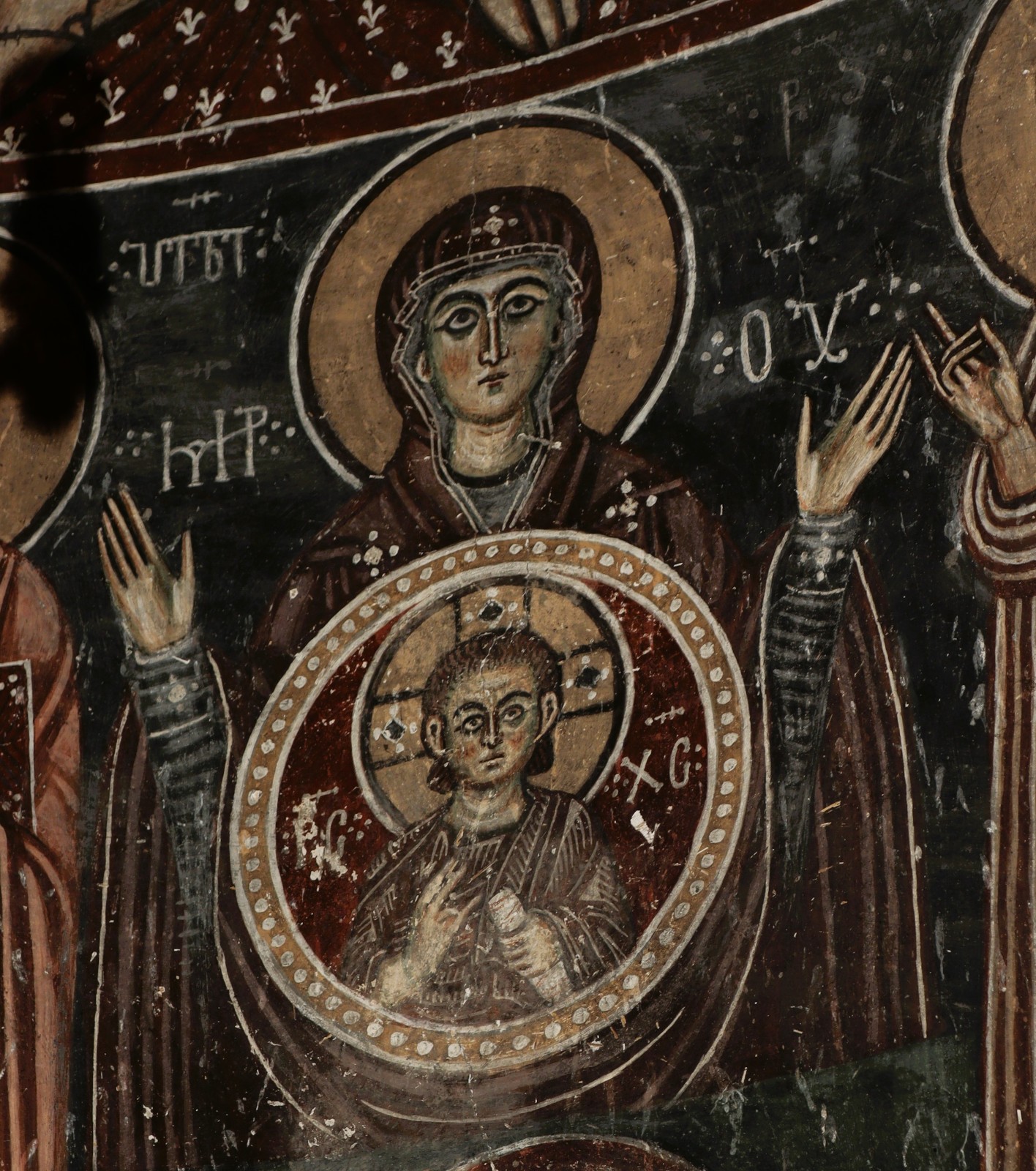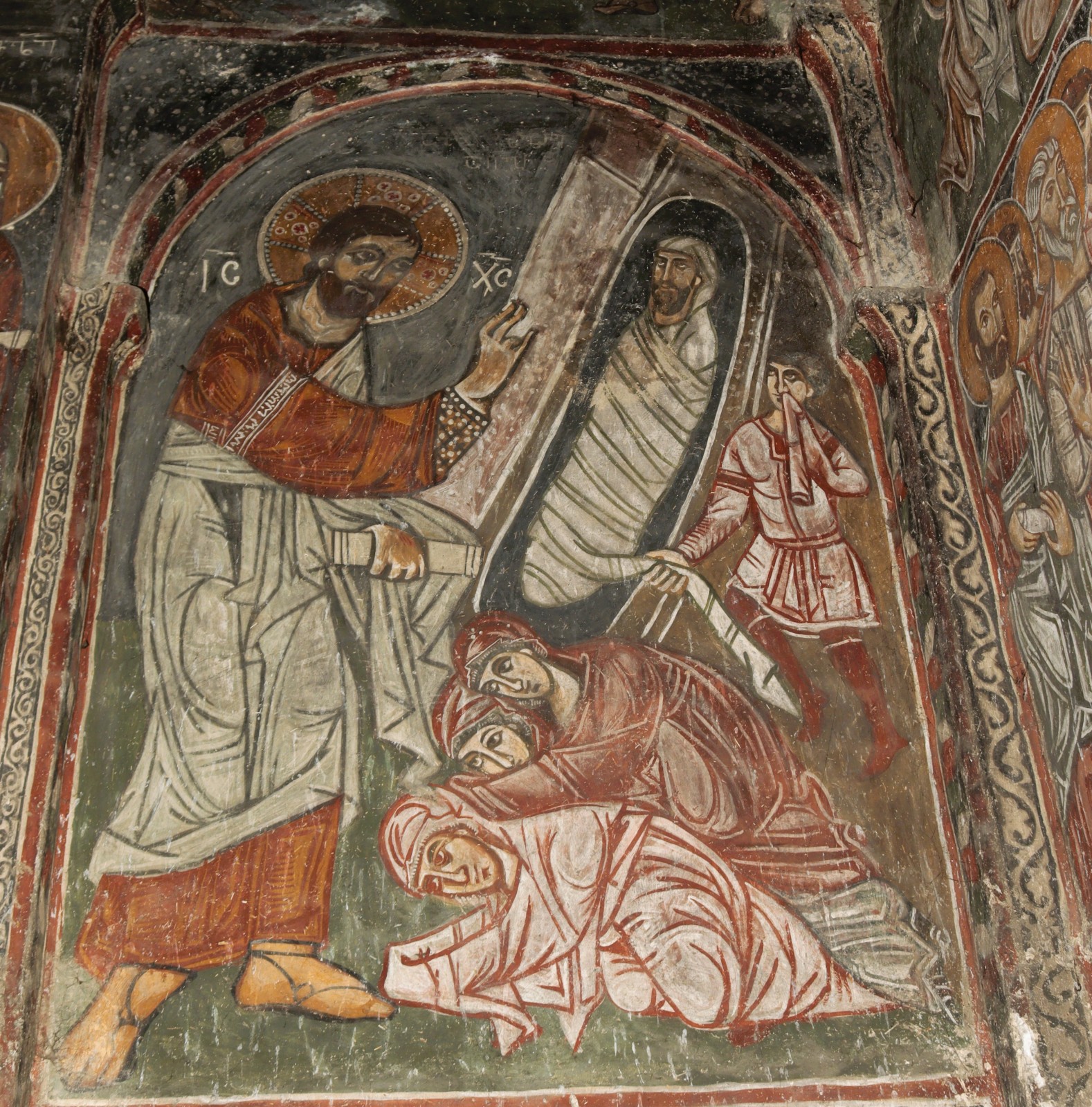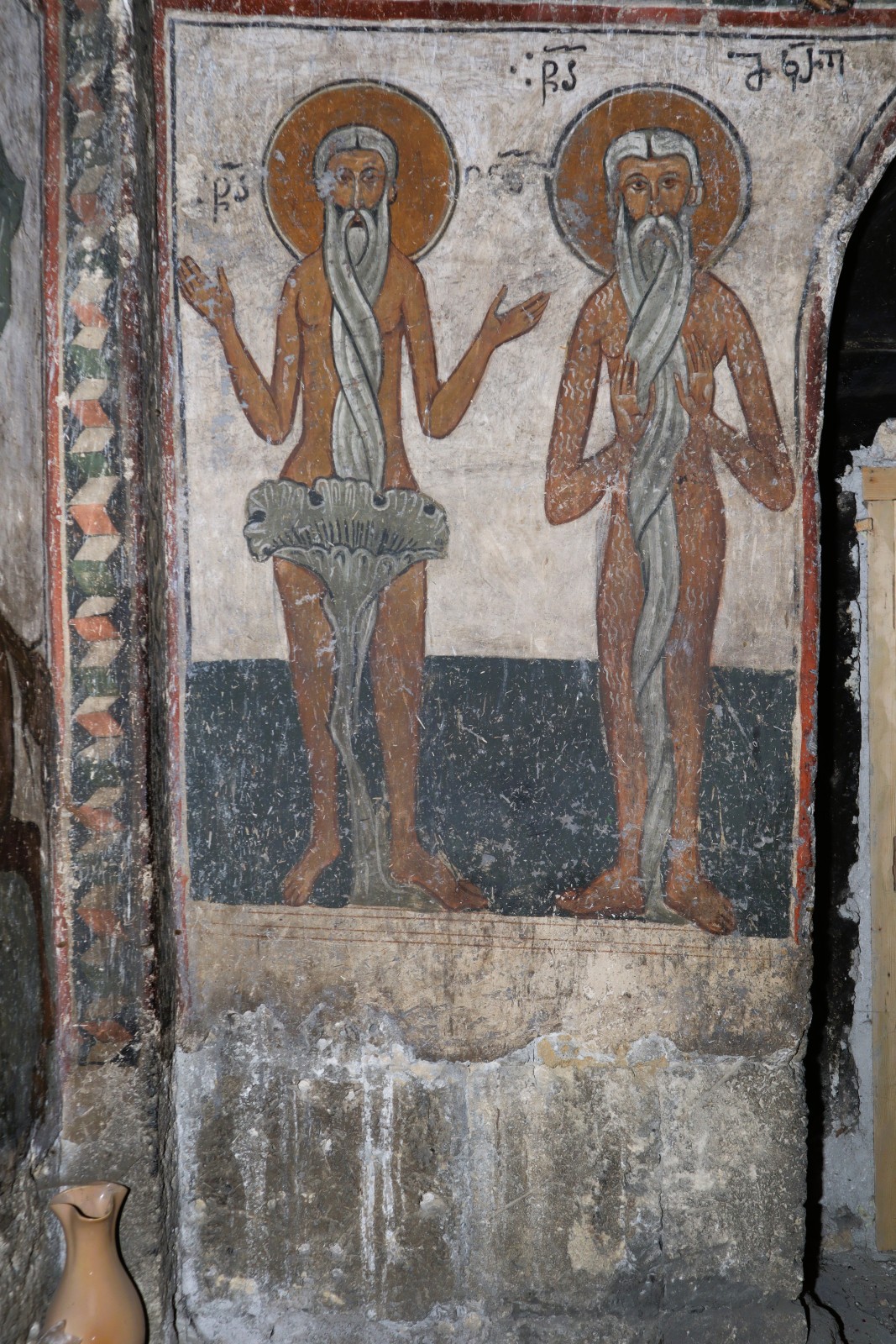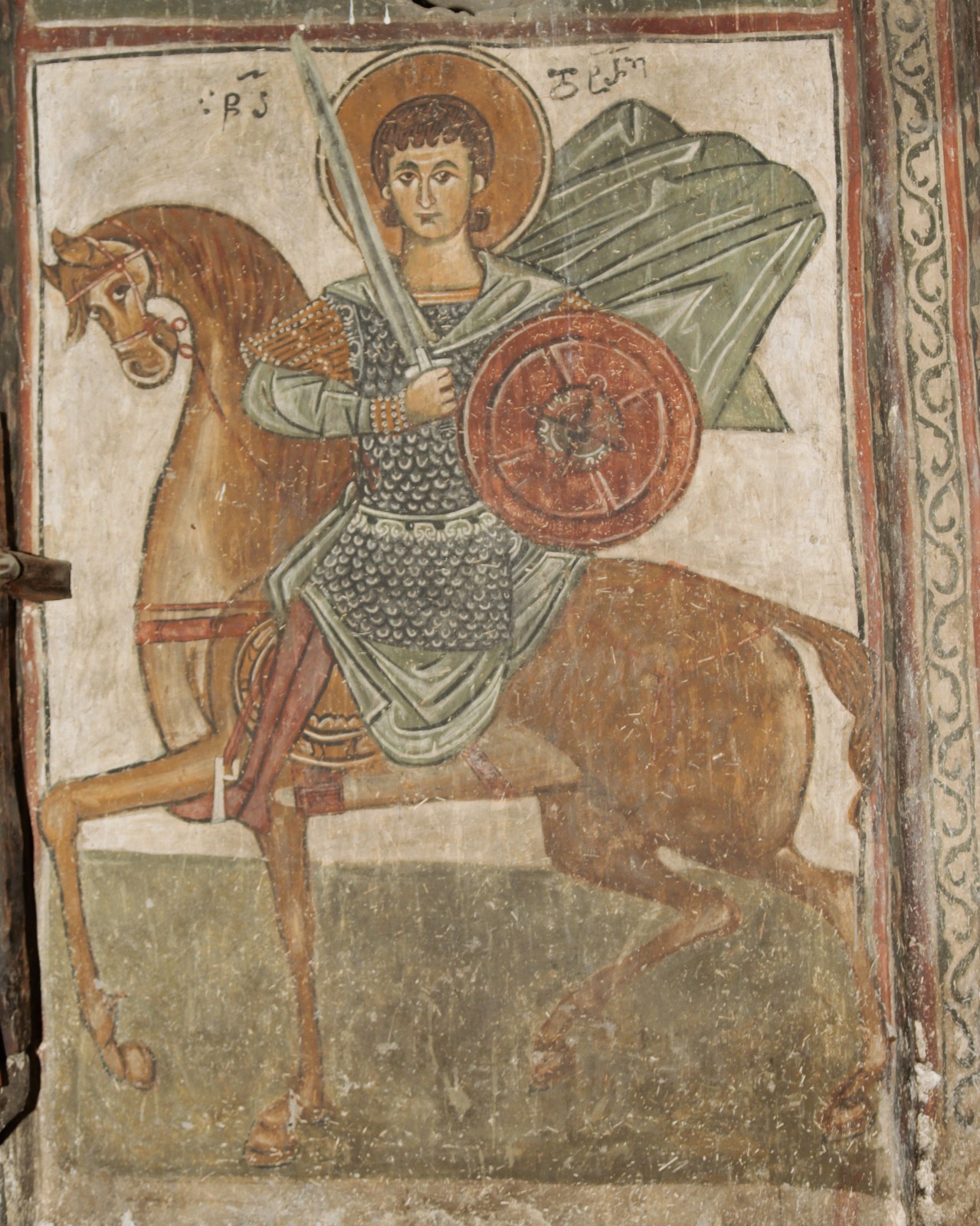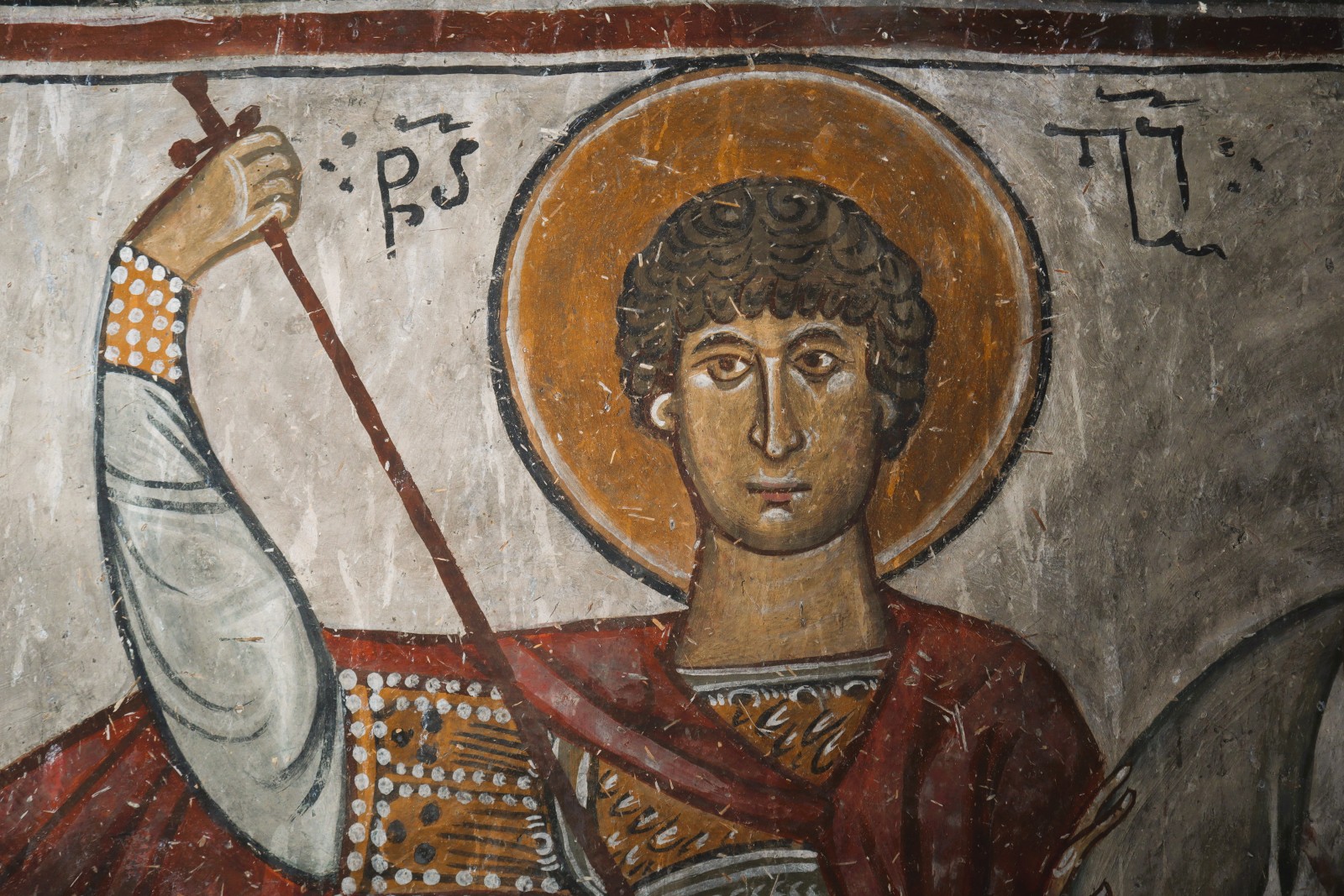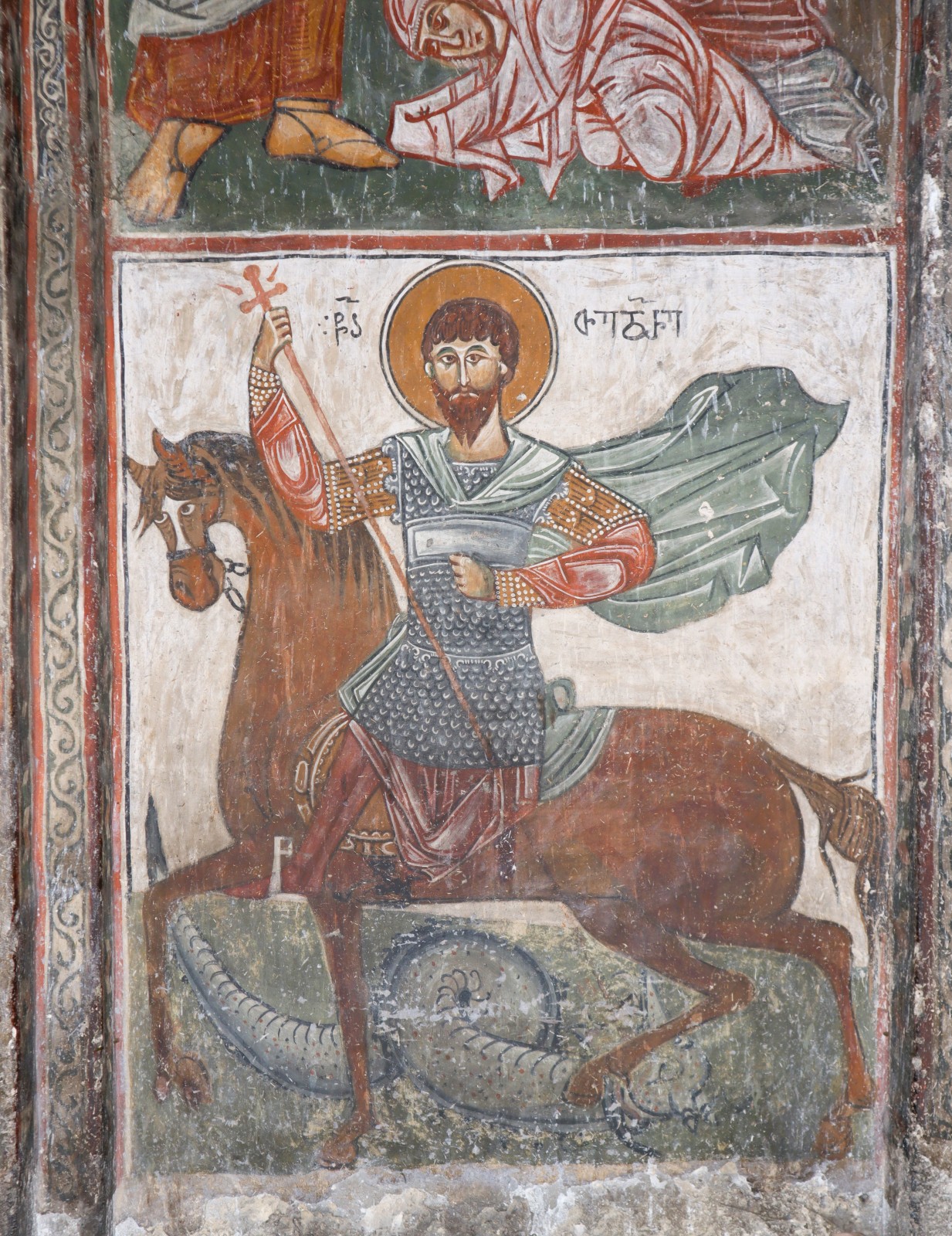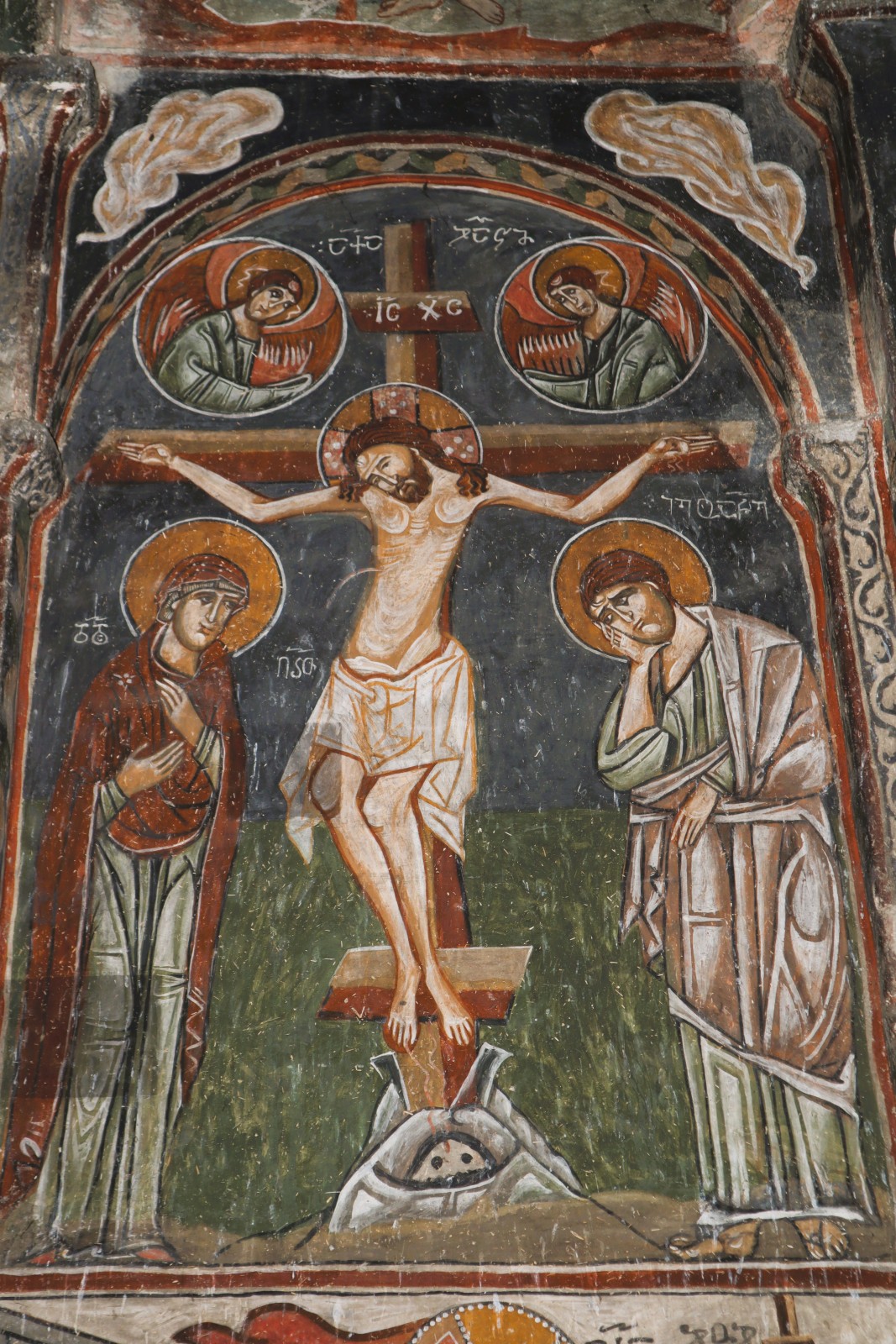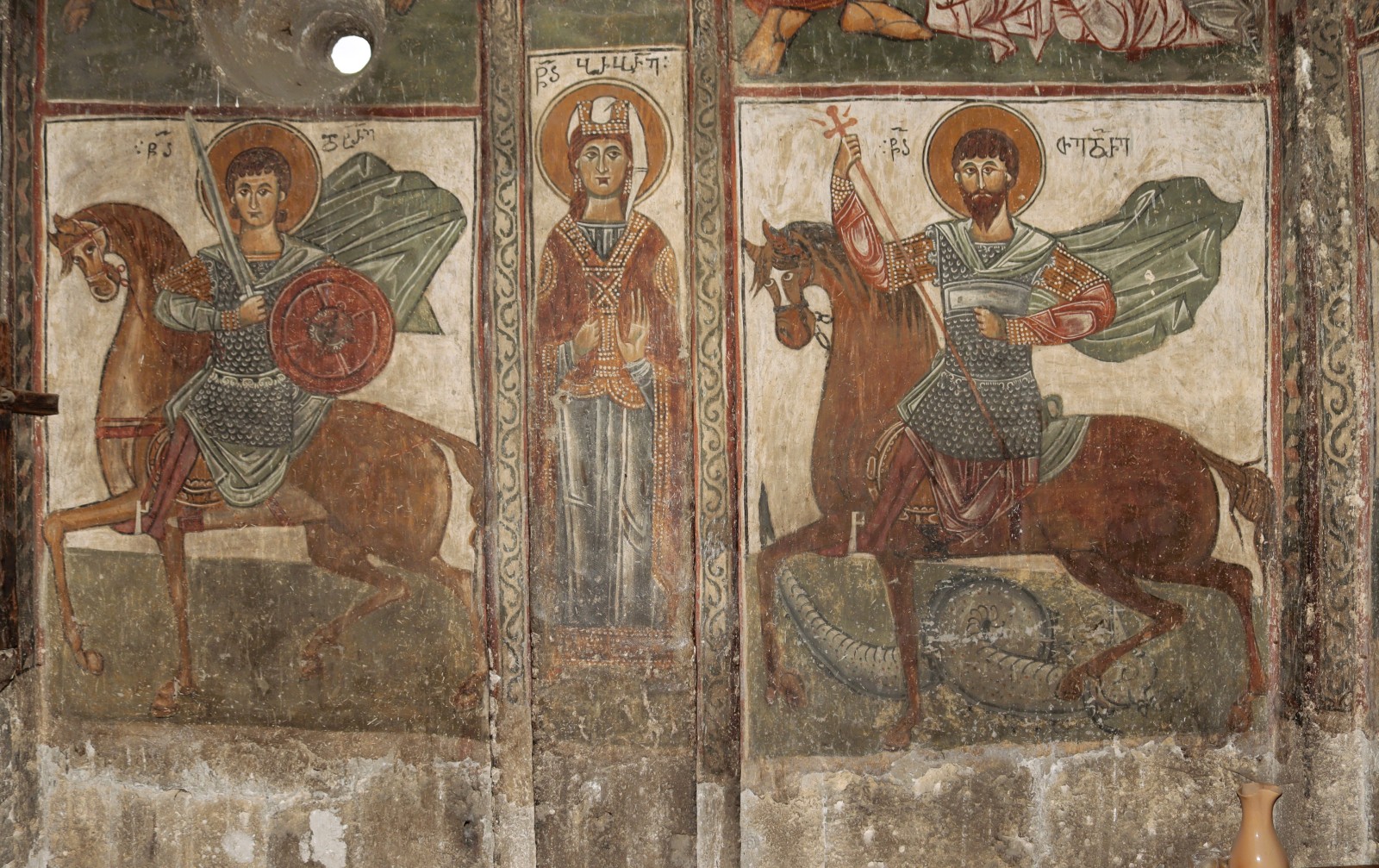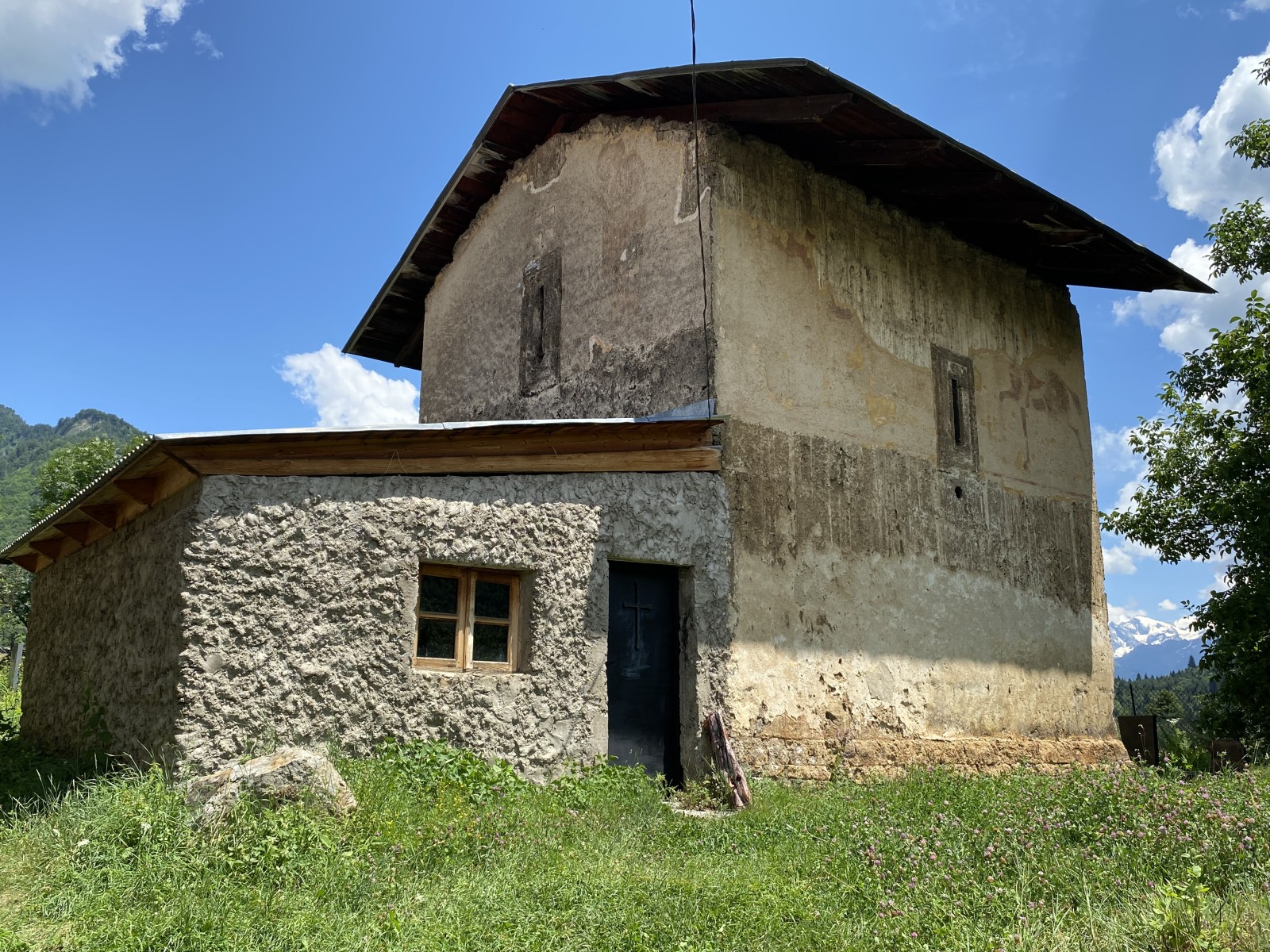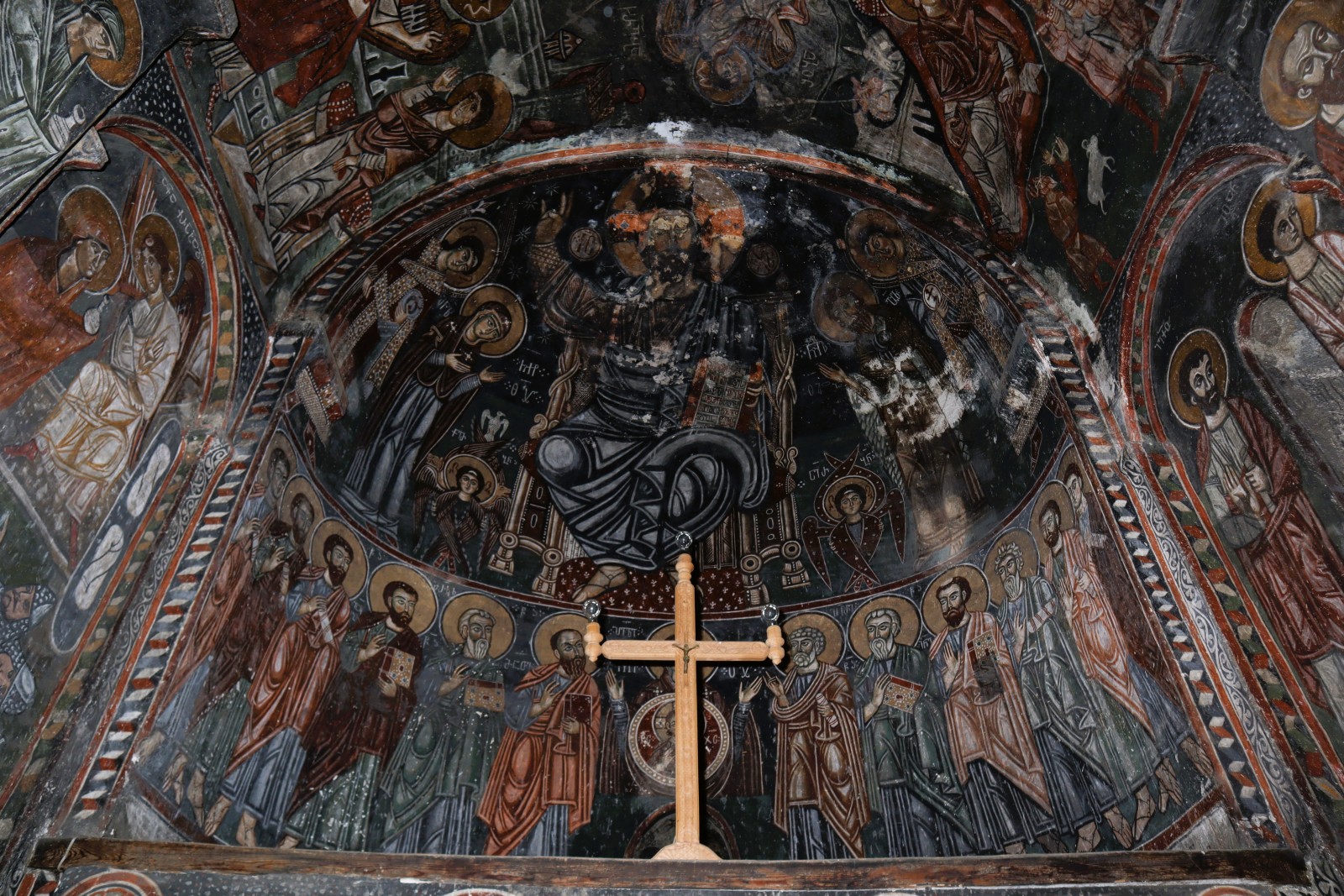
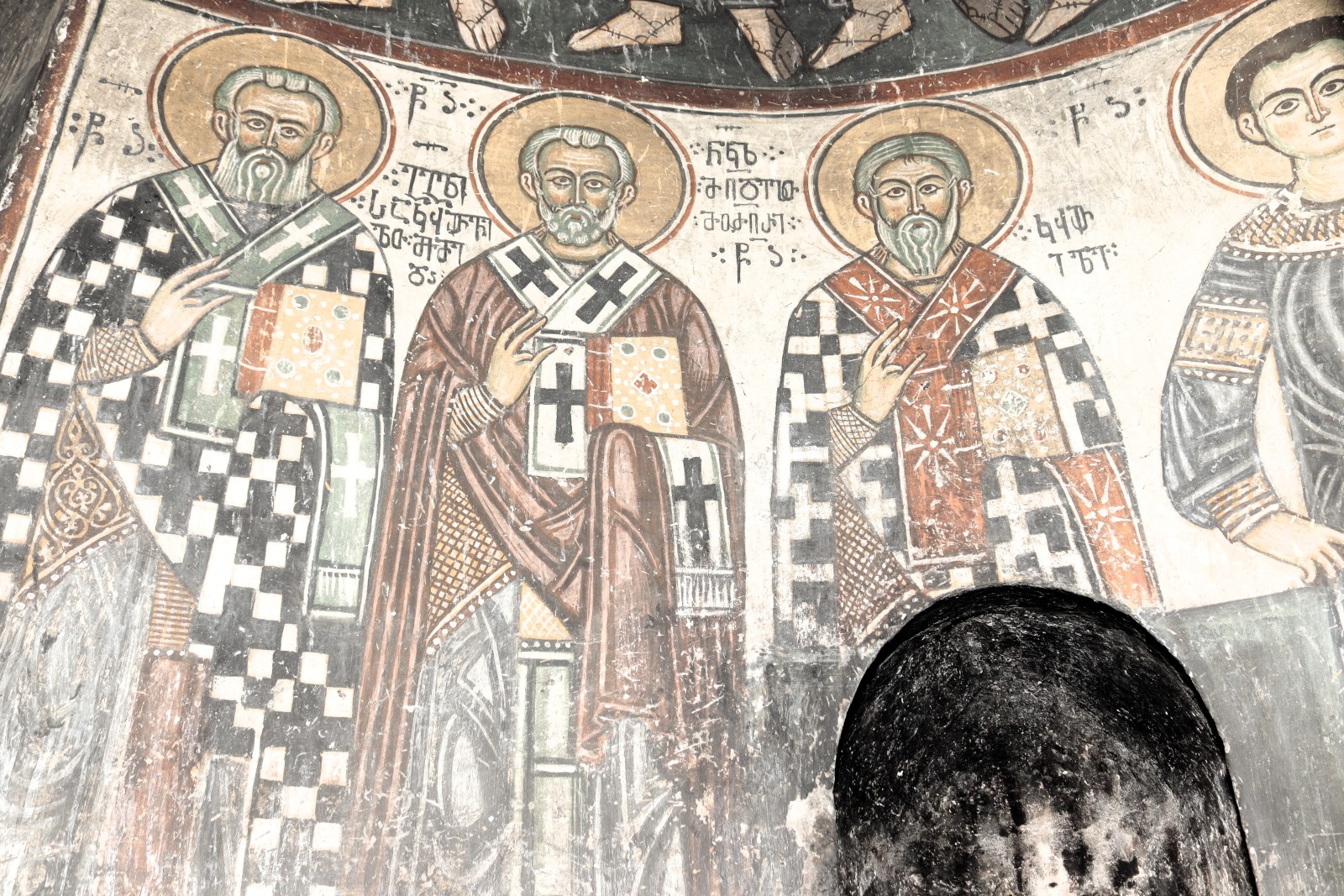
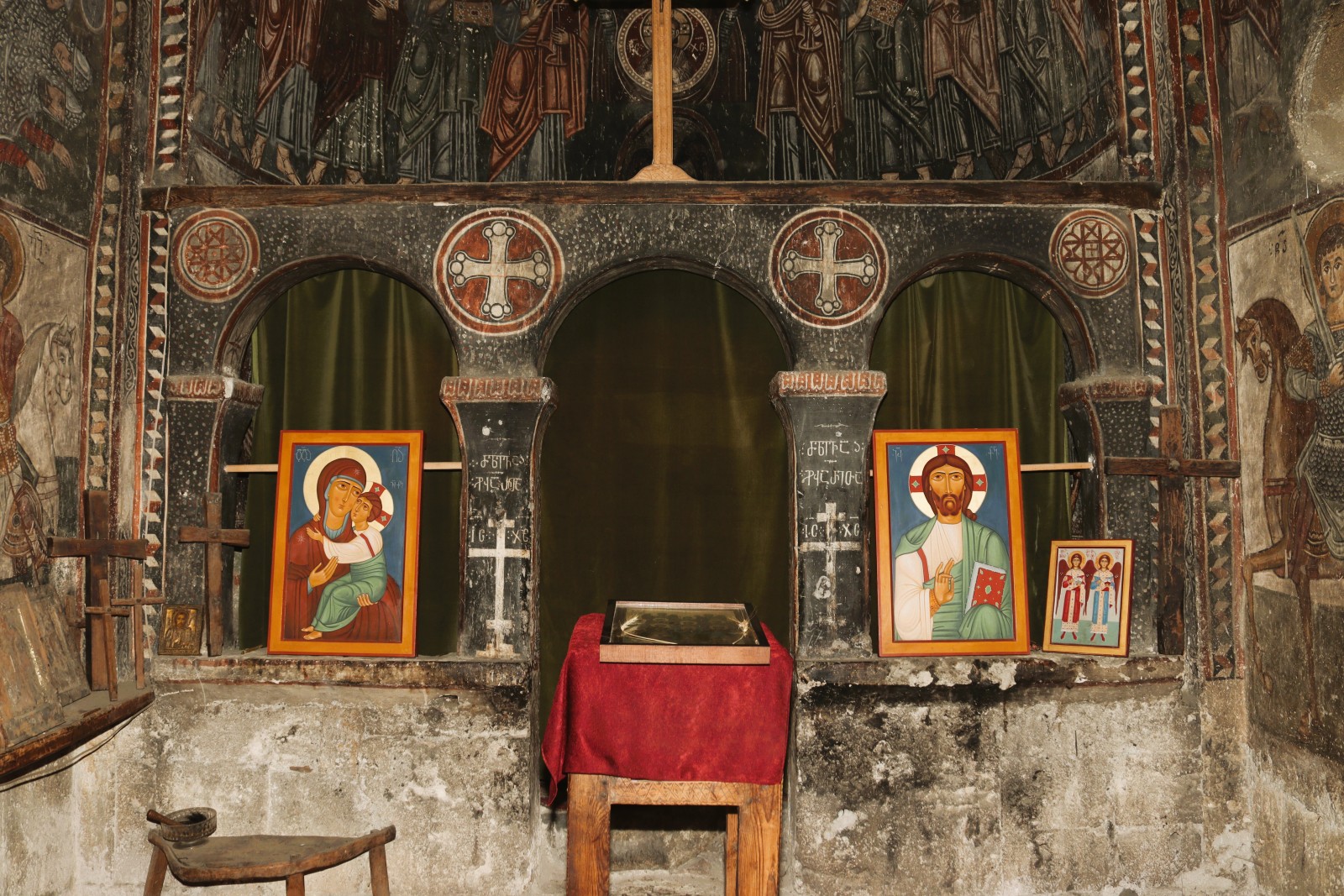
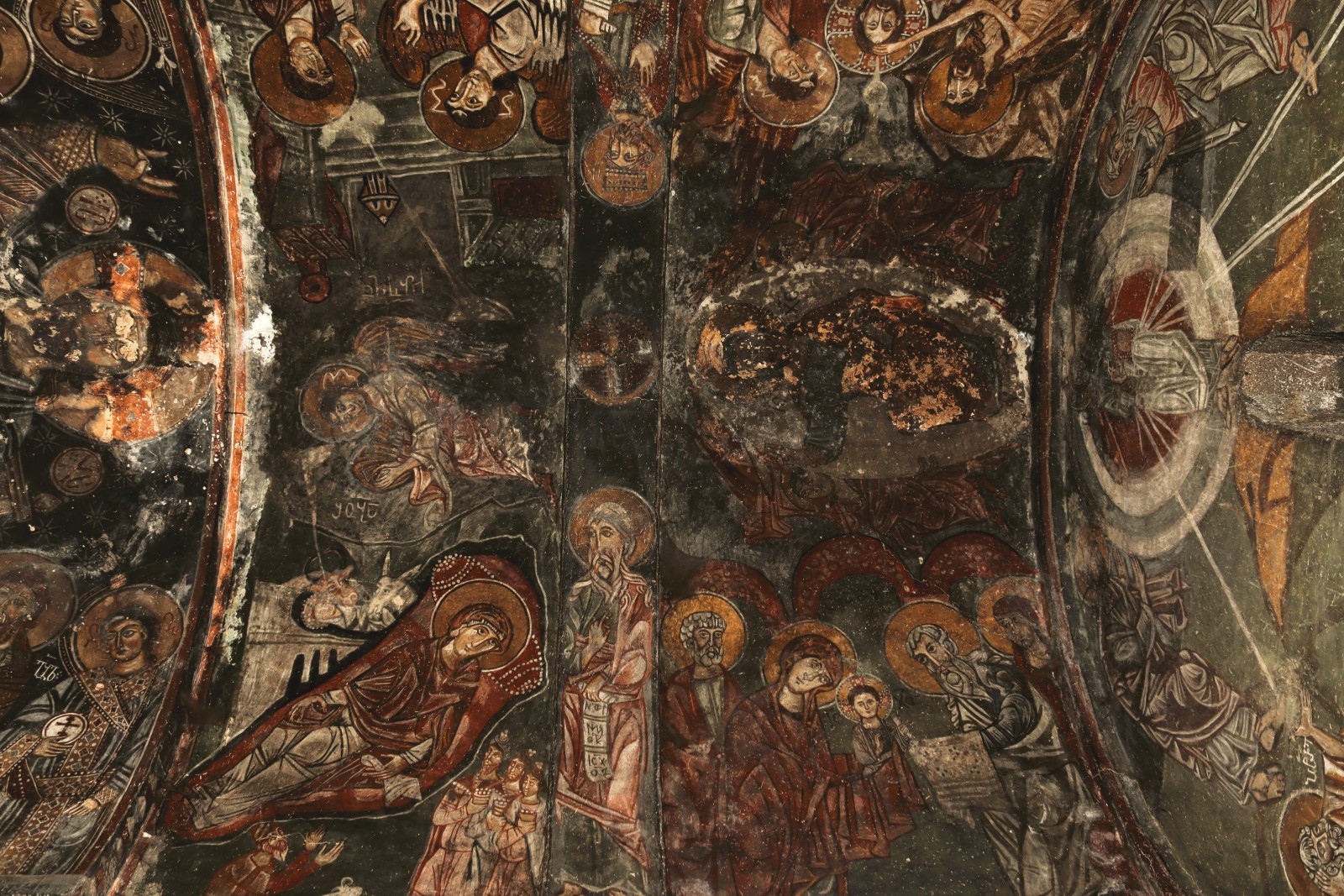
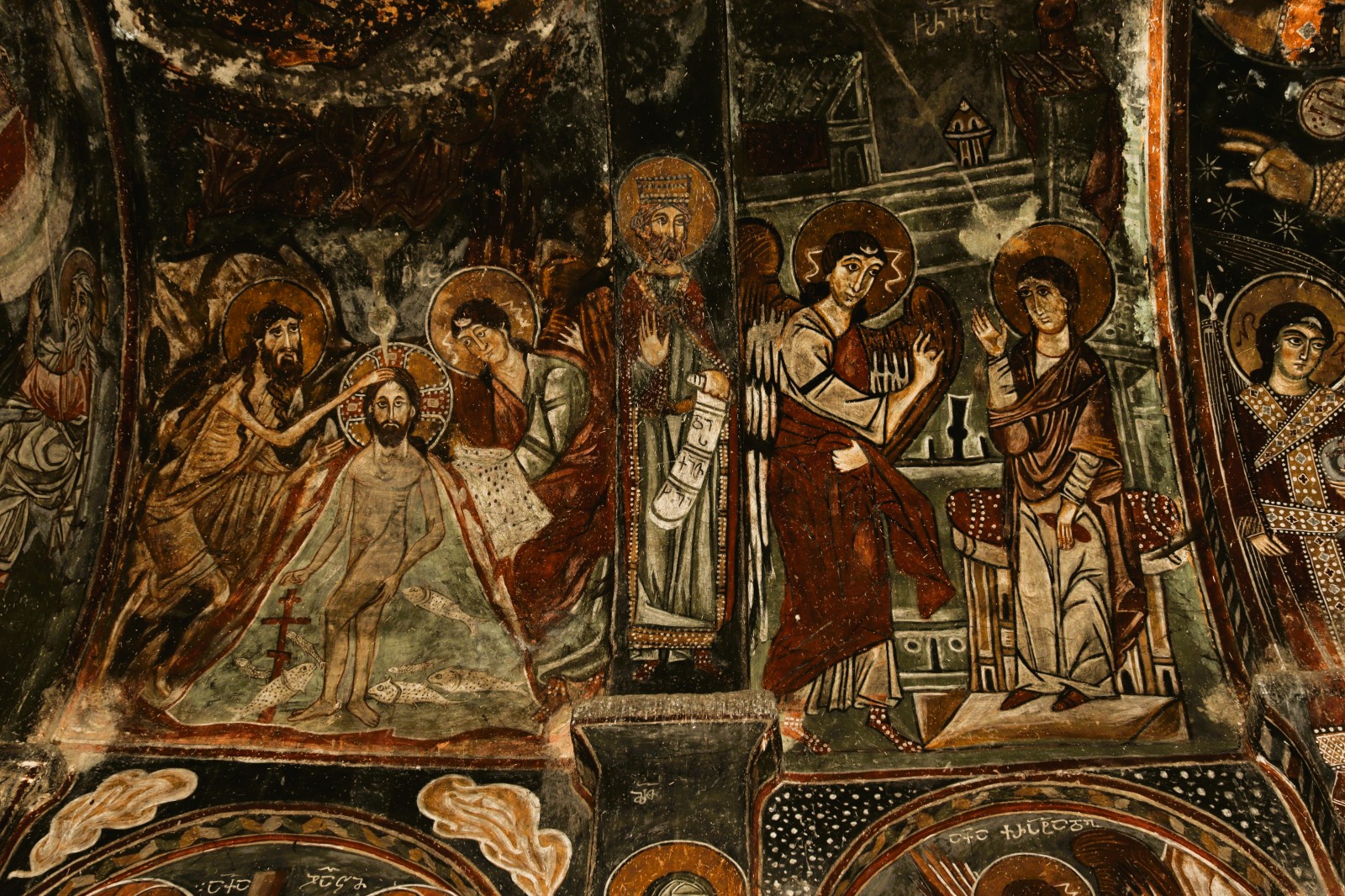
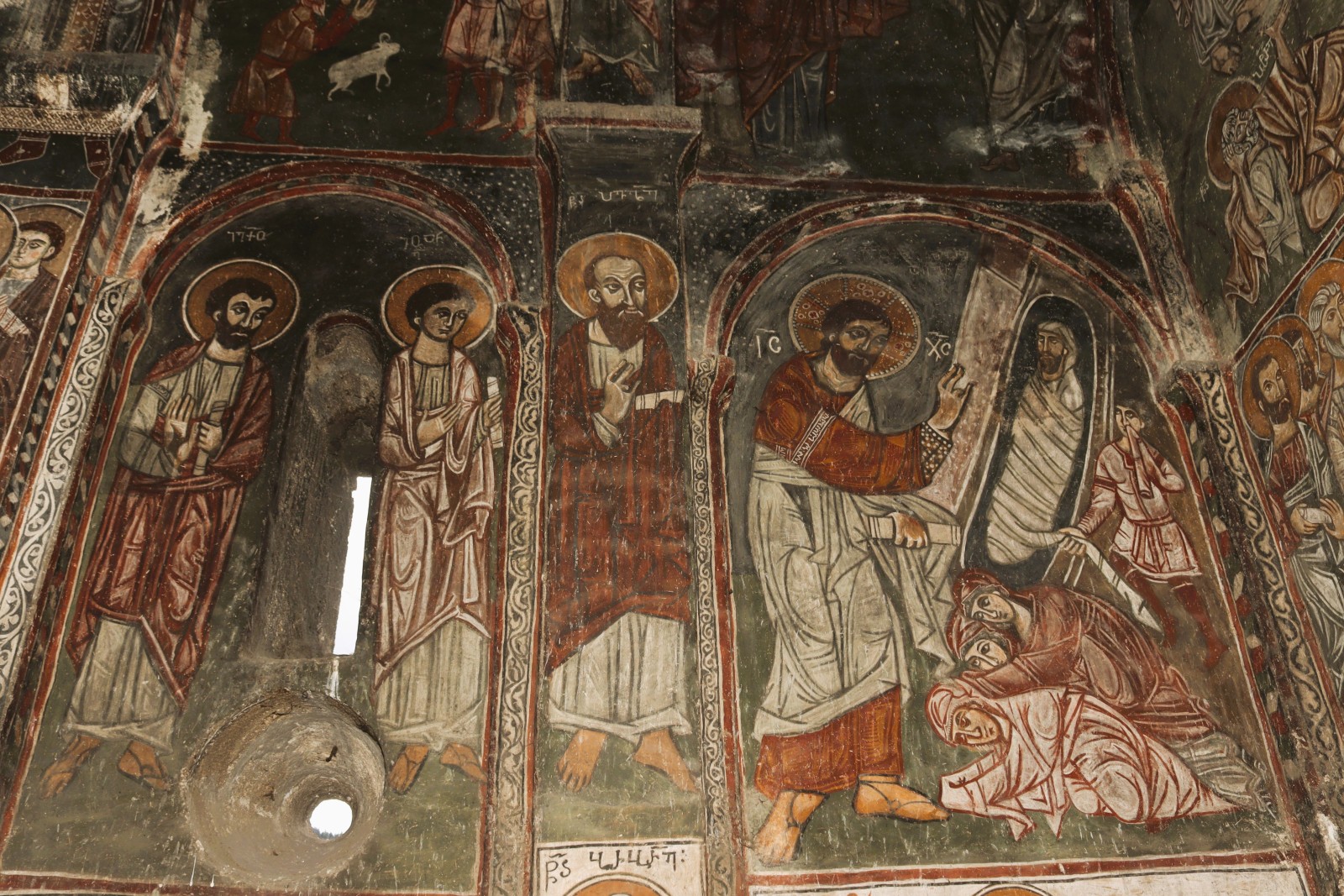
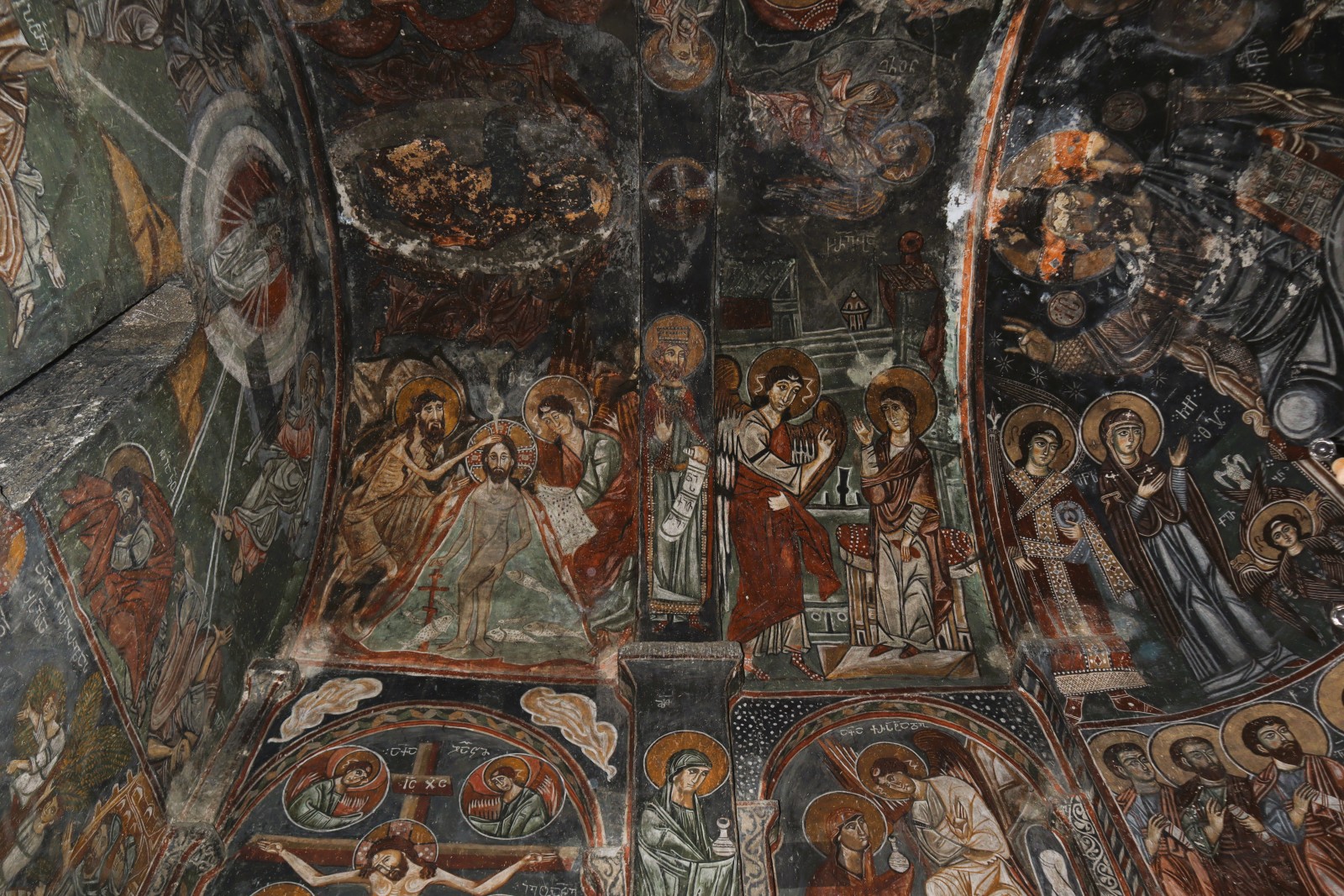
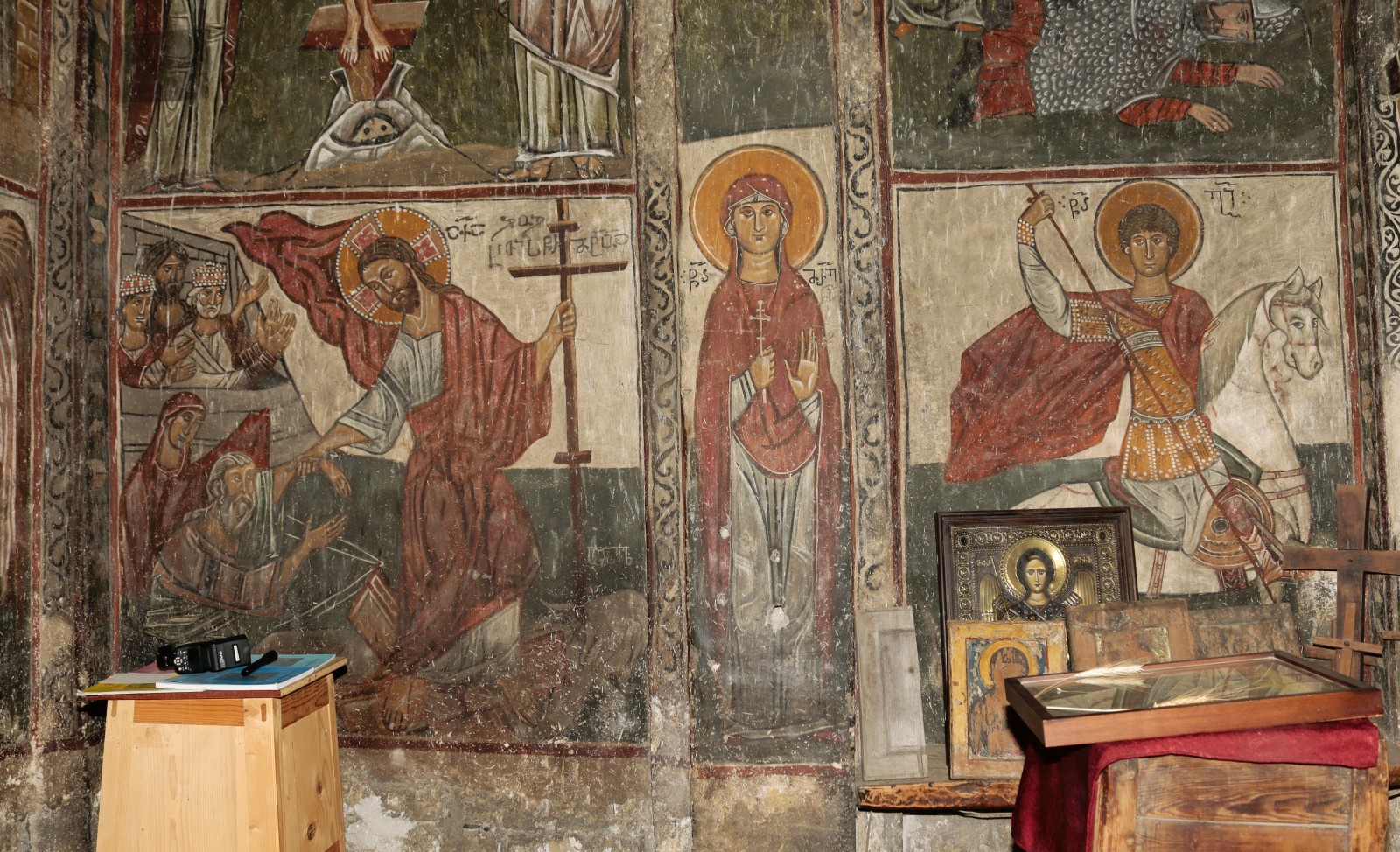
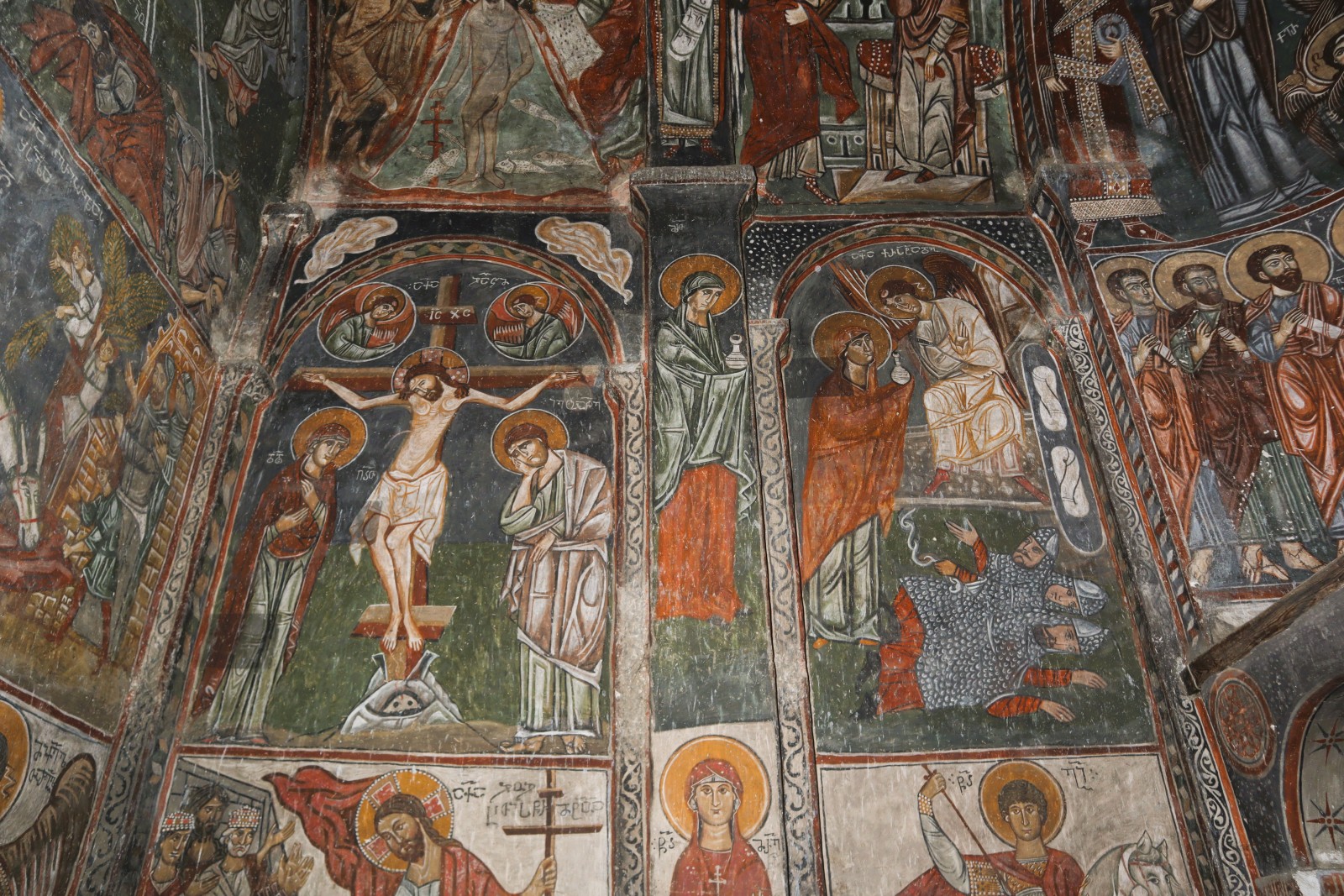
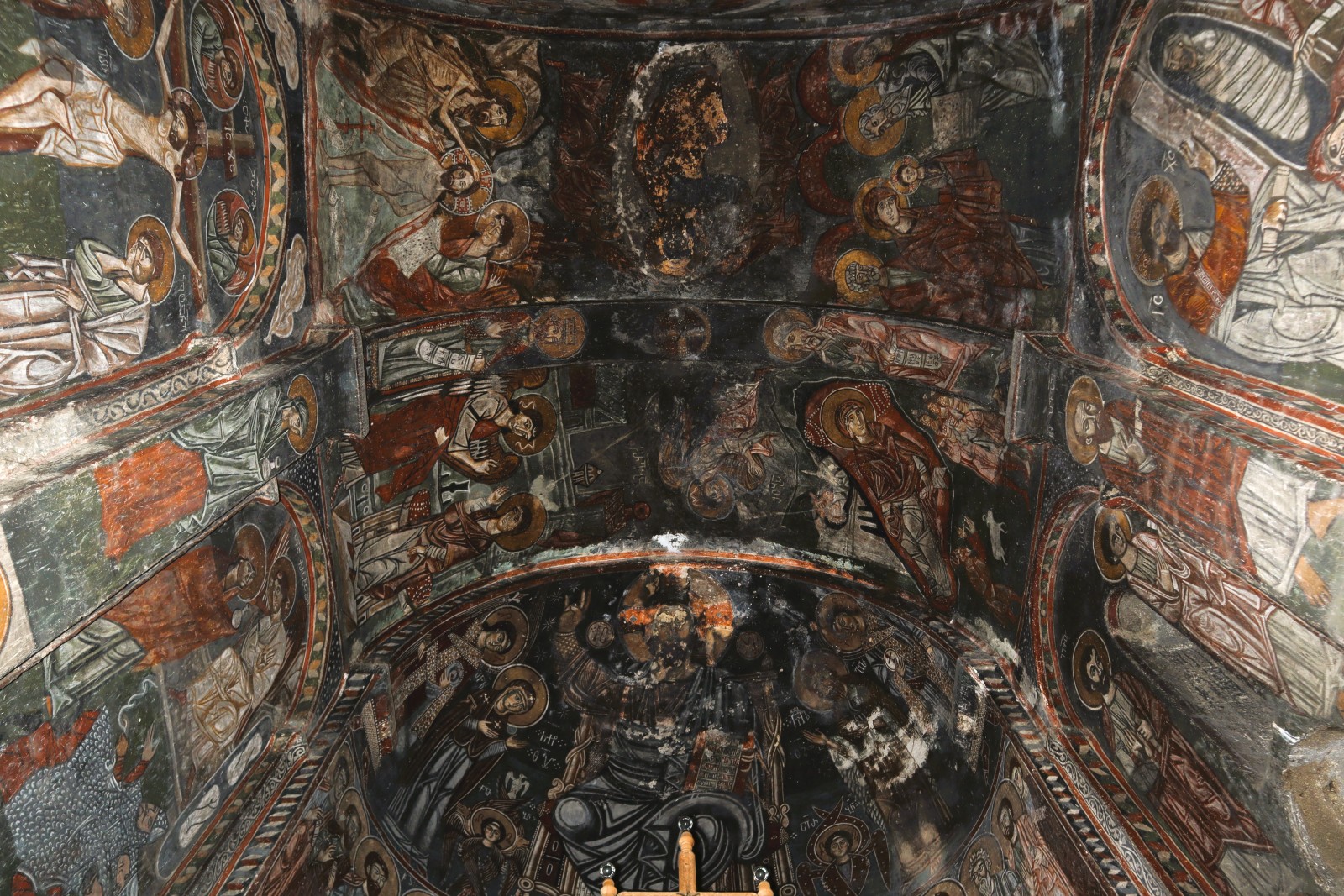
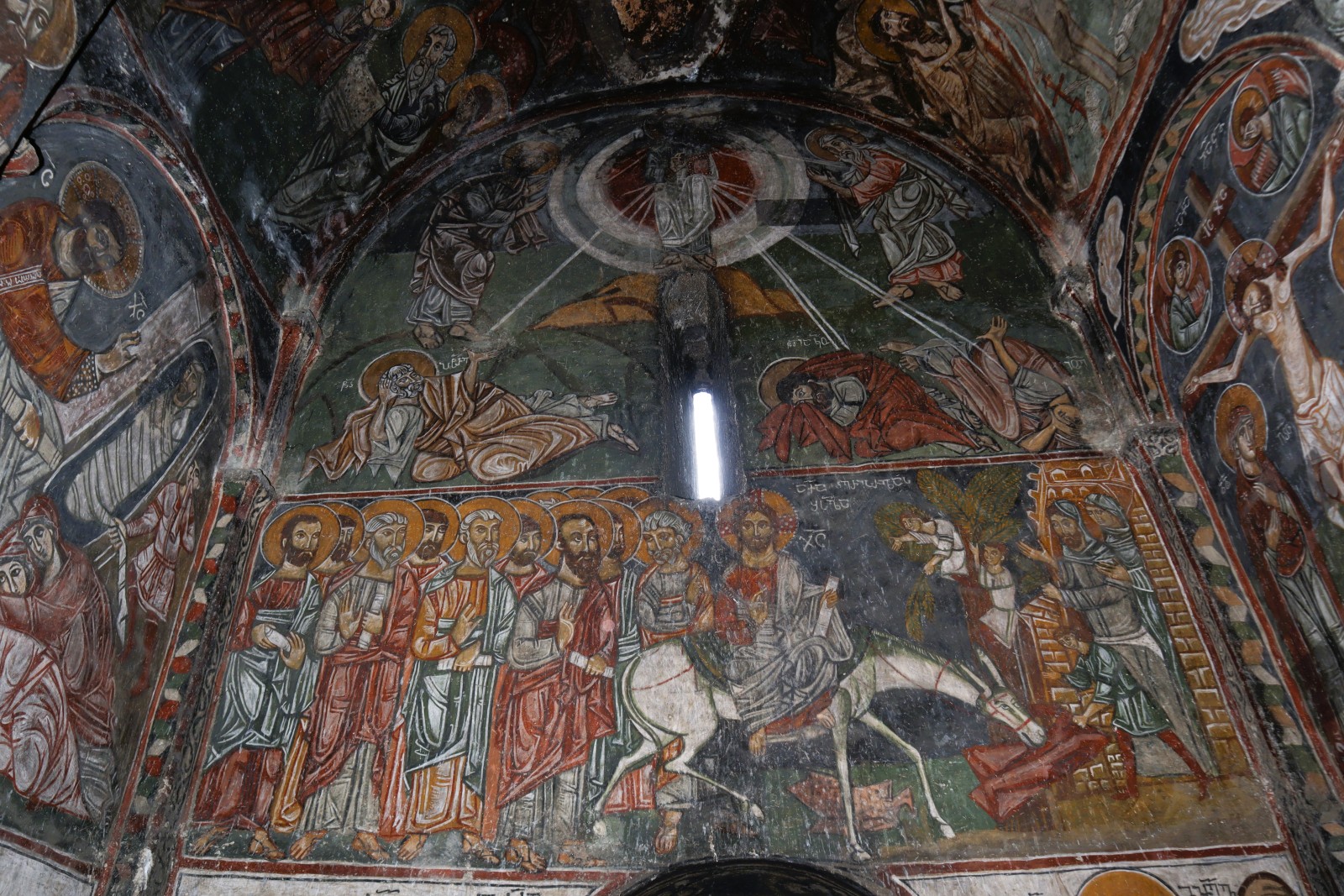
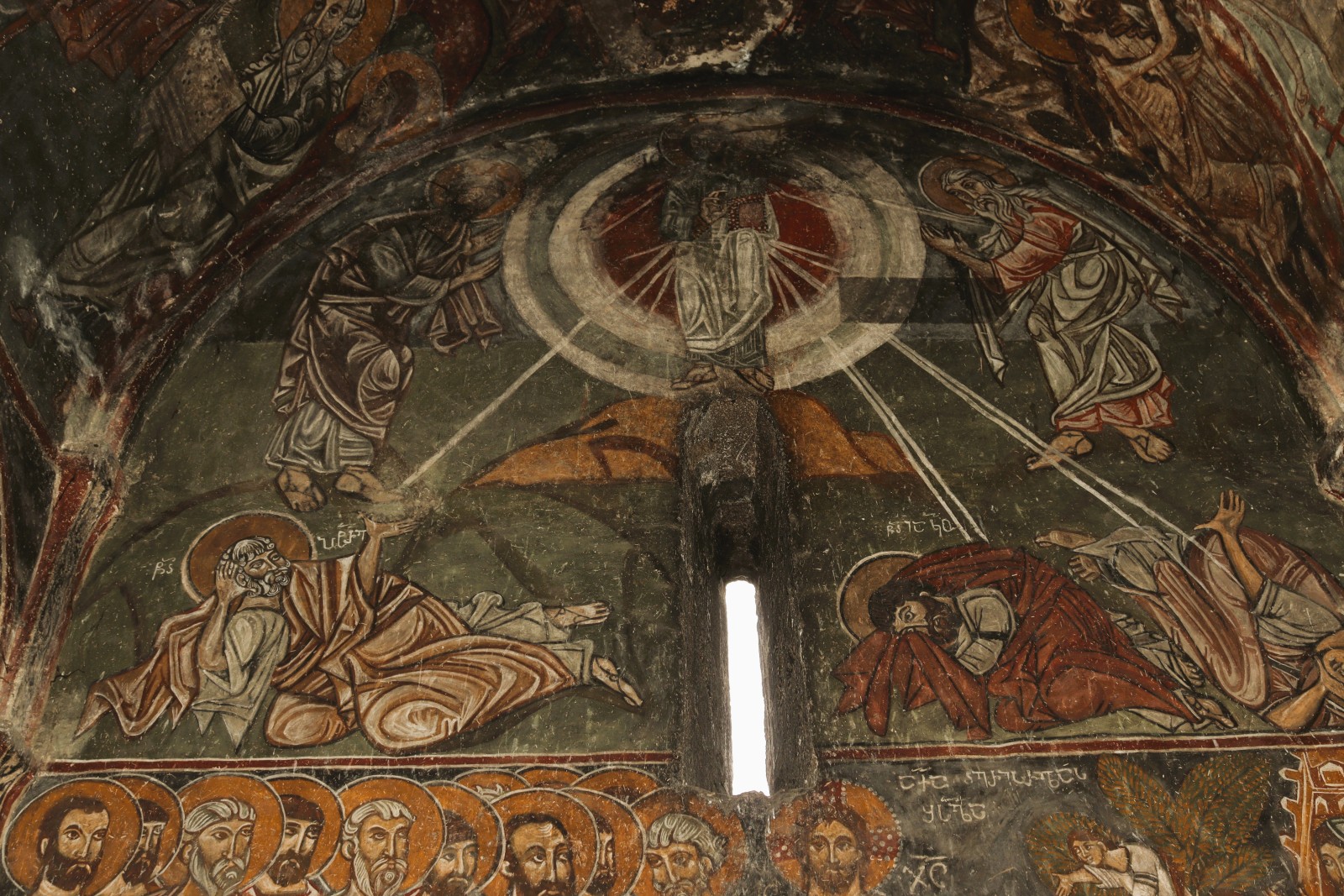
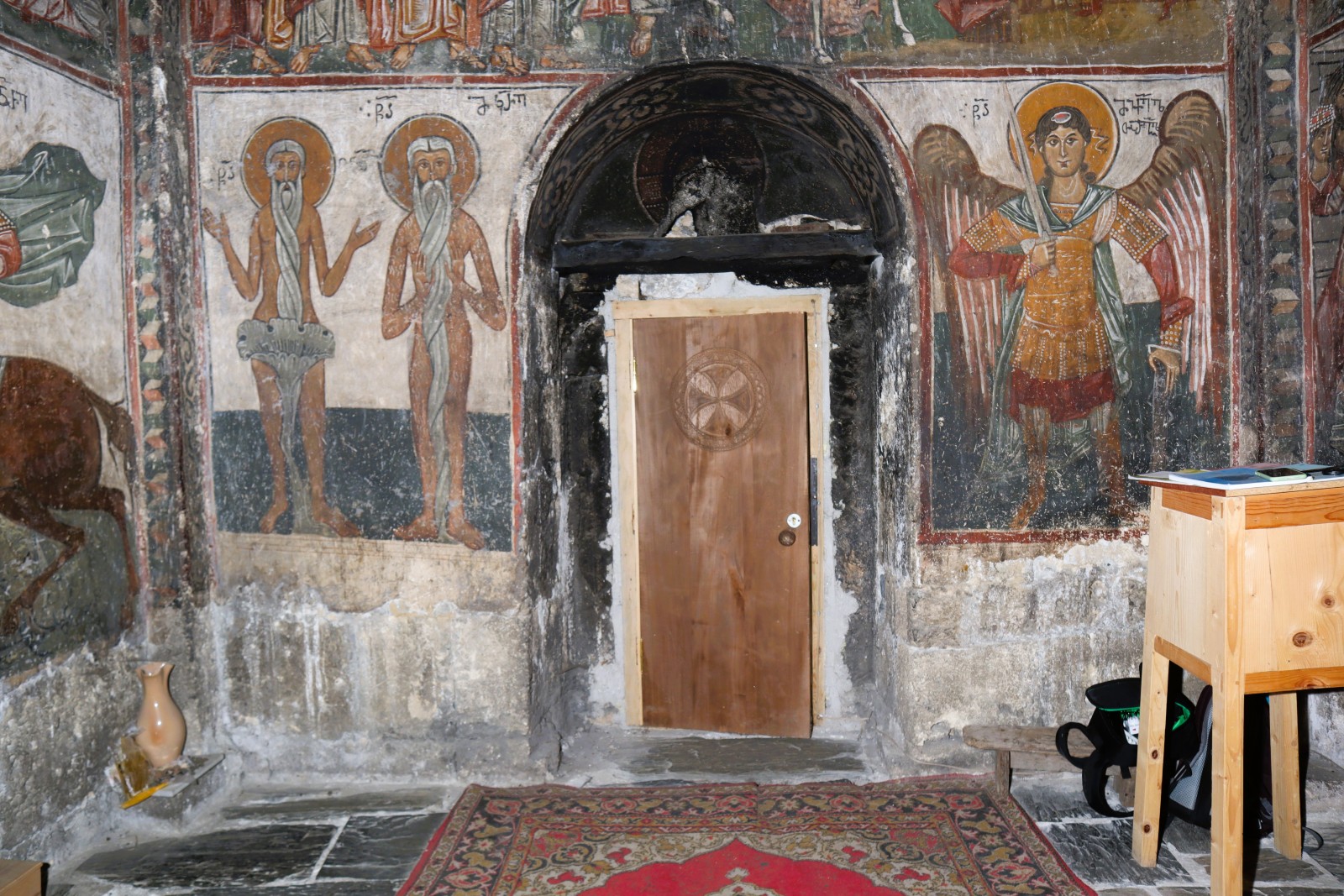
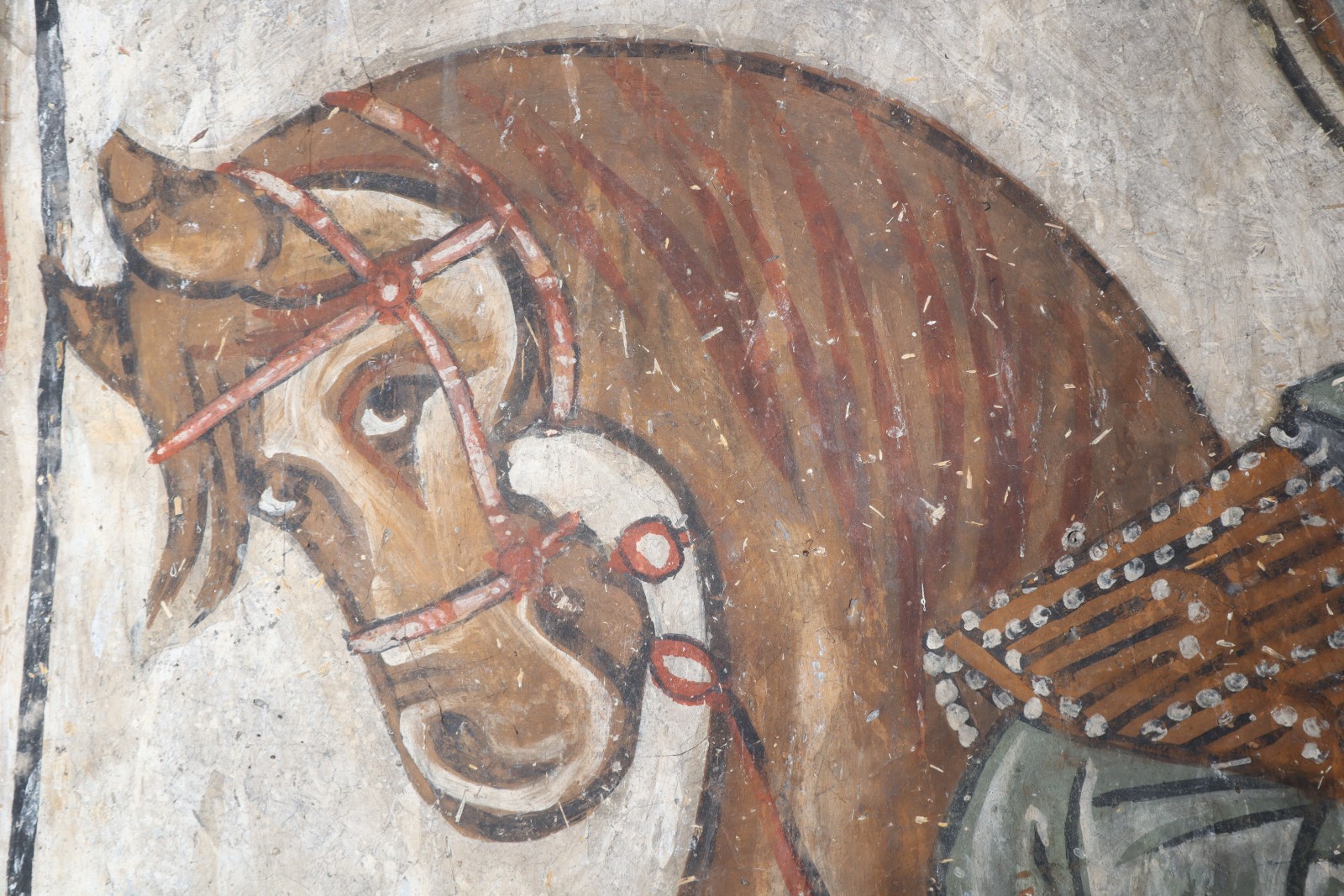
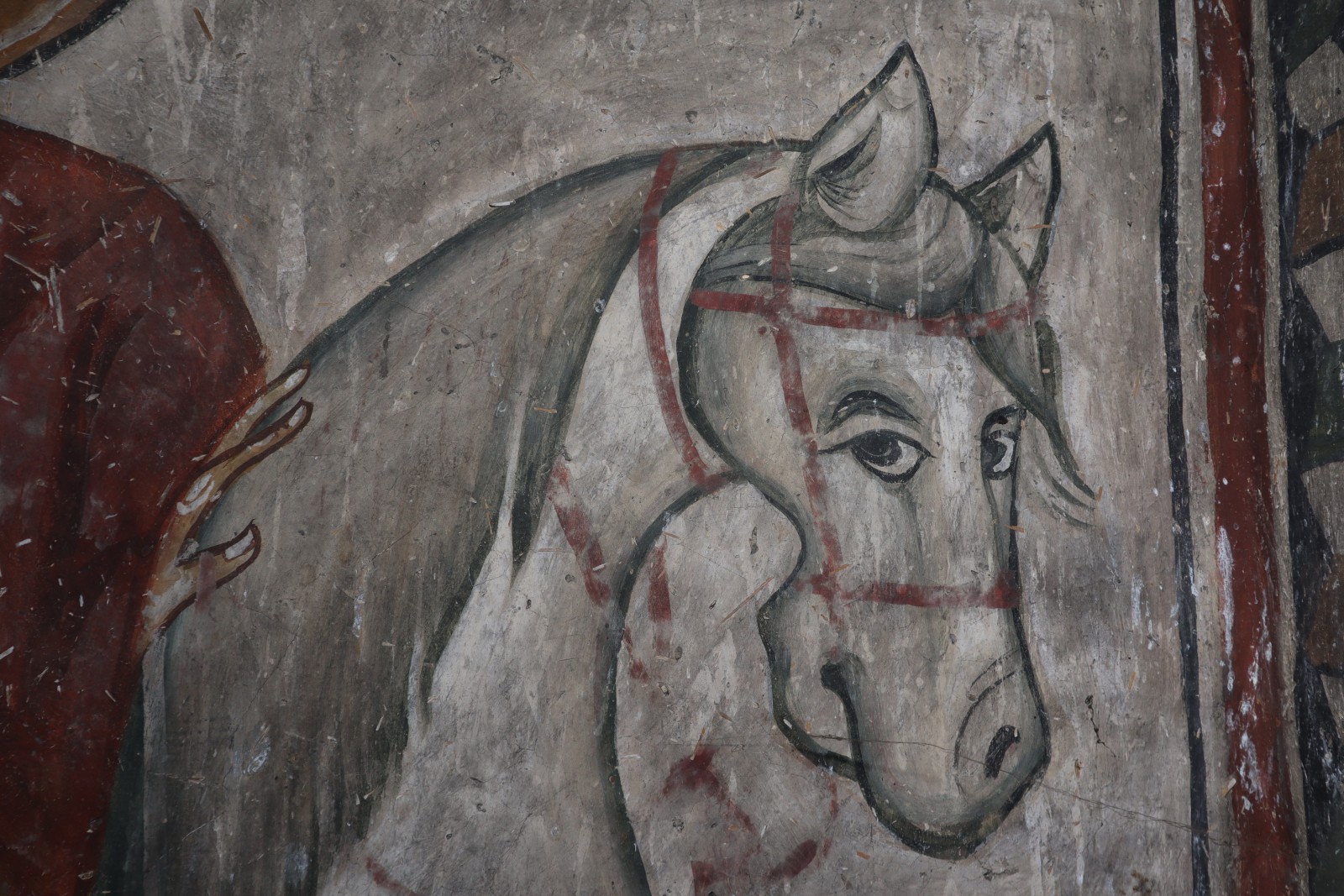
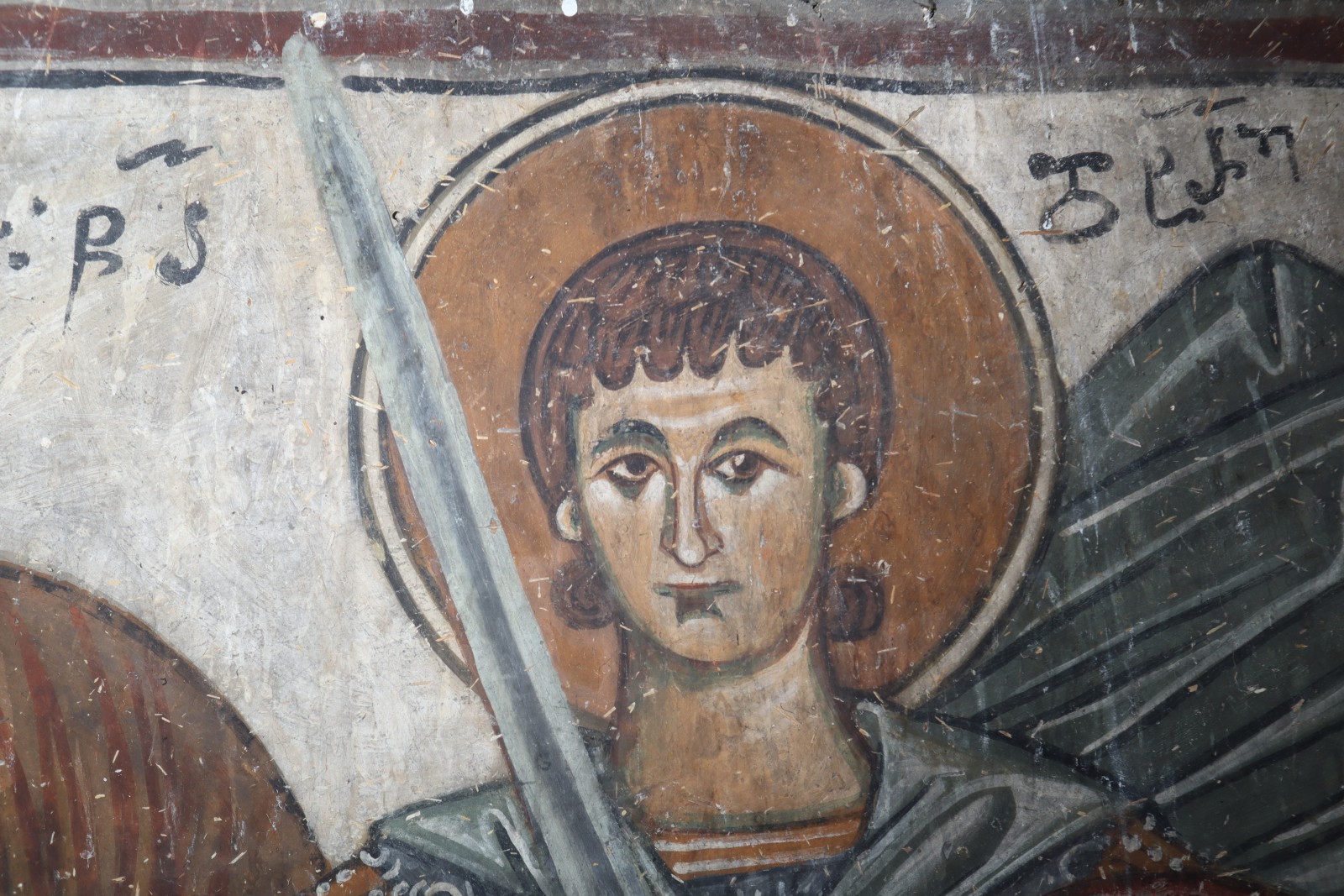

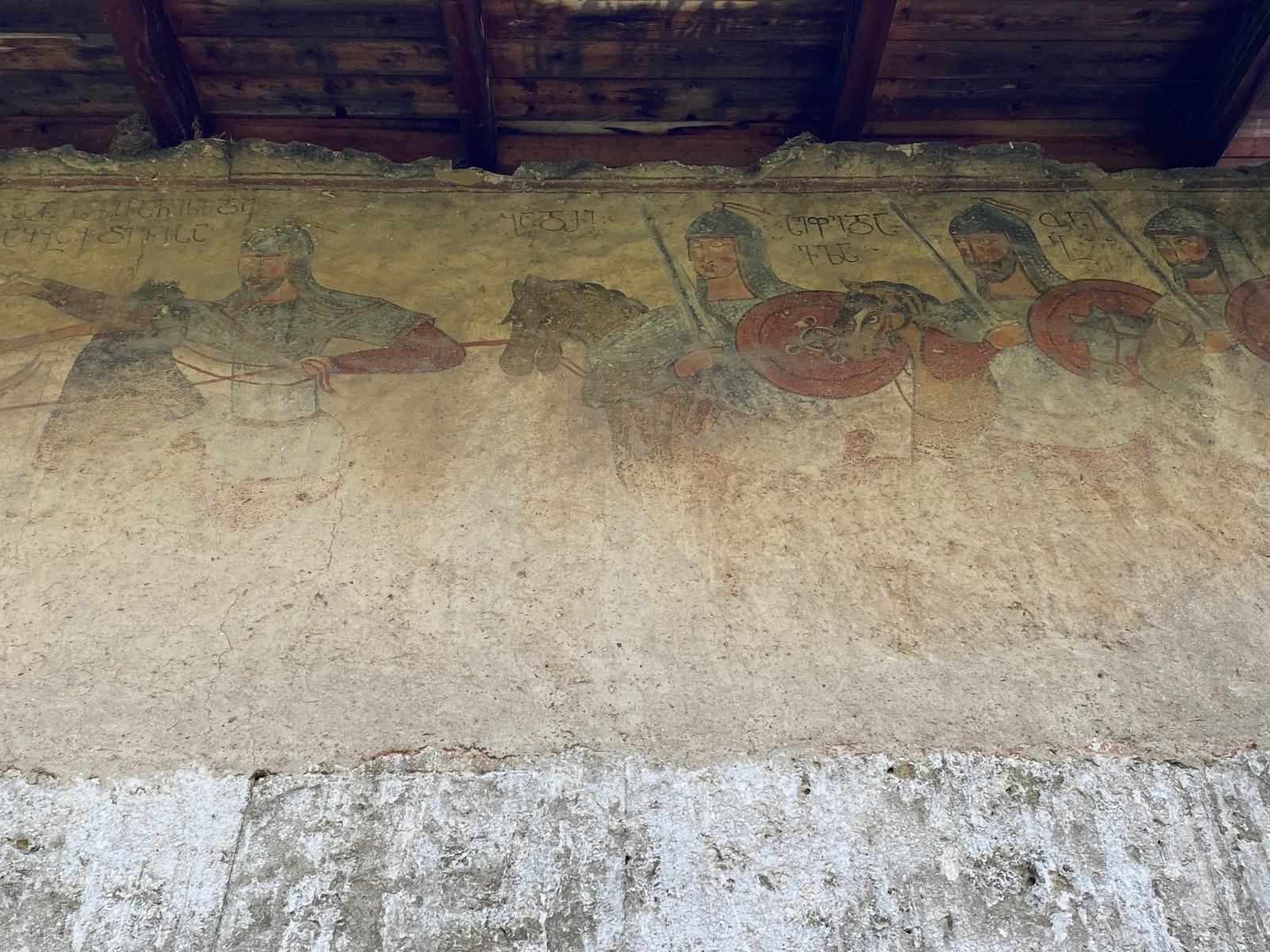
This large single nave church, with a western annex, is located in the village of Lasthkhveri in the Lenjeri community. The church dates to the 14th century, and both its interior and façades are decorated with paintings from various periods. The chancel murals date to the mid-14th century and are attributed to the same master painter David, who was the lead painter of the church in Mkheri. The murals of the naos and façades, dating to the late 14th and early 15th centuries, are thought to have been executed by three different painters. While scholarly consensus exists on the involvement of three painters, there is some disagreement regarding the attribution of specific sections to individual painters.
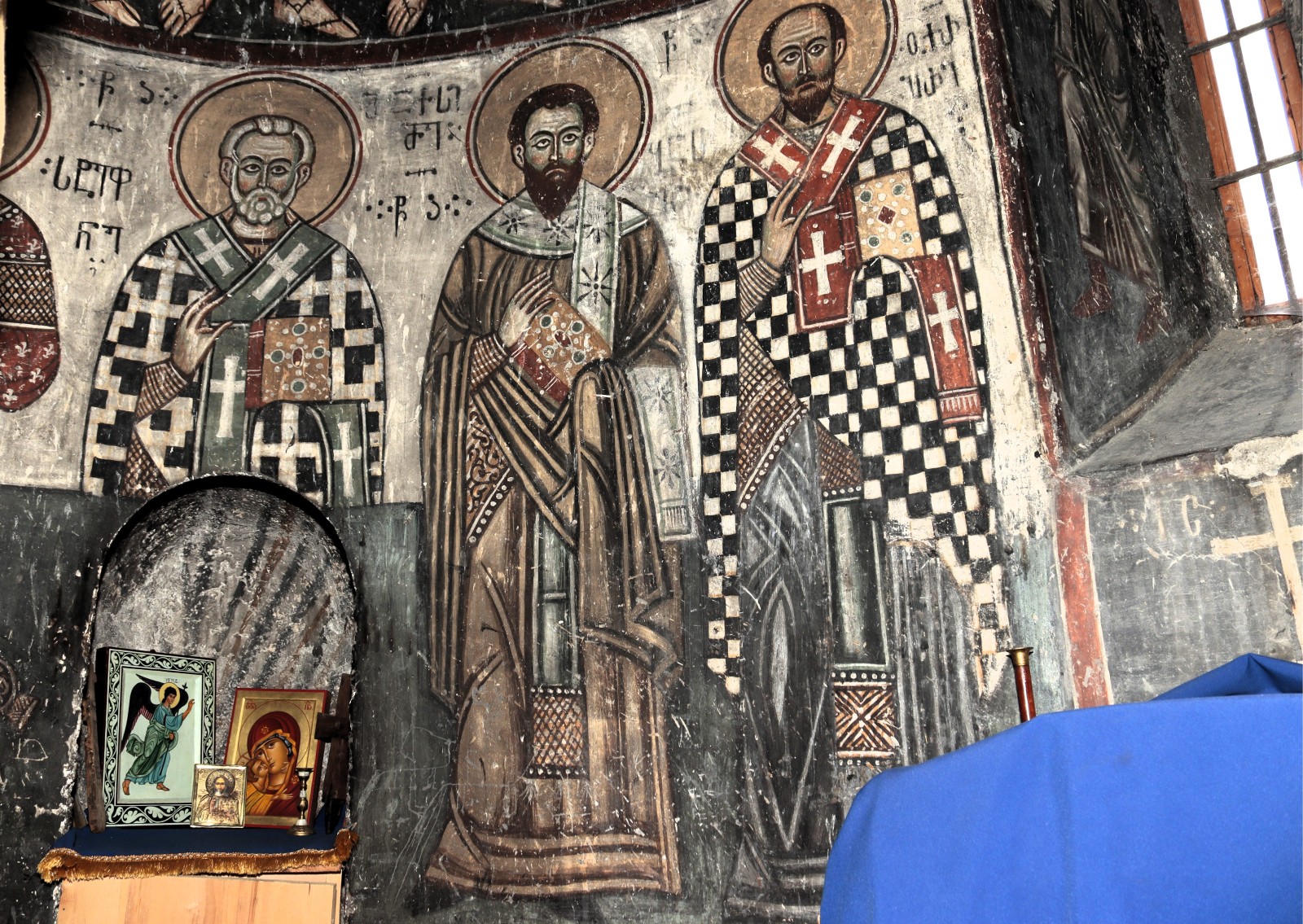
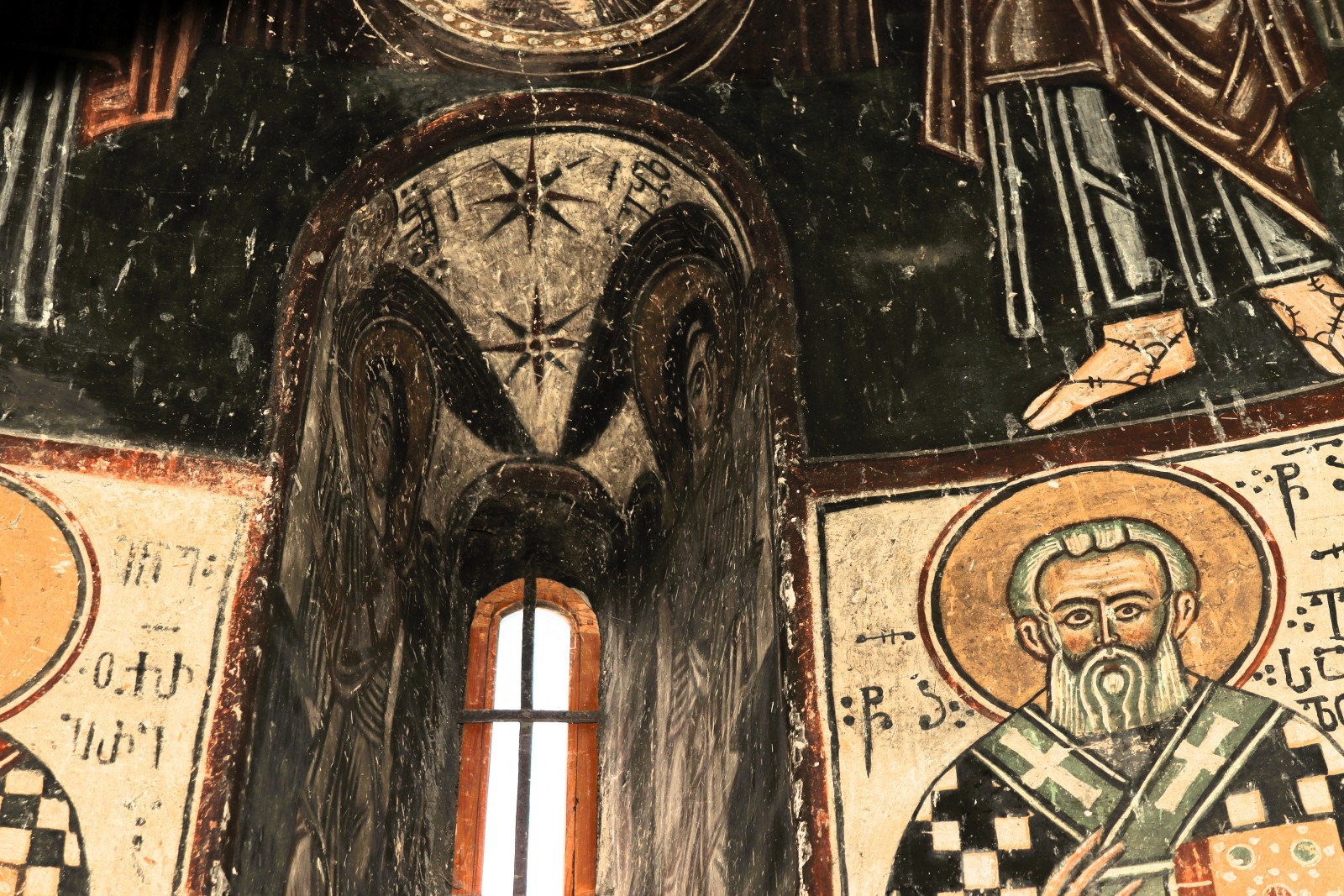
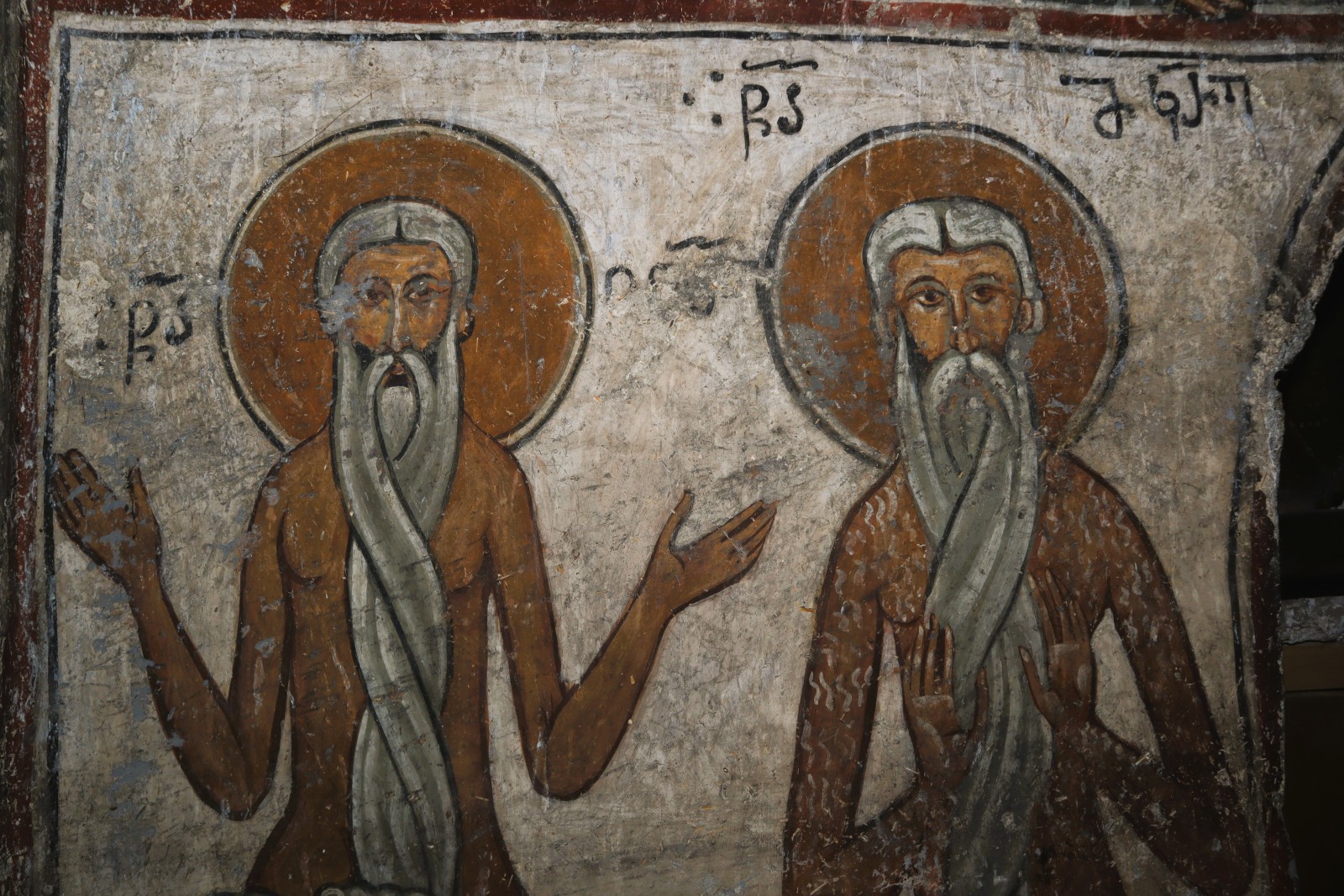
The wall paintings in the naos are notable for their use of unusual iconographic versions and illustrate the general stylistic trend of increasing rigidity and coarseness seen in Svaneti’s so-called Palaiologan mural tradition. Of particular interest is the fact that this church features the only known instance in Upper Svaneti where explanatory inscriptions accompanying the images—written in Asomtavruli script—include elements of the Svan language (Svanisms), providing rare linguistic evidence in a painted ecclesiastical context.
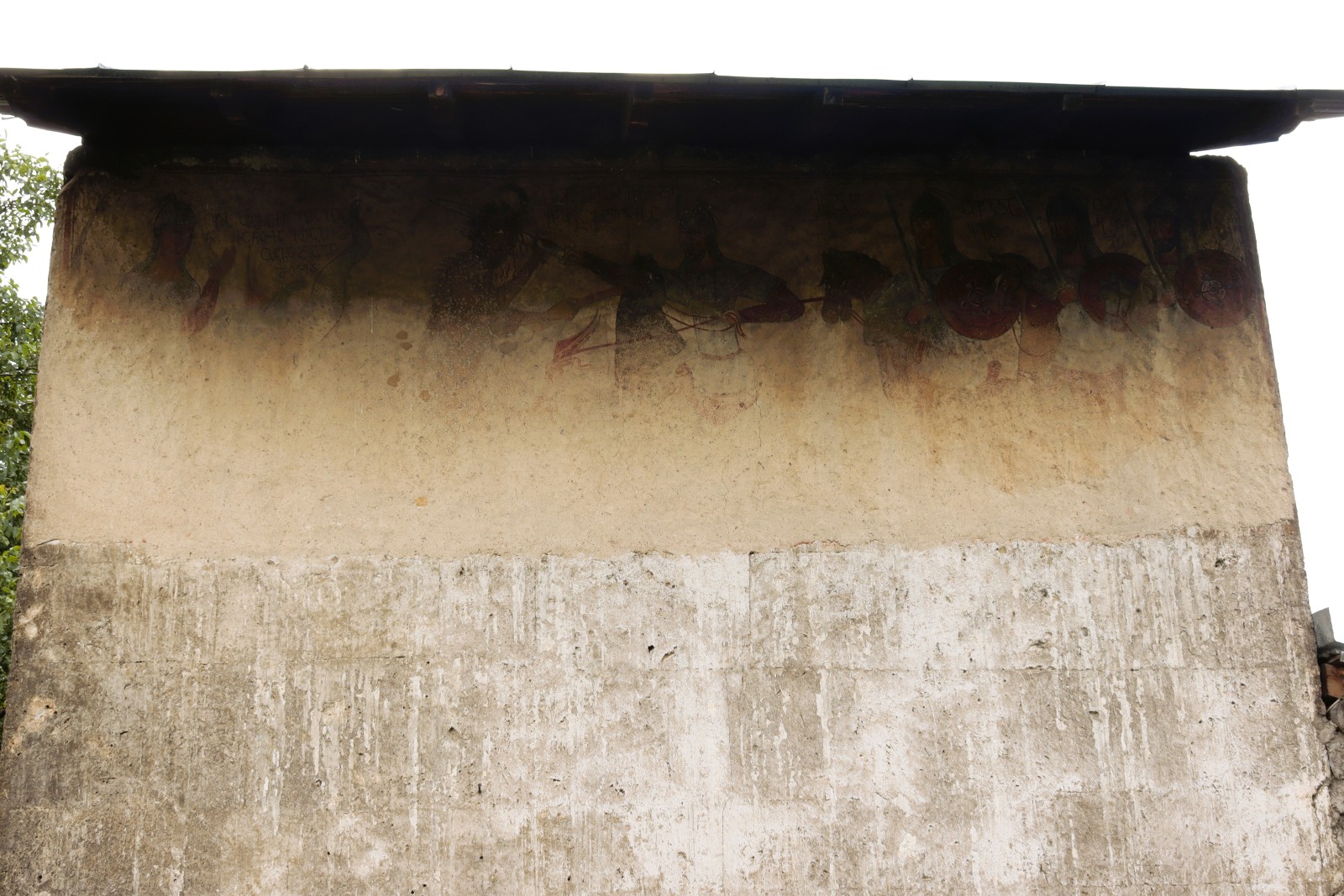
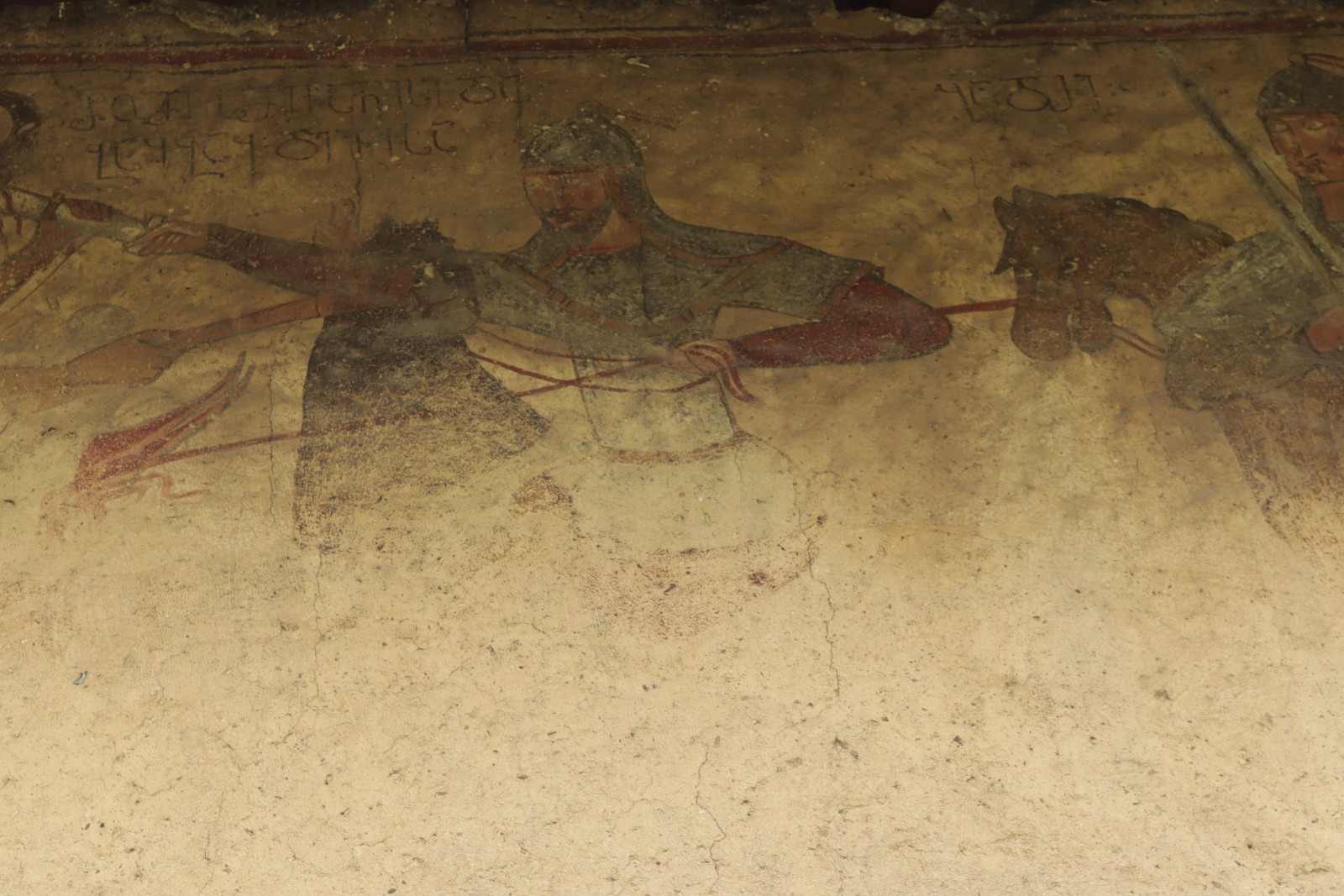
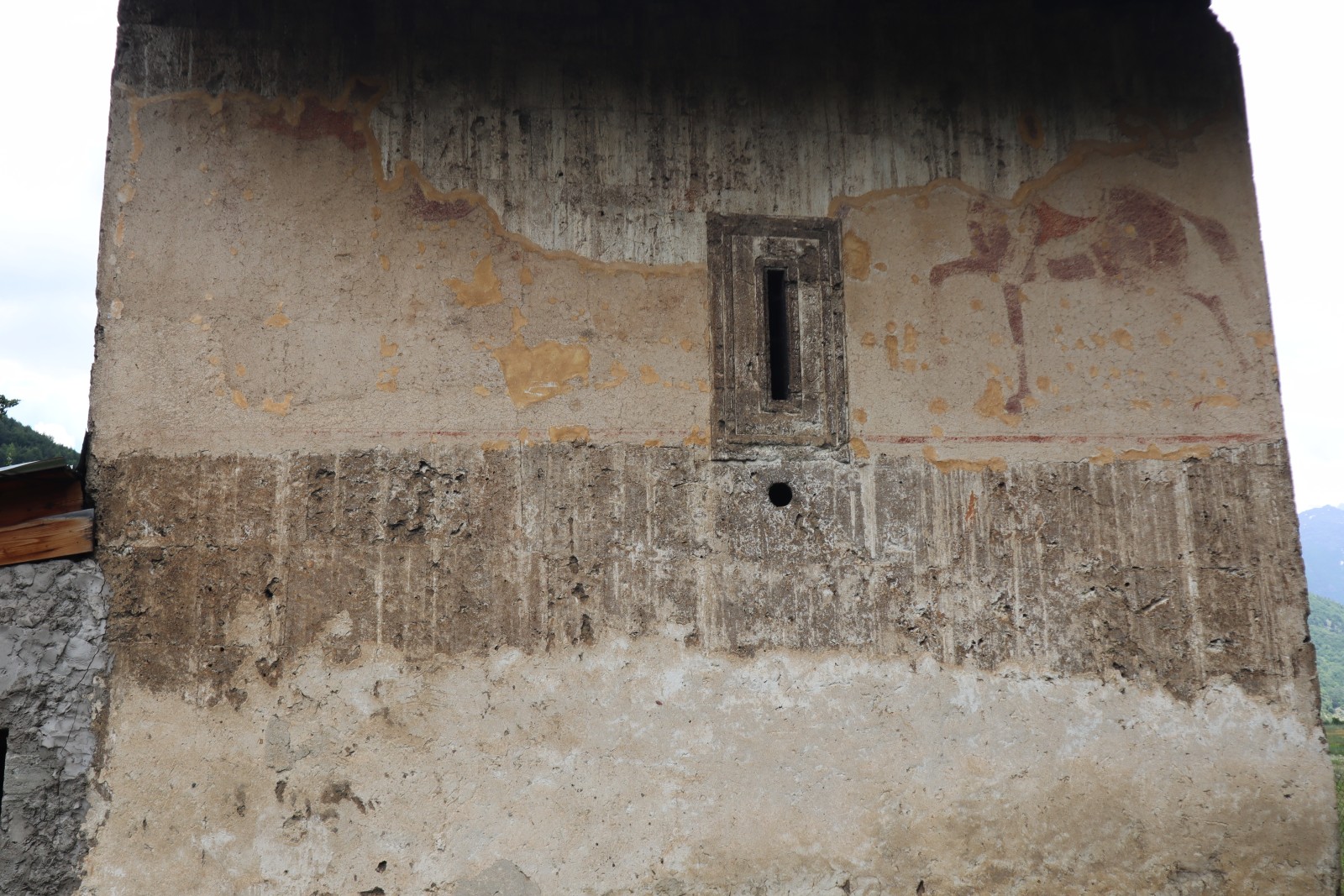
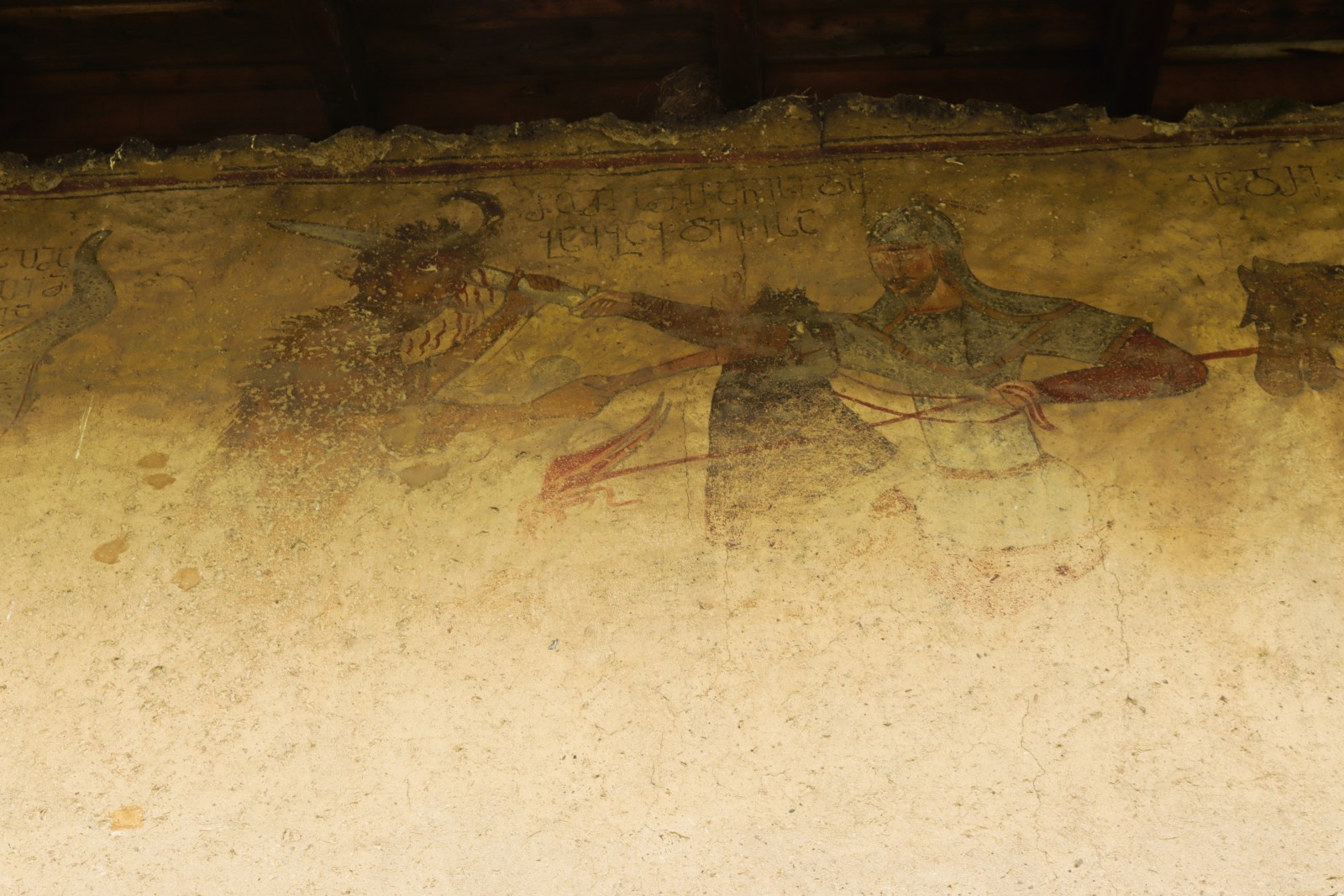
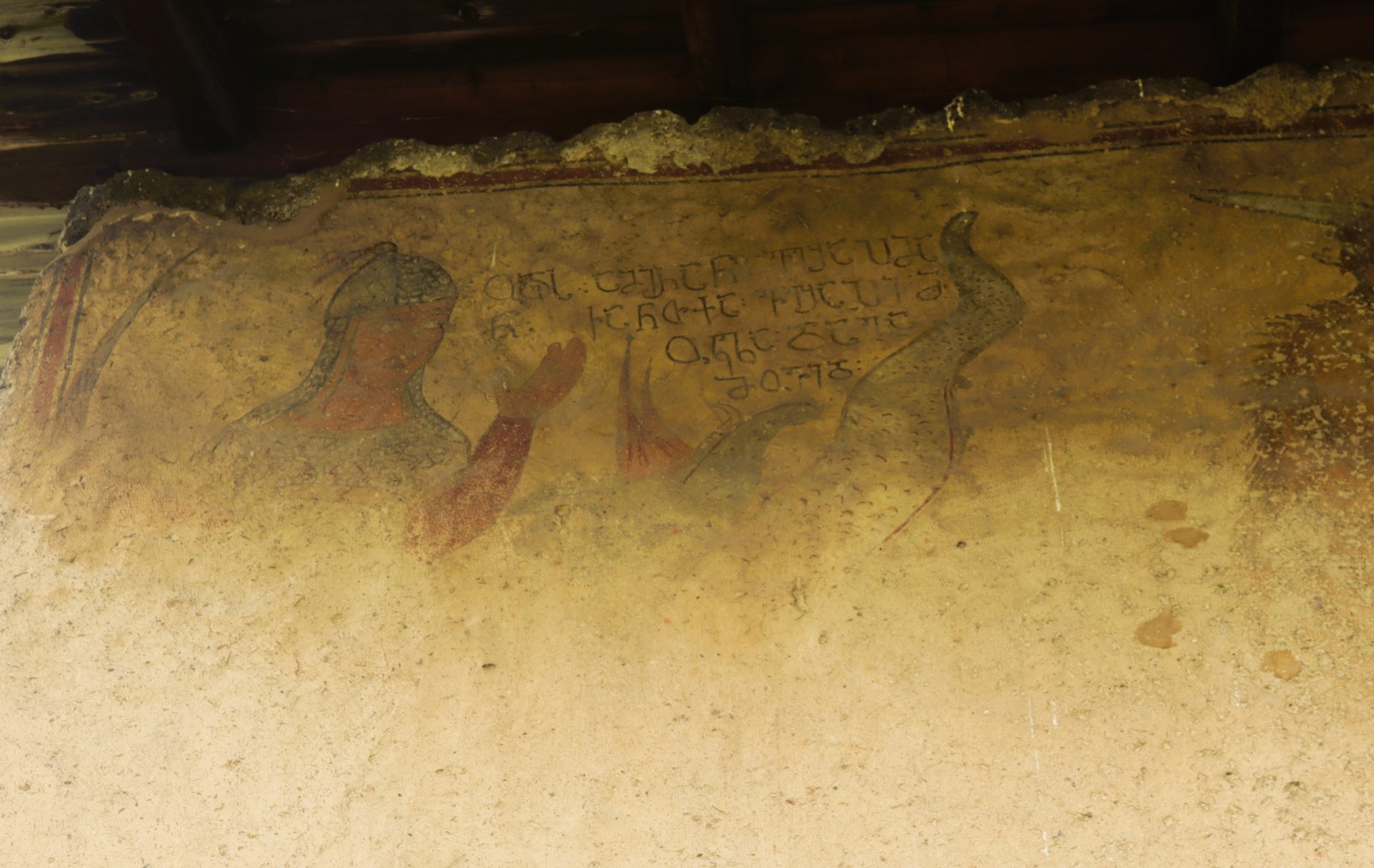
The façade paintings of Lashkhveri, though now severely damaged and faded, are also significant within the context of Svaneti's exterior mural decorations. Alongside traditional religious imagery—such as Warrior Saints on the southern façade and St. Eustathius Hunting on the eastern façade—the church also features scenes from the heroic Georgian folk epic "Amiran-Darejaniani", accompanied by fairly vast explanatory inscriptions. These include:
"When Amiran was swallowed by the dragon, he slew the dragon and came out"
"Amiran’s battle with Bakbak the Dev"
The inclusion of secular narrative scenes in ecclesiastical painting is extremely rare in medieval wall painting. The exterior murals of Lashkhveri, along with the façade mural decoration of the Chazhashi Church of the Savior, where fragments of the “Amiran-Darejaniani” scene are preserved on the northern façade, represent important and unusual examples of this phenomenon.
Another notable element is the depiction of Deesis on the western façade. Instead of the traditional multi-panel composition, it consists of only three main figures: Christ, the Virgin Mary, and St. John the Baptist, along with a kneeling donor figure in supplication. Unfortunately, the poor preservation of this figure and the absence of an identifying inscription make it impossible to determine the identity of the donor.
| Location | The church is located in the Centre of village Lashtkhveri |
| Key Holder | The key is kept at Father Basils (Philphani) family |
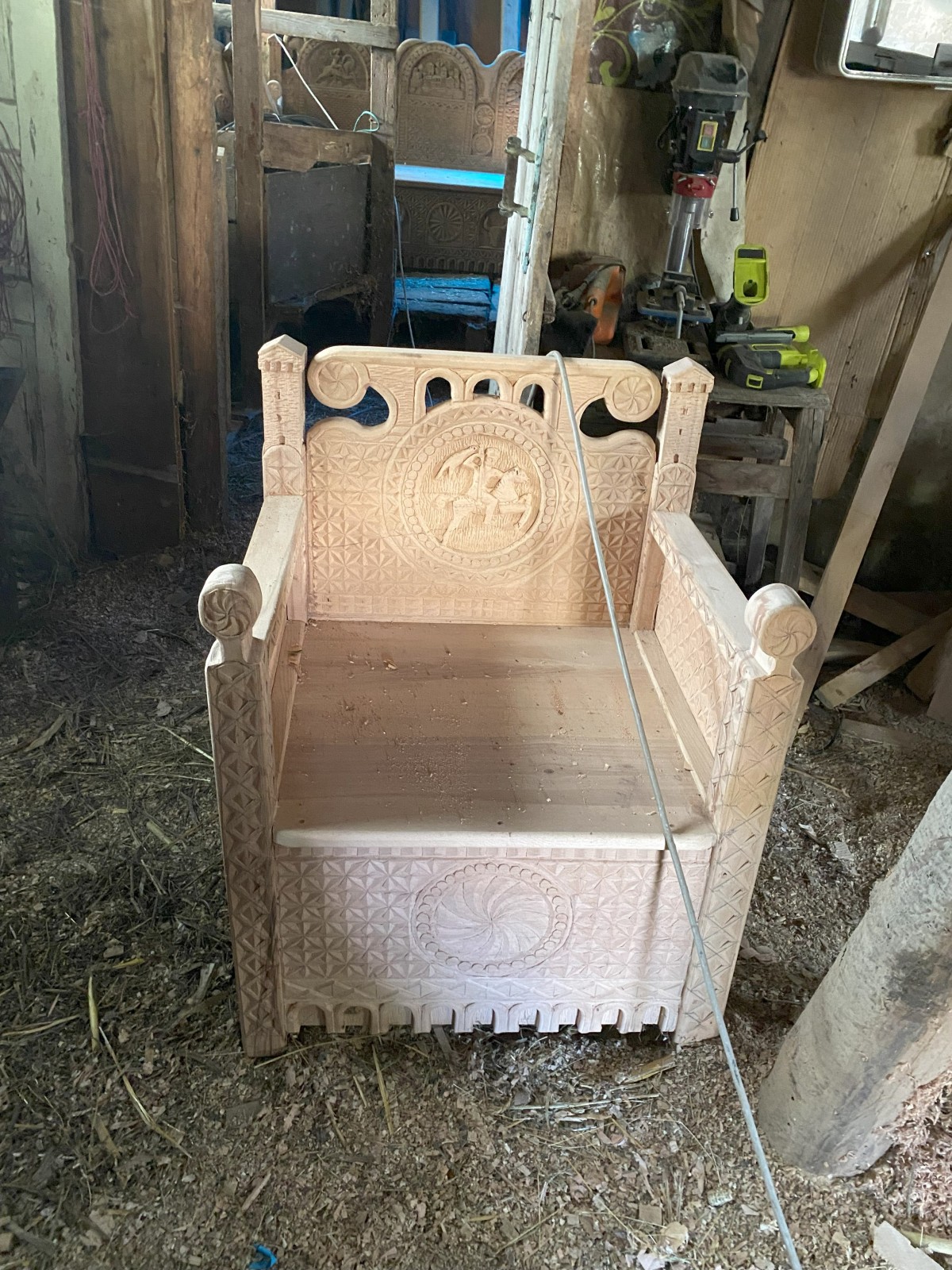
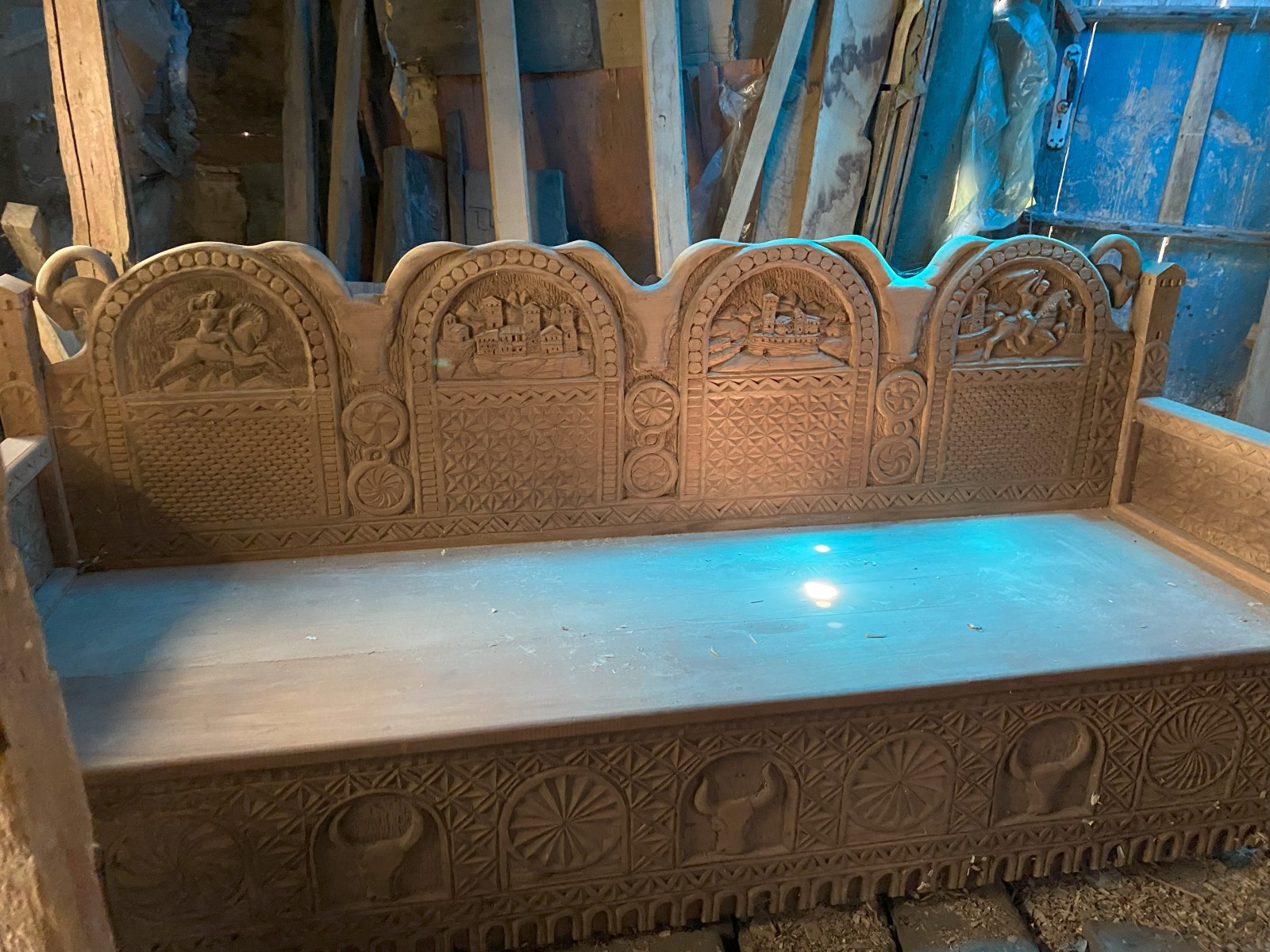
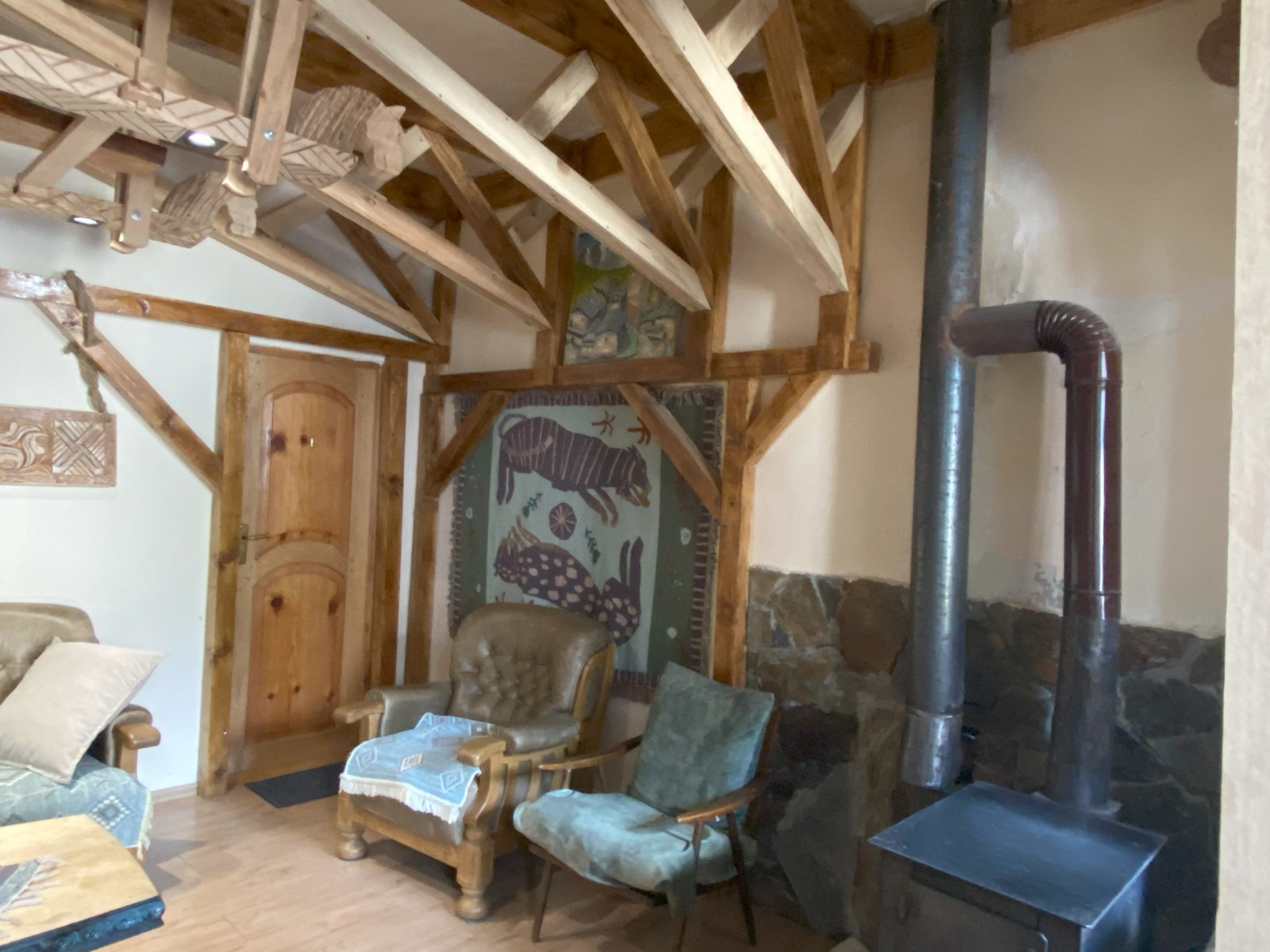
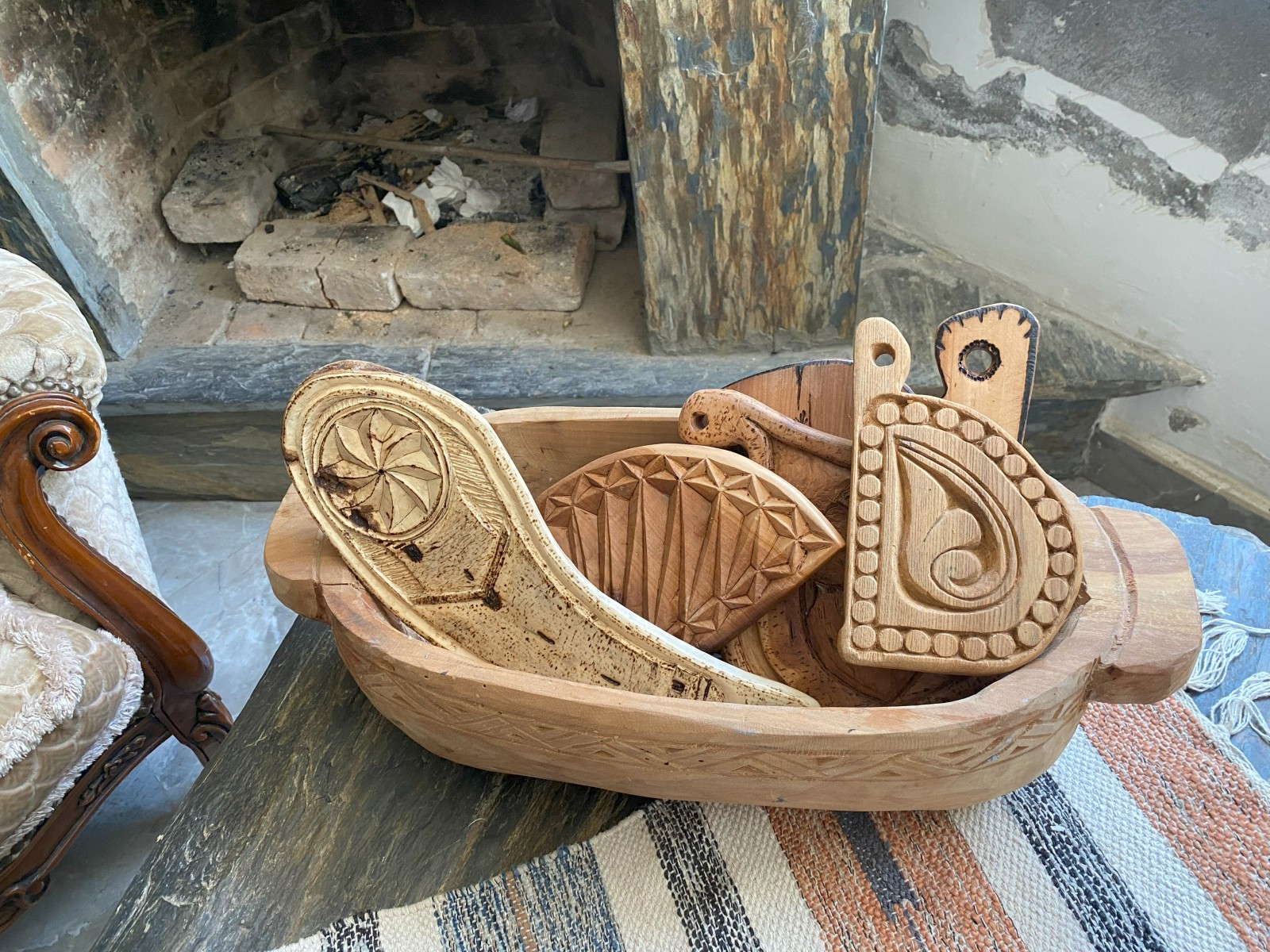
The family owns the family guesthouse “Shalva and Nargiza”, which is located in the village of Lenjeri, on the main road. Shalva Guledani is a professional craftsman. The husband and wife offer tourists a master class in ornamental woodcarving in the hotel space, as well as master classes in Svanetian hats and cooking.