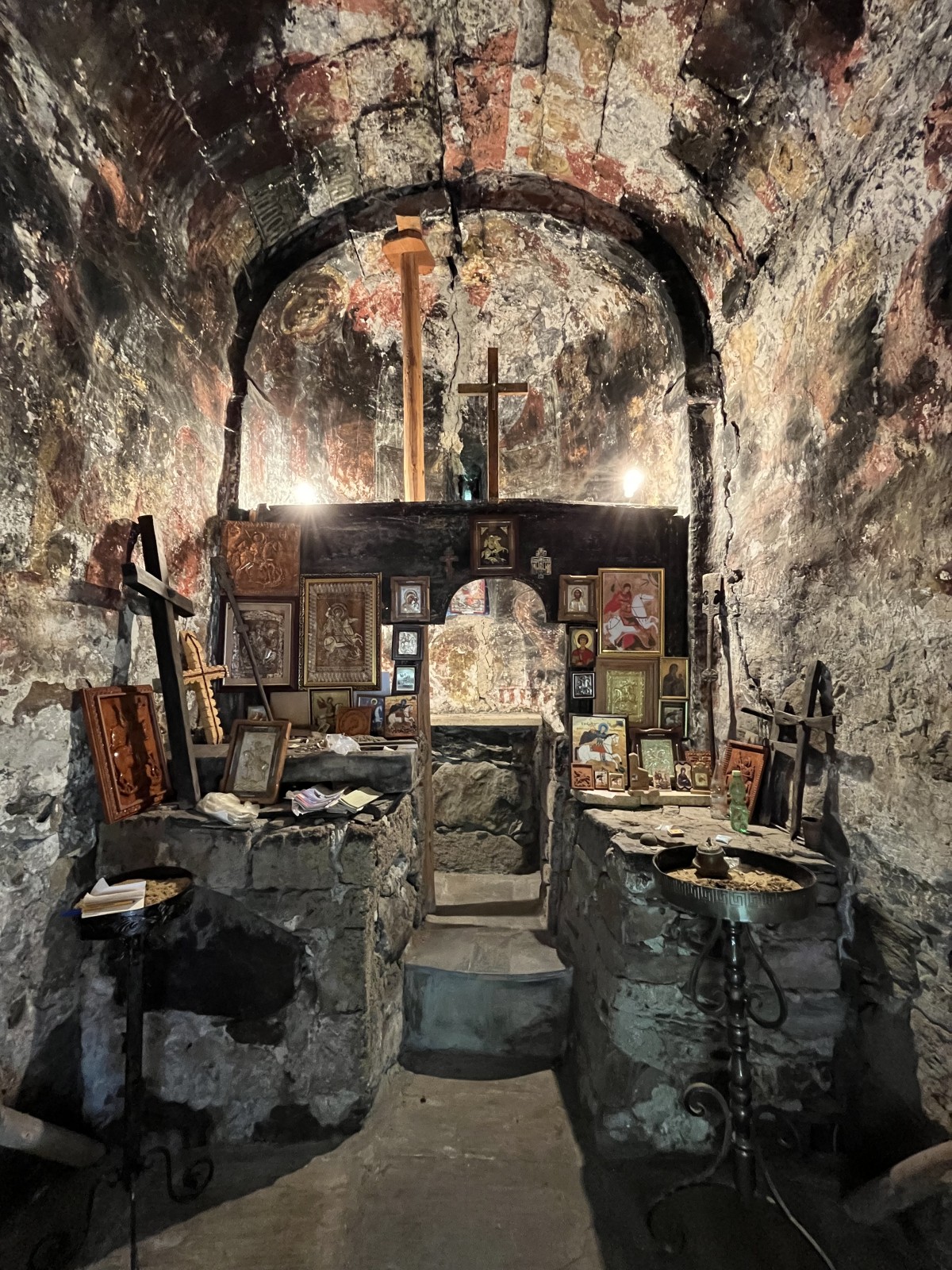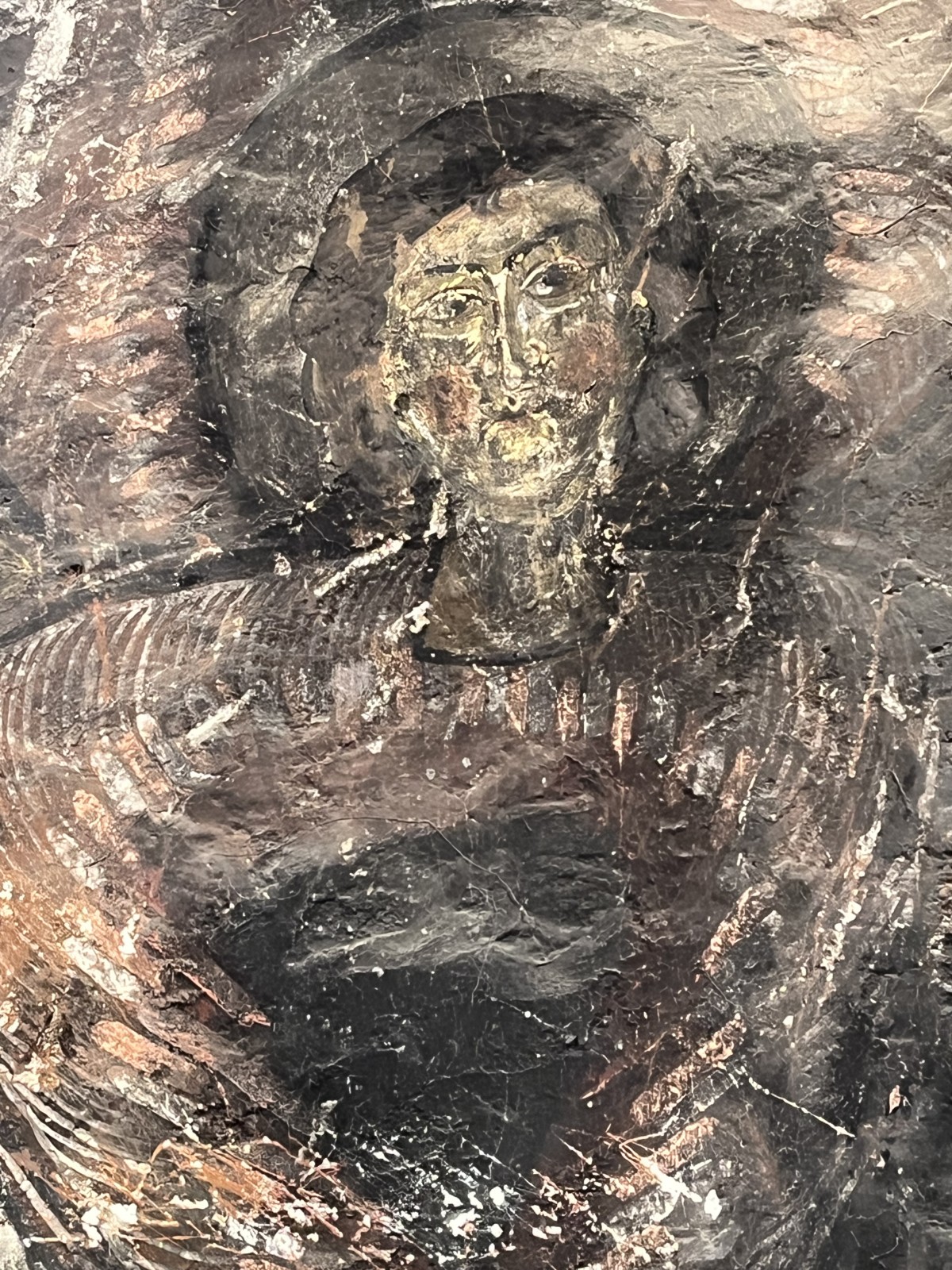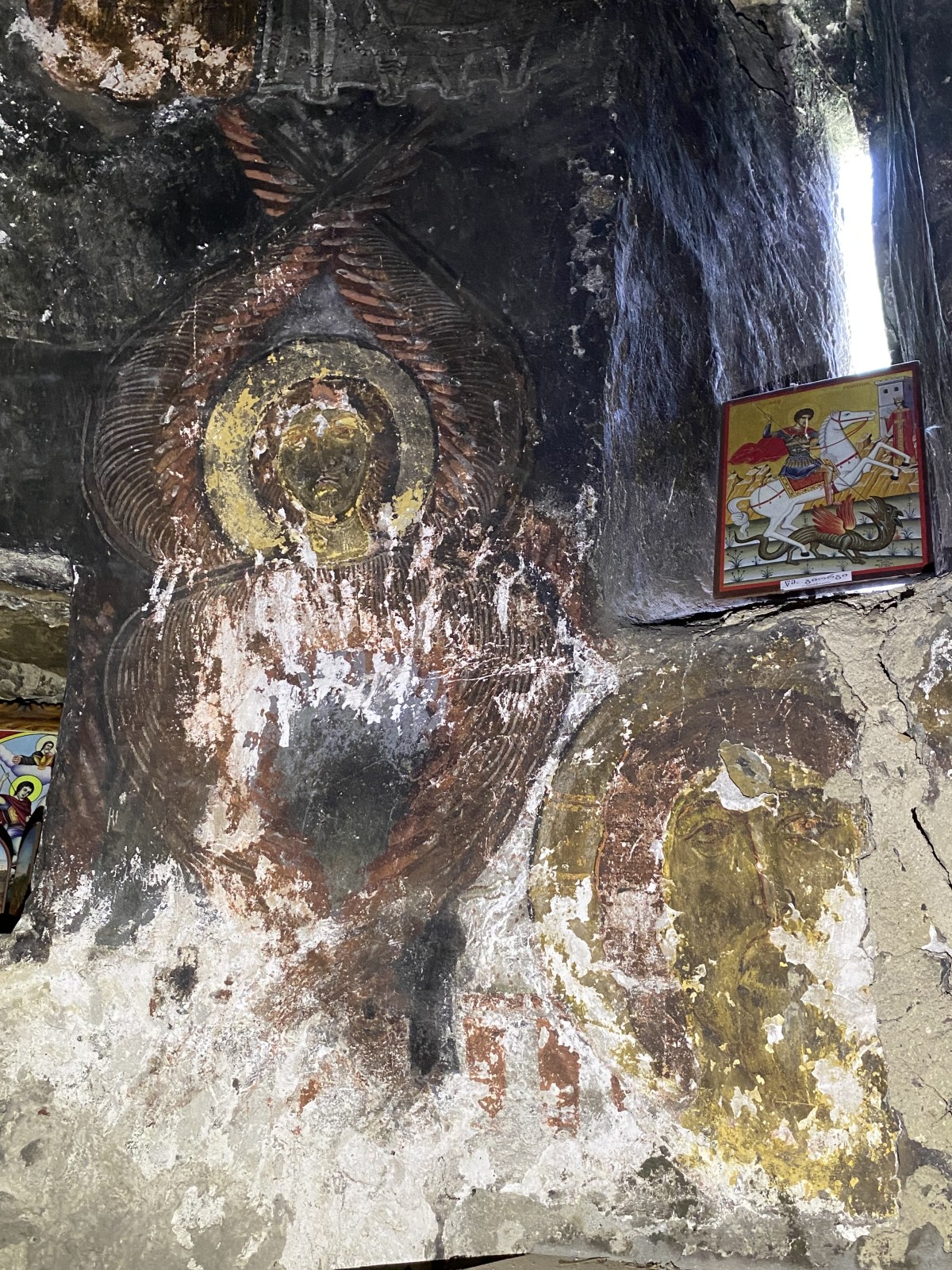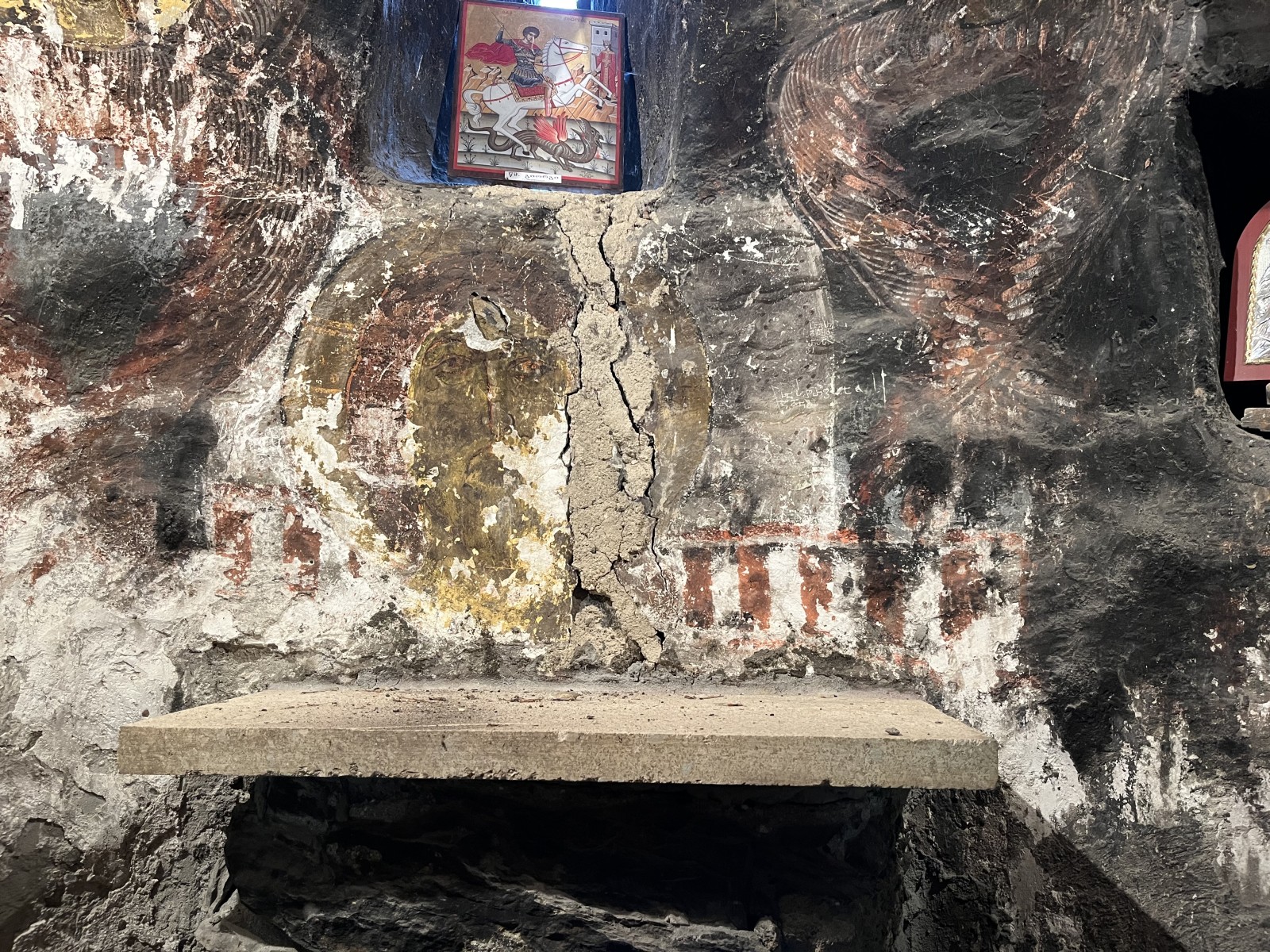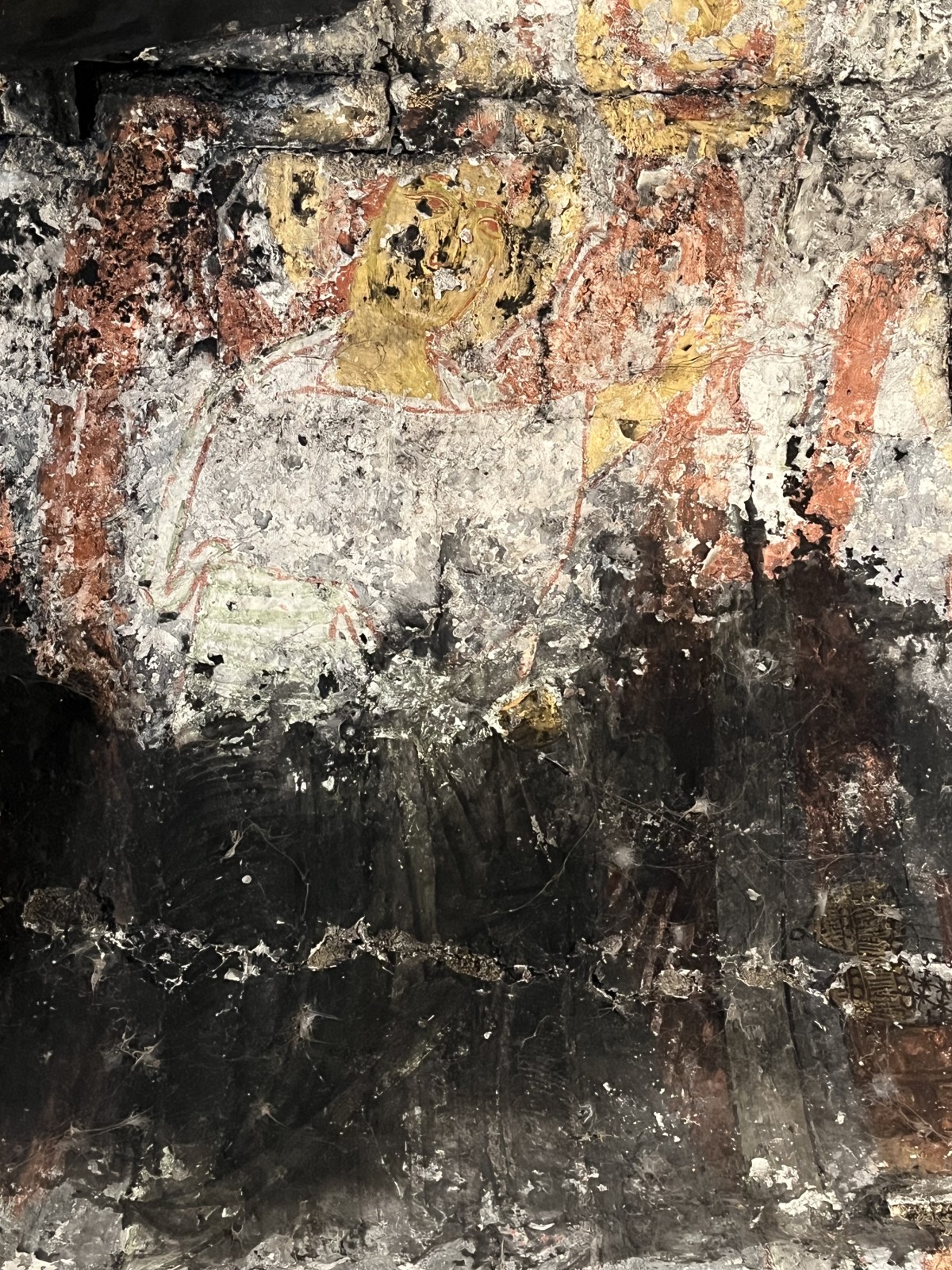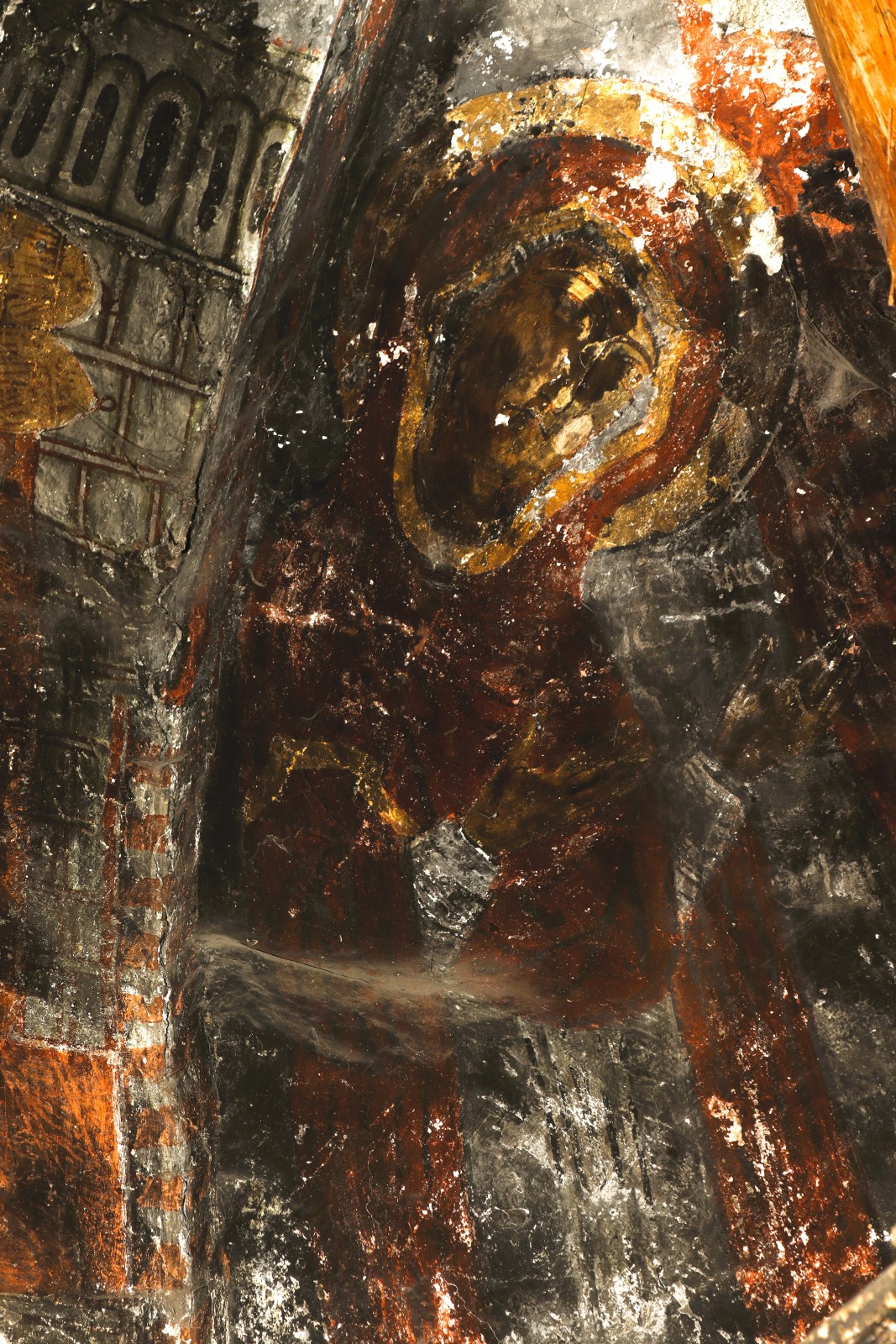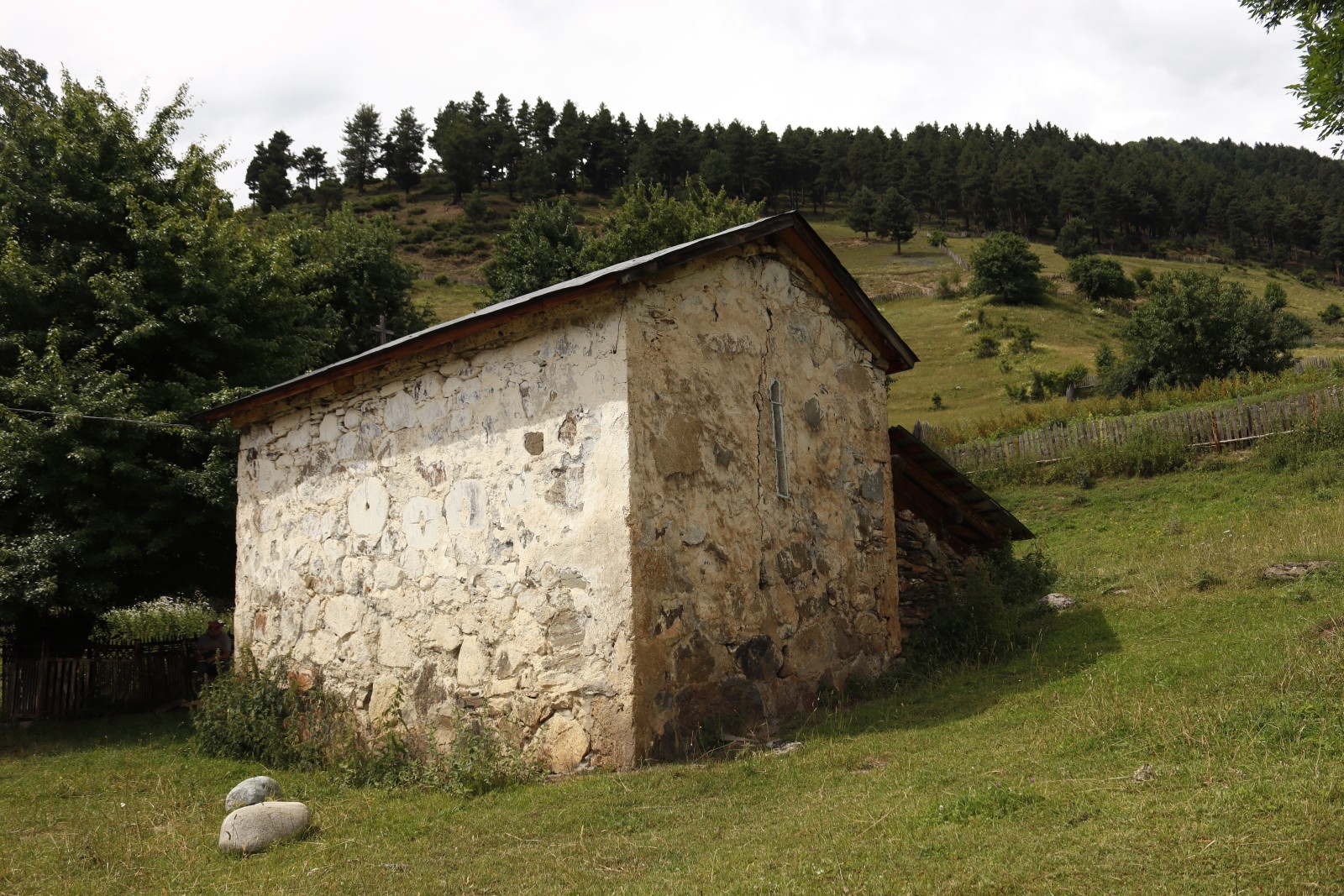
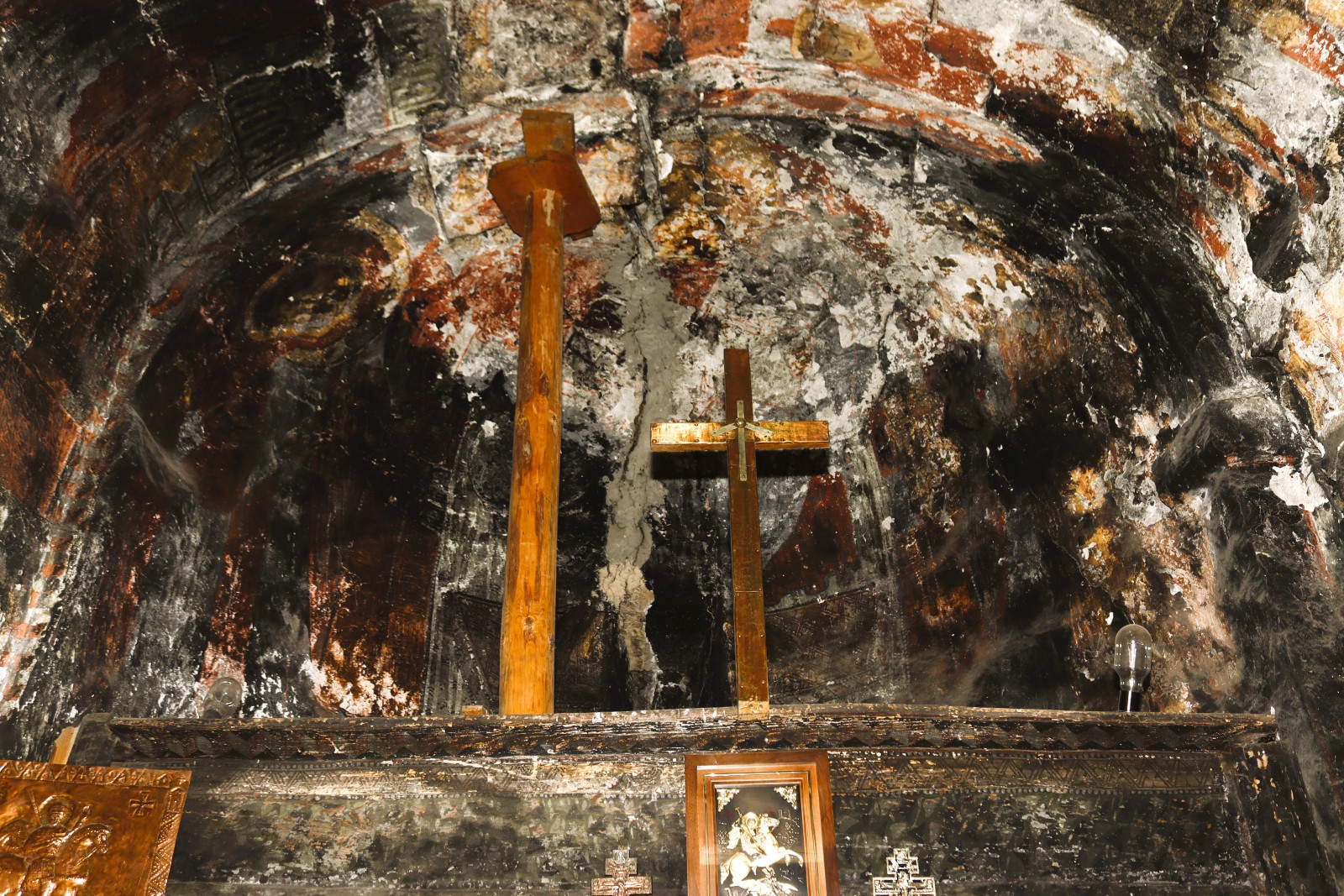


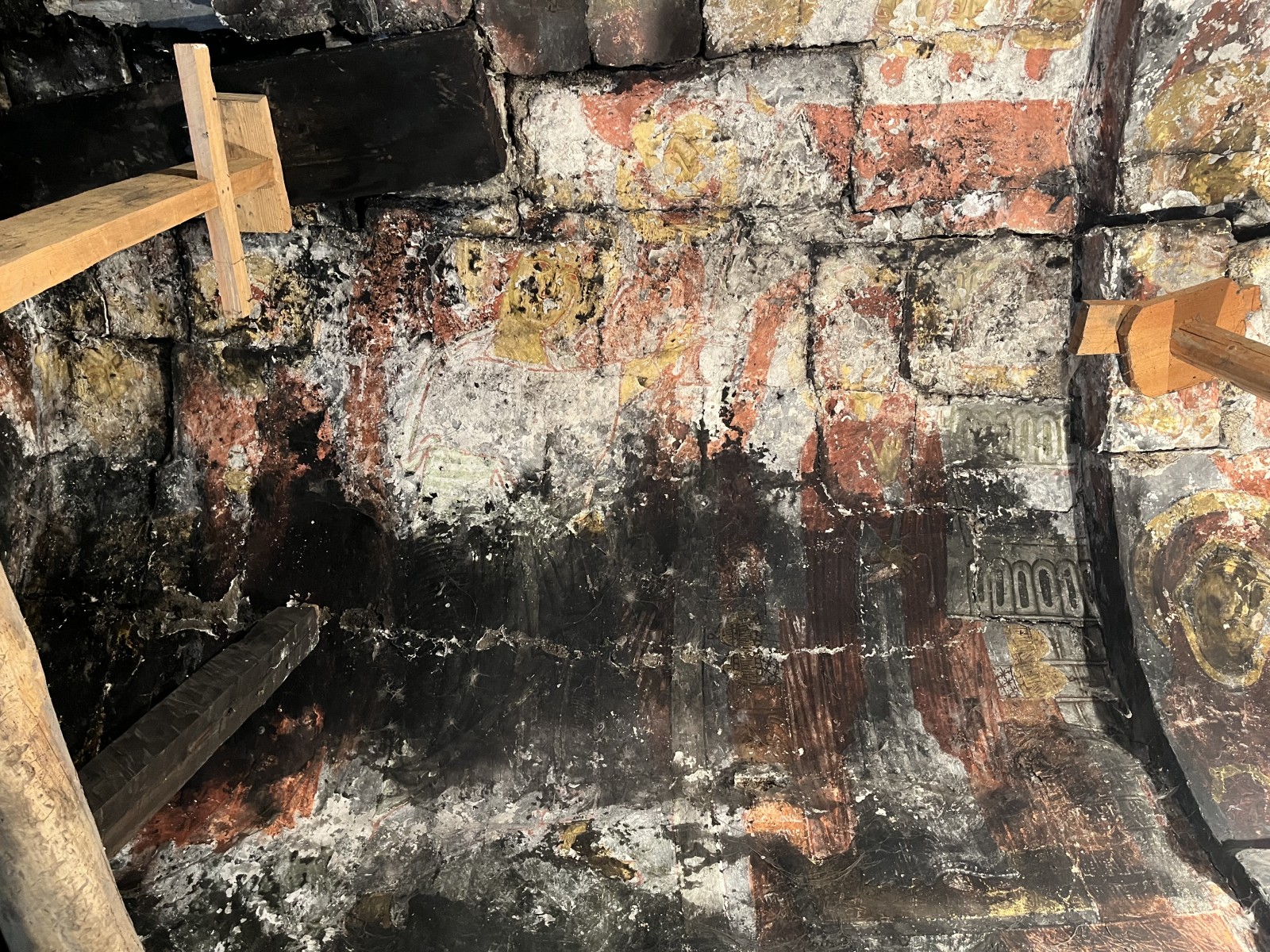
This small single nave church, with an annex on the northern side, is located in the village of Chobani, in the Tsvirmi community. The church was most likely built in the 12th century and painted during the same period.
Its murals belong to the group of the so-called vernacular trend of the 12th century. It is important to highlight that the group of murals belonging to this trend with such an early date is preserved only in Svaneti, making these ensembles particularly valuable in the broader history of Georgian wall painting.
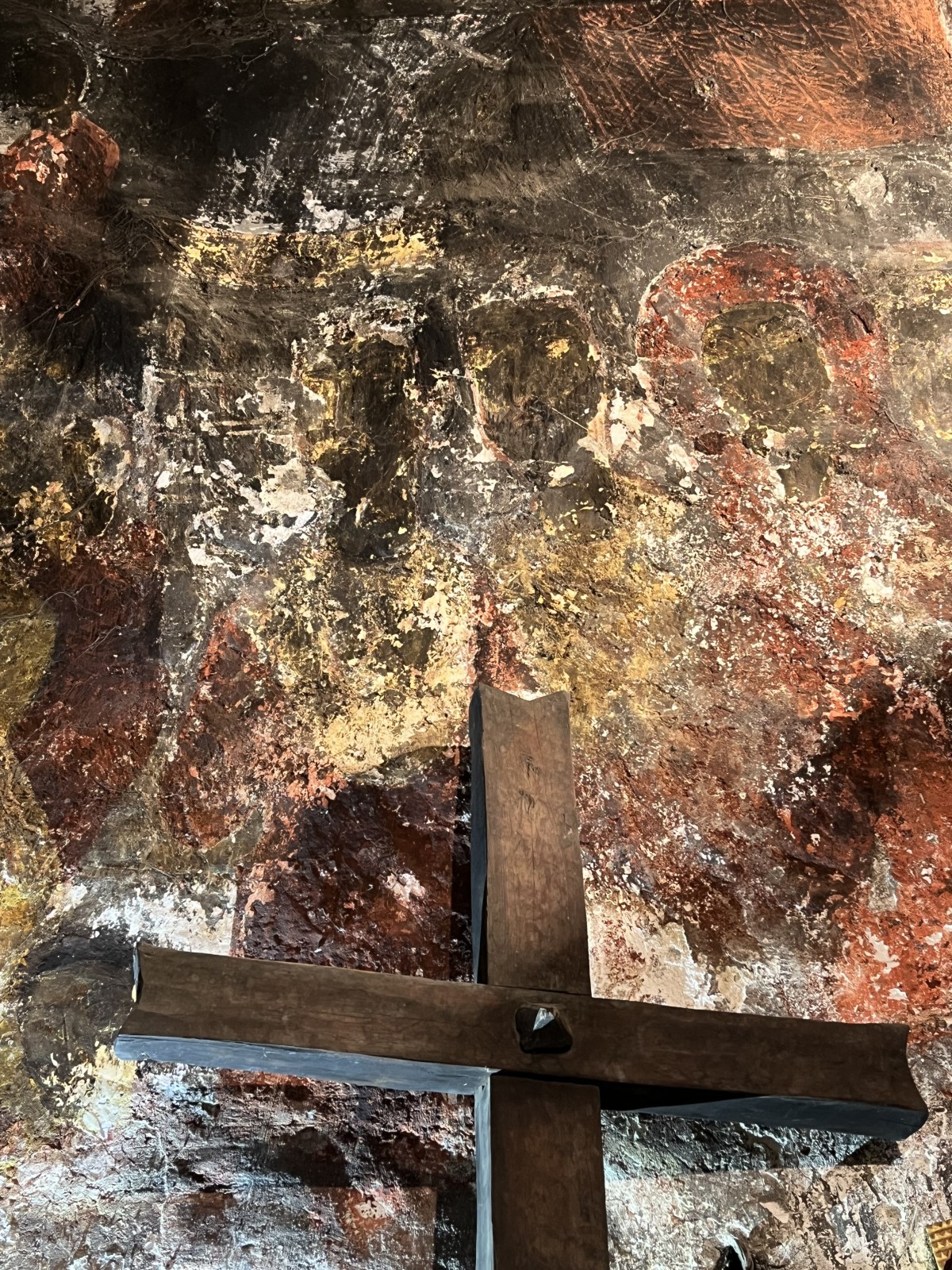
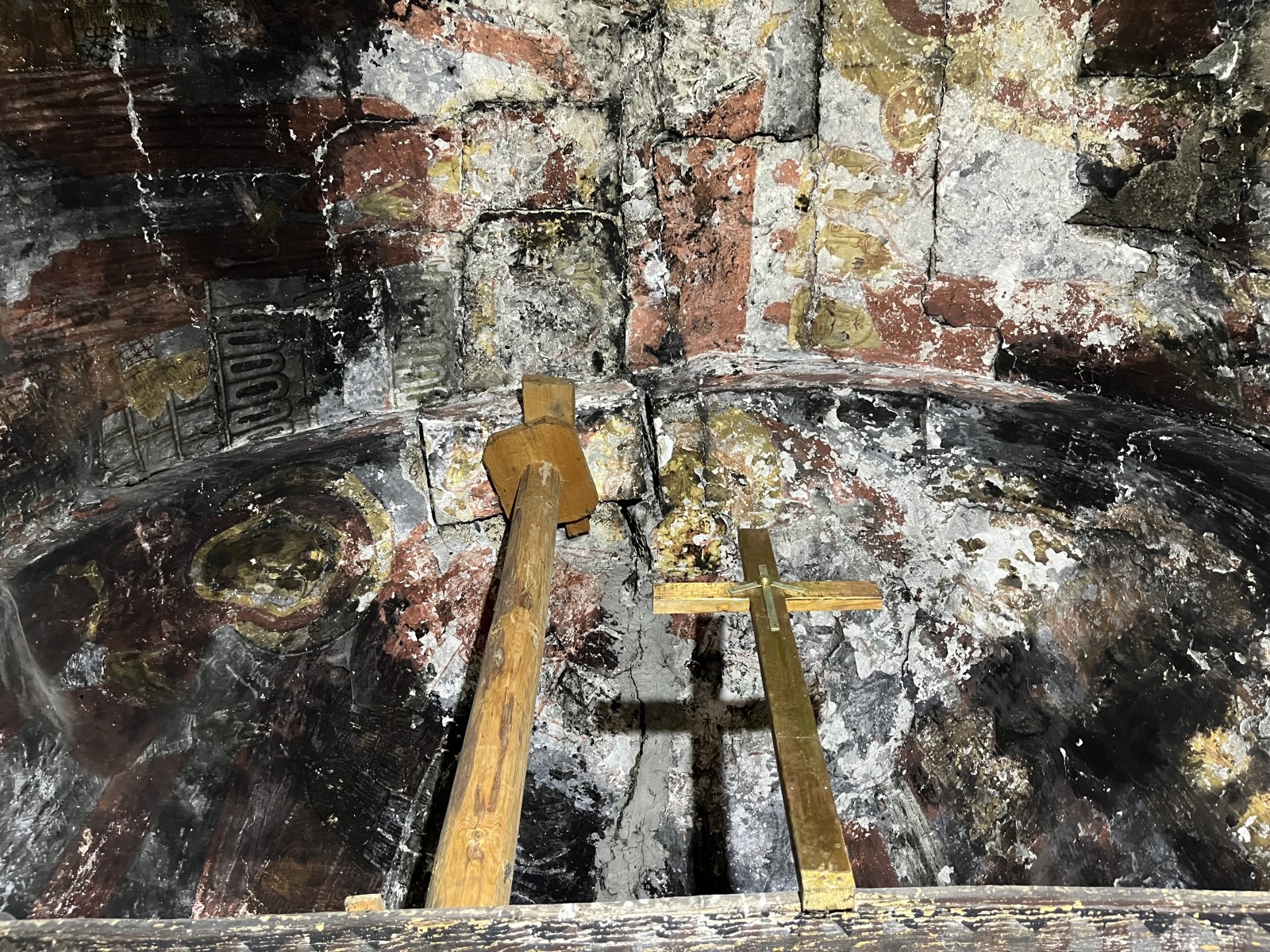
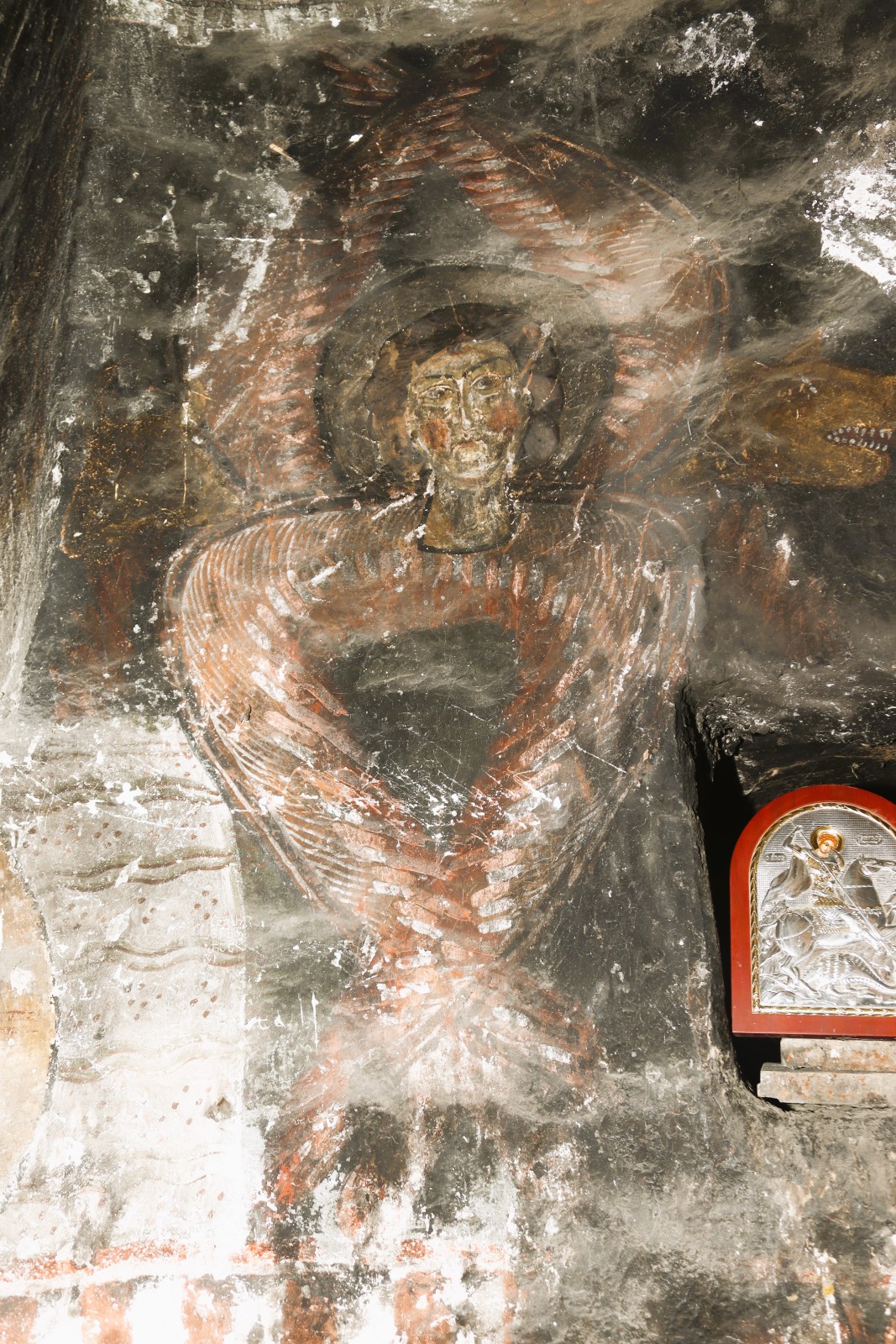
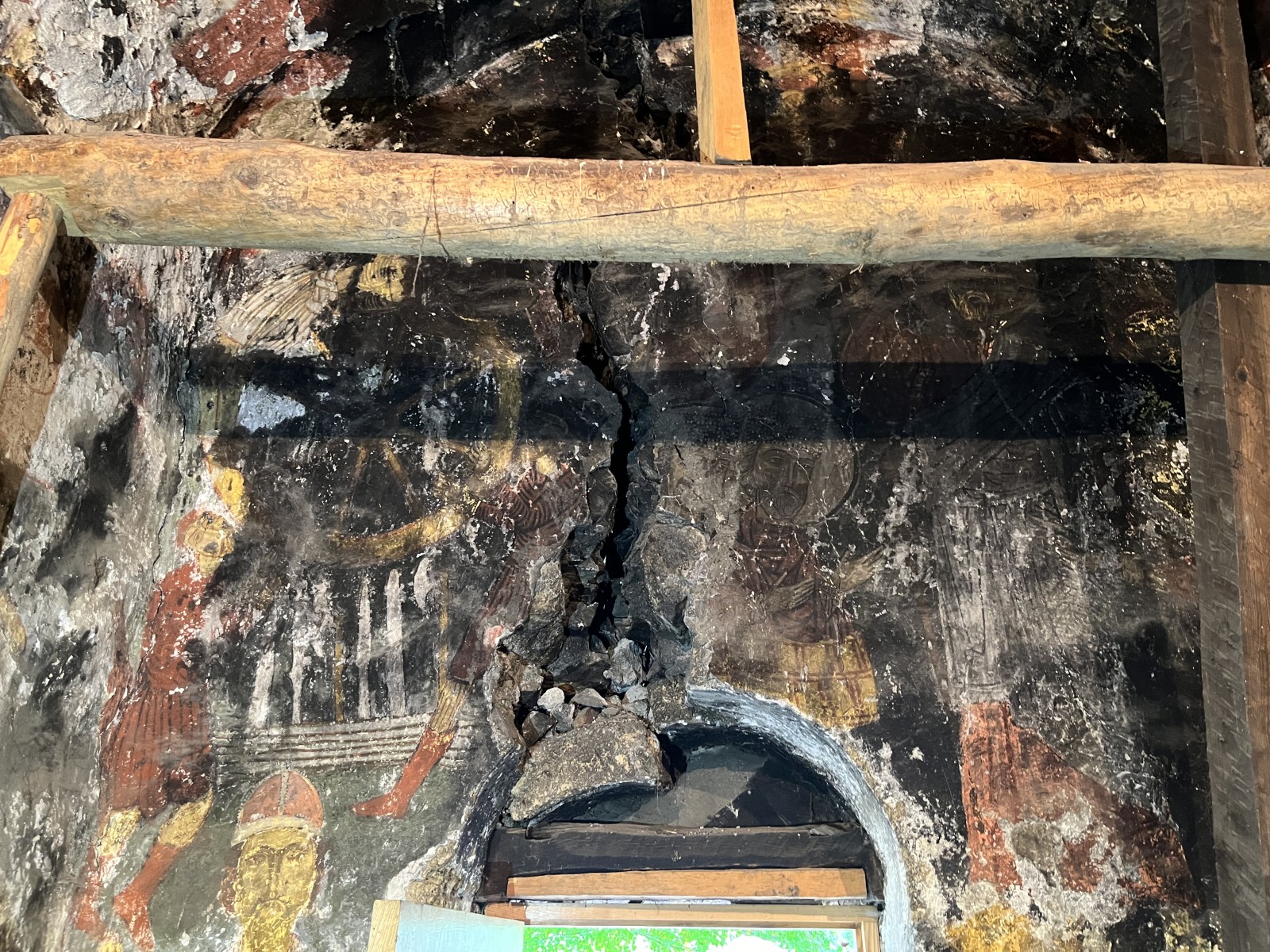
Although the murals are now heavily damaged, their main characteristics remain discernible. Notable is the selection of limited number of Great Feasts cycle scenes for the iconographic program, all unified around a general Theophanic idea. Also characteristic is the “carpet-like” arrangement of the scenes and images in the entire interior—a typical feature of this group.
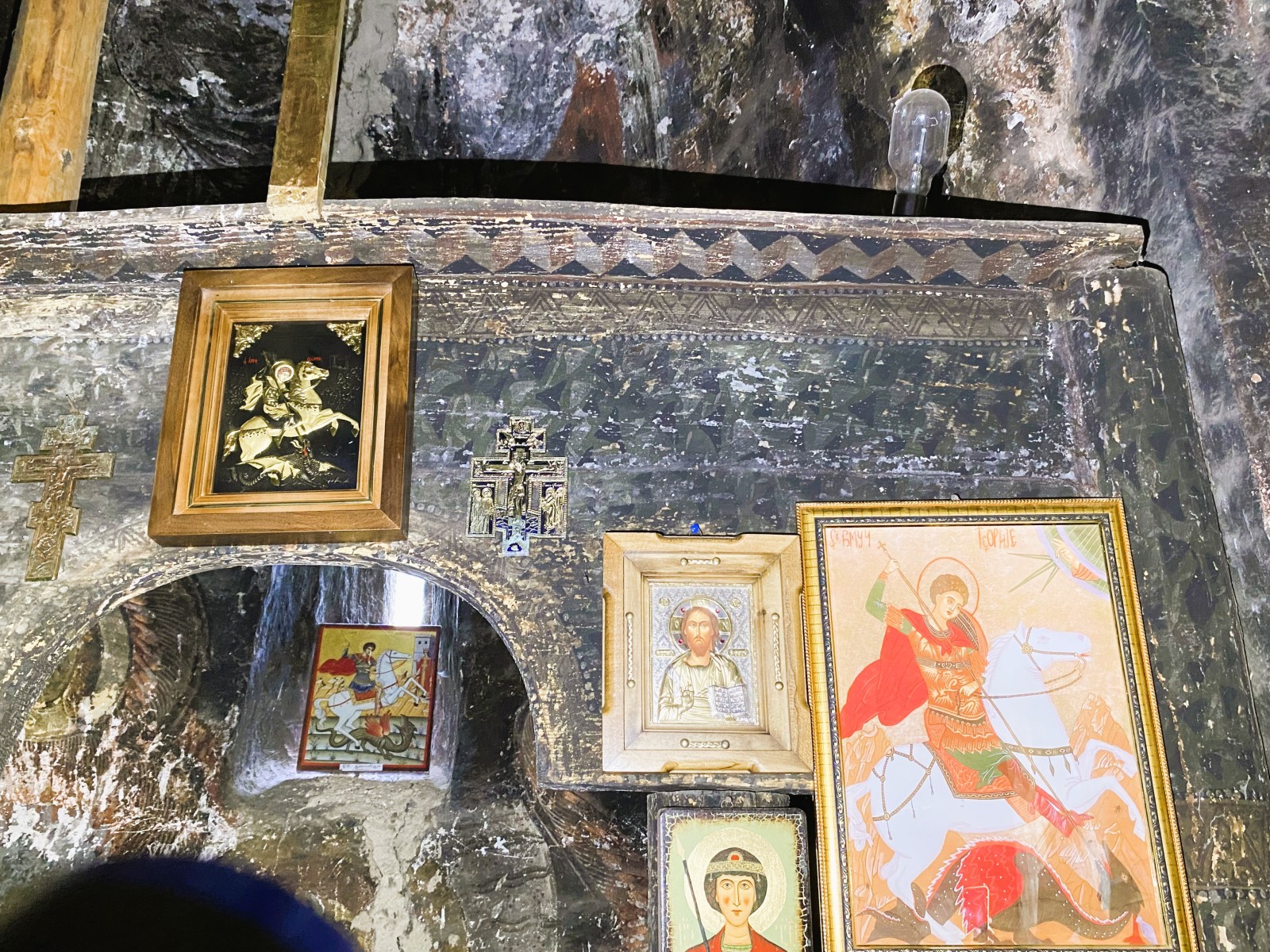
The church’s Patron Saint, St. George, is traditionally emphasized within the iconographic program, through the depiction of his Martyrdom on the Wheel and a heraldic composition of Warrior Saints.
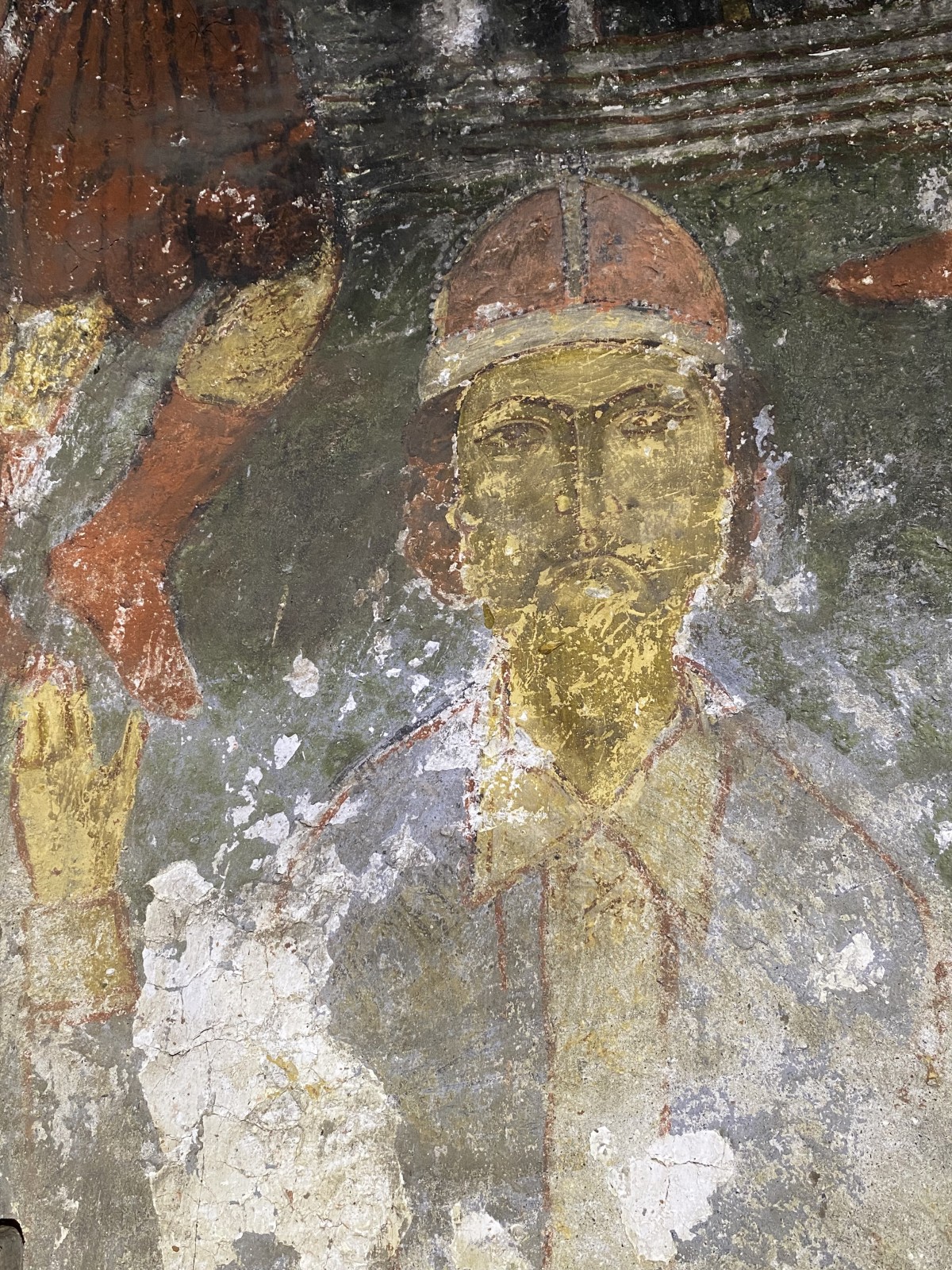
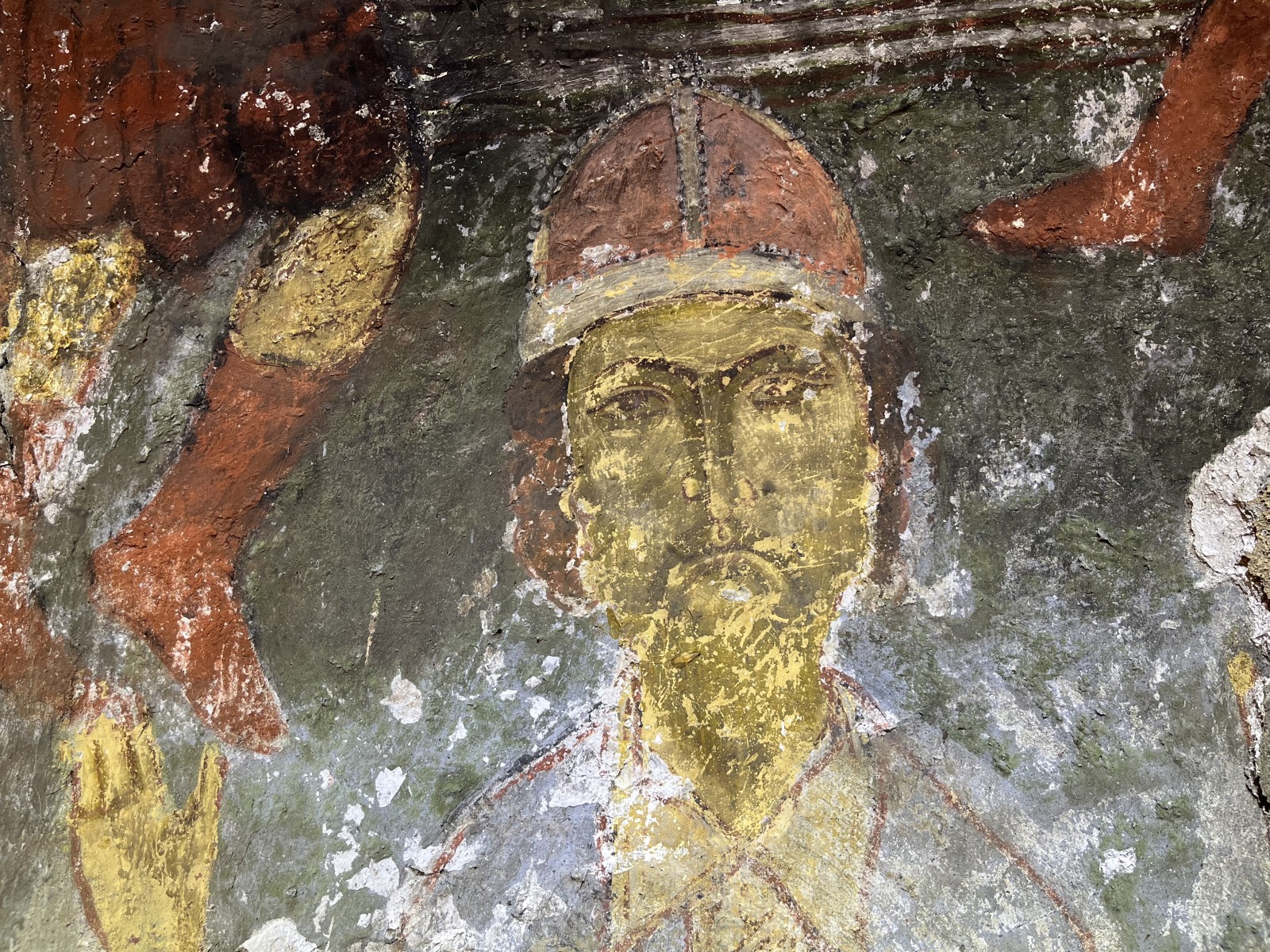
Quite an impressive portrait of the church’s donor, a Svan nobleman is preserved in the murals. Regretfully, his identity cannot be definitively determined due to the severe damage to the accompanying vast inscription. Various viewpoints have been proposed in scholarly literature regarding the identity of this nobleman, donor of the paintings.
| Location | The church is located in the center of village |
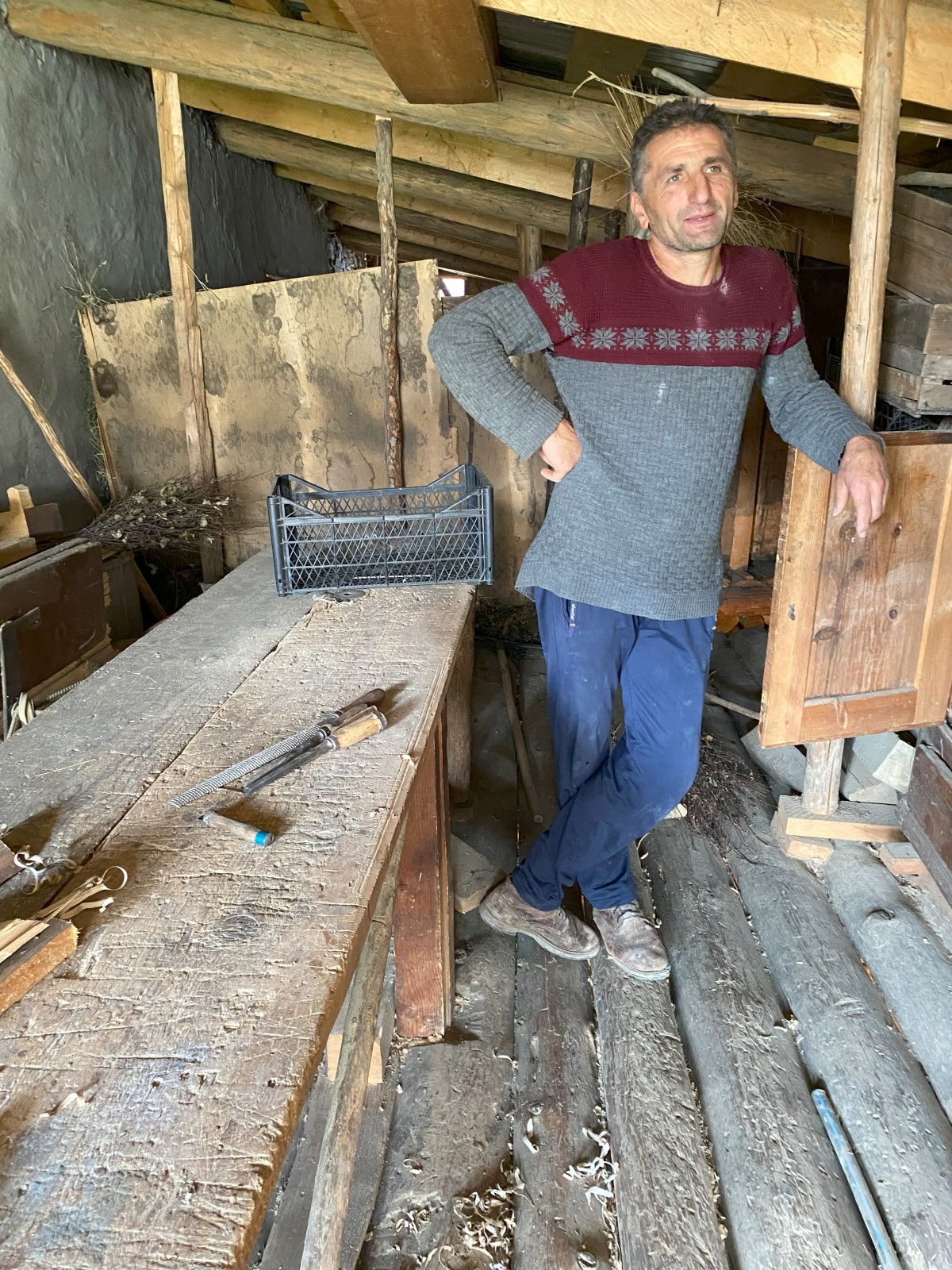
| key Holder | The key is kept at Sergo Pirtskheliani family |